Meeko
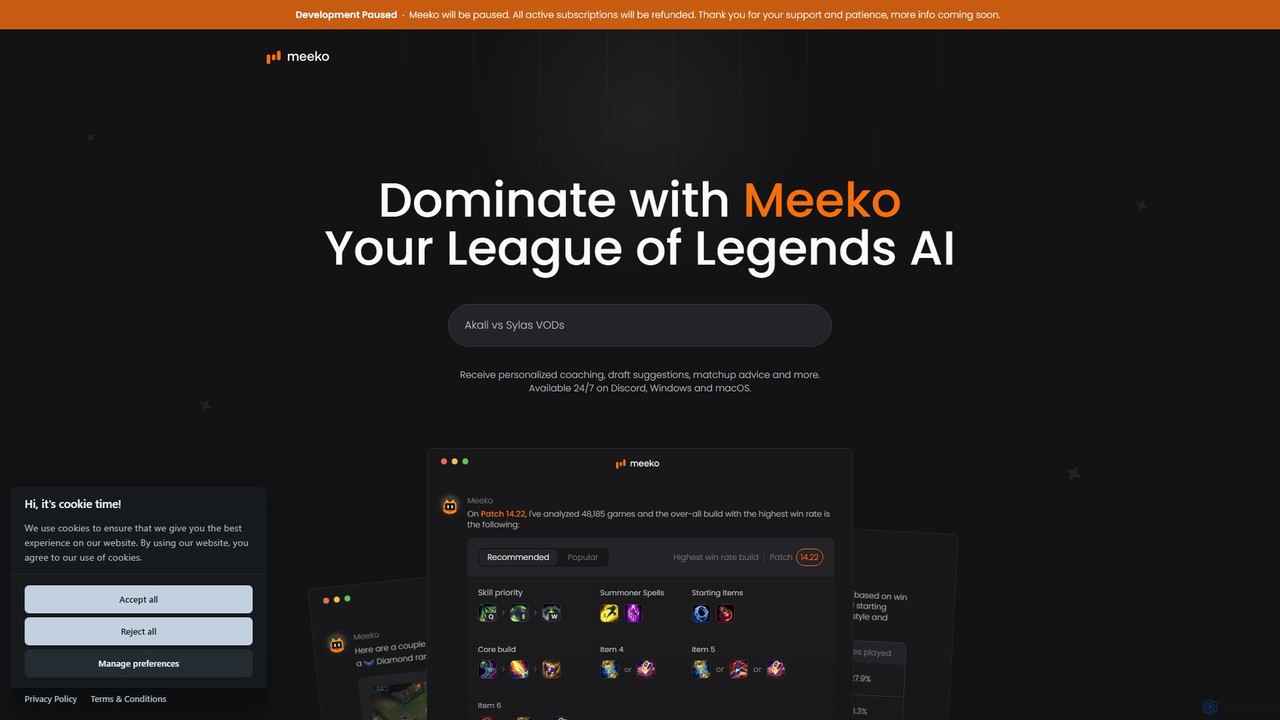
Meeko is an AI-powered coach for League of Legends, designed to help players improve their gameplay 24/7. It …
Meeko is an AI-powered coach for League of Legends, designed to help players improve their gameplay 24/7. It provides personalized advice, data-driven build recommendations, matchup analysis, and champion tier lists based on the latest patch data. Available via Discord and a desktop app, Meeko offers both reactive answers and proactive coaching to guide players through ranks. Please note: The development of Meeko is currently paused and the service is inactive.
Backseat
Backseat is an AI-powered in-game companion for League of Legends, offering real-time coaching, strategic insights, and commentary in …
Backseat is an AI-powered in-game companion for League of Legends, offering real-time coaching, strategic insights, and commentary in the voices of famous streamers like Tyler1 and Emiru. It helps players improve their skills with pre-game analysis, live macro/micro advice, and post-game feedback, making the game more fun and engaging while supporting creators.
trophi.ai
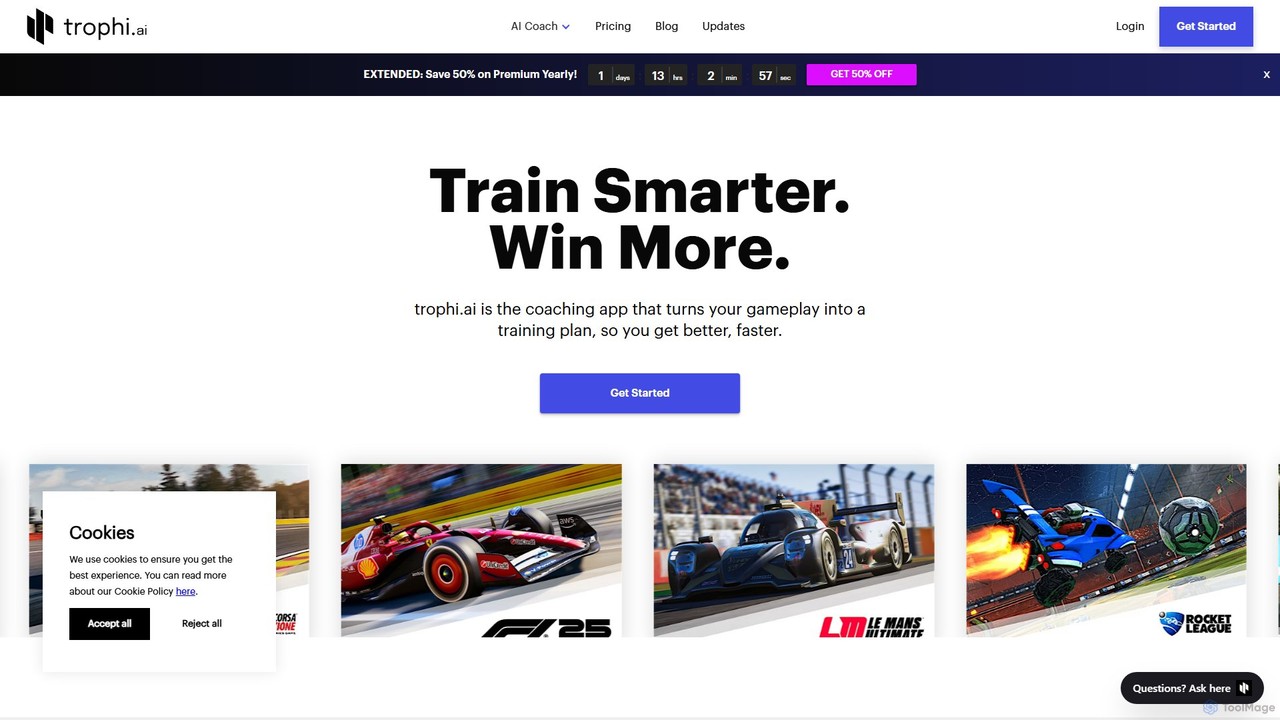
trophi.ai is an AI-powered coaching platform for sim racers that analyzes your gameplay to create personalized training plans. …
trophi.ai is an AI-powered coaching platform for sim racers that analyzes your gameplay to create personalized training plans. It provides real-time, on-track feedback through voice coaching and telemetry overlays, helping you improve technique and achieve faster, more consistent lap times in games like iRacing, ACC, and F1.
BotLab
BotLab is a platform for developing, testing, and running AI bots for video games. It provides a safe, …
BotLab is a platform for developing, testing, and running AI bots for video games. It provides a safe, simulated environment to evaluate bot performance and reliability without risk. Aimed at both users and developers, BotLab offers extensive guides, a dedicated client, and tools to automate gameplay, collect training data, and manage bots for games like EVE Online and Tribal Wars 2.
About Game Assistant
AI Game Assistants are tools designed to enhance a player's in-game performance and strategic understanding. Leveraging real-time data analysis and machine learning, these assistants provide live feedback, strategic suggestions, and performance analytics. They act as a personal coach, helping players identify weaknesses, optimize builds, and make smarter decisions during gameplay. Unlike cheats, these tools operate within the game's rules, using accessible data to offer insights rather than unfair advantages.
Core Features
- Real-time Strategy Suggestions: Provides live recommendations for actions, item builds, or character abilities based on the current game state.
- Performance Analysis: Analyzes gameplay replays to offer detailed statistics and feedback on aim, positioning, and decision-making.
- Personalized Coaching: Identifies player weaknesses and creates customized training drills or provides targeted advice for improvement.
- Opponent Profiling: Gathers data on opponents' playstyles and common strategies to help players anticipate their moves.
- Build Optimization: Recommends optimal skill trees, gear combinations, or deck builds for specific scenarios or matchups.
Use Cases
AI Game Assistants are primarily used by competitive and aspiring gamers across various genres like MOBAs, FPS, and strategy games. Casual players also use them to learn complex games more quickly. They are valuable for individual skill development, team strategy coordination, and preparing for competitive matches by analyzing personal and opponent data.
How to Choose
When selecting an AI Game Assistant, consider its compatibility with your favorite games first. Evaluate the depth of its features—does it offer simple overlays or in-depth replay analysis? Check its impact on system performance to avoid in-game lag. Finally, review the developer's policy on fair play and ensure the tool is compliant with the game's terms of service to avoid any risk of account suspension.
Game AssistantUse Cases
Improving FPS Aim and Positioning
A competitive FPS player, aiming to climb the ranks in a game like Valorant or CS:GO, uses an AI Game Assistant to analyze their gameplay. After each match, the tool automatically processes the replay, providing a detailed breakdown of their performance. It highlights missed shots with visual overlays, tracks crosshair placement, and generates heatmaps of their common positions on each map. Based on this data, the assistant suggests personalized aim training drills focusing on weak areas, such as tracking moving targets or flick shots, and recommends safer or more strategic positions to hold during defense rounds, helping the player improve measurable skills and game sense.
Optimizing Builds in MOBA and RPG Games
A player new to a complex MOBA like Dota 2 or an RPG like World of Warcraft uses an AI assistant to navigate the steep learning curve of itemization and character builds. The tool runs as an in-game overlay, analyzing the player's character, the enemy team composition, and the current state of the game. It then provides real-time recommendations for which items to buy or which skills to level up next. This guidance is based on statistical analysis of millions of high-level matches, helping the player make optimal choices that counter the enemy and synergize with their team, significantly accelerating their understanding of game mechanics.
Live Strategy Coaching in Card Games
A Hearthstone or Magic: The Gathering Arena player utilizes an AI Game Assistant during their matches to get a competitive edge. The assistant tracks the cards played by both players, calculates probabilities of drawing specific cards, and assesses the current board state. Based on this comprehensive analysis, it suggests the optimal play for the current turn, highlighting which card to play and which target to choose. This helps the player manage resources more effectively, anticipate the opponent's strategy, and identify complex lines of play they might have otherwise missed, improving their win rate over time.
Navigating Large Open-World Games
A player exploring a massive open-world RPG like Elden Ring or The Witcher 3 uses an AI assistant as an intelligent companion app. Instead of constantly pausing the game to look up wikis, the player can ask the assistant questions via voice or text, such as 'Where can I find the materials for this potion?' or 'What is the optimal path for this quest?'. The AI provides concise, context-aware answers, sometimes displaying a minimal map overlay with directions. This creates a more immersive and seamless gaming experience, reducing downtime and frustration associated with navigating complex game worlds and questlines.
Enhancing Team Communication with Live Translation
A member of a multinational esports team playing a team-based shooter uses an AI Game Assistant to overcome language barriers. The assistant integrates with their voice chat software, providing real-time voice-to-voice translation. When a teammate from Japan gives a callout in Japanese, the tool instantly translates it into English for the other players, and vice versa. This ensures that critical information, such as enemy positions and strategic plans, is understood by everyone on the team instantly, fostering better coordination and teamwork that would otherwise be impossible due to language differences.
Automated Scouting and Opponent Analysis
Before a competitive match in a strategy game like StarCraft II, a player uses an AI assistant to scout their opponent. The tool automatically searches for the opponent's recent match history on public ladders and analyzes their replays. It generates a concise report summarizing the opponent's preferred strategies, common unit compositions, and typical timings for attacks or expansions. This automated analysis saves the player hours of manual research, providing them with key strategic insights to prepare a counter-strategy and anticipate the opponent's moves from the very beginning of the match.