Gaming Best in category 1 results Game Platforms AI Tool

Popular AI tools in the Game Platforms field of Gaming include apkkeeper, etc., helping you quickly improve efficiency.

Free
apkkeeper

apkkeeper

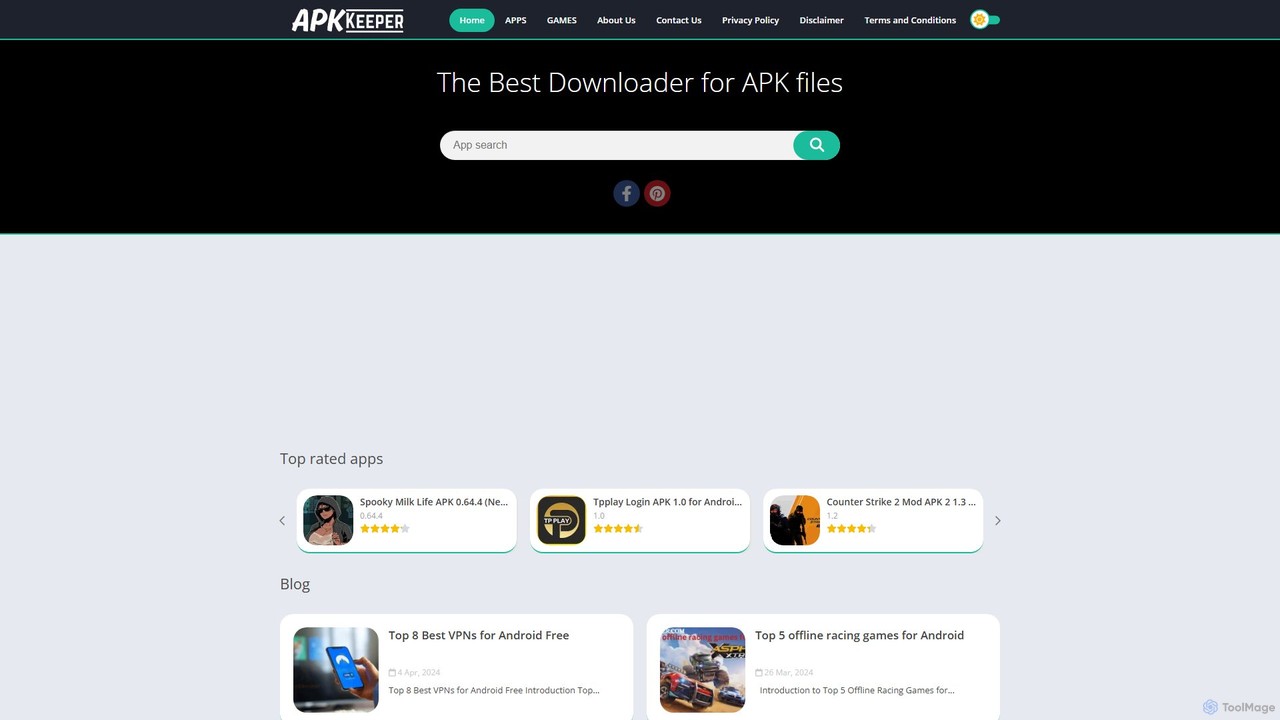
ApkKeeper is a comprehensive online repository for downloading Android APK files. It offers a vast library of the …

5.3K

About Game Platforms

AI Game Platforms are integrated development environments that use artificial intelligence to create, manage, and enhance interactive gaming experiences. These platforms leverage machine learning models for tasks like procedural content generation (PCG), creating dynamic NPC behaviors, and personalizing player journeys. Their primary value lies in accelerating the development cycle and enabling the creation of more complex, adaptive, and engaging game worlds. This allows developers, from solo creators to large studios, to build richer experiences with greater efficiency.

Core Features

  • Procedural Content Generation (PCG): Automatically creates game assets such as levels, terrains, characters, and items, reducing manual design work.
  • Intelligent NPC Behavior: Develops non-player characters (NPCs) with adaptive AI that can learn from player actions and exhibit complex decision-making.
  • Player Behavior Analytics: Analyzes player data to understand engagement, balance game difficulty, and personalize in-game content or offers.
  • Automated Game Testing: Deploys AI agents to play the game, identify bugs, explore exploits, and provide data on game balance.
  • AI-Assisted Narrative Design: Helps generate branching dialogues, questlines, and dynamic storylines that respond to player choices.

Use Cases

AI Game Platforms are utilized by indie game developers for rapid prototyping and asset creation, allowing small teams to build expansive games. Large AAA studios use them to generate vast open worlds and automate quality assurance testing. Narrative designers also employ these tools to craft intricate, player-responsive stories and dialogues.

How to Choose

When selecting an AI Game Platform, consider its integration capabilities with standard game engines like Unity or Unreal. Evaluate the scope and quality of its AI features, such as the sophistication of its NPC logic or the variety of its content generators. Also, assess the platform's learning curve, documentation, community support, and pricing model to ensure it aligns with your project's budget and team's technical skills.

Game PlatformsUse Cases

1

Rapid Prototyping for Indie Developers

An indie game developer with a limited budget and team size needs to quickly validate a new game concept. Using an AI Game Platform, they can generate entire playable levels, diverse character models, and basic environmental assets in hours instead of weeks. The developer inputs high-level descriptions like 'a fantasy forest with ancient ruins' and the platform's procedural content generation (PCG) tools create the 3D environment. This allows the team to focus on core gameplay mechanics and narrative, significantly accelerating the prototyping phase and enabling them to present a compelling demo to potential publishers or investors much faster.

2

Creating Dynamic NPCs for RPGs

A narrative designer for a role-playing game (RPG) wants to create non-player characters (NPCs) that feel alive and react realistically to the player's actions. They use an AI Game Platform's intelligent behavior module. Instead of scripting rigid dialogue trees, they define personality traits, goals, and knowledge for each NPC. The AI then generates dynamic conversations and actions in real-time based on the game's context and the player's choices. An NPC might remember a past favor, become hostile after an insult, or share rumors based on recent events, creating a more immersive and replayable world.

3

Automated QA Testing for a AAA Studio

A Quality Assurance (QA) team at a large AAA studio is tasked with testing a massive open-world game. Manually testing every possible path and interaction is impossible. They deploy AI agents from their game platform to autonomously explore the game world 24/7. These agents are trained to perform human-like actions: navigating complex terrain, engaging in combat, and completing quests. The platform logs any crashes, bugs, or performance drops encountered by the agents, complete with reproducible steps. This frees up human testers to focus on more nuanced issues like game feel and fun factor, while ensuring comprehensive bug detection across the entire game map.

4

Personalizing Player Experience in a Live Service Game

A Live Ops manager for a popular mobile game wants to increase player retention and monetization. They use the player analytics module of an AI Game Platform to analyze real-time data. The AI identifies player segments based on behavior, such as 'hardcore competitors', 'social explorers', and 'players at risk of churning'. Based on these segments, the platform automatically triggers personalized events, offers, or difficulty adjustments. For example, a competitive player might receive a challenge for a rare item, while a player showing signs of frustration might get a small boost, encouraging them to stay engaged and improving the overall health of the game's ecosystem.

5

Generating Diverse Game Assets for a 2D Platformer

A solo developer is creating a 2D platformer but lacks the artistic skills to create a wide variety of enemies and background elements. They use an AI Game Platform's asset generation feature. By providing a few base sprites and defining parameters like 'spiky', 'flying', or 'aquatic', the AI generates hundreds of unique enemy variations with consistent art styles. Similarly, they can generate different background tilesets for various biomes like forests, caves, and castles from a single style prompt. This allows the developer to populate their game with a rich diversity of content without needing to hire an artist or spend months learning to draw, ensuring the game world feels vast and visually interesting.

6

No-Code Game Creation for Educational Purposes

An educator teaching a game design course wants students to focus on design principles like level flow and player engagement, rather than getting bogged down by coding. They use a no-code AI Game Platform in their curriculum. Students can drag and drop assets, define game rules using natural language, and use AI to generate level layouts based on difficulty curves they specify. For their final project, a student could create a simple puzzle game by describing the mechanics ('the player pushes blocks onto switches') and letting the AI platform handle the underlying logic and asset placement. This approach makes game development accessible and allows students to rapidly iterate on their ideas.

Game PlatformsFrequently Asked Questions