
ToolMage
Sign in

Best 1 Interactive Storytelling AI tools for Gaming

Popular Interactive Storytelling AI tools in Gaming include World Simulator, helping you work more efficiently.

World Simulator

World Simulator

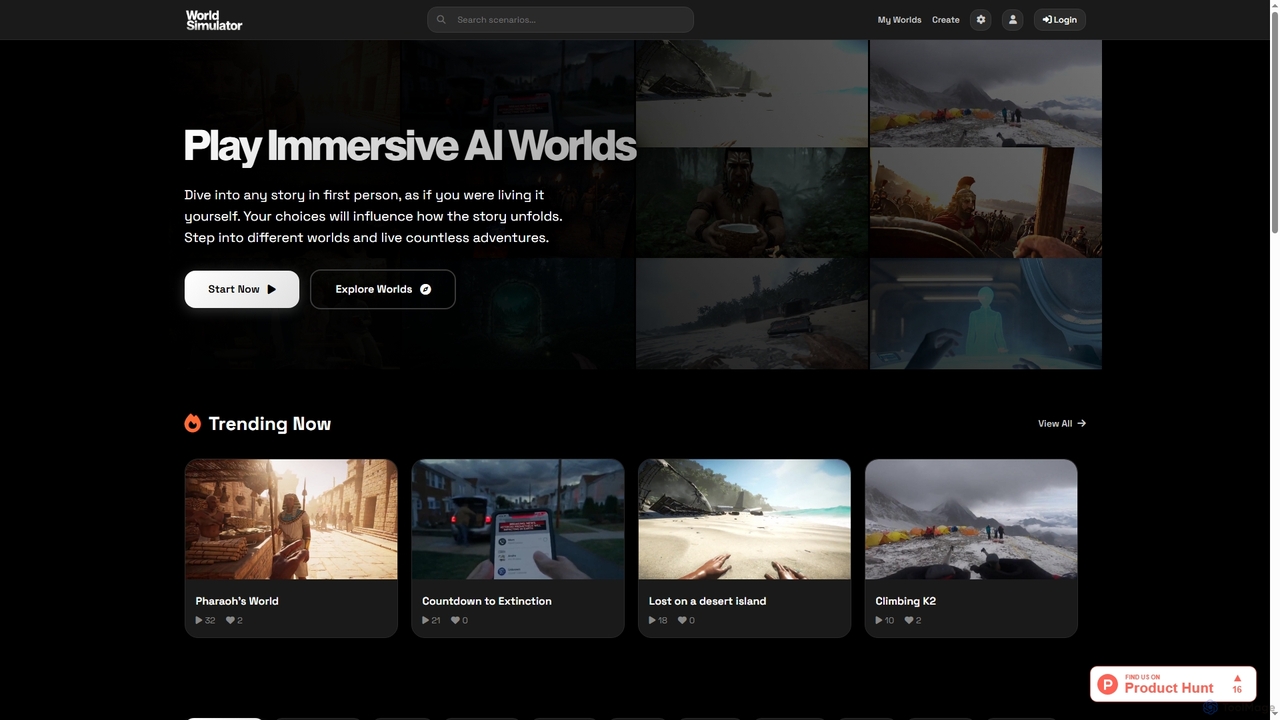
World Simulator is an innovative AI tool that allows users to create and play immersive, interactive AI-generated worlds. Dive into diverse narratives, from epic fantasy adventures and historical conquests to humorous everyday dramas, all shaped by your choices. Experience dynamic storytelling powered by artificial intelligence.

Story Generation
Visits 14.9KFavorites 149Likes 143

About Interactive Storytelling

Interactive Storytelling tools are AI-powered platforms for creating dynamic, choice-driven narratives. Using large language models (LLMs), these tools generate branching plotlines, character dialogue, and world descriptions in real-time based on user input. They enable creators to build deeply personal and replayable experiences that move beyond static, pre-written scripts. This technology is particularly valuable within the gaming sphere for crafting unique player journeys.

Core Features

  • Dynamic Narrative Generation: The AI creates unique story paths and outcomes on the fly, rather than following a fixed decision tree.
  • Adaptive Characters (NPCs): Generates non-player characters with consistent personalities and memories who react realistically to player actions.
  • World State Management: Tracks key events, character relationships, and environmental changes to ensure narrative coherence over time.
  • Natural Language Interaction: Allows players to guide the story using conversational text, offering more freedom than simple multiple-choice options.
  • Creator Controls & Guardrails: Provides tools for authors to set story goals, define lore, and constrain the AI to maintain the desired tone and plot direction.

Use Cases

These tools are primarily used by game developers for creating RPGs, text adventures, and visual novels with high replayability. They are also adopted by educators for building immersive learning simulations, by authors for crafting complex interactive fiction, and by marketers for developing engaging brand experiences.

How to Choose

When selecting a tool, consider the balance between AI autonomy and creator control. Evaluate its ability to maintain long-term narrative consistency, its integration options with game engines like Unity or Unreal, the complexity of its world-building features, and its pricing model (e.g., token-based or subscription).

Interactive Storytelling use cases

1

Prototyping RPG Questlines for Indie Games

An indie game developer needs to create a complex role-playing game with numerous branching quests. Instead of manually writing thousands of lines of dialogue and outcomes, they use an interactive storytelling tool. By defining key characters, world lore, and quest objectives, the AI generates diverse dialogue options, NPC reactions, and branching plot points. This allows the developer to rapidly prototype and test narrative ideas, saving hundreds of hours in writing and enabling them to focus on gameplay mechanics and world design.

2

Creating Educational Historical Simulations

A history teacher wants to create an immersive learning experience for students studying a specific historical event. Using an AI storytelling tool, they build a simulation where students assume the role of a historical figure. The AI generates scenarios and dilemmas based on real events, and student choices lead to different, historically plausible outcomes. This interactive approach helps students understand the complexities and consequences of decision-making in history, making the lesson more engaging and memorable than a traditional textbook.

3

Developing Interactive Marketing Campaigns

A marketing agency is tasked with creating a unique campaign for a new adventure-themed product. They use an AI storytelling platform to build a 'choose your own adventure' style interactive ad. Users engage with a short story where their choices influence the narrative and subtly highlight different product features. The AI ensures each user has a unique path, increasing engagement and time spent with the brand. The agency can track which narrative paths are most popular, providing valuable data for future campaigns.

4

Crafting Complex Interactive Fiction

An author wants to write a digital novel with hundreds of possible endings and paths. Manually managing these branches in a traditional tool would be extremely complex and prone to errors. By using an AI storytelling tool, the author can define the core plot, characters, and rules of the world. The AI then helps generate and manage the branching paths, ensuring consistency and creating unexpected yet logical story developments. This allows the author to focus on high-level narrative architecture and character arcs, rather than getting lost in the minutiae of a massive decision tree.

5

Building Dynamic Training Scenarios

A corporate trainer needs to develop role-playing scenarios for sales or customer service training. Instead of static scripts, they use an AI tool to create a dynamic simulation of a customer interaction. The AI plays the role of the customer, reacting unpredictably but realistically to the trainee's responses. The system can introduce unexpected objections or questions, forcing the trainee to adapt. This provides a more challenging and effective training environment than rehearsing pre-written dialogues, better preparing employees for real-world situations.

6

Powering AI Dungeon Master for Tabletop RPGs

A group of friends wants to play a tabletop role-playing game but lacks a Dungeon Master (DM). They use an interactive storytelling tool configured to act as an AI DM. The players input their actions using natural language, and the AI describes the world, controls non-player characters, and generates challenges in real-time. The tool maintains world consistency and adapts the story to the players' unexpected choices, providing a flexible and ever-available game master for spontaneous gaming sessions.

Interactive Storytelling FAQ

What are AI Interactive Storytelling tools?

AI Interactive Storytelling tools are software platforms that use artificial intelligence, primarily large language models (LLMs), to generate dynamic and adaptive narratives. Unlike traditional game writing software that relies on pre-written branching paths, these tools create story elements like plot, dialogue, and character responses in real-time based on player choices. This allows for a virtually limitless number of unique story outcomes, creating highly personalized and replayable experiences in games, simulations, and interactive fiction.

How do I choose the right Interactive Storytelling tool?

Choosing the right tool depends on your project's needs. Consider these factors:

  • Control vs. Creativity: Do you need tight control over the plot (more 'on-rails'), or do you want the AI to have maximum creative freedom?
  • Technical Skill: Look for no-code interfaces if you are a writer or designer. If you are a developer, check for API access and integration with game engines like Unity or Unreal.
  • Consistency Management: How well does the tool remember past events and character traits? A good tool will have strong world state and memory features.
  • Pricing Model: Some tools charge per word or API call (token-based), while others offer monthly subscriptions. Choose one that aligns with your expected usage and budget.
What's the difference between AI Storytelling and traditional branching narrative tools?

The key difference is generation versus selection. Traditional tools like Twine or Ink allow you to write and manage a finite set of pre-determined paths and choices (a decision tree). The player selects from options you have already written. AI Storytelling tools, however, generate new content dynamically. The AI writes the next part of the story based on the player's input and the established context. This means the number of possible paths isn't pre-defined; it's nearly infinite, leading to more emergent and unpredictable narratives.

Who can benefit from using Interactive Storytelling tools?

A wide range of creators can benefit from these tools. This includes:

  • Game Developers: Especially those making RPGs, adventure games, or visual novels who want to increase replayability and create unique player experiences.
  • Writers and Authors: For creating complex interactive fiction, digital 'choose your own adventure' books, or exploring story ideas.
  • Educators and Trainers: To build engaging simulations for history, ethics, or corporate training that respond dynamically to student choices.
  • Marketers: For developing immersive and personalized ad campaigns or brand experiences that capture user attention.
How do these AI tools ensure a coherent story?

Maintaining coherence is a primary challenge. These tools use several techniques to achieve it:

  • World State Tracking: They maintain a 'memory' of key facts, character relationships, and major plot points. This context is fed back to the AI with every new generation request.
  • Creator-Defined Guardrails: Authors can set rules, define lore, and specify character motivations. The AI is instructed to adhere to these constraints.
  • Narrative Frameworks: Some tools allow creators to define a high-level plot structure (like a three-act structure) that guides the AI's generation, ensuring the story progresses towards a goal.
  • Fine-Tuned Models: The underlying AI models are often fine-tuned on large datasets of literature and screenplays to better understand narrative structure, pacing, and character development.