Gaming Best in category 1 results Mmo AI Tool

Popular AI tools in the Mmo field of Gaming include DreamWorld, etc., helping you quickly improve efficiency.

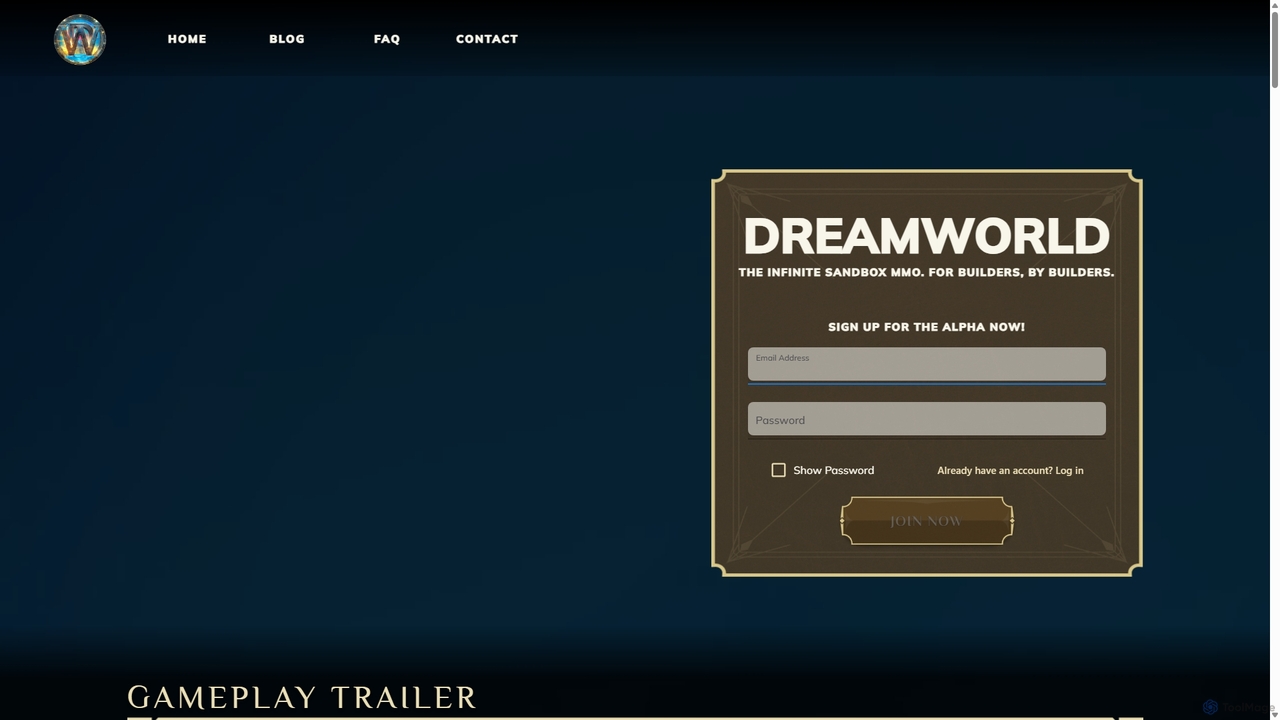
DreamWorld

DreamWorld

DreamWorld is an infinite sandbox MMO game where players build, explore, and fight together in a single, procedurally …

16.9K

About Mmo

AI MMO tools are a specialized category of software used to design, manage, and enhance Massively Multiplayer Online games. These tools leverage technologies like procedural content generation (PCG), advanced behavioral AI, and large-scale data analysis to create vast, dynamic, and persistent online worlds. Their primary value lies in automating complex development tasks, creating more believable NPC interactions, and maintaining a balanced and fair game environment for thousands of concurrent players. This allows developers to build more immersive and scalable gaming experiences.

Core Features

  • Procedural World Generation: Automatically creates expansive and unique game worlds, including landscapes, dungeons, and resource distribution.
  • Dynamic NPC & Faction AI: Enables non-player characters and entire factions to have their own goals, react to world events, and interact intelligently with players.
  • Player Behavior Analytics: Analyzes player data to balance game economies, detect bots or cheating, and personalize player journeys.
  • Automated Content Moderation: Uses natural language processing to monitor in-game chat and player reports to identify and handle toxic behavior.
  • Adaptive Quest Systems: Generates and modifies quests based on player actions and the evolving state of the game world, ensuring fresh content.

Use Cases

These tools are primarily used by MMO game development studios, live operations teams, and community managers. They are applied during the initial world design phase to rapidly build content, as well as in live game management to ensure economic stability, player safety, and ongoing engagement through dynamic events.

How to Choose

When selecting an AI MMO tool, consider its scalability to handle thousands of concurrent users and massive world data. Evaluate its integration capabilities with major game engines like Unreal Engine or Unity. Also, assess the level of customization available for AI behaviors and the robustness of its data analytics and moderation features.

MmoUse Cases

1

Generating a Continent for a New MMO

A small indie development team is creating a new fantasy MMO but lacks the resources to manually design a vast world. They use an AI tool with procedural content generation (PCG). By setting parameters like biome types, elevation, and resource density, the tool generates a complete, explorable continent in a matter of hours, not months. This includes varied landscapes, natural-looking rivers, and strategically placed resource nodes, saving thousands of hours of manual design work and allowing the team to focus on gameplay and story.

2

Dynamic Faction Warfare System

A game designer wants to create a living world where NPC factions feel autonomous. They implement a dynamic faction AI system. This tool manages the goals, resources, and relationships between different NPC factions. As a result, factions declare war, form alliances, capture territory, and react to player actions without direct scripting. Players witness a constantly evolving political landscape, creating emergent narratives and making the world feel more alive and unpredictable.

3

Automated Bot and Gold Farmer Detection

The live operations team of a popular MMO is struggling with bots disrupting the in-game economy. They deploy an AI-powered player behavior analysis tool. The system monitors player actions in real-time, identifying patterns indicative of automation, such as repetitive movements and unnatural trading volumes. When a potential bot is detected, it's automatically flagged for review or temporarily suspended, protecting the game's economic integrity and ensuring a fair playing field for legitimate players.

4

AI-Assisted Community Moderation

A community manager for a large MMO is overwhelmed by the volume of toxic messages in the global chat. They integrate an AI moderation tool that uses NLP to scan conversations for harassment, hate speech, and spam. The tool automatically mutes offenders for a short period and flags severe cases for human review. This reduces the manager's workload by over 70% and fosters a safer, more welcoming community environment, which in turn improves player retention.

5

Adaptive Quest Generation for Player Retention

To keep the endgame engaging, developers use an adaptive quest system. The AI analyzes a player's history, playstyle (e.g., explorer, combatant), and the current state of the world. Based on this data, it generates personalized daily or weekly quests. An explorer might get a quest to find a newly spawned rare creature, while a combatant gets a challenge to clear a dynamically generated mini-dungeon. This ensures players always have relevant and fresh content, increasing long-term engagement.

6

Balancing the In-Game Economy with AI Analytics

An MMO's economy is suffering from severe inflation, making items unaffordable for new players. The economics designer uses an AI analytics platform to track the flow of currency and items throughout the game. The tool identifies the primary sources of inflation (e.g., an overly generous monster drop) and sinks (e.g., underpriced repair costs). With these data-driven insights, the designer adjusts the drop rates and repair costs, successfully stabilizing the economy and improving the experience for all players.

MmoFrequently Asked Questions