Convai
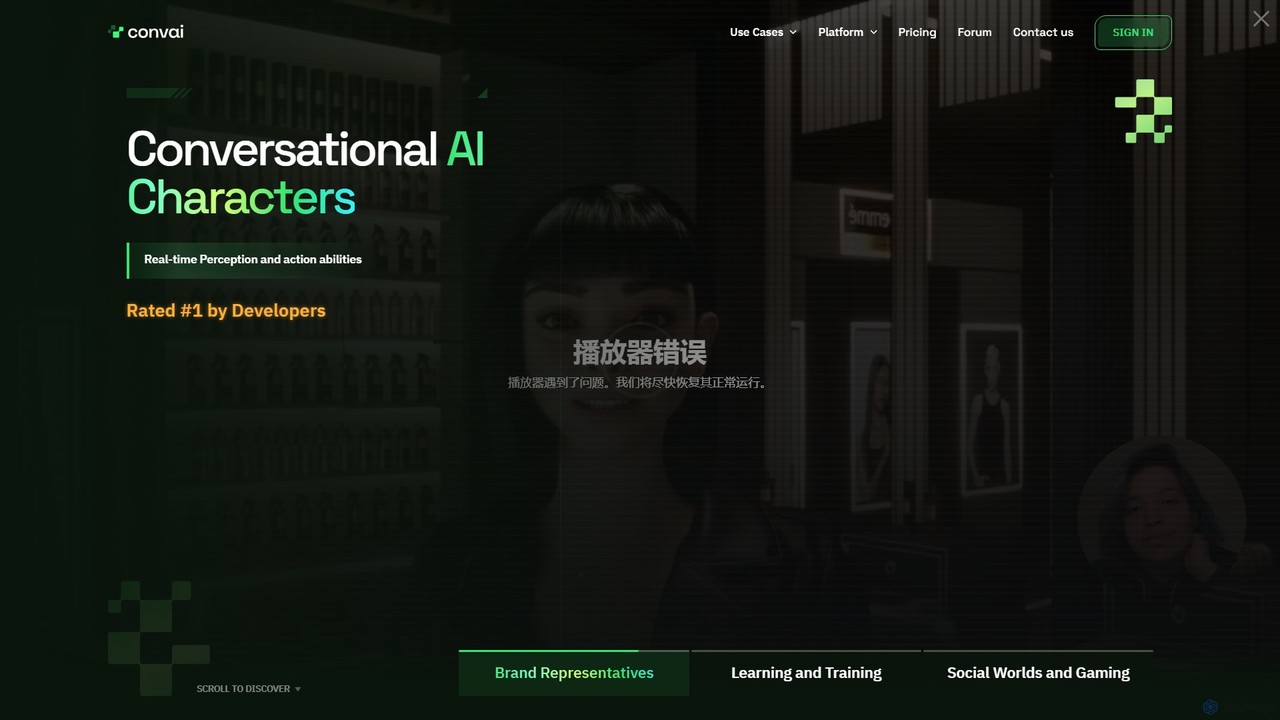
Convai is a developer platform for creating intelligent, conversational AI characters (NPCs) for games and virtual worlds. It …
Convai is a developer platform for creating intelligent, conversational AI characters (NPCs) for games and virtual worlds. It features real-time perception, multimodal interaction (vision, sound, text), and seamless integration with major game engines like Unreal and Unity, enabling lifelike and dynamic virtual experiences.
About Npc Creation
NPC Creation tools are specialized AI applications designed to automate the generation of non-player characters for games and interactive experiences. These tools utilize generative AI, including large language models (LLMs) and procedural algorithms, to create characters with unique appearances, personalities, backstories, dialogues, and behaviors. They empower developers to populate vast digital worlds with dynamic and believable inhabitants, significantly reducing manual effort and production time. Unlike traditional methods, AI NPC creation enables the rapid generation of diverse character populations, enhancing player immersion and narrative depth.
Core Features
- Dynamic Dialogue Generation: Creates context-aware and adaptive conversations that respond to player actions and world states.
- Behavioral AI Scripting: Defines complex routines, decision-making processes, and reactions for NPCs without manual coding.
- Personality & Trait Customization: Allows developers to set parameters like alignment, mood, and goals to shape unique character identities.
- Backstory & Lore Integration: Generates coherent character histories that align with the established lore of the game world.
- Visual Character Generation: Produces 2D portraits or basic 3D models based on descriptive prompts or attribute settings.
Use Cases
These tools are primarily used by game developers, from indie studios to large AAA teams, especially for creating open-world RPGs, simulation games, and narrative-driven experiences. Narrative designers and world builders use them to quickly prototype character concepts and populate entire virtual cities with unique individuals, each having their own schedule and purpose. They are also valuable in creating diverse enemy factions and procedurally generated quest-givers.
How to Choose
When selecting an NPC Creation tool, consider its integration capabilities with major game engines like Unity or Unreal Engine. Evaluate the depth of customization for personality, dialogue, and behavior. Assess the tool's scalability for generating and managing a large number of NPCs efficiently. Finally, check for API access and documentation, which are crucial for integrating the tool into a custom development pipeline.

Npc CreationUse Cases
Populating Open-World Game Cities
A game development team working on a large-scale open-world RPG needs to fill a major city with hundreds of unique citizens. Manually creating each NPC with a distinct routine and personality is unfeasible. Using an AI NPC Creation tool, they define parameters for different social classes (merchants, guards, nobles). The tool then generates a diverse population, each with a unique name, appearance, daily schedule (e.g., going to work, visiting the market, sleeping), and basic conversational lines. This populates the world quickly, making the city feel alive and dynamic with minimal manual scripting.
Creating Dynamic Quest Givers
A narrative designer wants to create a quest giver whose dialogue and available quests change based on the player's reputation. Instead of writing complex branching dialogue trees, they use an AI NPC tool. They input the NPC's core personality ('gruff but honorable blacksmith') and link it to the game's reputation system. The AI generates dialogue variations: friendly and offering discounts if the player's reputation is high, or suspicious and dismissive if it's low. It can also procedurally generate simple radiant quests like 'collect 10 iron ores' that fit the NPC's profession, ensuring fresh content for players.
Rapid Prototyping of Character Concepts
During the pre-production phase of a new game, the writing team needs to quickly test different character archetypes for a central story role. Using an AI NPC generator, they can create multiple versions of a character in minutes. For example, they can generate a 'wise old mentor' character, then instantly create variations like a 'cynical, world-weary mentor' or an 'eccentric, forgetful mentor'. Each version comes with sample dialogue and a brief backstory, allowing the team to place them in a test environment and see which personality resonates best with the game's tone without investing weeks in writing and design.
Generating Diverse Enemy Factions
An indie developer creating a fantasy RPG wants to have several distinct bandit factions, not just generic enemies. They use an AI NPC tool to define the core ideology of each faction (e.g., 'desperate survivalists', 'ruthless mercenaries', 'fanatical cultists'). The AI then generates character profiles for each faction, including unique combat barks, background snippets explaining their motivations, and even visual concepts for their attire. This creates more memorable and believable antagonists, enriching the game's world-building and providing varied combat encounters for the player.
Enhancing Interactive Storytelling
For a narrative-driven game or visual novel, a developer wants NPCs who can hold unscripted, natural conversations. They integrate an AI NPC creation tool powered by a large language model (LLM). This allows players to type their own questions or statements to an NPC. The LLM, primed with the NPC's personality and knowledge of the game world, generates responses in real-time. This creates a deeply immersive experience where players can genuinely investigate a mystery or build a relationship with a character beyond predefined dialogue options, making each playthrough unique.
Creating Realistic Training Simulations
A company developing a customer service training simulation needs virtual customers who can react unpredictably. Using an AI NPC tool, they create a range of customer personas, from 'calm and inquisitive' to 'angry and irrational'. Trainees can then interact with these AI-powered NPCs in realistic scenarios. The AI can understand the trainee's responses and escalate or de-escalate the situation accordingly, providing a dynamic and effective training environment that prepares employees for real-world challenges far better than static, scripted role-playing.