gowindmill
gowindmill is an AI Manager Assistant that automates team management tasks. Its AI bot, Windy, integrates with your …
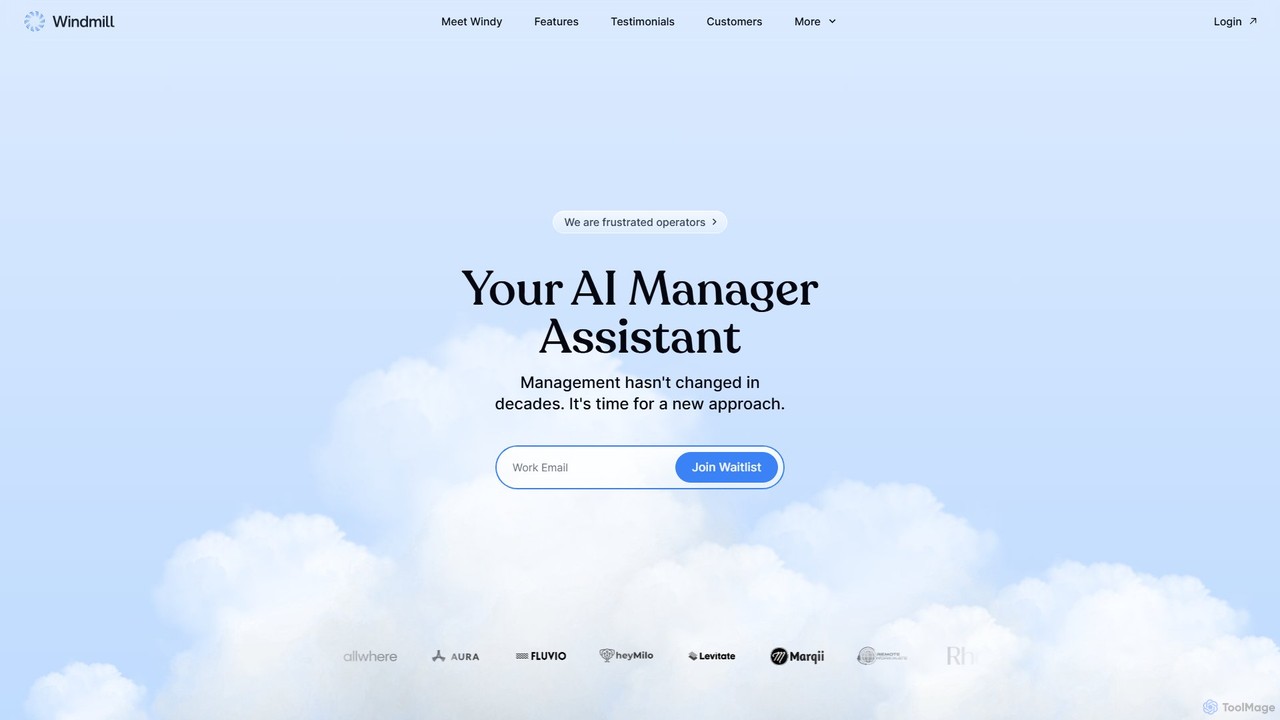
gowindmill is an AI Manager Assistant that automates team management tasks. Its AI bot, Windy, integrates with your productivity tools to collect real-time feedback, track weekly accomplishments, and identify blockers. This streamlines performance management, reduces administrative overhead, and empowers managers to focus on leading their teams effectively.
About Performance Review
AI Performance Review tools are specialized platforms that use artificial intelligence to streamline and enhance employee evaluations. They leverage Natural Language Processing (NLP) to analyze written feedback and machine learning to identify performance patterns, biases, and skill gaps from various data sources. The primary value of these tools is to make performance reviews more objective, data-driven, and efficient for managers and HR professionals. This approach helps foster a culture of fair assessment and targeted employee development.
Core Features
- AI-Generated Review Drafts: Automatically creates initial performance summaries based on goals, 360-degree feedback, and project data.
- Bias Detection: Analyzes review text to identify and flag potential gender, age, recency, or other unconscious biases.
- Performance Analytics: Visualizes performance trends, identifies top performers, and highlights skill gaps across teams and the organization.
- Goal Recommendation: Suggests personalized and measurable development goals based on an employee's role and past performance data.
- Feedback Synthesis: Consolidates and summarizes qualitative feedback from multiple sources into coherent themes and key takeaways.
Applicable Scenarios
These tools are particularly effective in mid-to-large sized enterprises, especially those with remote or hybrid work models, where standardized and fair evaluation is crucial. They are widely used by HR departments to manage company-wide review cycles and by managers to save time while providing higher quality feedback. Industries like tech, finance, and consulting benefit from their data-centric approach to talent management.
Selection Criteria
When choosing an AI Performance Review tool, consider its integration capabilities with your existing HRIS, payroll, and collaboration platforms (like Slack or Jira). Evaluate the sophistication of its AI models, particularly the accuracy of its bias detection and insight generation. Also, assess the level of customization available for review templates and workflows, and ensure the platform complies with stringent data privacy and security standards.

Performance ReviewUse Cases
Automating Annual Review Drafts for Managers
A team manager overseeing 12 direct reports uses an AI Performance Review tool to prepare for the annual review cycle. Instead of manually compiling notes and data, the tool automatically synthesizes information from project management systems (Jira), communication channels (Slack), and 360-degree feedback surveys. It generates a comprehensive first draft for each employee, highlighting key achievements, areas for improvement, and alignment with goals. This process reduces the manager's administrative workload by over 60%, allowing them to focus on delivering personalized, high-quality feedback during the actual review conversations.
Ensuring Fair and Unbiased Evaluations
An HR Business Partner at a global tech company uses the tool's bias detection feature to audit all submitted manager reviews. The AI scans the text for subtle language patterns that may indicate gender, age, or recency bias. For example, it might flag if female employees are consistently described with communal words (e.g., 'supportive', 'helpful') while male employees are described with agentic words (e.g., 'driven', 'assertive'). The HR partner receives a confidential report, allowing them to coach managers on providing more equitable and objective feedback, thereby strengthening the company's DEI (Diversity, Equity, and Inclusion) initiatives.
Data-Driven Succession Planning
The leadership team of a fast-growing company uses the performance analytics dashboard to identify high-potential employees for future leadership roles. The tool aggregates performance ratings, goal achievement rates, and competency scores over multiple review cycles. It visualizes this data, allowing executives to spot consistent top performers and identify individuals ready for promotion, rather than relying solely on subjective manager nominations. This data-driven approach makes succession planning more transparent and effective, ensuring the right talent is nurtured for critical roles.
Personalized Employee Development Planning
During a quarterly check-in, an employee and their manager review the AI-generated performance summary. The tool identifies a specific skill gap, such as 'Advanced Data Analysis', based on project feedback and goal outcomes. It then recommends a set of development goals, like 'Complete an online course on Python for data science' and 'Lead one data-driven A/B test next quarter'. This transforms the review from a simple evaluation into a forward-looking development conversation, providing the employee with a clear, actionable path for growth that is directly tied to their performance data.
Streamlining 360-Degree Feedback Synthesis
A project manager initiates a 360-degree feedback process for their team after completing a major project. Instead of manually reading through dozens of comments from peers, stakeholders, and self-assessments, they use the AI tool to process the feedback. The AI automatically groups comments into key themes like 'Communication', 'Technical Skill', and 'Collaboration', and performs sentiment analysis on each theme. The manager receives a concise, digestible summary, enabling them to quickly understand team strengths and areas for collective improvement without getting lost in individual comments.
Calibrating Performance Ratings Across an Organization
During calibration meetings, HR and leadership teams use the AI tool to ensure consistency in performance ratings across different departments. The platform provides a dashboard comparing the distribution of ratings ('Exceeds Expectations', 'Meets Expectations', etc.) for each manager and department. It flags statistical anomalies, such as one manager rating their entire team as top performers. This data helps facilitate a more objective discussion, allowing leaders to adjust ratings based on a shared understanding of performance standards, reducing manager-specific inflation or deflation of scores.