StackBob
StackBob is an advanced access and license management platform for modern businesses. It helps IT teams automate user …
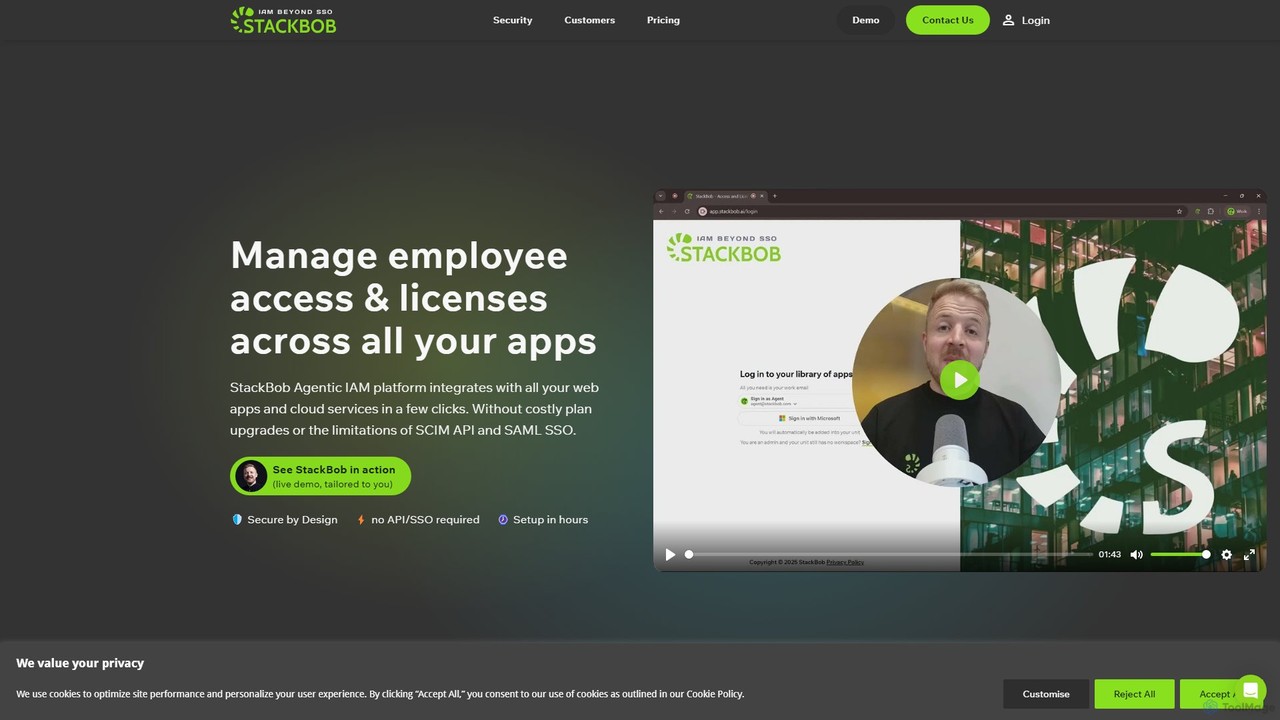
StackBob is an advanced access and license management platform for modern businesses. It helps IT teams automate user provisioning, control access to over 300,000 SaaS tools (even without SSO), and eliminate unnecessary software spending. By using a secure, privacy-focused browser extension, StackBob provides visibility into tool usage, enhances security with a Zero Trust model, and streamlines IT operations, saving time and money.
About Access Management
Access Management tools are AI-powered solutions designed to control and monitor who can access specific resources, data, and functionalities within an organization's IT and AI infrastructure. These tools leverage AI to enhance security, automate policy enforcement, and streamline user authentication and authorization processes. They ensure secure and compliant operations, especially in environments with sensitive AI models and data, by providing robust control over digital assets.
Core Features
- AI-driven Anomaly Detection: Identifies unusual access patterns or behaviors that may indicate security threats or policy violations.
- Automated Policy Enforcement: Applies access rules dynamically based on user roles, context, and real-time risk assessments.
- Granular Access Control: Manages precise permissions for accessing AI models, datasets, and development environments.
- Adaptive Authentication: Adjusts authentication requirements based on risk factors, user behavior, and device context.
- Centralized Identity Management: Provides a unified platform for managing user identities and their access privileges across various systems.
Use Cases
Organizations utilize Access Management tools to secure their digital assets, manage user permissions efficiently, and comply with regulatory requirements. They are crucial for protecting sensitive data, intellectual property, and ensuring operational integrity across diverse IT landscapes, from cloud applications to on-premise AI infrastructure.
How to Choose
When selecting Access Management tools, consider the scope of integration with existing IT systems, the granularity of control offered for AI resources, the robustness of AI-driven security features like anomaly detection, scalability for future growth, and compliance with industry regulations such as GDPR or HIPAA. Evaluate the ease of deployment and management, as well as support for various authentication protocols.

Access ManagementUse Cases
Securing AI Model Development Environments
AI development teams use Access Management tools to control who can access sensitive training data, proprietary AI models, and development platforms. This ensures only authorized data scientists and engineers can modify or deploy models, preventing intellectual property theft and unauthorized data exposure. Granular permissions can be set for different stages of model development, from data ingestion to deployment, safeguarding the entire AI lifecycle.
Managing Access to AI-Generated Data
Companies generating large volumes of AI-driven insights or content need to manage access to this data effectively. Access Management tools ensure that only relevant departments (e.g., marketing, product, legal) can view, analyze, or utilize specific AI-generated reports or assets. This maintains data confidentiality, ensures compliance with data governance policies, and prevents misuse of valuable AI outputs, streamlining data sharing while maintaining security.
Automating User Provisioning and Deprovisioning
For rapidly growing organizations or those with high employee turnover, Access Management tools automate the process of granting and revoking access rights. AI can predict necessary access levels based on roles and responsibilities, streamlining onboarding and offboarding. This reduces manual errors, minimizes security gaps from lingering access, and significantly improves operational efficiency for IT and HR teams.
Implementing Adaptive Multi-Factor Authentication (MFA)
IT security teams deploy Access Management solutions with AI-powered adaptive MFA to enhance security without hindering user experience. The system analyzes user behavior, device, and location to determine if additional authentication steps are needed. This reduces friction for legitimate users by only prompting for extra verification when risk factors are high, effectively blocking suspicious access attempts and strengthening overall security posture.
Ensuring Compliance for Data Access
Enterprises operating under strict data privacy regulations (e.g., GDPR, HIPAA) leverage Access Management to enforce granular controls over who can access sensitive customer or health data. AI can monitor access logs for compliance violations, identify potential risks, and generate detailed audit reports. This simplifies regulatory adherence, reduces the burden of manual audits, and provides verifiable proof of data protection measures.
Controlling Third-Party Vendor Access to AI Systems
Organizations collaborating with external vendors or contractors on AI projects use Access Management to grant temporary, time-bound, and least-privilege access to specific AI resources. This minimizes risk by ensuring vendors only access what's necessary for their tasks and their permissions are automatically revoked upon project completion. AI can help monitor vendor activities for unusual patterns, adding an extra layer of security and accountability.