KubeHA
KubeHA is a GenAI-powered SaaS platform for Kubernetes, offering an all-in-one solution for Monitoring, Observability, Remediation, and Exploration …
KubeHA is a GenAI-powered SaaS platform for Kubernetes, offering an all-in-one solution for Monitoring, Observability, Remediation, and Exploration (MORE). It unifies logs, metrics, traces, and events to provide AI-driven root cause analysis, smart fix suggestions, and 1-click remediation, eliminating tool sprawl and simplifying complex operations for SRE and DevOps teams.
K8sGPT
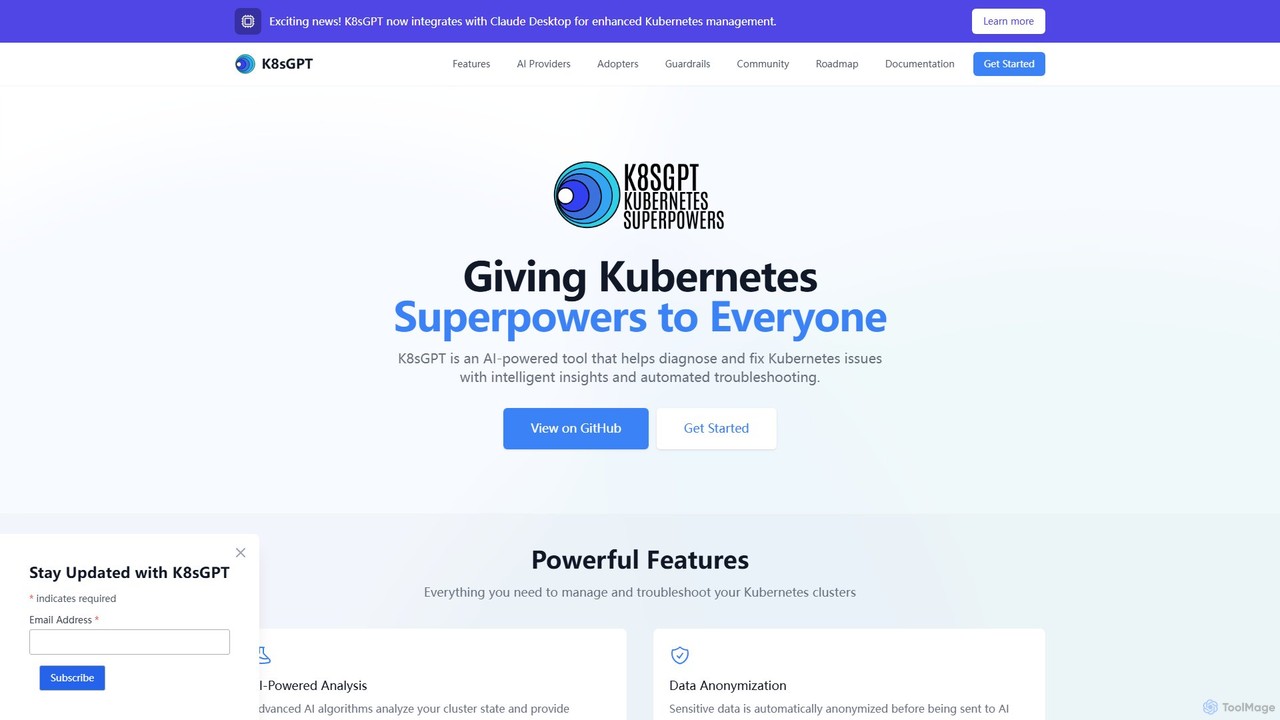
K8sGPT is an AI-powered tool designed to supercharge Kubernetes (K8s) troubleshooting. It scans your clusters, diagnoses issues, and …
K8sGPT is an AI-powered tool designed to supercharge Kubernetes (K8s) troubleshooting. It scans your clusters, diagnoses issues, and provides intelligent, context-aware insights and solutions. By integrating with various AI providers, including local models, it helps SREs, DevOps engineers, and developers to quickly identify and resolve complex problems, significantly reducing downtime and manual effort.
About Cloud Computing
AI Cloud Computing tools are a category of software that leverages artificial intelligence to automate and optimize cloud infrastructure and services. They utilize machine learning algorithms to analyze vast amounts of operational data, predict resource needs, and detect security threats in real-time. These tools empower organizations to enhance cloud performance, reduce operational costs, and improve security posture by transforming manual processes into intelligent, automated workflows. Their key advantage lies in providing predictive insights and proactive management for complex, dynamic cloud environments.
Core Features
- AIOps (AI for IT Operations): Automates cloud monitoring, incident response, and root cause analysis using machine learning.
- Cloud Cost Optimization: Uses predictive analytics to forecast spending, identify waste, and recommend resource adjustments.
- AI-Powered Security: Detects anomalies, predicts threats, and automates security policy enforcement in the cloud.
- Resource & Workload Automation: Intelligently scales resources up or down based on real-time demand and predictive models.
- Cloud Governance & Compliance: Employs AI to continuously monitor configurations and ensure adherence to compliance standards.
Use Cases
These tools are primarily used by DevOps engineers, IT administrators, FinOps specialists, and security teams managing multi-cloud or hybrid cloud environments. Common scenarios include automating the response to performance bottlenecks in a production application, dynamically adjusting storage tiers to minimize costs without manual intervention, or identifying sophisticated security threats by correlating events across different cloud services.
How to Choose
When selecting an AI Cloud Computing tool, consider its integration capabilities with your existing cloud providers (e.g., AWS, Azure, GCP) and monitoring stack. Evaluate the scope of its automation, from simple alerting to fully autonomous remediation. Assess the sophistication of its AI models for prediction and anomaly detection, and consider the technical expertise required for implementation and maintenance.

Cloud ComputingUse Cases
Proactive Anomaly Detection in Cloud Applications
A DevOps team for a SaaS company uses an AIOps tool to monitor their application's performance on AWS. Instead of relying on static thresholds, the AI model learns the application's normal behavior patterns. During a minor release, the tool detects a subtle memory leak pattern that traditional alerts would miss. It automatically correlates this with the recent code deployment and raises a high-priority incident with detailed context, allowing developers to fix the issue before it causes a major outage and impacts customers, thus preserving service uptime and reliability.
Automated Cloud Cost Reduction for Startups
A startup's FinOps manager uses an AI-powered cost optimization tool to analyze their Azure spending. The tool's AI engine continuously scans resource utilization and identifies that several virtual machines for development are oversized and are left running overnight. It provides a concrete recommendation to resize the VMs and implement an automated shutdown schedule. By applying these AI-driven suggestions with a single click, the startup reduces its monthly cloud bill by 30%, freeing up crucial capital for product development.
Intelligent Threat Hunting in a Multi-Cloud Environment
A security analyst at a financial institution is tasked with protecting assets across both GCP and Azure. They use an AI-powered security tool that ingests and normalizes logs from both clouds. The AI model identifies a low-and-slow data exfiltration attempt: a user account with unusual access patterns is downloading small, encrypted files from a database in GCP and uploading them to a storage account in Azure over several weeks. This sophisticated attack pattern, invisible to single-cloud security tools, is flagged by the AI, enabling the security team to intervene and prevent a major data breach.
Dynamic Resource Scaling for E-commerce Platforms
An e-commerce site uses an AI workload automation tool to manage its infrastructure during a major holiday sale. The tool's predictive model analyzes historical sales data, current marketing campaigns, and real-time traffic patterns. It forecasts a massive traffic spike 30 minutes before it occurs and proactively scales up web servers and database read replicas. This prevents the site from crashing under load, ensuring a smooth customer experience and maximizing sales. After the peak, it automatically scales resources back down to avoid unnecessary costs.
Automating Cloud Compliance & Governance
A healthcare company uses an AI governance tool to continuously scan its cloud environment against HIPAA standards. The tool automatically detects a misconfigured S3 bucket with public access containing sensitive patient data. Instead of just sending an alert, it automatically applies a more restrictive policy to the bucket, logs the event for audit purposes, and creates a high-priority remediation ticket for the IT team with a full report. This automated enforcement prevents potential data breaches and ensures continuous compliance without manual oversight.
Optimizing Kubernetes Cluster Management
A platform engineering team manages large Kubernetes clusters for their organization's microservices. They use an AI tool that analyzes pod scheduling patterns, resource requests versus actual usage, and node utilization. The AI recommends consolidating workloads onto fewer, more appropriately sized nodes, predicting a 20% cost saving. It also identifies 'noisy neighbor' pods that intermittently consume high CPU, and suggests applying resource quotas to prevent them from impacting other critical services, thereby improving overall cluster stability and efficiency.