It Best in category 1 results Ai Management AI Tool

Popular AI tools in the Ai Management field of It include basebox, etc., helping you quickly improve efficiency.

basebox

basebox

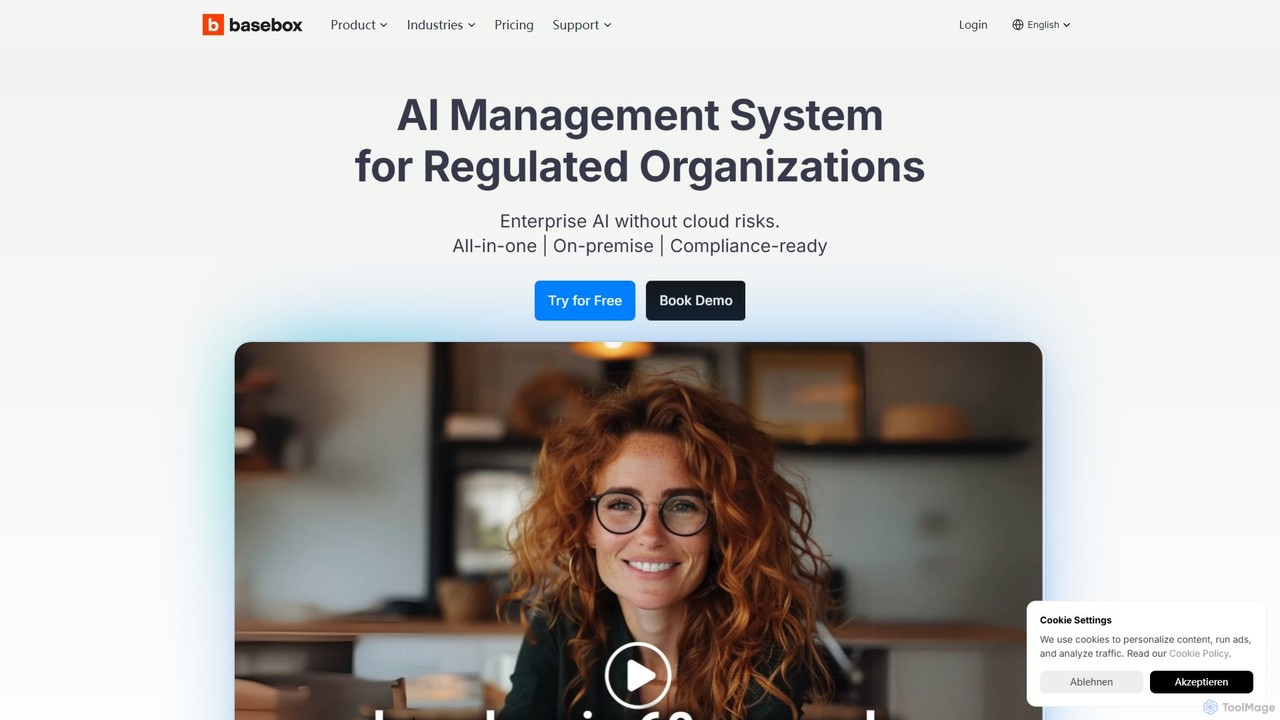
basebox is an all-in-one AI Management System for regulated organizations. It enables enterprises in sectors like healthcare, finance, …

3.6K

About Ai Management

AI Management refers to specialized tools and platforms designed to oversee, optimize, and govern the entire lifecycle of artificial intelligence models, applications, and infrastructure. These solutions leverage advanced analytics and automation to ensure AI systems are deployed, monitored, and maintained efficiently and responsibly. As a critical component within the broader IT landscape, AI Management helps organizations maximize the value of their AI investments while mitigating operational risks and ensuring compliance.

Core Features

  • Model Lifecycle Management: Automate the deployment, versioning, scaling, and rollback of AI models in production environments.
  • Performance Monitoring & Alerting: Continuously track model accuracy, latency, resource utilization, and detect anomalies or drift, triggering alerts when thresholds are breached.
  • Resource Optimization: Efficiently allocate and manage computational resources (GPUs, CPUs) and storage for AI workloads across various environments.
  • Data Governance for AI: Ensure the quality, security, and compliance of data used for AI training, validation, and inference, including lineage tracking.
  • Bias Detection & Mitigation: Identify and address potential biases in AI models and their outputs to promote fairness and ethical AI practices.

Use Cases

AI Management tools are essential for MLOps teams to streamline the deployment and monitoring of machine learning models, ensuring high availability and performance. They enable enterprises to maintain regulatory compliance for AI applications, providing audit trails and governance frameworks. Furthermore, these platforms help IT operations teams efficiently manage the infrastructure supporting complex AI workloads, optimizing resource utilization and cost.

How to Choose

When selecting an AI Management solution, consider its integration capabilities with your existing MLOps pipelines and cloud infrastructure. Evaluate its monitoring and alerting features for comprehensive performance tracking and anomaly detection. Assess its compliance and governance functionalities, including data lineage and bias detection. Finally, prioritize solutions offering scalability, robust security, and an intuitive interface for collaborative team use.

Ai ManagementUse Cases

1

Automated AI Model Deployment

For MLOps engineers, AI Management platforms automate the seamless deployment of trained AI models into production environments. This involves packaging models, configuring inference endpoints, and orchestrating their rollout across distributed systems, significantly reducing manual effort and deployment errors. It ensures new models are available for use quickly and reliably.

2

Real-time AI Model Performance Monitoring

Data scientists and AI operations teams utilize these tools to continuously monitor the performance of live AI models. They track key metrics like prediction accuracy, latency, and data drift, receiving instant alerts for any degradation. This proactive monitoring allows for timely intervention, maintaining model reliability and business impact.

3

Optimizing AI Resource Allocation

IT managers leverage AI Management solutions to efficiently allocate and manage computational resources (e.g., GPUs, CPUs, memory) for various AI workloads. The platforms provide insights into resource consumption, enabling dynamic scaling and optimization to reduce infrastructure costs while ensuring adequate performance for critical AI applications.

4

Ensuring AI Model Version Control and Rollback

Development teams rely on AI Management for robust version control of their AI models, datasets, and code. This allows for easy tracking of changes, reproducibility of results, and the ability to quickly roll back to previous stable versions in case of performance issues or unexpected behavior in production, minimizing downtime.

5

Managing AI Data Pipelines for Compliance

Data governance officers use AI Management tools to establish and enforce policies for the data used by AI models. This includes tracking data lineage, ensuring data quality, and managing access controls to comply with regulations like GDPR or HIPAA. It provides an auditable trail for all data interactions within AI systems.

6

Detecting and Mitigating AI Model Drift

AI reliability engineers employ these platforms to automatically detect model drift, where a model's performance degrades over time due to changes in real-world data. The tools analyze incoming data against training data, identify significant shifts, and can trigger retraining workflows or alert teams to address the drift before it impacts business outcomes.

Ai ManagementFrequently Asked Questions