It Best in category 3 results Cybersecurity AI Tool

Popular AI tools in the Cybersecurity field of It include Netify、Escape、FindErnest, etc., helping you quickly improve efficiency.

Escape

Escape

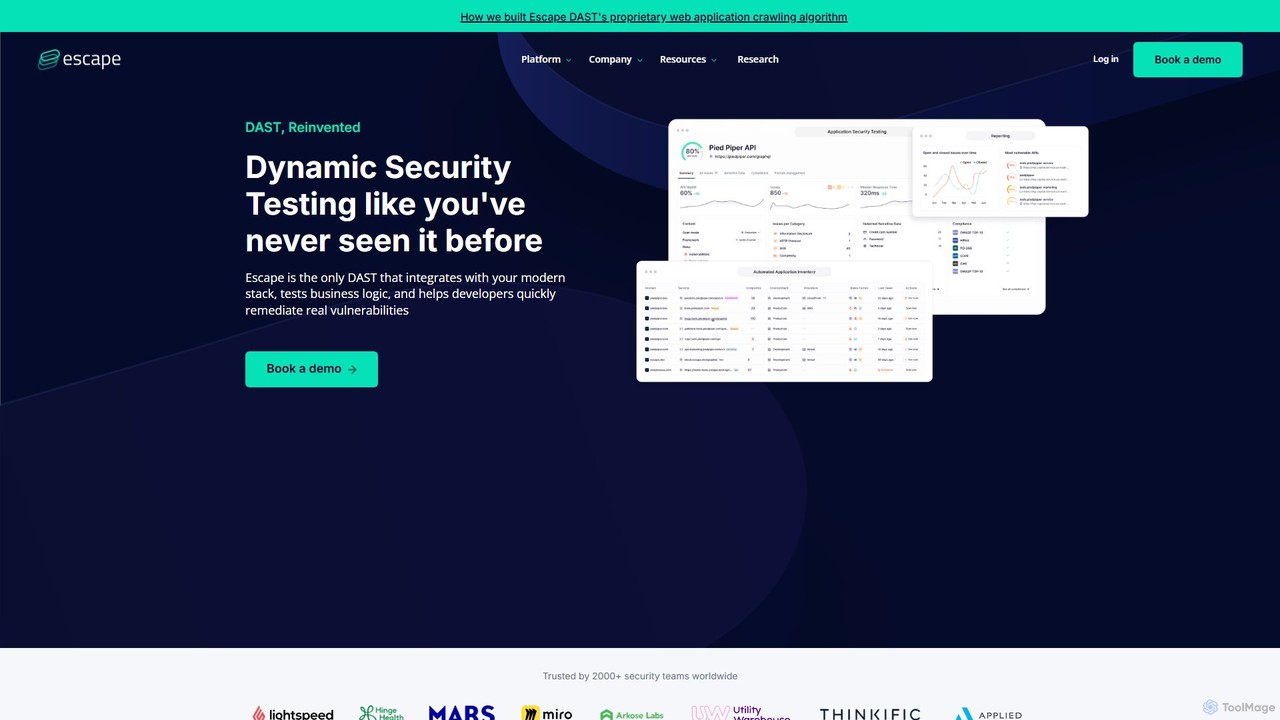
Escape is an AI-powered DAST (Dynamic Application Security Testing) tool specifically designed for modern applications. It focuses on …

37.9K
FindErnest

FindErnest

FindErnest is a technology consultancy that empowers enterprises with innovative solutions. Specializing in AI, cybersecurity, cloud services, and …

6.0K
Netify

Netify

Netify is a network intelligence platform that provides deep visibility into network traffic through Deep Packet Inspection (DPI), …

239.9K

About Cybersecurity

AI Cybersecurity tools are a class of solutions that leverage machine learning and artificial intelligence to proactively detect, analyze, and respond to digital threats. These tools go beyond traditional signature-based methods by analyzing vast amounts of data to identify anomalies, predict attack patterns, and automate security operations. Their primary value lies in significantly reducing response times, identifying previously unknown vulnerabilities, and enhancing the capabilities of human security teams. This makes them crucial for protecting modern IT infrastructures against sophisticated and evolving cyberattacks.

Core Features

  • Predictive Threat Detection: Uses machine learning models to identify and block new malware, ransomware, and phishing attempts before they cause damage.
  • Behavior Analytics (UEBA): Establishes baseline behaviors for users and devices, automatically flagging suspicious deviations that could indicate an insider threat or compromised account.
  • Automated Incident Response: Orchestrates and automates the response to security alerts, such as quarantining affected devices or blocking malicious IPs, without manual intervention.
  • AI-Powered Vulnerability Management: Analyzes and prioritizes system vulnerabilities based on the likelihood of exploitation and potential business impact, allowing teams to focus on critical risks.

Use Cases

These tools are widely adopted in sectors with high-value data, such as finance, healthcare, e-commerce, and government. Security Operations Centers (SOCs) use them for advanced threat hunting and alert triage, while IT departments deploy them for endpoint protection and network security monitoring.

How to Choose

When selecting an AI Cybersecurity tool, consider its detection accuracy (false positive and negative rates), its ability to integrate with your existing security stack (like SIEM and firewalls), the level of automation it provides, and its scalability to handle your organization's data volume and threat landscape.

CybersecurityUse Cases

1

Automated Threat Hunting for SOC Teams

A Security Operations Center (SOC) analyst is tasked with identifying advanced persistent threats (APTs) hidden within terabytes of network logs. Instead of manually writing complex queries, they use an AI Cybersecurity platform. The AI continuously analyzes log data, network traffic, and endpoint activity, automatically correlating subtle events across different systems. It identifies a low-and-slow data exfiltration pattern that would be nearly impossible for a human to spot, allowing the team to neutralize the threat before a major breach occurs.

2

Real-time Phishing and Malware Prevention

A mid-sized e-commerce company needs to protect its employees from sophisticated phishing attacks. They deploy an AI-powered email security gateway. When an email arrives, the AI analyzes not just the sender's reputation but also the linguistic patterns, sense of urgency, and structure of the message. It detects a highly convincing spear-phishing email impersonating the CEO and automatically quarantines it, providing a detailed report on why it was flagged. This prevents a potential financial loss and credential theft without relying on known malicious signatures.

3

Detecting Insider Threats with Behavior Analytics

A financial institution is concerned about data exfiltration by employees. They implement a User and Entity Behavior Analytics (UEBA) tool. The AI establishes a baseline of normal activity for each employee, including login times, data access patterns, and network usage. One day, it flags an accountant who suddenly starts accessing sensitive client folders they've never touched before and attempts to upload a large, encrypted file to a personal cloud storage service late at night. The security team is alerted in real-time, allowing them to investigate and prevent a major data leak.

4

Automating Cloud Security Posture Management

A fast-growing tech startup uses multiple cloud services (AWS, GCP) and struggles to maintain a secure configuration. Their DevOps team uses an AI-powered Cloud Security Posture Management (CSPM) tool. The AI continuously scans their cloud environments against industry benchmarks and best practices. It automatically detects a misconfigured S3 bucket with public read access and, based on predefined policies, either alerts the team with remediation steps or automatically adjusts the permissions to be private. This prevents accidental data exposure without manual, error-prone audits.

5

Prioritizing Vulnerabilities for Patch Management

A large enterprise has thousands of assets and receives hundreds of new vulnerability reports daily. Their security team is overwhelmed. By using an AI-driven vulnerability management tool, they can automatically prioritize which vulnerabilities to patch first. The AI considers not only the CVSS score but also real-world exploitability, threat intelligence data, and the asset's business criticality. It highlights a medium-severity vulnerability on a public-facing server that is being actively exploited in the wild, elevating it above high-severity vulnerabilities on internal, less critical systems. This allows the team to allocate resources effectively and reduce the most significant risks first.

6

Next-Generation Endpoint Protection (NGAV)

A small business without a dedicated security team needs robust protection against ransomware. They replace their traditional, signature-based antivirus with a Next-Generation Antivirus (NGAV) solution. When an employee unknowingly downloads a file containing a brand-new, zero-day ransomware variant, the NGAV's AI model analyzes the file's behavior in real-time. It detects malicious actions like rapid file encryption and attempts to delete shadow copies, immediately terminating the process and rolling back any changes. The attack is stopped before any data is lost, a feat impossible for traditional AV that wouldn't have a signature for this new threat.

CybersecurityFrequently Asked Questions