ToolMage
Sign in

Best 1 Consulting AI tools for It

Popular Consulting AI tools in It include Tredence, helping you work more efficiently.

Tredence

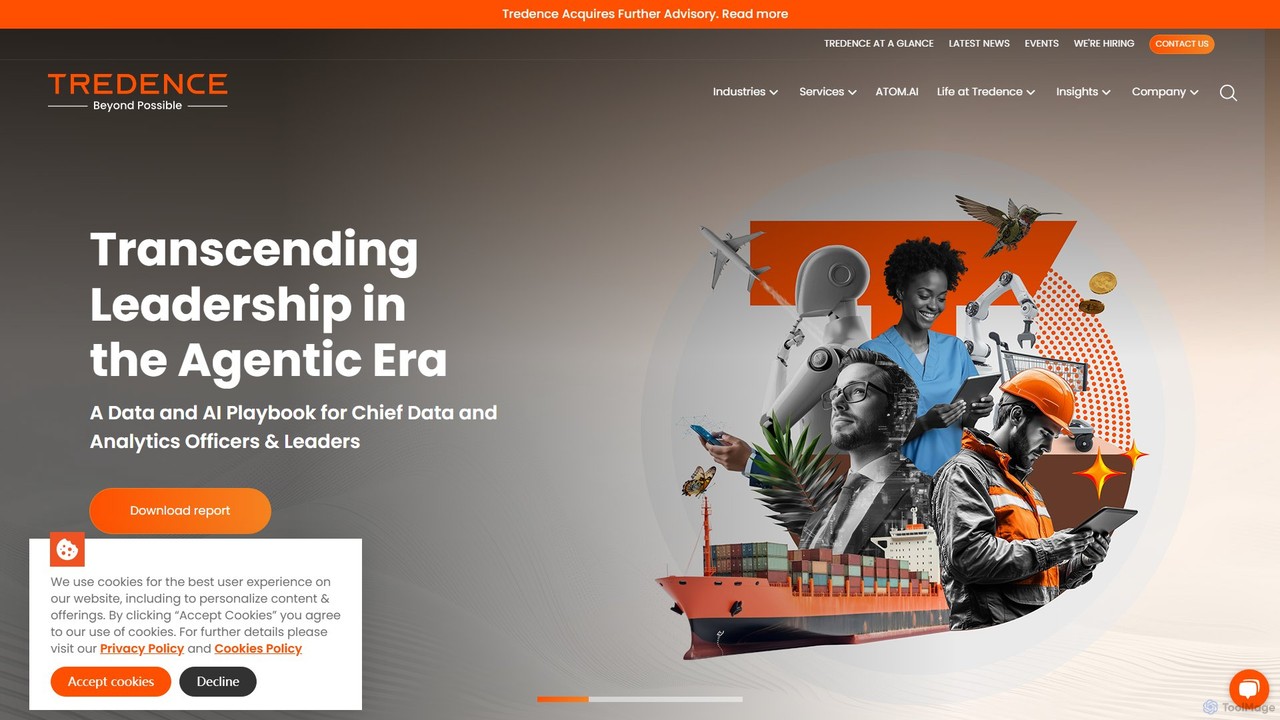
Tredence is a leading data science and AI solutions company that helps enterprises navigate their journey from insights to action. They provide custom, full-stack AI/ML solutions, AI consulting, and data engineering services across various industries, including retail, CPG, healthcare, and finance. By leveraging advanced analytics, Tredence empowers businesses to optimize supply chains, enhance customer experiences, and drive significant growth and efficiency.

Data Analytics
Visits 67.7KFavorites 96Likes 99

About Consulting

AI Consulting tools are a class of software that leverage artificial intelligence to provide data-driven business advice and strategic recommendations. They analyze vast amounts of company data using machine learning algorithms to uncover insights and suggest actionable solutions, effectively acting as a digital advisor. These tools empower businesses to make smarter decisions, optimize operations, and identify growth opportunities without the high cost of traditional consulting firms. Their key advantage lies in the ability to process information at scale and provide unbiased, real-time analysis.

Core Features

  • Automated Data Analysis: Ingests and processes business data to automatically identify trends, patterns, and anomalies.
  • Recommendation Engine: Generates specific, actionable advice for strategy, marketing, operations, and finance.
  • Predictive Forecasting: Models future outcomes based on historical data and simulated scenarios to support decision-making.
  • Natural Language Interaction: Allows users to ask complex business questions in plain language and receive data-backed answers.
  • Performance Dashboards: Creates interactive visualizations and reports to track key metrics and progress on recommendations.

Use Cases

These tools are valuable across various industries for roles like business strategists, marketing managers, and operations directors. For instance, a retail company might use an AI consultant to optimize pricing strategies based on competitor data and demand forecasts. A tech startup could leverage it to analyze user behavior and identify key features for its product roadmap.

How to Choose

When selecting an AI Consulting tool, evaluate its data integration capabilities with your existing systems (CRM, ERP). Assess the specialization of its analytical models—some are better for finance, others for marketing. Consider the user interface's intuitiveness and the level of customization available for reports and dashboards. Finally, review the pricing model, whether it's based on data volume, users, or features.

Featured tool rankings

Consulting use cases

1

Market Entry Strategy Analysis

A startup's leadership team uses an AI consulting tool to evaluate potential new markets. By uploading industry reports, competitor data, and economic indicators, the tool analyzes market size, growth potential, and competitive saturation. The AI generates a ranked list of target markets, identifies key risks, and suggests tailored go-to-market strategies, including pricing and initial marketing channels. This process reduces weeks of manual research into a matter of hours, providing a data-backed foundation for a critical expansion decision.

2

Optimizing Manufacturing Operations

An operations manager at a manufacturing plant connects their production line sensor data and ERP system to an AI consulting platform. The AI continuously monitors metrics like machine uptime, output rates, and material waste. It identifies a recurring bottleneck in the packaging stage that causes downstream delays. The tool recommends a specific adjustment to the conveyor belt speed and a change in shift scheduling, predicting a 15% increase in overall throughput. This provides a clear, actionable plan to improve efficiency.

3

Enhancing Digital Marketing ROI

A digital marketing team struggling with ad spend efficiency feeds their campaign data from Google Ads and Facebook into an AI consultant. The tool analyzes performance across different demographics, ad creatives, and platforms. It discovers that a specific audience segment on Instagram has a high conversion rate but is underfunded. The AI recommends reallocating 20% of the budget from a low-performing Google Search campaign to this Instagram segment, providing a clear forecast for the expected lift in return on investment (ROI).

4

Financial Health Diagnosis for SMEs

The owner of a small to medium-sized enterprise (SME) links their accounting software (like QuickBooks) to an AI consulting tool. The AI analyzes cash flow, profitability, and expense reports. It flags an unusually high 'miscellaneous' spending category and identifies that subscription costs for unused software have been steadily increasing. The tool provides a dashboard visualizing these trends and recommends specific subscriptions to cancel, immediately improving the company's monthly cash flow and profitability.

5

Proactive Customer Churn Prevention

A customer success manager for a SaaS company uses an AI consulting tool to predict churn. The platform integrates with their CRM and product usage logs. The AI builds a model that identifies patterns in user behavior—such as a drop in login frequency or disuse of key features—that correlate with cancellations. It then automatically generates a list of 'at-risk' customers and suggests personalized outreach campaigns or training offers to re-engage them, helping the team act proactively before a customer decides to leave.

6

Automated Competitor Benchmarking

A product manager needs to understand how their product stacks up against the competition. They use an AI consulting tool that scrapes public data, including pricing pages, feature lists, and customer reviews for key competitors. The AI synthesizes this information into a comprehensive competitive matrix, highlighting feature gaps and pricing discrepancies. It also analyzes review sentiment to identify competitors' weaknesses that can be exploited in marketing messages, providing strategic intelligence on demand.

Consulting FAQ

What are AI Consulting tools?

AI Consulting tools are software platforms that use artificial intelligence to provide data-driven business analysis and strategic advice. They function like digital consultants by analyzing your company's data to identify opportunities, pinpoint problems, and recommend specific actions. Unlike simple analytics dashboards, they go a step further by generating strategic insights and actionable recommendations for areas like marketing, finance, and operations.

How do AI Consulting tools differ from human consultants?

The key difference lies in scale, speed, and focus. AI Consulting tools excel at processing massive datasets 24/7 to find patterns that humans might miss, delivering insights in real-time. Human consultants provide contextual understanding, creativity, and implementation support that AI cannot. AI tools are best for data-intensive analysis and ongoing monitoring, while human consultants are better for complex, nuanced strategic planning and change management. Many businesses use them to complement each other.

How do I choose the right AI Consulting tool?

To choose the right tool, consider these factors:

  • Data Connectivity: Ensure it can easily integrate with your existing data sources (e.g., CRM, ERP, marketing platforms).
  • Industry Specialization: Some tools are tailored for specific industries like e-commerce or finance. Choose one that aligns with your business model.
  • Type of Analysis: Determine if you need strategic recommendations, operational efficiency analysis, or financial forecasting, and select a tool with strong capabilities in that area.
  • Usability: Look for an intuitive interface and clear, understandable reports that don't require a data scientist to interpret.
What kind of data is needed to use an AI Consulting tool?

The effectiveness of an AI Consulting tool depends heavily on the quality and quantity of data you provide. Common data sources include:

  • Financial Data: Revenue, expenses, and cash flow statements from accounting software.
  • Sales & Marketing Data: Customer information from CRMs, campaign performance from ad platforms, and website analytics.
  • Operational Data: Supply chain logs, production metrics, or project management system data.

Generally, the more comprehensive and clean the data, the more accurate and valuable the insights will be.

Who can benefit from using AI Consulting tools?

A wide range of users can benefit. Business leaders and executives use them for high-level strategic planning and performance monitoring. Department managers (e.g., marketing, operations, finance) leverage them for tactical decision-making and process optimization. Small and medium-sized businesses (SMEs) find them particularly valuable as an affordable alternative to hiring expensive consulting firms, gaining access to enterprise-level strategic insights.