It Best in category 2 results Network Monitoring AI Tool

Popular AI tools in the Network Monitoring field of It include SolarWinds、Quantum Network Monitor, etc., helping you quickly improve efficiency.

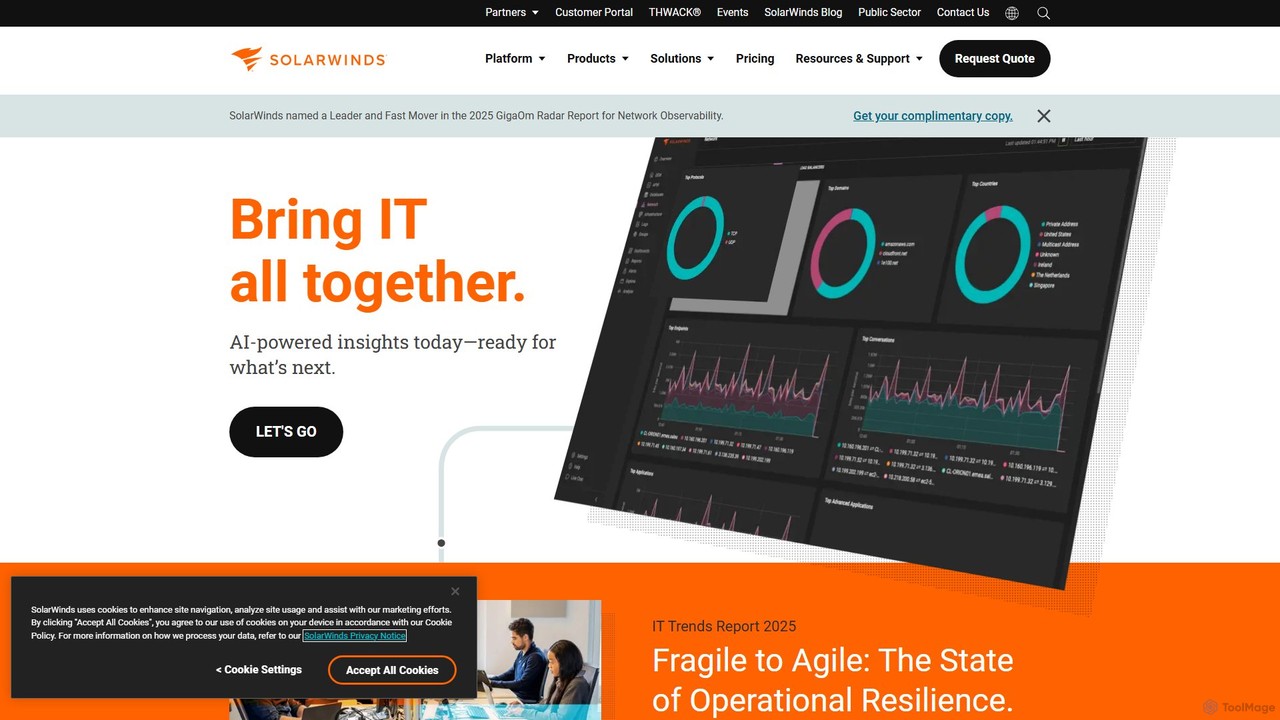
SolarWinds

SolarWinds

SolarWinds offers a comprehensive suite of IT management tools powered by AI for full-stack observability, database performance monitoring, …

882.5K
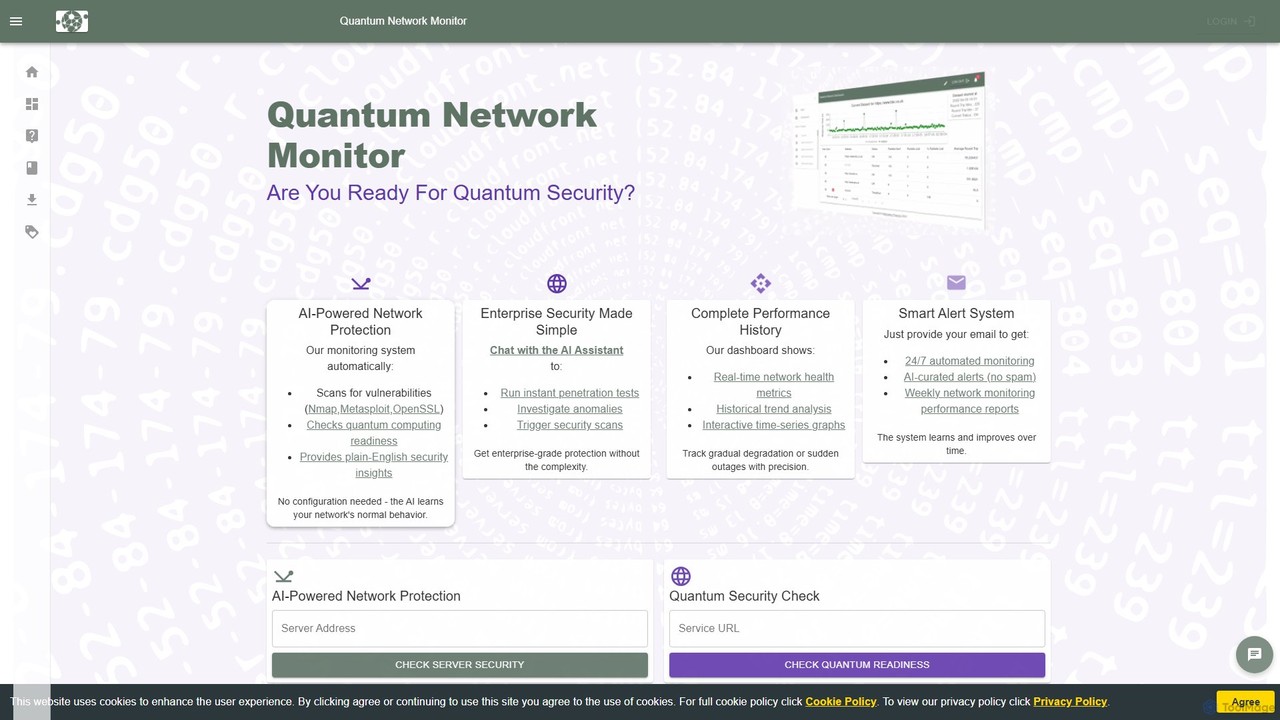
Quantum Network Monitor

Quantum Network Monitor

An AI-powered network security and monitoring platform that automates vulnerability scanning, provides quantum readiness checks, and offers an …

5.0K

About Network Monitoring

Network Monitoring tools are AI-powered solutions designed to continuously observe and analyze network performance, security, and availability. They leverage advanced algorithms to detect anomalies, predict potential issues, and provide real-time insights into network health. These tools are crucial for maintaining robust IT infrastructure and ensuring seamless digital operations within the broader IT management landscape.

Core Features

  • Real-time Traffic Analysis: Monitors data flow, bandwidth usage, and packet activity across the network.
  • Anomaly Detection: Uses machine learning to identify unusual patterns that may indicate security breaches or performance issues.
  • Performance Optimization: Pinpoints bottlenecks, latency issues, and resource saturation to suggest improvements.
  • Security Threat Identification: Detects suspicious network behavior, unauthorized access attempts, and malware propagation.
  • Alerting & Reporting: Provides customizable alerts for critical events and generates comprehensive performance reports.

Applicable Scenarios

Network monitoring tools are indispensable for IT administrators, network engineers, and cybersecurity teams. They are used in data centers to ensure server uptime, in enterprise networks to manage bandwidth and user experience, and in cloud environments to track resource utilization and security posture. These tools help maintain operational continuity and protect sensitive data.

How to Choose

When selecting network monitoring tools, consider their scalability to handle your network's size and growth, integration capabilities with existing IT systems (like SIEM or ITSM), and the depth of their AI-driven analytics. Evaluate the customization options for alerts and dashboards, the clarity of their reporting, and the level of support for various network devices and protocols. Pricing models and ease of deployment are also key factors.

Network MonitoringUse Cases

1

Proactive Identification of Network Bottlenecks

IT administrators utilize network monitoring tools to continuously analyze data traffic patterns and identify potential bottlenecks before they impact user experience. By leveraging AI-driven analytics, these tools can pinpoint overloaded servers, congested links, or inefficient routing paths, allowing for timely intervention and optimization. This proactive approach prevents service disruptions and ensures consistent network performance, crucial for business continuity.

2

Enhanced Network Security Posture

Cybersecurity teams deploy network monitoring tools to detect and respond to security threats in real-time. These tools use AI to analyze network traffic for unusual activities, such as unauthorized data exfiltration, suspicious login attempts, or malware communication. By quickly identifying these anomalies, organizations can isolate compromised systems, mitigate attacks, and strengthen their overall security posture, protecting sensitive assets from cyber threats.

3

Optimizing Cloud Resource Utilization

Cloud architects and DevOps engineers leverage network monitoring to gain visibility into their cloud infrastructure's network performance and resource consumption. These tools help track bandwidth usage, latency between cloud services, and data transfer costs. By identifying underutilized or over-provisioned resources, teams can optimize cloud spending, improve application responsiveness, and ensure efficient operation of their distributed cloud environments.

4

Ensuring Compliance and Auditing

Compliance officers and auditors use network monitoring tools to ensure that network activities adhere to regulatory requirements and internal policies. These tools provide detailed logs and audit trails of network access, data transfers, and configuration changes. This documentation is vital for demonstrating compliance with standards like GDPR, HIPAA, or PCI DSS, and for forensic analysis in case of security incidents, helping organizations avoid penalties and maintain trust.

5

Capacity Planning and Resource Allocation

Network engineers and IT managers leverage network monitoring data for strategic capacity planning. By analyzing historical trends in bandwidth usage, device performance, and traffic volume, these tools help predict future resource needs. This enables organizations to make informed decisions about upgrading infrastructure, allocating resources efficiently, and preventing performance degradation as their network demands grow, ensuring a scalable and resilient IT environment.

6

Troubleshooting and Root Cause Analysis

Help desk and IT support teams rely on network monitoring tools for efficient troubleshooting and root cause analysis. When users report connectivity issues or slow application performance, these tools provide granular data on network device status, packet loss, and latency. AI-driven insights can quickly pinpoint the exact component or configuration causing the problem, drastically reducing mean time to resolution (MTTR) and improving user satisfaction.

Network MonitoringFrequently Asked Questions