It & Security Best in category 1 results Automation AI Tool

Popular AI tools in the Automation field of It & Security include Mindflow, etc., helping you quickly improve efficiency.

Mindflow

Mindflow

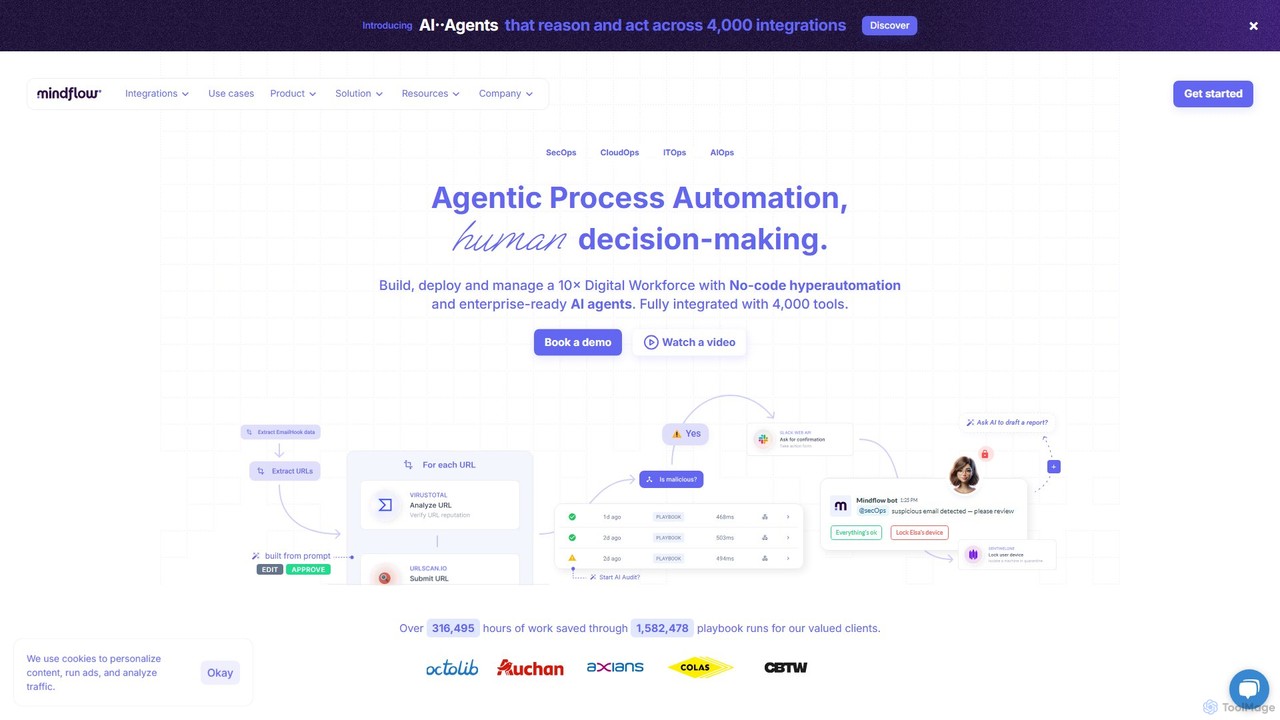
Mindflow is a Gen-AI hyperautomation platform for enterprise IT and cybersecurity teams. It combines a no-code engine with …

23.1K

About Automation

AI Automation tools for IT & Security are a class of software designed to autonomously manage, execute, and orchestrate complex technical operations. Leveraging machine learning, API integrations, and predefined playbooks, these tools monitor systems, detect anomalies, and trigger workflows without direct human intervention. Their primary value lies in enhancing system reliability, accelerating incident response, and enforcing security policies at scale. Unlike traditional scripting, AI-powered automation can adapt to new threats and changing system conditions by making decisions based on learned patterns.

Core Features

  • Workflow Orchestration: Design and execute multi-step, cross-system processes for tasks like incident response or infrastructure provisioning.
  • Automated Remediation: Automatically execute predefined actions to resolve issues, such as restarting services, patching vulnerabilities, or blocking malicious IPs.
  • Intelligent Alert Triage: Analyze and correlate alerts from various monitoring tools to filter false positives and prioritize genuine threats.
  • Policy-based Enforcement: Continuously monitor system configurations and automatically enforce security and compliance policies (e.g., CIS, GDPR).
  • Infrastructure as Code (IaC) Management: Automate the provisioning, configuration, and management of cloud and on-premise infrastructure.

Use Cases

These tools are essential for Security Operations Centers (SOCs), IT Operations (ITOps), and DevOps teams. Common applications include Security Orchestration, Automation, and Response (SOAR) to handle security threats, automated cloud resource deployment and scaling, and proactive system monitoring with self-healing capabilities to maintain uptime.

How to Choose

When selecting an IT & Security Automation tool, consider its integration capabilities with your existing tech stack (e.g., SIEM, cloud providers, ticketing systems). Evaluate its scalability to handle your volume of events and workflows. Assess the flexibility of its playbook editor (low-code vs. script-based) and ensure it provides robust security features like access control and detailed audit logs.

AutomationUse Cases

1

Automated Security Incident Response

A Security Operations (SecOps) analyst uses an automation platform to handle phishing alerts. When an email is reported, the tool automatically extracts indicators of compromise (IOCs) like URLs and file hashes. It then queries threat intelligence feeds to assess their maliciousness. If confirmed, the platform initiates a playbook that blocks the URL at the firewall, searches for the malicious email across all inboxes and deletes it, and isolates any endpoint where the file was opened. This reduces the response time from hours to minutes, containing threats before they spread.

2

Automated Cloud Infrastructure Provisioning

A DevOps engineer needs to deploy a new microservice. Instead of manually configuring virtual machines, networks, and load balancers, they define the required infrastructure in a configuration file (Infrastructure as Code). The automation tool parses this file, communicates with the cloud provider's API (e.g., AWS, Azure), and provisions all necessary resources in the correct order. It can also automatically configure monitoring, logging, and apply security group policies, ensuring consistency and reducing deployment time from days to under an hour.

3

Automated System Patching and Compliance

An IT administrator is responsible for maintaining hundreds of servers. An automation tool continuously scans the entire server fleet for missing security patches and configuration drifts from a baseline standard (e.g., CIS Benchmarks). When a critical vulnerability is announced, the admin creates a job to deploy the patch. The tool intelligently rolls out the patch to a test group first, verifies system stability, and then proceeds with the production fleet during a scheduled maintenance window. This ensures timely patching, reduces security risks, and provides auditable proof of compliance.

4

Automated User Onboarding and Offboarding

An HR system triggers a workflow when a new employee is hired. The automation tool receives this trigger and creates user accounts in Active Directory, Office 365, Slack, and other required applications. It assigns appropriate permissions based on the employee's role and department. Conversely, when an employee resigns, a similar offboarding workflow is triggered. The tool immediately disables all accounts, revokes access tokens, archives data, and transfers ownership of files, ensuring a secure and consistent process that prevents unauthorized access from former employees.

5

Proactive Network Performance Monitoring and Healing

A Network Operations Center (NOC) engineer sets up an automation workflow to monitor network latency and packet loss. When the tool detects that latency to a critical application server exceeds a predefined threshold, it automatically initiates a series of diagnostic checks. It runs traceroutes, checks device CPU load, and analyzes interface errors. Based on the findings, it might automatically restart a problematic router interface or reroute traffic through a secondary link, often resolving the issue before users even notice a performance degradation.

6

Automated Compliance Auditing and Reporting

A compliance officer uses an automation tool to ensure the organization adheres to industry standards like PCI DSS or HIPAA. The tool is configured with policies that reflect these standards. It runs scheduled scans across the entire IT environment—cloud accounts, servers, and databases—to check for misconfigurations, such as publicly accessible storage buckets or unencrypted data. It automatically generates detailed reports highlighting non-compliant resources and can even create tickets for the responsible teams to remediate the findings, simplifying the audit process.

AutomationFrequently Asked Questions