Metoro
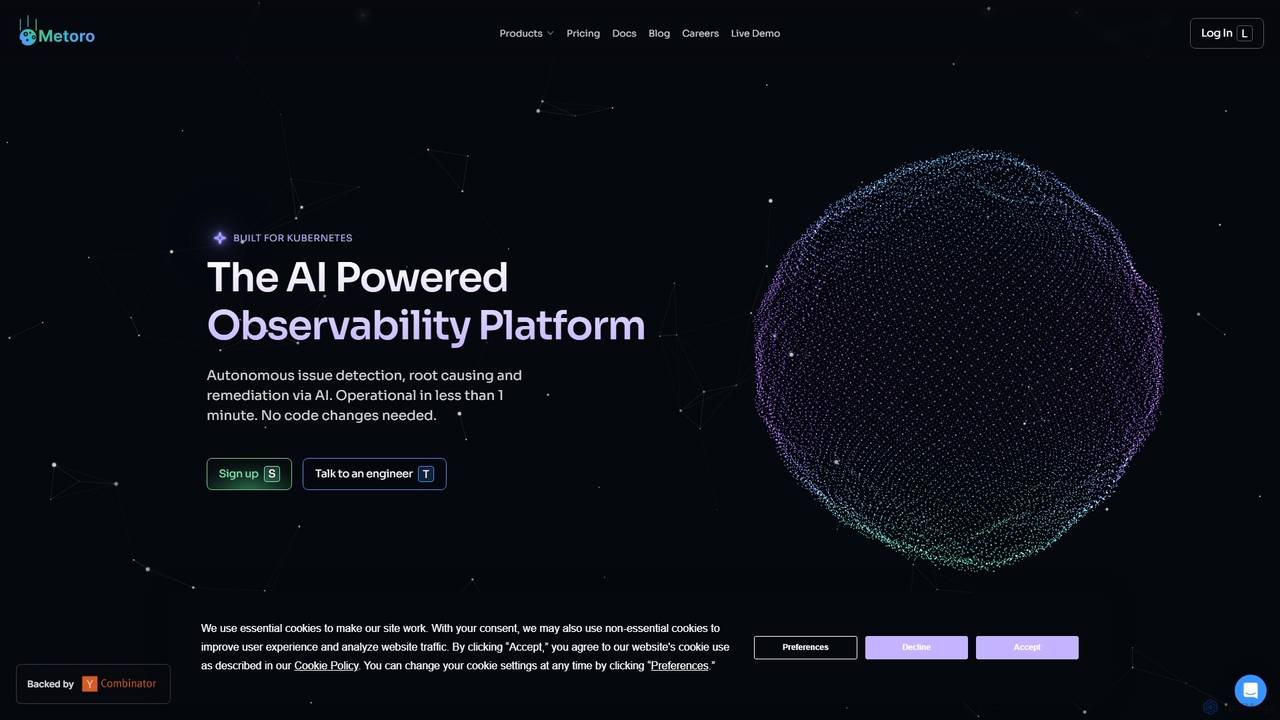
Metoro is an AI-powered observability platform designed for Kubernetes. It uses eBPF technology for zero-instrumentation monitoring, enabling autonomous …
Metoro is an AI-powered observability platform designed for Kubernetes. It uses eBPF technology for zero-instrumentation monitoring, enabling autonomous issue detection, root cause analysis, and automated code fixes via pull requests. Operational in under a minute, it offers a comprehensive and cost-effective alternative to traditional monitoring tools.
PredictOPs
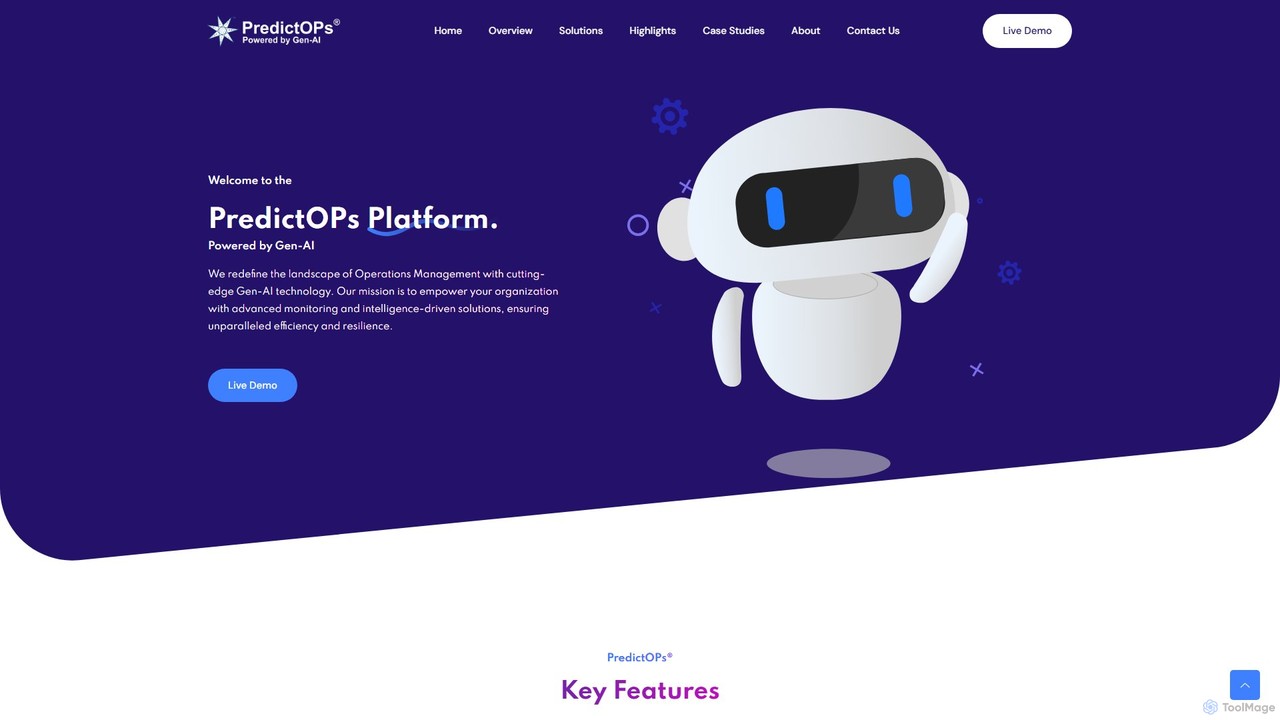
PredictOPs is a cutting-edge AIOps platform that leverages Generative AI to revolutionize IT operations. It provides advanced anomaly …
PredictOPs is a cutting-edge AIOps platform that leverages Generative AI to revolutionize IT operations. It provides advanced anomaly detection, log data monitoring, alert correlation, and data visualization. This enables organizations to proactively identify and resolve potential issues, optimize performance, and reduce operational downtime across various sectors like banking, healthcare, and telecom.
Eyer
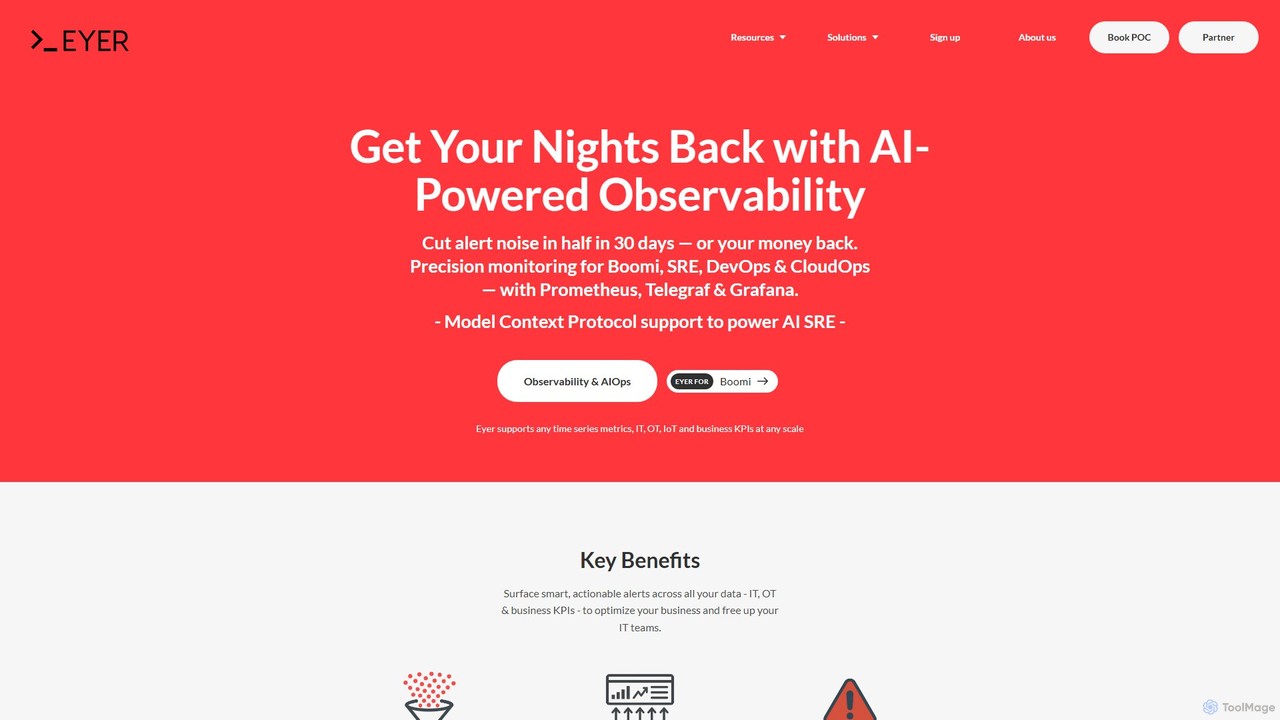
Eyer is a headless AIOps and observability platform that uses AI to analyze time-series data from IT, OT, …
Eyer is a headless AIOps and observability platform that uses AI to analyze time-series data from IT, OT, and business systems. It delivers smart, actionable alerts to reduce noise by up to 80%, enabling teams to proactively identify and resolve issues. It integrates seamlessly with existing tools like Grafana and Boomi.
PagerDuty
PagerDuty is an AI-first operations platform designed for real-time incident management and automation. It empowers DevOps, IT, and …
PagerDuty is an AI-first operations platform designed for real-time incident management and automation. It empowers DevOps, IT, and security teams to detect, triage, and resolve critical incidents faster. By leveraging AIOps and automation, PagerDuty helps reduce downtime, increase team productivity, and protect customer experiences, acting as a central hub for modern digital operations.
About Monitoring
Monitoring AI tools are advanced solutions that leverage artificial intelligence and machine learning to observe, analyze, and manage the performance, health, and security of IT systems, applications, and networks. These tools go beyond traditional rule-based monitoring by intelligently detecting anomalies, predicting potential issues, and providing deep, actionable insights into complex operational data. They are essential for maintaining system reliability, optimizing resource utilization, and proactively identifying security threats, thereby strengthening the overall resilience within the broader IT & Security landscape.
Core Features
- Anomaly Detection: Automatically identifies unusual patterns in system behavior, network traffic, or application performance that deviate significantly from established baselines, often in real-time.
- Predictive Analytics: Forecasts future system states, resource needs, and potential failures by analyzing historical data and trends, enabling organizations to take proactive measures before incidents occur.
- Root Cause Analysis: Utilizes AI to correlate events across diverse data sources, logs, and metrics, rapidly pinpointing the underlying causes of complex incidents and outages, reducing mean time to resolution (MTTR).
- Automated Alerting & Prioritization: Intelligently filters alert noise, aggregates related events, prioritizes critical issues based on impact, and routes notifications to the appropriate teams through preferred channels.
- Performance Optimization: Continuously analyzes system and application performance data, identifies bottlenecks, and suggests data-driven recommendations to improve the efficiency, responsiveness, and scalability of IT infrastructure.
Applicable Scenarios
These tools are widely adopted across various domains including IT operations, DevOps, and cybersecurity. For instance, IT operations teams use them to ensure critical application uptime, monitor infrastructure health, and manage service level agreements. DevOps and SRE teams leverage AI monitoring for continuous performance validation in CI/CD pipelines and to quickly diagnose issues in production environments. Furthermore, Security Operations Centers (SOCs) deploy these tools for real-time threat detection, identifying suspicious activities, and accelerating incident response within complex enterprise networks.
How to Choose
When selecting an AI monitoring tool, consider its comprehensive scope of coverage, including infrastructure, applications, network, and security aspects. Evaluate the depth of its AI/ML capabilities for accurate anomaly detection, robust predictive analytics, and efficient root cause analysis. Crucially, assess its integration capabilities with your existing IT ecosystem, such as ticketing systems, cloud platforms, and other observability tools. Also, examine its scalability to handle your growing data volume, the clarity and customizability of its alerting and reporting features, and the ease of configuring dashboards to fit your specific operational needs and compliance requirements.

MonitoringUse Cases
Proactive IT Infrastructure Health Monitoring
An IT operations manager uses an AI monitoring tool to continuously observe the health and performance of servers, databases, and network devices across hybrid cloud environments. The AI automatically detects subtle anomalies in resource utilization or network latency that might indicate an impending hardware failure or service degradation, triggering an alert before users are impacted. This allows the team to perform preventative maintenance, ensuring high availability and reducing unplanned downtime by 30%.
Real-time Application Performance Management (APM)
A DevOps engineer deploys AI monitoring to gain deep visibility into their microservices-based application. The tool tracks key performance indicators (KPIs) like response times, error rates, and transaction throughput. When a new code deployment causes a performance bottleneck in a specific service, the AI quickly identifies the affected component and correlates it with recent changes, enabling the engineer to roll back or fix the issue within minutes, minimizing user impact.
Advanced Cybersecurity Threat Detection
A Security Operations Center (SOC) analyst utilizes AI monitoring to sift through vast volumes of security logs and network traffic data. The AI identifies sophisticated attack patterns, such as unusual login attempts from geographically disparate locations or abnormal data exfiltration attempts, that would be missed by traditional signature-based systems. This allows the analyst to prioritize and investigate genuine threats more effectively, reducing false positives by 60% and accelerating incident response.
Optimizing Cloud Resource Utilization and Costs
A cloud architect employs AI monitoring to analyze resource consumption patterns across their public cloud infrastructure. The AI identifies underutilized virtual machines or over-provisioned databases, suggesting optimal scaling adjustments or instance types. This proactive optimization helps the organization reduce unnecessary cloud spending by 20% while ensuring adequate resources are available during peak demand, balancing performance and cost efficiency.
Predictive Maintenance for Industrial IoT Devices
An industrial plant operator integrates AI monitoring with their IoT sensors on critical machinery. The AI continuously analyzes sensor data (temperature, vibration, pressure) to detect subtle deviations from normal operating parameters. By predicting potential equipment failures days or weeks in advance, the operator can schedule maintenance proactively, avoiding costly breakdowns, extending equipment lifespan, and improving operational safety.
User Experience Monitoring and Anomaly Detection
A product manager uses AI monitoring to track real user interactions and application performance from an end-user perspective. The AI identifies sudden drops in page load times or increases in error rates for specific user segments or geographic regions. This allows the product team to quickly pinpoint and address issues impacting user satisfaction, ensuring a smooth and consistent experience for their customer base.