
It & Security Best in category 1 results Cloud Management AI Tool

Popular AI tools in the Cloud Management field of It & Security include Middleware, etc., helping you quickly improve efficiency.

Middleware

Middleware

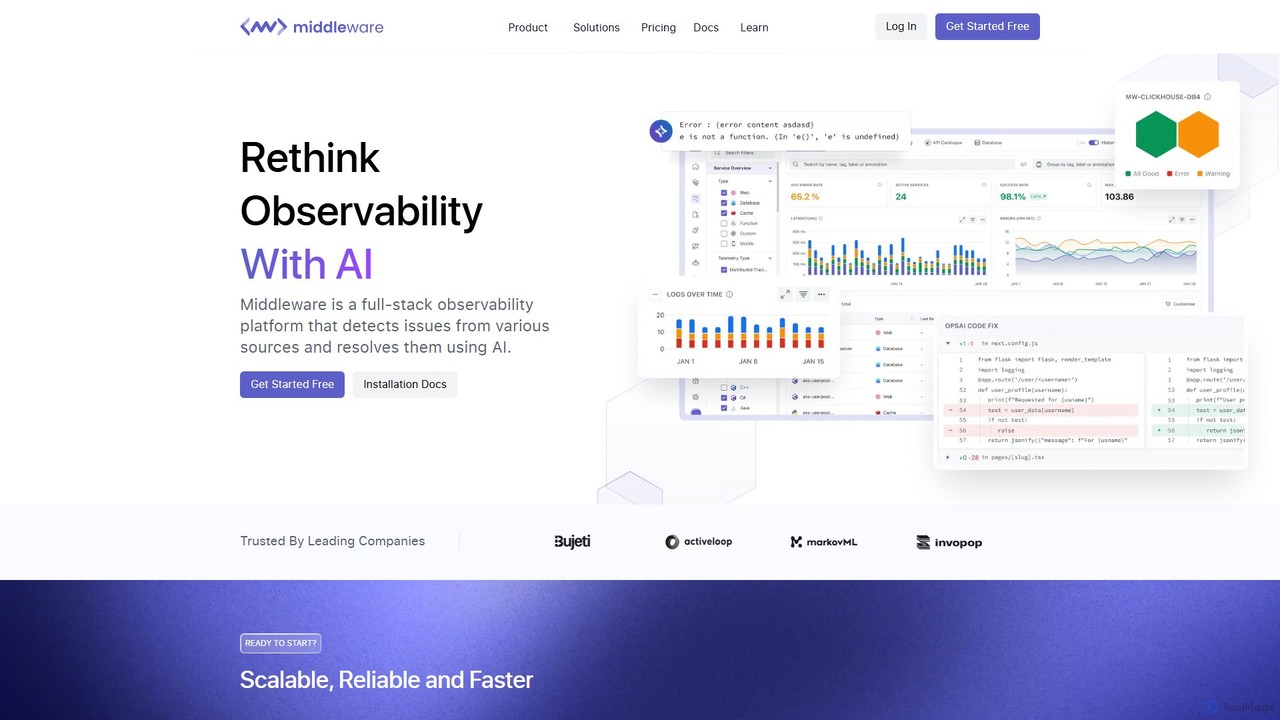
Middleware is an AI-powered, full-stack cloud observability platform designed to modernize IT infrastructure. It unifies logs, metrics, traces, …

55.8K

About Cloud Management

Cloud Management tools are AI-powered solutions designed to oversee, optimize, and automate operations across various cloud environments. These platforms leverage advanced algorithms to provide comprehensive visibility, control, and efficiency for cloud resources, services, and applications. They enable organizations to effectively manage costs, enhance performance, ensure security, and maintain compliance in complex multi-cloud or hybrid cloud infrastructures.

Core Features

  • Cost Optimization: Analyzes cloud spending, identifies waste, and recommends cost-saving strategies like rightsizing and reserved instances.
  • Performance Monitoring: Tracks resource utilization, application performance, and network latency to ensure optimal operation and identify bottlenecks.
  • Security & Compliance: Enforces security policies, detects vulnerabilities, monitors access, and ensures adherence to regulatory standards.
  • Resource Automation: Automates provisioning, scaling, patching, and decommissioning of cloud resources based on predefined rules or AI insights.
  • Multi-Cloud Governance: Provides a unified dashboard and policy enforcement across different cloud providers for consistent management.

Applicable Scenarios

DevOps teams utilize these tools to streamline CI/CD pipelines and automate infrastructure provisioning. IT operations managers rely on them for real-time monitoring and incident response across their cloud estate. FinOps specialists leverage their capabilities to gain granular insights into cloud spending and implement cost-saving measures, ensuring financial accountability and efficiency.

How to Choose

When selecting a Cloud Management tool, consider its compatibility with your existing cloud providers (multi-cloud support), the depth of its cost analysis and optimization features, and its automation capabilities for routine tasks. Evaluate its security posture management and compliance reporting, as well as its integration with other IT and security tools in your ecosystem.

Cloud ManagementUse Cases

1

Optimizing Cloud Spending Across Departments

For finance and IT leaders, cloud management tools provide granular visibility into departmental cloud consumption. By analyzing usage patterns and identifying idle resources, these tools automatically recommend or implement rightsizing, schedule shutdowns for non-production environments, and suggest optimal purchasing models (e.g., reserved instances), leading to significant cost reductions and improved budget predictability.

2

Automating Multi-Cloud Resource Provisioning

DevOps engineers can use cloud management platforms to define infrastructure-as-code templates that automatically provision resources across AWS, Azure, and GCP. This ensures consistent environments for development, testing, and production, reduces manual errors, and accelerates deployment cycles, allowing teams to focus on innovation rather than infrastructure setup.

3

Enhancing Cloud Security Posture

Security teams leverage cloud management tools to continuously monitor cloud environments for misconfigurations, policy violations, and potential vulnerabilities. These tools can automatically detect non-compliant resources, alert administrators to suspicious activities, and even remediate common security issues, strengthening the overall security posture and reducing attack surface.

4

Real-time Performance Monitoring and Alerting

Site Reliability Engineers (SREs) and IT operations personnel use these tools to gain real-time insights into application performance, resource utilization, and network health across their cloud infrastructure. Automated alerts for performance degradation or resource exhaustion enable proactive issue resolution, minimizing downtime and ensuring high availability for critical services.

5

Ensuring Regulatory Compliance in the Cloud

Compliance officers and auditors utilize cloud management solutions to demonstrate adherence to industry regulations like GDPR, HIPAA, or SOC 2. The tools provide automated compliance checks, generate detailed audit trails, and offer reporting features that highlight compliant and non-compliant resources, simplifying the auditing process and reducing compliance risks.

6

Streamlining Cloud Governance and Policy Enforcement

Enterprise architects and cloud administrators implement cloud governance policies through these platforms. This includes defining rules for resource tagging, access control, data residency, and budget limits. The tools automatically enforce these policies across all cloud accounts, preventing shadow IT, ensuring resource consistency, and maintaining organizational standards.

Cloud ManagementFrequently Asked Questions