
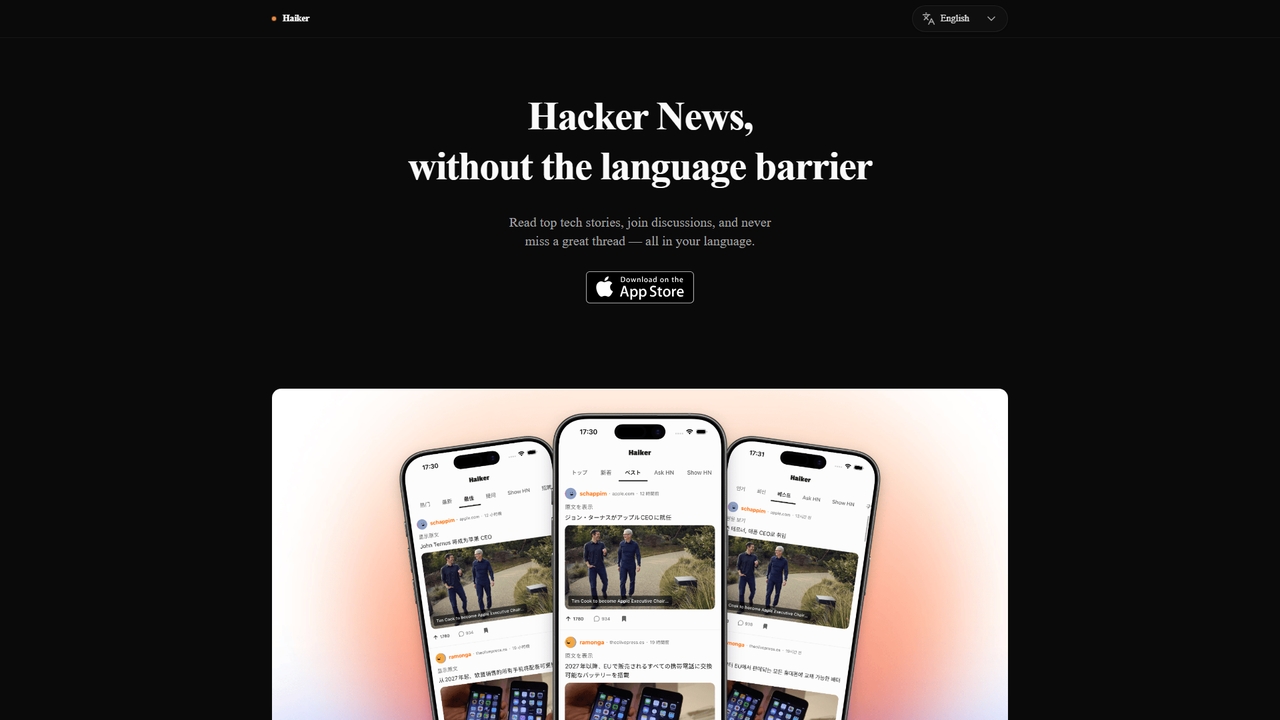
Best 4 Reading AI tools for News
Popular Reading AI tools in News include Haiker, gettldr, SkimIt.ai, and iBrief, helping you work more efficiently.
Free
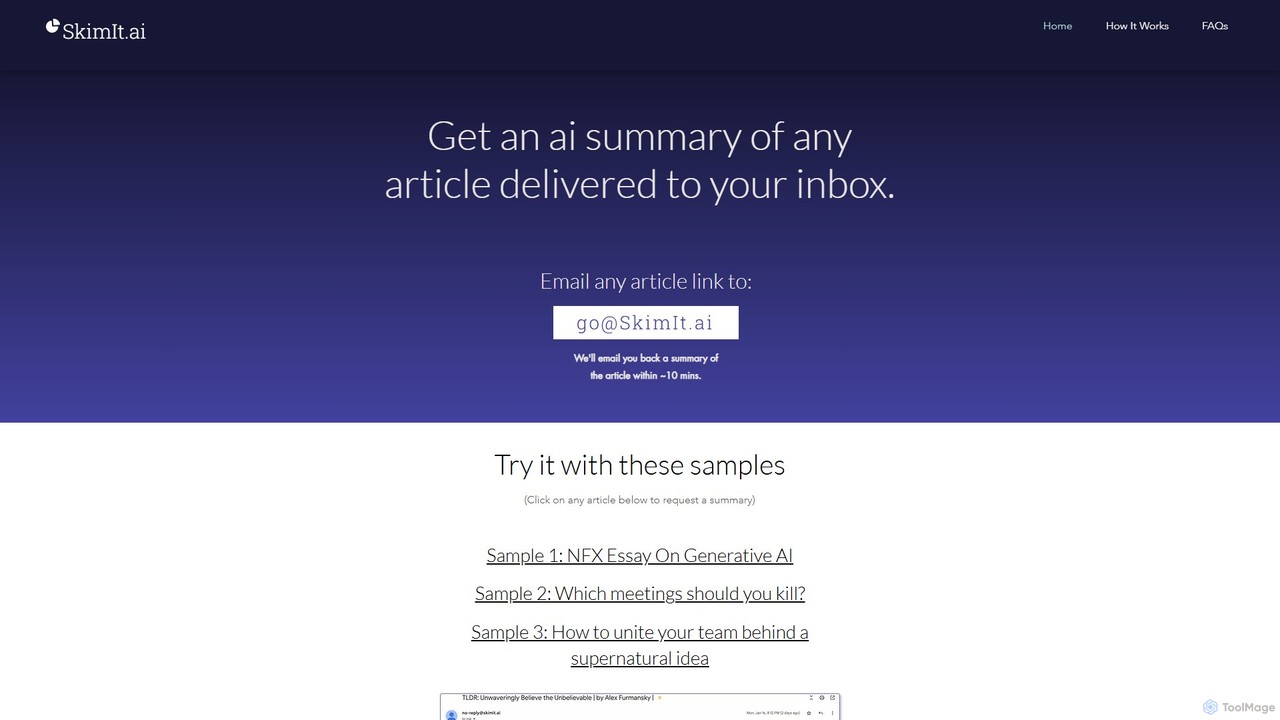
SkimIt.ai
SkimIt.ai is a free and simple AI tool that delivers summaries of any web article directly to your email inbox. Just email an article link to [email protected], and you'll receive a concise, AI-generated summary in about 10 minutes. It's the perfect way to stay informed without the time commitment of reading full articles.
ResearchVisits 10.2KFavorites 137Likes 125
Freemium
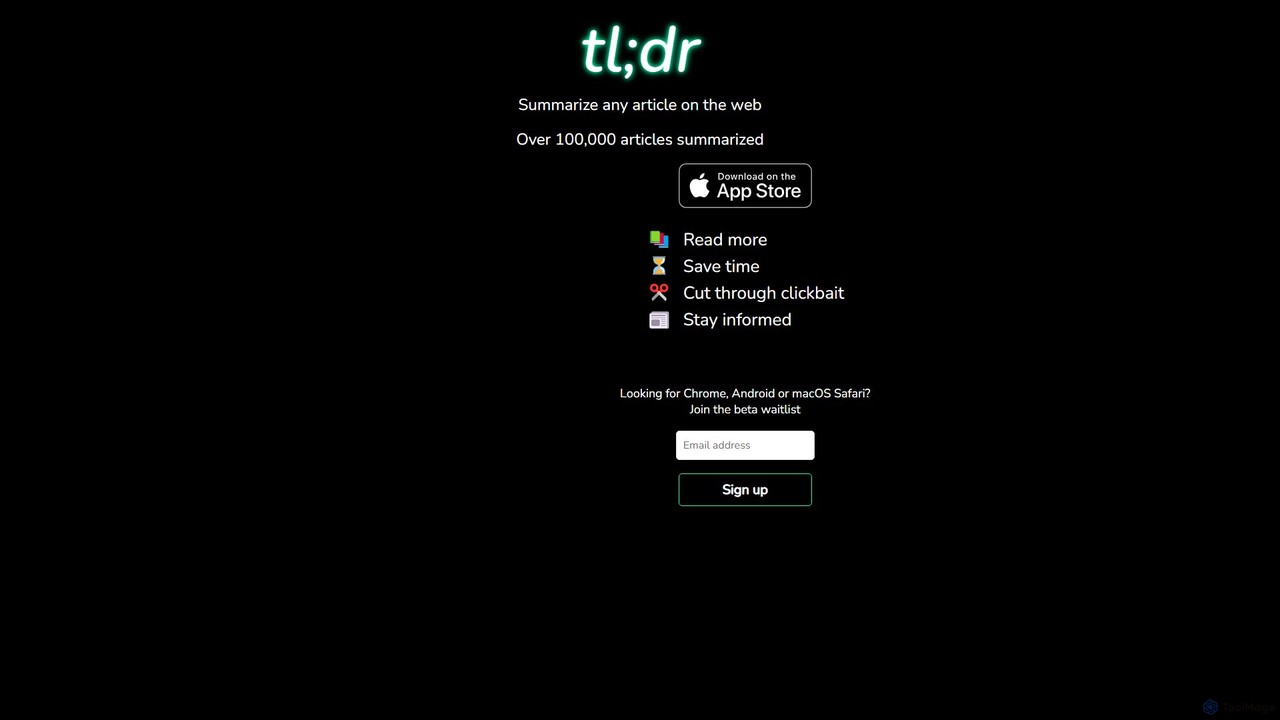
gettldr
gettldr is an AI-powered tool that summarizes any web article instantly. It helps users save time, cut through clickbait, and stay informed by providing concise, easy-to-digest summaries of long-form content. Ideal for students, professionals, and anyone experiencing information overload.
ResearchVisits 10.3KFavorites 120Likes 124
Freemium
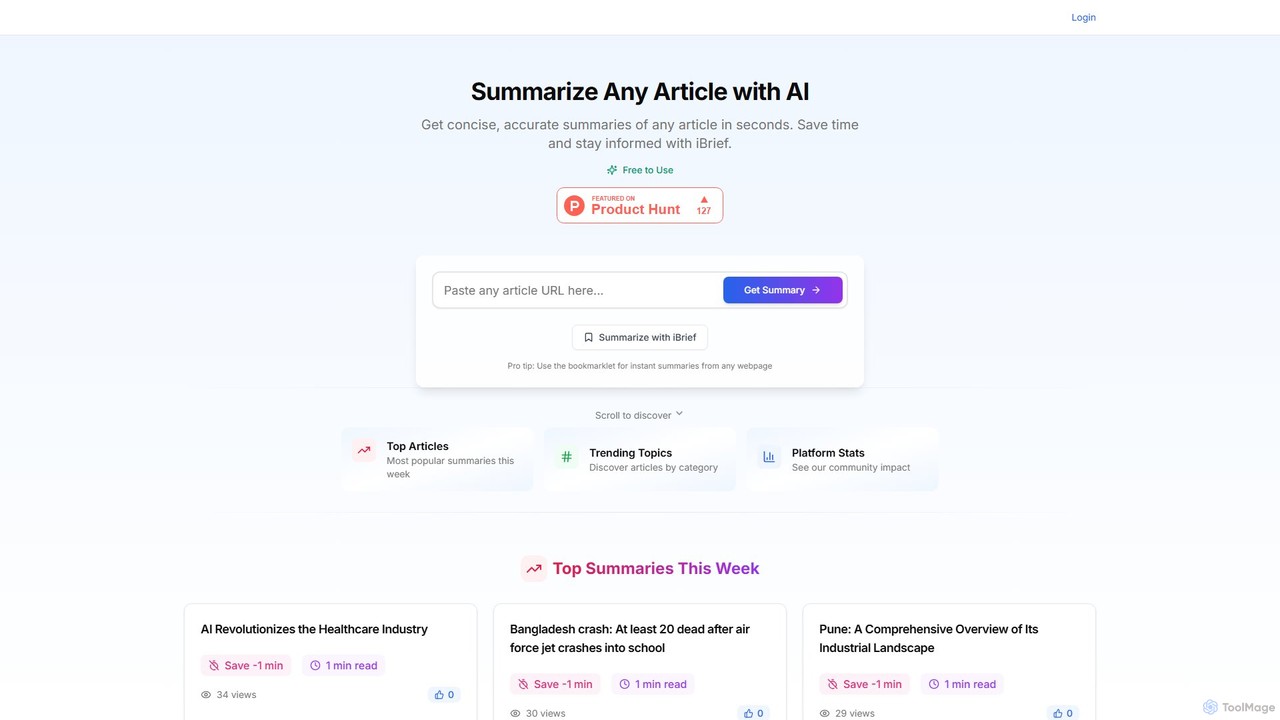
iBrief
iBrief is an AI-powered tool that generates concise and accurate summaries of any online article in seconds. It helps users save significant reading time, stay informed on various topics, and overcome information overload. With a simple interface and a convenient browser bookmarklet, iBrief makes absorbing information fast and efficient.
ResearchVisits 8.7KFavorites 148Likes 146
About Reading
Reading AI tools are intelligent applications designed to enhance how users interact with and comprehend textual content. Leveraging natural language processing (NLP) and machine learning, these tools can summarize, analyze, and personalize reading experiences. They are invaluable for processing large volumes of information, from news articles to academic papers, making information consumption more efficient and insightful. Within the broader 'News' category, they specifically empower users to quickly grasp essential information and stay informed without being overwhelmed.
Core Features
- Smart Summarization: Automatically extracts core ideas and key information from articles, reports, or books, generating concise summaries.
- Key Information Extraction: Identifies and highlights important entities, facts, and data such as names, places, events, and dates within text.
- Personalized Reading Recommendations: Suggests relevant news, articles, or books based on user reading history and stated interests.
- Text-to-Speech Conversion: Transforms written text into natural-sounding speech, enabling users to listen to content while multitasking or for accessibility.
- Reading Comprehension Assistance: Explains complex terminology, provides background knowledge, or offers interactive Q&A to improve understanding.
Applicable Scenarios
These tools are widely used by busy professionals to quickly review industry reports and news, by students and researchers to efficiently digest academic papers and literature, and by content creators to rapidly gather and organize source material. They streamline the process of information acquisition and analysis across various domains.
How to Choose
When selecting an AI reading tool, consider the quality and accuracy of its summarization, the range of supported file formats (e.g., PDF, web pages, EPUB) and integration capabilities. Evaluate its personalization features and overall user experience, including ease of navigation and learning curve. Finally, assess its multilingual support if you frequently read content in different languages.
Reading use cases
1
Quickly Digest Daily News Briefings
Busy professionals leverage AI reading tools to automatically summarize multiple news articles into a daily briefing. This allows them to quickly grasp industry trends and global headlines, saving significant time spent browsing. The tool identifies key takeaways and presents them concisely, ensuring users stay informed without information overload, crucial for strategic decision-making.
2
Extract Core Ideas from Academic Papers
Graduate students or researchers utilize AI tools to quickly scan and summarize large volumes of academic papers. This enables them to rapidly pinpoint research objectives, methodologies, results, and conclusions, significantly boosting the efficiency of literature reviews. The tool helps in identifying relevant studies and extracting critical data points for their own research.
3
Read and Understand Cross-Language Content
International business professionals or multilingual learners use AI reading tools to instantly translate foreign news or reports and provide key information extraction. This overcomes language barriers, allowing them to access global information efficiently. The tool ensures that nuances are captured and presented clearly, facilitating better cross-cultural communication and understanding.
4
Personalize Learning Material Organization
Students or self-learners use AI reading tools to extract key notes and concept explanations from textbooks and online articles. The tool automatically generates personalized flashcards or knowledge graphs, deepening their understanding of complex subjects. This tailored approach to learning material organization enhances retention and makes study sessions more productive and engaging.
5
Filter Key Information from Long Reports
Business decision-makers or analysts, faced with lengthy market analysis reports or financial statements, use AI tools to quickly filter out critical data, trend predictions, and risk assessments. This aids in informed decision-making by providing a concise overview of essential insights. The tool helps to cut through the noise, focusing attention on the most impactful information for strategic planning.
6
Assist Visually Impaired Users with Text-to-Speech
Visually impaired users utilize AI reading tools' text-to-speech functionality to convert web articles, e-books, or PDF documents into clear, natural-sounding audio. This enables barrier-free access to information, allowing them to consume content independently and efficiently. The tool provides an essential bridge to digital content, enhancing inclusivity and accessibility for all readers.
Related categories
Reading FAQ
What are AI Reading Tools?
AI reading tools are software or platforms that leverage artificial intelligence to help users process and understand textual content more efficiently and deeply. They utilize natural language processing (NLP) and machine learning algorithms to perform functions like text summarization, key information extraction, personalized recommendations, and text-to-speech conversion. These capabilities significantly enhance the reading experience and information acquisition efficiency, making complex texts more accessible.
How do AI Reading Tools differ from traditional reading methods?
The core advantage of AI reading tools lies in their automation and intelligence. Traditional reading relies on manual filtering and comprehension, which is often less efficient. AI tools can automatically summarize long articles, extract key points, explain complex concepts, and even recommend content based on user preferences, significantly saving time and enhancing comprehension depth. They transform passive reading into an active, highly efficient information processing experience.
How to choose the right AI Reading Tool for me?
When selecting an AI reading tool, consider your primary needs: do you require summarization, translation, or personalized recommendations? Evaluate the accuracy and naturalness of its summarization and information extraction. Check its compatibility with various file formats (e.g., PDF, web pages, EPUB) and its integration capabilities with other platforms. Finally, assess the user-friendliness of its interface, the availability of learning assistance features, and its pricing model to ensure it aligns with your budget and workflow.
What are the main functions of AI Reading Tools?
The main functions of AI reading tools include smart text summarization, which condenses lengthy content into key points; key information extraction, automatically identifying and highlighting important entities and data; text-to-speech conversion, which reads out written content; personalized content recommendations, pushing relevant articles based on user interests; and reading assistance features, such as vocabulary explanations and background knowledge supplementation, all designed to comprehensively enhance reading efficiency and comprehension.
How do AI Reading Tools help me process news information?
AI reading tools are particularly powerful for processing news information. They can quickly summarize daily news headlines, allowing you to grasp core events in a short time; extract key facts and data from lengthy in-depth reports, preventing information overload; filter and recommend news sources based on your interests, enabling personalized news subscriptions; and even convert news content into audio, making it convenient to listen while commuting. This ensures you acquire news efficiently and comprehensively.