Protocol Labs
Protocol Labs is a research, development, and deployment lab for network protocols. It drives breakthroughs in computing, focusing …
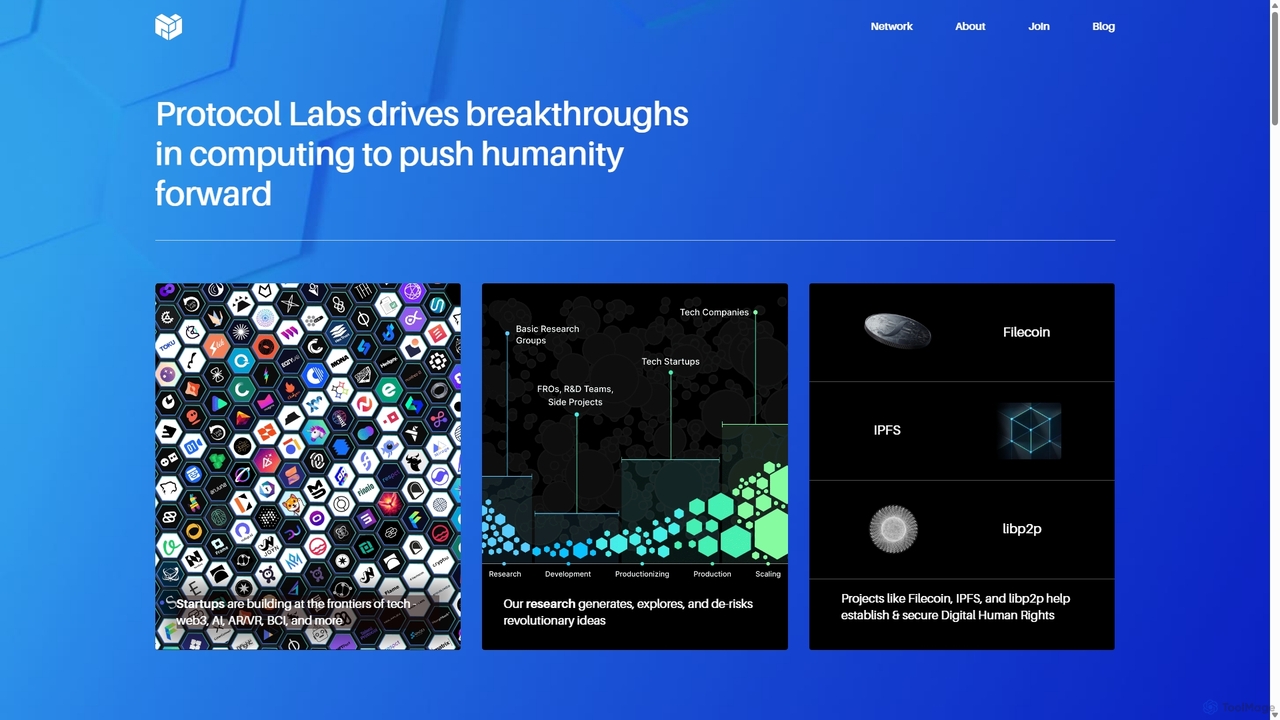
Protocol Labs is a research, development, and deployment lab for network protocols. It drives breakthroughs in computing, focusing on Web3, AI, and decentralized infrastructure. It's the creator of foundational technologies like IPFS and Filecoin, fostering a global innovation network of over 600 startups and organizations to build a more resilient and open internet.
About Computer Science
Computer Science AI tools are advanced applications that leverage artificial intelligence to automate, optimize, and assist in various computational tasks and research. These tools integrate machine learning, natural language processing, and symbolic AI to enhance efficiency in areas like code development, algorithm design, and data analysis. They provide invaluable support for researchers, developers, and educators seeking to push the boundaries of computational understanding and application. This category within Research tools focuses specifically on the theoretical and practical aspects of computing.
Core Features
- Automated Code Generation: Generates code snippets, functions, or entire programs based on natural language descriptions or specifications.
- Algorithm Optimization: Analyzes existing algorithms and suggests improvements for efficiency, speed, or resource usage.
- Bug Detection & Fixing: Identifies potential errors, vulnerabilities, and logical flaws in code, often suggesting automated fixes.
- Theoretical Modeling & Simulation: Assists in creating and testing computational models for complex systems or abstract concepts.
- Automated Theorem Proving: Uses logical reasoning to verify mathematical theorems or the correctness of software specifications.
Applicable Scenarios
These tools are primarily used in academic research, software engineering, and advanced data science. They can accelerate the development of complex systems, validate theoretical models, and streamline the process of scientific discovery in computational fields, from designing new programming languages to optimizing database queries.
How to Choose
When selecting Computer Science AI tools, consider the specific computational problem you aim to solve, the programming languages or frameworks supported, the level of integration with your existing development environment, and the tool's explainability for understanding its outputs and decisions.

Computer ScienceUse Cases
Accelerating Software Development
Software engineers use AI code generation tools to quickly scaffold new projects, generate boilerplate code, or convert natural language requirements into functional code. This significantly reduces the manual effort and time spent on repetitive coding tasks, allowing developers to focus on more complex architectural challenges and innovative features, thereby speeding up the entire development lifecycle.
Optimizing Complex Algorithms
Researchers and data scientists employ AI-powered algorithm optimizers to analyze the performance bottlenecks in their computational models. These tools provide suggestions for more efficient data structures or algorithmic approaches, often identifying non-obvious improvements that can lead to significant gains in processing speed and resource utilization for large-scale data processing or scientific simulations.
Automating Code Review and Debugging
Development teams integrate AI bug detection tools into their CI/CD pipelines to automatically scan for common vulnerabilities, logical errors, and style inconsistencies. These tools not only identify issues but often suggest automated fixes or refactorings, leading to higher code quality, fewer post-release issues, and a more efficient debugging process, freeing up human reviewers for more critical tasks.
Assisting in Theoretical Research
Computer science academics utilize AI tools for automated theorem proving or symbolic reasoning to verify complex mathematical proofs, explore logical consequences of theoretical models, or validate the correctness of formal specifications. This allows researchers to tackle more intricate theoretical landscapes and validate hypotheses more rigorously, pushing the boundaries of computational theory.
Designing Efficient Data Structures
Data engineers and database architects leverage AI-driven tools to analyze data access patterns and suggest optimal data structures for specific applications. By intelligently recommending structures like B-trees, hash tables, or custom graph databases, these tools can significantly improve database performance, reduce memory footprint, and enhance query execution speed, crucial for high-performance computing.
Generating Educational Programming Examples
Educators use AI to generate diverse programming examples, exercises, and solutions for teaching computer science concepts. These tools can tailor content to different learning levels and programming languages, providing students with a rich, interactive learning experience and helping instructors create engaging and relevant course materials more efficiently, from basic syntax to advanced algorithms.