CoLoop
CoLoop is an AI-powered analysis copilot designed for insights and strategy teams. It streamlines qualitative research by automating …
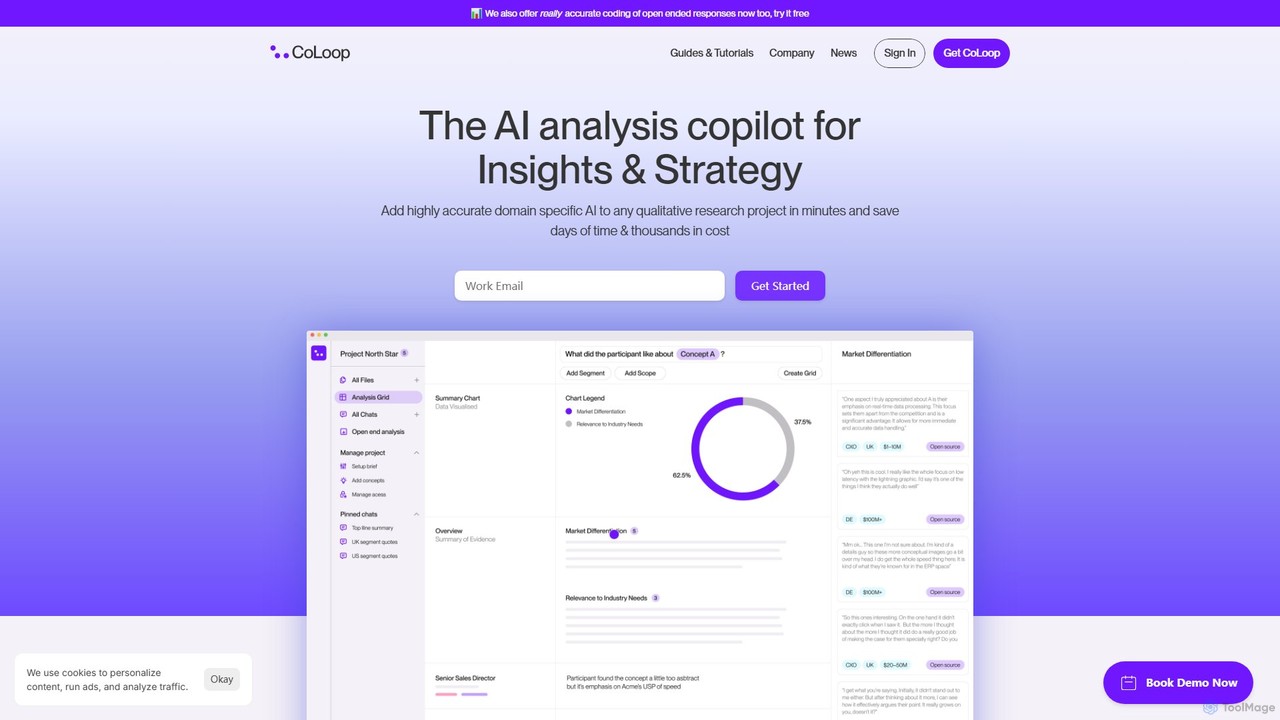
CoLoop is an AI-powered analysis copilot designed for insights and strategy teams. It streamlines qualitative research by automating the analysis of unstructured data from interviews, focus groups, and open-ended responses. The platform helps researchers save days of work, generate deeper insights, and create more impactful reports with features like AI-driven thematic analysis, instant video clipping, and collaborative workspaces.
WhyHive
WhyHive is an AI-powered data analysis tool designed for simplicity. It transforms spreadsheets, surveys, and customer feedback into …
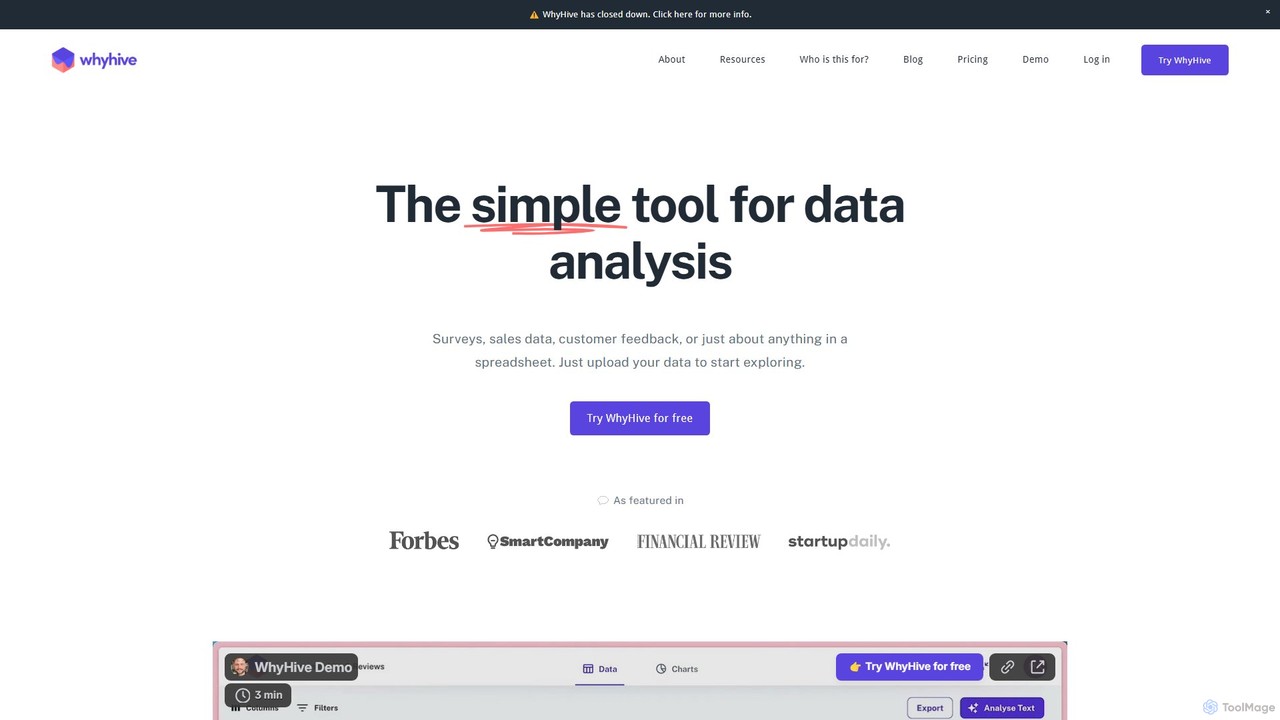
WhyHive is an AI-powered data analysis tool designed for simplicity. It transforms spreadsheets, surveys, and customer feedback into clear insights and visualizations. Ideal for marketers, researchers, and startups, it automates text analysis and charting, making data accessible to everyone without technical expertise.
getaftercare
getaftercare is an AI-powered survey platform that supercharges your research by asking intelligent follow-up questions to open-ended responses. …
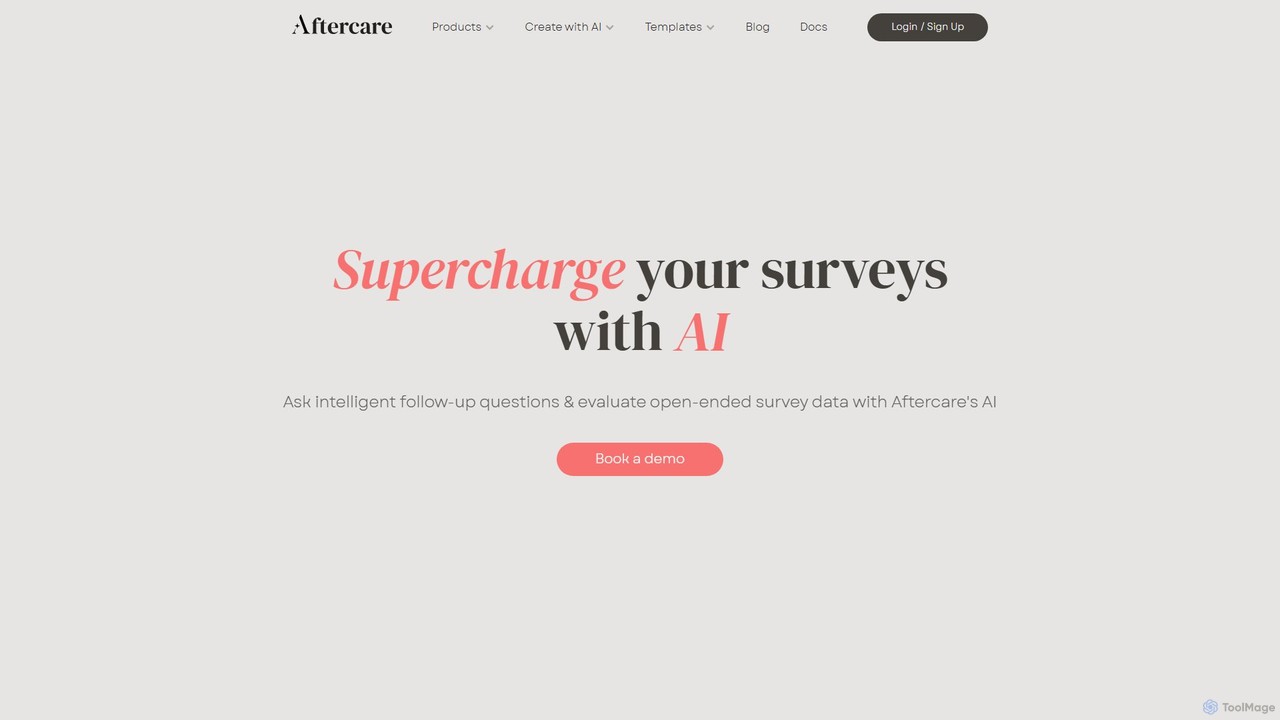
getaftercare is an AI-powered survey platform that supercharges your research by asking intelligent follow-up questions to open-ended responses. It helps you gather deeper, more nuanced insights, automatically flags data quality issues, and streamlines qualitative data analysis with AI-powered coding and categorization. Ideal for market researchers, product teams, and businesses seeking to truly understand their audience.
About Qualitative Analysis
Qualitative Analysis tools are AI-powered platforms designed to interpret and structure non-numerical data like text, audio, and video. Leveraging Natural Language Processing (NLP), these tools automate the identification of themes, sentiments, and patterns within large datasets. They transform unstructured feedback from interviews, surveys, and social media into actionable insights. This capability allows researchers and analysts to move beyond manual coding, significantly accelerating the research process while handling a greater volume of data with enhanced consistency.
Core Features
- Thematic Analysis & Coding: Automatically identifies and categorizes recurring topics, concepts, and themes from text data.
- Sentiment Analysis: Determines the emotional tone (positive, negative, neutral) of text to gauge opinions and attitudes.
- Entity Recognition: Extracts and classifies specific entities such as names, organizations, locations, and products.
- Data Visualization: Generates interactive charts, word clouds, and theme maps to visually represent complex data relationships.
- Transcription Integration: Natively transcribes audio and video files into text for immediate analysis within the platform.
Applicable Scenarios
These tools are widely used in market research, academic studies, user experience (UX) research, and brand management. Product managers use them to analyze customer feedback, UX researchers to synthesize interview findings, and marketers to monitor social media conversations. They are essential for any role that needs to derive deep, contextual understanding from qualitative data sources.
Selection Criteria
When choosing a Qualitative Analysis tool, consider its data source compatibility (text, audio, social media APIs), language support, and the depth of its analytical features (e.g., topic modeling vs. simple keyword counting). Also evaluate its integration capabilities with other platforms (like survey tools or CRMs), the intuitiveness of its user interface, and its pricing model relative to your project scale.

Qualitative AnalysisUse Cases
Analyze Customer Feedback from Surveys
A product manager receives thousands of open-ended responses from a customer satisfaction survey. Instead of spending weeks manually reading and tagging each comment, they upload the entire dataset to an AI Qualitative Analysis tool. The platform automatically identifies and groups feedback into key themes such as 'feature requests,' 'usability issues,' and 'pricing concerns.' It also provides sentiment scores for each theme, allowing the manager to quickly pinpoint the most critical areas for improvement and present data-backed priorities to the development team.
Synthesize Findings from UX Research Interviews
A UX research team conducts dozens of in-depth user interviews for a new app design. They upload the audio recordings or transcripts to an analysis tool. The AI transcribes the audio and then identifies recurring pain points, user motivations, and quotes related to specific features. By visualizing the connections between different themes, the team can quickly build a comprehensive journey map and affinity diagram, reducing synthesis time from days to hours and ensuring design decisions are grounded in rich, qualitative evidence.
Monitor Brand Perception on Social Media
A marketing team wants to track public perception of their brand in real-time. They connect an AI analysis tool to their social media channels and relevant hashtags. The tool continuously pulls in mentions, comments, and posts, performing sentiment analysis on the fly. It alerts the team to spikes in negative sentiment, identifies emerging topics of conversation (both positive and negative), and tracks the emotional response to marketing campaigns. This allows for rapid crisis response and provides valuable feedback for future marketing strategies.
Accelerate Academic Literature Reviews
An academic researcher needs to conduct a systematic literature review involving hundreds of scholarly articles. They import the PDFs of all papers into a qualitative analysis platform. The tool helps by extracting key concepts, identifying the main arguments of each paper, and mapping the relationships between different studies and authors. This allows the researcher to quickly identify major research themes, uncover gaps in the existing literature, and build a theoretical framework far more efficiently than by reading and manually annotating each document.
Analyze Employee Engagement Feedback
An HR department analyzes thousands of comments from an annual employee engagement survey. Using an AI tool, they can quickly categorize feedback into areas like 'work-life balance,' 'management communication,' and 'career development opportunities.' The sentiment analysis feature highlights the most positive and negative aspects of the employee experience. This data enables HR to identify specific departmental issues, develop targeted improvement initiatives, and present clear, evidence-based findings to leadership, fostering a better workplace culture.
Process and Code Legal or Compliance Documents
A legal team needs to review a large volume of contracts or internal documents for compliance checks. They use a qualitative analysis tool to automatically identify and tag specific clauses, risks, or non-compliant language across thousands of pages. The tool can be trained to recognize custom legal concepts. This process drastically reduces manual review time, minimizes the risk of human error, and allows the legal team to focus their expertise on interpreting the flagged issues rather than on the tedious task of discovery.