mostrecommendedbooks
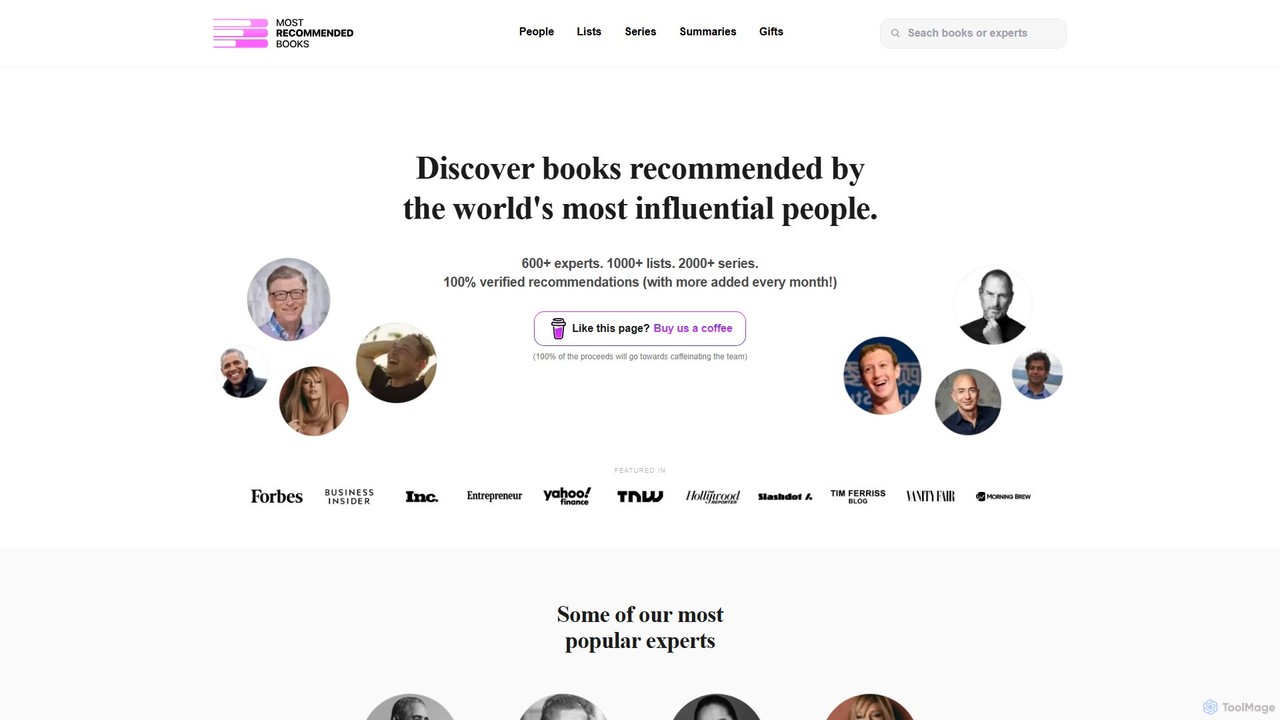
Discover books recommended by over 600 of the world's most influential people. This free platform aggregates verified reading …
Discover books recommended by over 600 of the world's most influential people. This free platform aggregates verified reading lists from experts like Barack Obama and Bill Gates, organizes books by series, and provides curated lists by genre, making it easy to find your next great read.
gptionary
gptionary is an AI-powered dictionary and language assistant that goes beyond simple definitions. It provides contextual meanings, explains …
gptionary is an AI-powered dictionary and language assistant that goes beyond simple definitions. It provides contextual meanings, explains complex concepts, and offers advanced translation and vocabulary enhancement tools. Ideal for students, writers, and professionals, it helps users understand and use language with greater precision and depth.
About Reference
AI Reference tools are specialized platforms that leverage artificial intelligence to streamline the process of information discovery, organization, and citation. These tools utilize advanced natural language processing (NLP) and machine learning algorithms to analyze vast datasets, identify relevant sources, and extract key information, acting as intelligent research assistants. They empower researchers, students, and content creators to efficiently manage their knowledge base, ensure accuracy, and produce well-supported work. By automating tedious tasks like citation generation and semantic search, AI reference tools significantly enhance the quality and speed of research workflows within the broader Research category.
Core Features
- Automated Citation Generation: Automatically formats citations and bibliographies in various styles (APA, MLA, Chicago) from source data.
- Semantic Search & Retrieval: Understands query intent to find highly relevant articles, papers, and documents beyond keyword matching.
- Knowledge Graph & Organization: Builds interconnected knowledge bases from user inputs, linking concepts and sources for better understanding.
- Content Summarization: Extracts key points and generates concise summaries from long articles, reports, or research papers.
- Fact-Checking & Verification: Cross-references information across multiple reputable sources to identify inconsistencies or support claims.
Applicable Scenarios
AI Reference tools are indispensable for academic research, where students and scholars manage sources, generate citations, and summarize literature reviews. Content creators and journalists use them to quickly verify facts and gather background information for articles. Professionals in various fields, such as business analysts, leverage these tools to synthesize market reports and organize industry data, ensuring data-driven decision-making.
How to Choose
When selecting an AI Reference tool, prioritize its citation style support to ensure compatibility with required academic or professional formats. Evaluate its information retrieval accuracy, including semantic search capabilities and the credibility of sources found. Consider its integration capabilities with your existing word processors, browsers, and other research tools. Finally, assess its knowledge organization features, such as how effectively it helps structure, link, and visualize complex information for long-term use.

ReferenceUse Cases
Automating Academic Citation Management
University students and academic researchers often spend hours manually formatting citations and bibliographies for papers and theses. AI reference tools can automatically generate accurate citations in APA, MLA, Chicago, or other required styles directly from imported source information. This significantly reduces the risk of errors and frees up valuable time for deeper analysis and writing, ensuring compliance with academic standards.
Synthesizing Literature Reviews for Research
PhD candidates and scientific researchers need to review hundreds of papers to identify gaps and build upon existing knowledge. AI reference tools can ingest numerous research articles, identify key themes, summarize findings, and even highlight conflicting results. This capability allows researchers to quickly grasp the essence of a vast body of literature, accelerating the literature review process and informing new research directions.
Fact-Checking and Verifying News Articles
Journalists and content creators are under pressure to publish accurate information rapidly. Before publication, AI reference tools can cross-reference claims, statistics, and quotes against multiple reputable sources in real-time. This helps verify the veracity of information, identify potential misinformation, and enhance the credibility of their reporting, ensuring a higher standard of journalistic integrity.
Building a Personal Knowledge Base
Lifelong learners and professionals in knowledge-intensive fields constantly consume new information. AI reference tools enable users to capture notes, articles, and web pages, then intelligently link related concepts and ideas. This creates a dynamic, searchable personal knowledge graph that facilitates deeper understanding, recall, and the generation of new insights from disparate pieces of information.
Streamlining Legal Document Analysis
Legal professionals, such as paralegals and lawyers, frequently deal with extensive legal documents, case law, and statutes. AI reference tools can quickly scan these documents to identify relevant precedents, extract key clauses, and summarize complex legal arguments. This drastically reduces the time spent on manual review, allowing legal teams to focus on strategic analysis and case preparation more efficiently.
Organizing Market Research Data for Business
Market analysts and business strategists need to synthesize vast amounts of market research reports, competitor analyses, and industry trends. AI reference tools can ingest these diverse data sources, extract critical insights, identify emerging patterns, and organize them into a coherent, searchable knowledge base. This empowers businesses to make data-driven decisions faster and respond proactively to market changes.