
ToolMage
Sign in

Best 1 Tutoring AI tools for Research

Popular Tutoring AI tools in Research include GrowMindGPT, helping you work more efficiently.

GrowMindGPT
Paid

GrowMindGPT

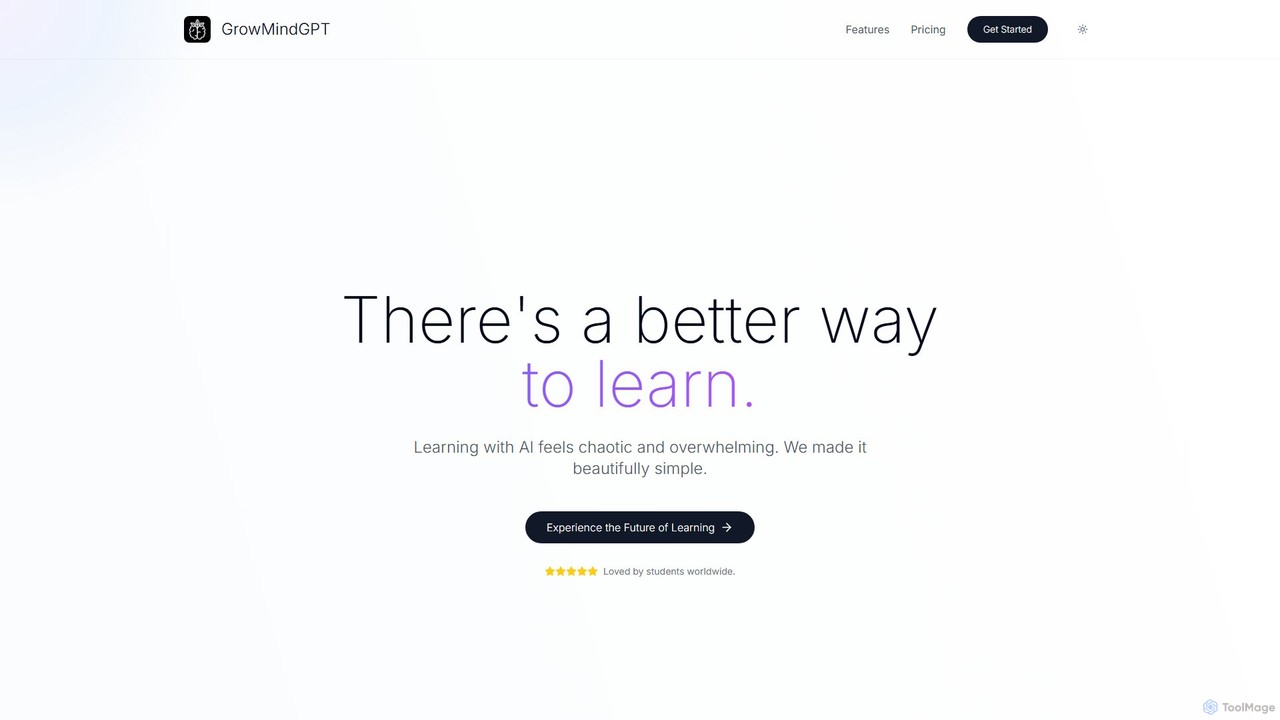
GrowMindGPT is an AI-powered learning platform that transforms your curiosity into structured, personalized, and interactive learning paths. It simplifies complex subjects through adaptive lessons, multimedia content, and real-time feedback, making learning intuitive, engaging, and effective for students and lifelong learners.

Learning
Visits 4.8KFavorites 114Likes 107

About Tutoring

AI Tutoring tools are intelligent systems designed to provide personalized, one-on-one academic support. They utilize natural language processing and machine learning to understand student queries, identify knowledge gaps, and offer step-by-step explanations. This creates an adaptive learning environment that adjusts to an individual's pace and style, available 24/7. Unlike general research tools that retrieve information, AI tutors actively engage users in a pedagogical dialogue to build deep understanding.

Core Features

  • Personalized Learning Paths: Adapts curriculum and problem difficulty based on real-time user performance.
  • Instant Feedback: Provides immediate corrections and detailed explanations for answers.
  • Socratic Questioning: Asks guiding questions to help students arrive at solutions independently.
  • Interactive Problem Solving: Offers virtual whiteboards, code editors, or simulations for hands-on practice.
  • Progress Analytics: Tracks performance over time, highlighting strengths and areas needing improvement.

Use Cases

These tools are widely used by K-12 students for homework assistance, university students tackling complex STEM subjects like calculus or programming, and individuals preparing for standardized tests such as the SAT, GRE, or GMAT. Professionals also use them for upskilling in technical domains like data science or learning a new language.

How to Choose

When selecting an AI Tutoring tool, consider the subject coverage to ensure it matches your needs. Evaluate its teaching methodology—whether it provides direct answers or promotes critical thinking. Assess the quality and depth of its feedback and the range of interactive features it offers. Finally, consider the user interface and pricing structure.

Tutoring use cases

1

Mastering Calculus Concepts for a University Exam

A university student struggling with derivatives and integrals uses an AI tutor to prepare for their final exam. Instead of just providing answers, the tool breaks down complex problems into manageable steps. It uses interactive graphs to visualize functions and their derivatives, helping the student build an intuitive understanding. When the student makes a mistake, the AI provides targeted hints and explains the underlying concept, rather than just correcting the calculation. This allows the student to practice hundreds of problems and receive instant, personalized feedback, building confidence and mastery of the subject.

2

Debugging Code with a Socratic AI Partner

A novice programmer is stuck on a bug in their Python script. Instead of asking a senior developer, they turn to an AI coding tutor. The AI doesn't fix the code directly. It asks questions like, 'What do you expect this line of code to do?' or 'Have you considered what happens if this variable is null?'. This Socratic method guides the programmer to identify the logical flaw on their own. The AI also provides links to relevant documentation and explains error messages in plain language, transforming a frustrating bug into a valuable learning experience about debugging techniques.

3

Personalized SAT Preparation and Strategy Building

A high school student aims to improve their SAT score. They use an AI tutoring platform that starts with a diagnostic test to identify their specific weaknesses in math and verbal sections. Based on the results, the AI creates a personalized study plan, focusing on topics like geometry rules or critical reading skills. The platform provides adaptive drills that increase in difficulty as the student improves. It also simulates full-length, timed practice tests and provides detailed analytics on pacing and question types, helping the student build not just knowledge but also effective test-taking strategies.

4

Practicing Conversational Spanish for Business Travel

A marketing manager needs to learn basic conversational Spanish for an upcoming business trip. They use an AI language tutor that simulates real-world conversations. The user can practice scenarios like ordering at a restaurant, asking for directions, or introducing themselves at a meeting. The AI provides instant feedback on pronunciation and grammar, suggesting more natural phrasing. Unlike static apps, the AI can handle a wide range of user responses, making the conversation feel dynamic and realistic. This allows the manager to build practical communication skills and confidence in a safe, judgment-free environment.

5

Providing Homework Help for an Elementary School Student

A parent uses an AI tutor to help their child with a 4th-grade history assignment about ancient Egypt. The child can ask questions in their own words, like 'Why did they build pyramids?'. The AI tutor explains complex topics using simple language, analogies, and even generates images of pyramids and hieroglyphs. It then creates a short, fun quiz to check for understanding. This approach provides patient, on-demand support that supplements classroom learning, making homework less of a struggle for both the child and the parent, and fostering curiosity in the subject.

6

Upskilling in Data Science with Interactive SQL Challenges

A marketing analyst wants to transition into a data science role and needs to learn SQL. They use an AI tutoring platform that provides an interactive coding environment. The platform presents real-world business problems, such as 'Find all customers who made a purchase in the last 30 days'. The analyst writes SQL queries directly in the browser, and the AI provides instant feedback on syntax, logic, and efficiency. The challenges start simple and progressively become more complex, covering joins, subqueries, and window functions, creating a structured, hands-on learning path from beginner to advanced.

Tutoring FAQ

What are AI Tutoring tools?

AI Tutoring tools are software applications that use artificial intelligence to provide personalized educational support. They act as digital one-on-one tutors, adapting to a user's individual learning pace and style. Using technologies like natural language processing (NLP), they can understand student questions, provide step-by-step explanations, offer instant feedback on exercises, and create customized learning paths. Their primary goal is to make learning more interactive, accessible, and effective for a wide range of subjects.

How to choose the right AI Tutor?

Choosing the right AI Tutor depends on your specific learning goals. Consider the following factors:

  • Subject Coverage: Ensure the tool specializes in the subject you need, whether it's math, coding, a language, or test prep.
  • Teaching Methodology: Do you prefer a tutor that gives direct answers or one that guides you to the solution with questions (Socratic method)?
  • Interactivity: Look for features beyond text chat, such as interactive whiteboards, code simulators, or speech recognition for language practice.
  • Adaptivity: A good AI tutor should adjust the difficulty and content based on your performance, not follow a rigid, one-size-fits-all curriculum.
  • Feedback Quality: Check if the feedback is specific, constructive, and explains the 'why' behind corrections.
What is the difference between an AI Tutor and a search engine?

The core difference lies in their purpose: information retrieval versus guided learning. A search engine (a type of research tool) is designed to find and present vast amounts of information based on keywords. It gives you the raw materials for learning.

An AI Tutor, on the other hand, is designed to be a pedagogical partner. It structures information into a lesson, diagnoses your misunderstandings, asks questions to stimulate critical thinking, and provides a personalized path to mastery. It's the difference between being given a library and having a librarian guide you to the right book and help you understand it.

Can AI Tutors replace human teachers?

AI Tutors are best viewed as powerful supplements, not replacements, for human teachers. They excel at providing scalable, 24/7 personalized practice, instant feedback, and reinforcement of core concepts. This frees up human teachers to focus on higher-order skills that AI struggles with, such as fostering creativity, mentoring, providing emotional support, and facilitating collaborative projects.

The ideal educational model often involves a blend of both: AI handles the personalized drills and knowledge reinforcement, while human teachers guide, inspire, and manage the holistic development of students.

What subjects are AI Tutors most effective for?

AI Tutors are effective across a wide range of subjects, but they particularly excel in fields with clear rules, structures, and problem-solving steps. These include:

  • STEM Subjects: Mathematics (from algebra to calculus), physics, chemistry, and computer science are ideal due to their logical nature.
  • Language Learning: AI is excellent for vocabulary drills, grammar practice, and conversational simulations with pronunciation feedback.
  • Standardized Test Preparation: For tests like the SAT, GRE, or GMAT, AI can effectively identify weak areas and provide targeted practice to improve scores.

While they are also being developed for humanities and social sciences, their strength currently lies in subjects where concepts can be broken down into logical, verifiable components.