PodCheck
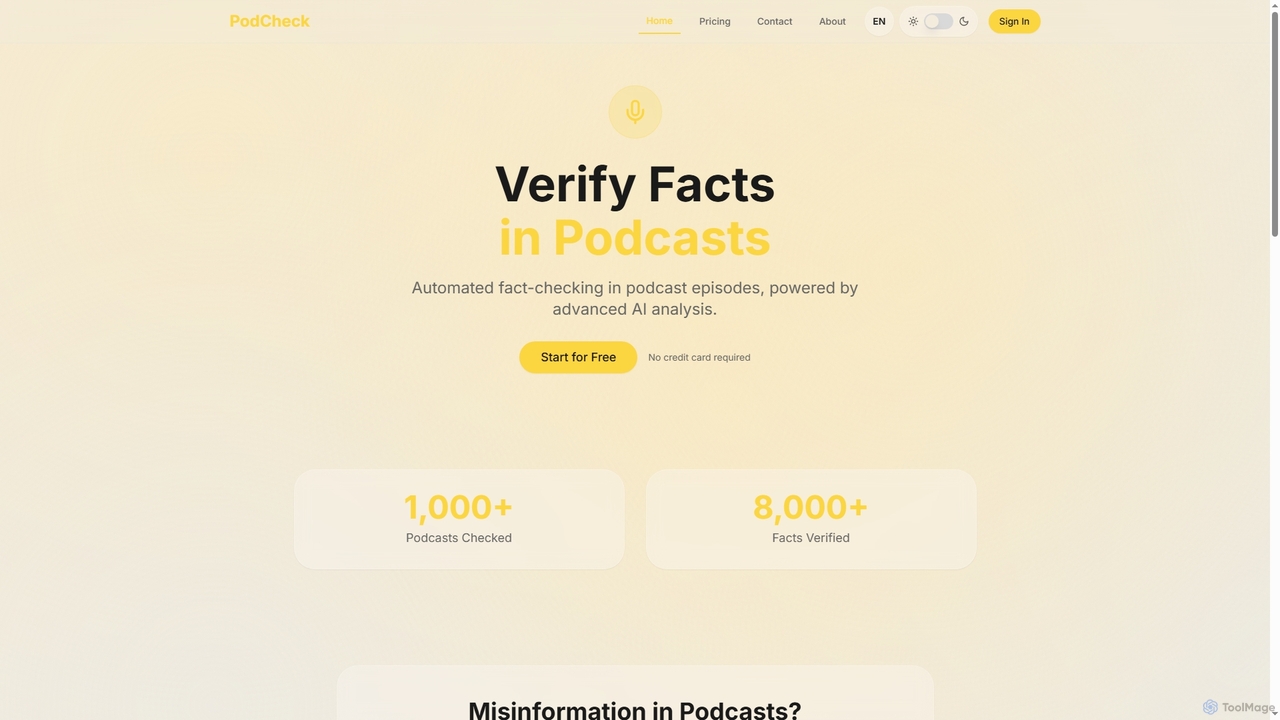
PodCheck is an AI-powered online tool designed to automatically fact-check claims made in podcast episodes published on YouTube. …
PodCheck is an AI-powered online tool designed to automatically fact-check claims made in podcast episodes published on YouTube. It analyzes audio content, identifies factual statements, and verifies them against reliable sources, providing users with comprehensive reports to combat misinformation.
Workki AI
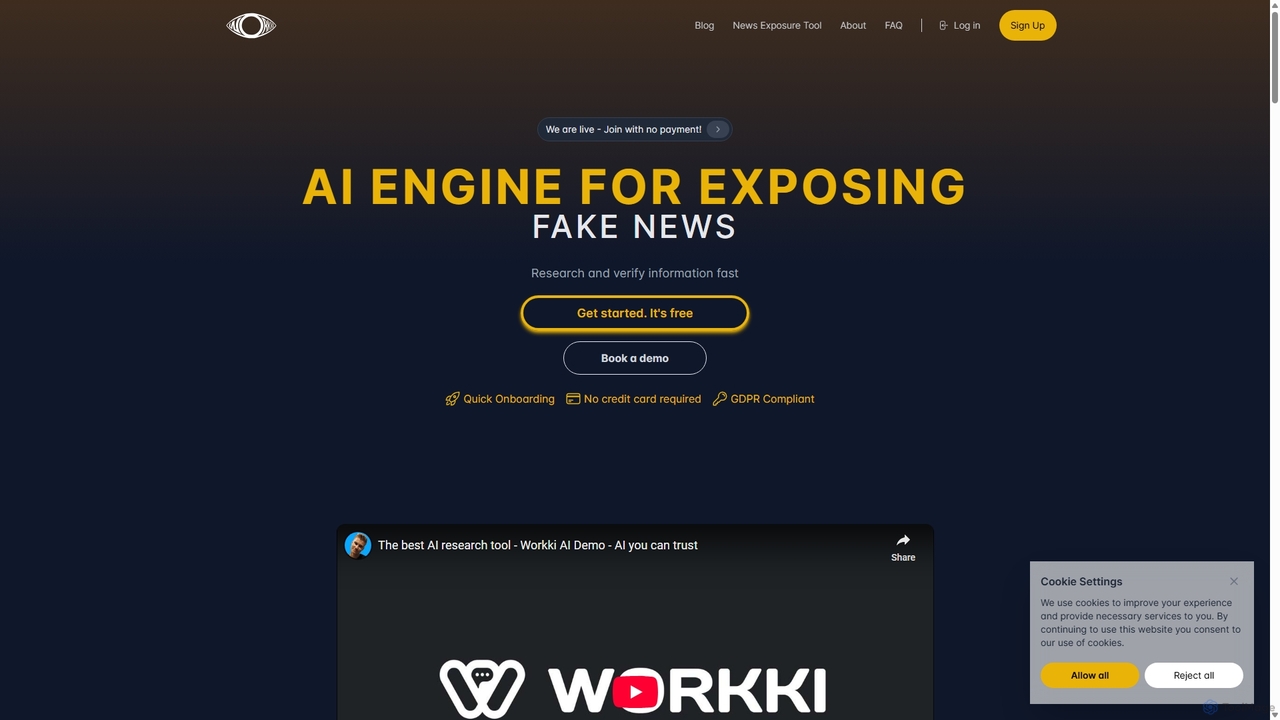
Workki AI is an advanced AI-powered engine designed to expose fake news and verify information. It helps users …
Workki AI is an advanced AI-powered engine designed to expose fake news and verify information. It helps users quickly fact-check texts, analyze source credibility, detect bias, and generate comprehensive reliability reports. Ideal for journalists, researchers, financial analysts, and students.
About Verification
AI Verification tools are a class of software that uses artificial intelligence to assess the accuracy, authenticity, and integrity of information. These tools leverage natural language processing (NLP) and machine learning models to cross-reference claims, analyze source credibility, and detect inconsistencies in data or media. Their primary value lies in automating the critical research step of validation, enabling users to combat misinformation and ensure the reliability of their findings. They provide a structured approach to confirming facts, far beyond the capabilities of standard search engines.
Core Features
- Automated Fact-Checking: Instantly cross-references statements and data points against a vast database of credible sources.
- Source Credibility Analysis: Evaluates the reputation, bias, and historical accuracy of websites, authors, and publications.
- Data & Content Integrity Audit: Scans datasets for anomalies, inconsistencies, or signs of manipulation, and checks text for plagiarism.
- AI-Generated Content Detection: Identifies text, images, or videos likely created or altered by generative AI models, including deepfakes.
Use Cases
These tools are essential in fields where information accuracy is paramount. Journalists and fact-checkers use them to verify sources before publication. Academic researchers leverage them to validate data and citations in literature reviews. Business and financial analysts rely on them to confirm market data and vet intelligence reports for strategic decision-making.
How to Choose
When selecting an AI Verification tool, consider the scope and quality of its underlying database of sources. Evaluate its support for different content types, such as text, images, and data files. Assess its integration capabilities with browsers or other research platforms, and examine the clarity of its verification reports, which should explain why a piece of information was flagged.
VerificationUse Cases
Fact-Checking for Investigative Journalism
An investigative journalist is working on a story about a new public policy claim. Before publishing, they use an AI Verification tool to analyze statements from officials, statistics cited in reports, and related social media posts. The tool automatically cross-references each claim with academic studies, government databases, and reputable news archives. It flags a key statistic as outdated and identifies a social media account spreading related misinformation. This allows the journalist to report with higher accuracy, correct the faulty data, and expose the disinformation campaign, strengthening the credibility of their article.
Validating Sources for Academic Research
A university researcher is conducting a literature review for their dissertation. They use an AI Verification tool to assess the credibility of dozens of potential sources. By inputting the URLs of articles and journals, the tool provides a credibility score for each, based on factors like author history, publication reputation, citation metrics, and potential biases. It also scans the full text of uploaded papers for logical inconsistencies or plagiarized content. This process helps the researcher quickly filter out unreliable sources and build a strong, defensible foundation for their academic work, saving weeks of manual vetting.
Detecting AI-Generated Misinformation Online
A content moderation team for a large social media platform uses an AI Verification tool to combat the spread of deepfakes and AI-generated text. The tool continuously scans newly uploaded content, analyzing images for subtle artifacts indicative of AI manipulation and text for patterns common in machine-generated narratives. When a potential deepfake video of a public figure is uploaded, the system flags it within minutes, providing a confidence score and a report on the detected anomalies. This enables the moderation team to quickly review and remove the harmful content before it goes viral, protecting users from manipulation.
Verifying Data for Financial Due Diligence
An investment analyst is evaluating a startup for a potential acquisition. They use an AI Verification tool to conduct due diligence on the company's financial claims and market position. The tool cross-references figures from the startup's pitch deck with public financial records, industry benchmarks, and news reports. It flags a discrepancy between the company's reported user growth and independent market analysis. It also uncovers several negative press articles from obscure sources that were not disclosed. This automated verification provides the analyst with critical insights, leading to a more accurate valuation and informed investment decision.
Auditing Legal Documents for Authenticity
A paralegal team is preparing for a major corporate litigation case and needs to verify the authenticity of hundreds of digital documents submitted as evidence. They use an AI Verification tool to scan documents for metadata anomalies, signs of digital tampering, and inconsistencies across different versions. The tool identifies a contract where the timestamp metadata does not align with the creation date recorded in the company's server logs, suggesting it may have been altered. This finding is critical for the legal strategy, allowing the team to challenge the validity of the evidence in court.
Ensuring Brand Safety in Advertising
A digital marketing agency needs to ensure their clients' ads do not appear alongside misinformation or harmful content. They integrate an AI Verification tool into their ad placement platform. The tool analyzes the content of potential host websites in real-time, checking for factual inaccuracies, extremist rhetoric, or AI-generated fake news. If a website is flagged for hosting unreliable content, the system automatically prevents the agency's ads from being served on that page. This proactive verification protects brand reputation and ensures advertising budgets are spent on credible, safe platforms.