Best of the Year 1 results Robotics AI Tools

Popular AI tools in the Robotics field include Rerun, etc., helping you quickly improve efficiency.

Rerun

Rerun

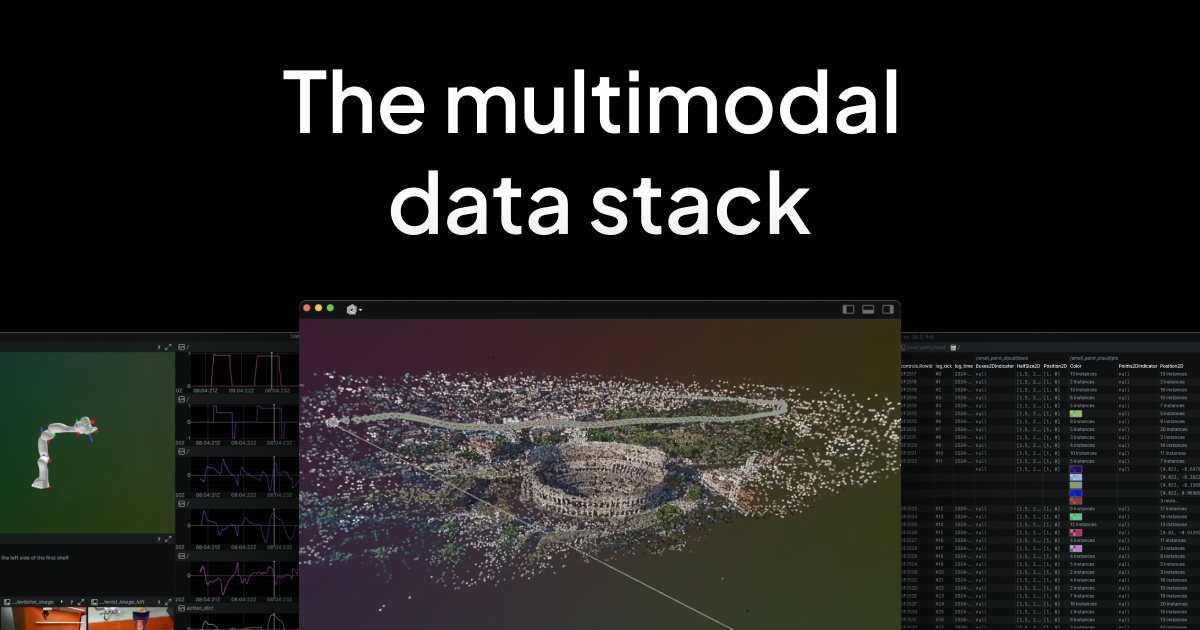
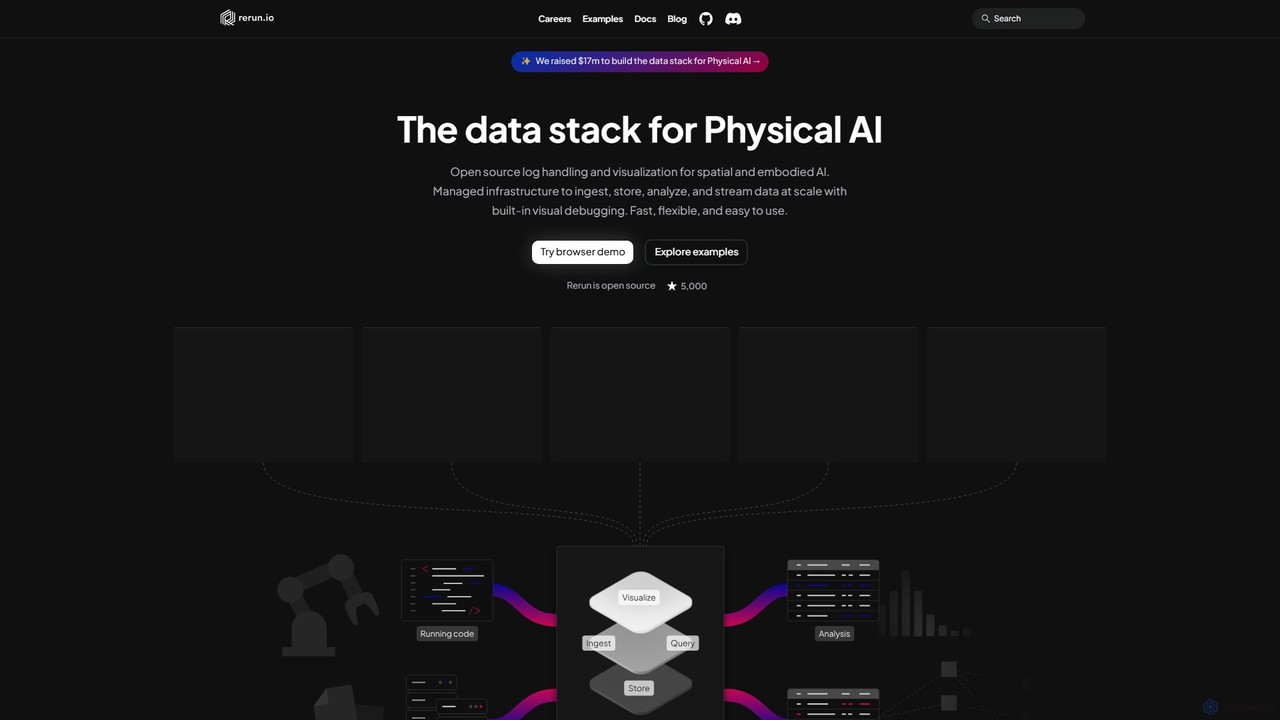
Rerun is an open-source data stack for Physical AI, providing powerful logging and visualization tools for multimodal, time-series …

59.7K

About Robotics

Robotics tools are AI-powered platforms and software designed to facilitate the creation, control, and deployment of intelligent robots. These advanced solutions leverage machine learning, computer vision, and sophisticated algorithms to enable robots to perceive, reason, and act autonomously or semi-autonomously in complex environments. They are crucial for automating tasks, enhancing precision, and performing operations in hazardous or repetitive settings across various industries.

Core Features

  • Autonomous Navigation: Enables robots to plan paths, avoid obstacles, and move independently in dynamic environments using sensor data and AI algorithms.
  • Object Recognition & Manipulation: Allows robots to identify, grasp, and manipulate objects with high precision, crucial for assembly lines and logistics.
  • Human-Robot Interaction (HRI): Facilitates natural and safe collaboration between humans and robots through voice commands, gesture recognition, and adaptive behaviors.
  • Predictive Maintenance: AI analyzes robot performance data to predict potential failures, enabling proactive maintenance and minimizing downtime.
  • Simulation & Digital Twins: Provides virtual environments for designing, testing, and optimizing robot behaviors and systems before physical deployment.

Use Cases

AI Robotics tools are widely adopted in manufacturing for assembly and quality control, in logistics for automated warehousing and delivery, and in healthcare for surgical assistance and patient care. They also play a vital role in agriculture for precision farming and in exploration for hazardous environments, significantly boosting efficiency and safety.

How to Choose

When selecting AI Robotics tools, consider the specific application's complexity and required autonomy level. Evaluate compatibility with existing hardware and infrastructure, the flexibility of programming interfaces, and the robustness of safety features. Assess the scalability for future expansion and the availability of comprehensive support and community resources.

RoboticsUse Cases

1

Automated Warehouse Logistics

Warehouse managers utilize AI-powered robotic systems to automate inventory management, picking, and packing processes. Robots navigate autonomously, identify items using computer vision, and transport them efficiently, reducing human error by 90% and increasing throughput by 30% in large distribution centers.

2

Precision Agricultural Harvesting

Farmers deploy AI robots equipped with advanced sensors and machine learning to identify ripe crops and harvest them with precision. This minimizes crop damage, optimizes yield by up to 20%, and significantly reduces labor costs, especially for delicate produce like strawberries or tomatoes.

3

Surgical Assistance and Automation

Medical professionals integrate AI robotics into surgical procedures for enhanced precision and minimally invasive operations. Robotic arms, guided by AI, can perform intricate tasks with greater stability and accuracy than human hands, leading to faster patient recovery and reduced complication rates.

4

Industrial Quality Inspection

Manufacturing companies use AI-driven robots for automated quality control on production lines. Robots with high-resolution cameras and AI vision systems can detect microscopic defects in products at high speed, ensuring consistent product quality and reducing defective output by up to 70% compared to manual inspection.

5

Hazardous Environment Exploration

Researchers and emergency services employ AI robots for exploring and mapping dangerous or inaccessible environments, such as disaster zones, deep-sea trenches, or extraterrestrial surfaces. These robots can collect critical data, identify hazards, and perform tasks without risking human lives, providing invaluable information for rescue or scientific missions.

6

Personalized Educational Robotics

Educators and parents use AI-enhanced educational robots to provide personalized learning experiences for children. These robots adapt to a child's learning pace and style, offering interactive lessons in coding, science, and math, fostering engagement and improving comprehension by making learning fun and adaptive.

RoboticsFrequently Asked Questions