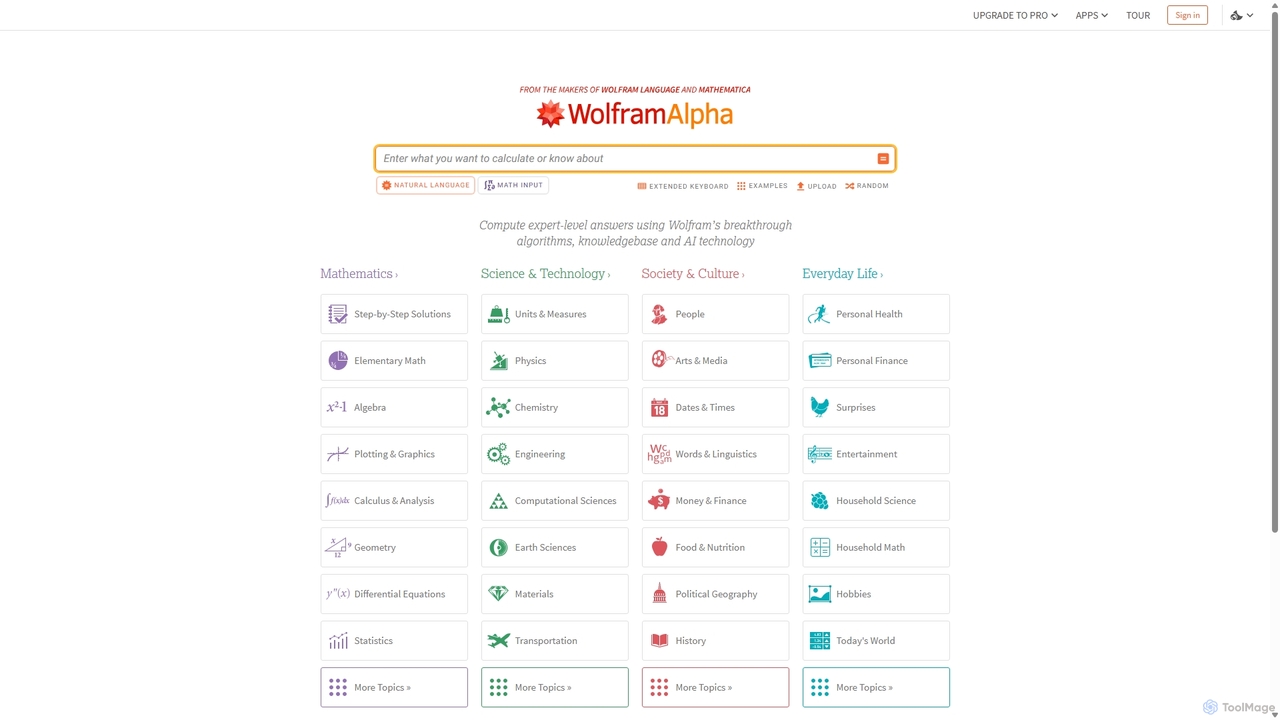
Computational Science AI tools are a specialized category of artificial intelligence applications designed to enhance and accelerate scientific discovery through advanced computation. These tools leverage machine learning, deep learning, and other AI techniques to process vast datasets, perform complex simulations, and model intricate systems with unprecedented efficiency and accuracy. They empower researchers and scientists to tackle problems that are intractable with traditional methods, leading to breakthroughs in fields ranging from materials science and drug discovery to climate modeling and astrophysics. By integrating AI, these platforms not only automate routine tasks but also uncover hidden patterns and generate novel hypotheses, fundamentally transforming the scientific research paradigm.
Core Features
- AI-driven Simulation & Modeling: Enhances traditional scientific simulations by predicting outcomes, optimizing parameters, and significantly reducing computational cost and time for complex physical, chemical, and biological systems.
- Scientific Data Analysis & Interpretation: Automates the extraction of patterns, anomalies, and profound insights from large, complex scientific datasets, including genomic sequences, proteomic profiles, astronomical observations, and experimental sensor data.
- Automated Experiment Design & Optimization: Utilizes AI to intelligently propose optimal experimental setups, predict potential results, and guide iterative research cycles, thereby accelerating the discovery process and minimizing resource expenditure.
- Materials & Drug Discovery Acceleration: Speeds up the identification of novel materials with desired properties, chemical compounds, and potential drug candidates by accurately predicting their structures, functions, and interactions.
- High-Performance Computing (HPC) Optimization: Employs AI algorithms to intelligently manage and optimize resource allocation, job scheduling, and overall performance within supercomputing environments, ensuring maximum efficiency for demanding scientific workloads.
- Quantum Computing Integration: Explores and develops algorithms that leverage quantum principles to solve specific computational science problems, often in conjunction with classical AI methods.
Applicable Scenarios
These tools are indispensable for a wide array of stakeholders, including academic research institutions, industrial R&D departments in sectors like pharmaceuticals, aerospace, energy, and government science agencies. They are actively used by theoretical physicists modeling quantum phenomena, computational chemists designing new catalysts, molecular biologists analyzing complex biological systems, climate scientists predicting environmental changes, and astrophysicists interpreting cosmic data, significantly advancing the pace and scope of scientific inquiry across the board.
How to Choose
When selecting a Computational Science AI tool, it is crucial to consider its specific domain applicability (e.g., whether it's tailored for physics, chemistry, biology, or a multidisciplinary approach) and its compatibility with your existing scientific software, programming languages (like Python, R, MATLAB), and data formats. Evaluate its scalability for handling increasingly large datasets and complex computations, as well as its performance on high-performance computing infrastructures. Furthermore, assess the tool's interpretability and explainability features, which are paramount for validating scientific findings, understanding AI-generated predictions, and building trust in the research outcomes.