getstellr
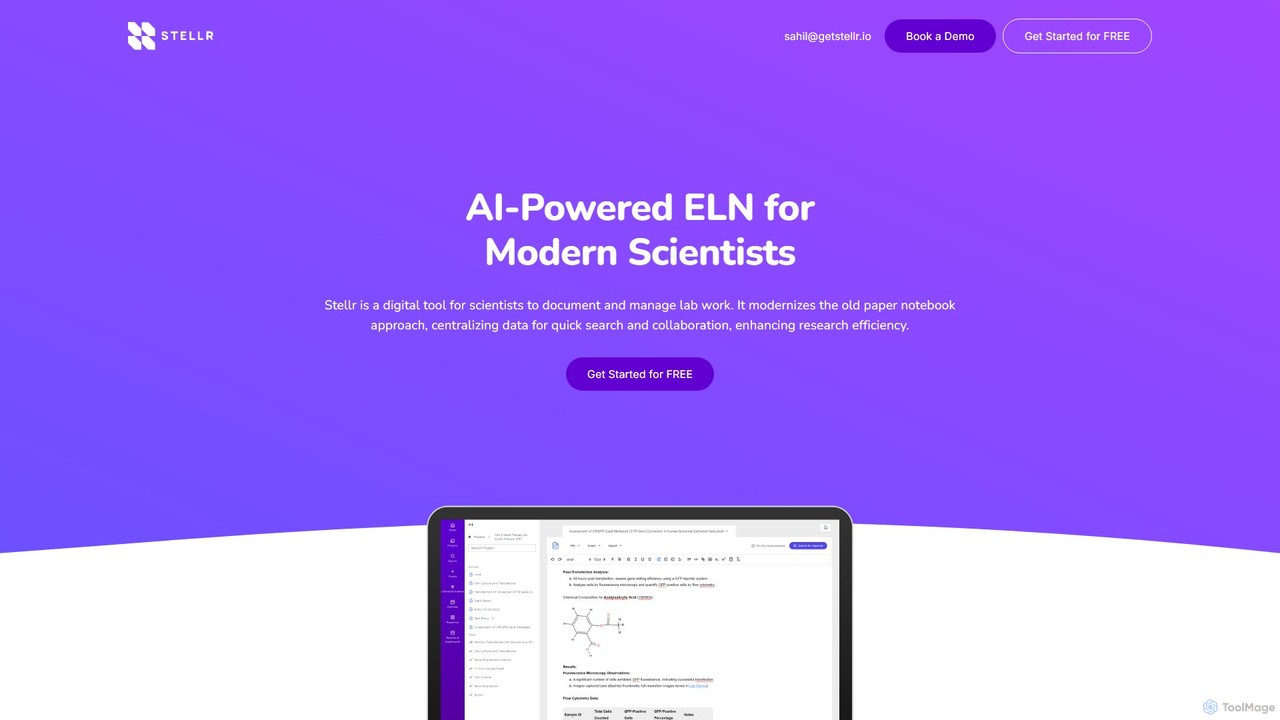
getstellr is an AI-powered Electronic Lab Notebook (ELN) designed for modern scientists in the bio-pharma industry. It replaces …
getstellr is an AI-powered Electronic Lab Notebook (ELN) designed for modern scientists in the bio-pharma industry. It replaces traditional paper notebooks, offering a centralized, searchable, and collaborative platform to document experiments, manage data, and accelerate research and development.
Scispot
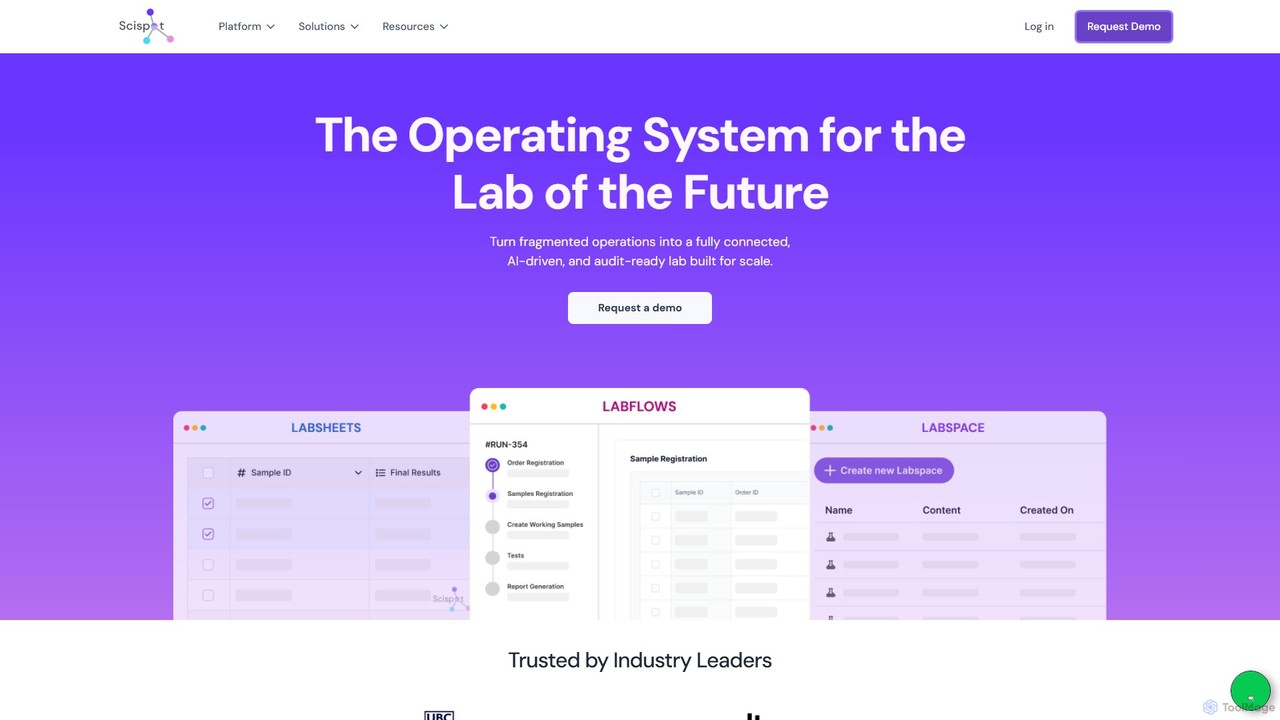
Scispot is an AI-powered, all-in-one lab operating system (LabOS) designed for biotech, diagnostics, and research labs. It unifies …
Scispot is an AI-powered, all-in-one lab operating system (LabOS) designed for biotech, diagnostics, and research labs. It unifies fragmented workflows by integrating experiment planning, sample management (LIMS), inventory tracking, and instrument data into a single, automated ecosystem. Featuring an AI assistant, Scibot, it streamlines operations, ensures compliance, and accelerates scientific discoveries.
About Laboratory Management
AI Laboratory Management tools are specialized software that use artificial intelligence to automate, optimize, and streamline laboratory operations. These platforms leverage machine learning for predictive analytics, computer vision for sample tracking, and natural language processing to manage vast amounts of research data. Their primary value lies in increasing experimental throughput, reducing human error, and ensuring rigorous compliance with industry standards. By integrating various lab functions, they provide a unified, intelligent system for managing everything from inventory to complex data analysis.
Core Features
- Predictive Maintenance: Analyzes equipment performance data to forecast potential failures and schedule maintenance proactively, minimizing downtime.
- Automated Data Capture & Analysis: Automatically records experimental results from connected instruments and uses AI to identify patterns, anomalies, and insights.
- Smart Inventory Management: Tracks reagent and consumable usage, predicts future needs based on project pipelines, and automates reordering processes.
- Compliance & Quality Control Automation: Monitors workflows in real-time to ensure adherence to Standard Operating Procedures (SOPs) and regulatory standards like GLP/GMP.
- Intelligent Experiment Design: Suggests optimal parameters for experiments (Design of Experiments), reducing the number of trials needed to achieve results.
Use Cases
These tools are crucial in data-intensive environments such as pharmaceutical R&D, biotechnology firms, clinical diagnostic labs, and academic research institutions. They are used by lab managers to optimize resource allocation, by research scientists to accelerate discovery, and by quality control teams to automate inspection and reporting processes.
How to Choose
When selecting an AI Laboratory Management tool, consider its integration capabilities with your existing LIMS, ELN, and lab instruments. Evaluate the specificity of its AI modules for your needs (e.g., image analysis vs. predictive modeling). Data security, regulatory compliance (e.g., FDA 21 CFR Part 11), and the system's scalability to grow with your lab are also critical factors.

Laboratory ManagementUse Cases
Automating Quality Control Image Analysis
A quality control analyst in a biotechnology lab is tasked with analyzing thousands of microscopy images daily to assess cell viability. Using an AI Laboratory Management tool with a computer vision module, the process is automated. The AI scans each image, accurately counts viable and non-viable cells, flags anomalies that deviate from standard morphology, and generates a comprehensive report with statistical data. This eliminates subjective manual counting, increases throughput by over 90%, and provides a fully documented, auditable trail for regulatory compliance.
Predictive Inventory Management for a Research Institute
A lab manager at a large research institute struggles with stockouts of critical reagents, causing delays in important projects. By implementing an AI-powered inventory management system, they can now track real-time consumption across all labs. The AI analyzes historical usage data, current project schedules, and supplier lead times to predict when supplies will run low. It automatically generates purchase orders for approval, ensuring just-in-time delivery. This proactive approach prevents costly experiment delays, reduces waste from expired chemicals, and optimizes the purchasing budget.
Optimizing Experimental Design in Pharmaceutical R&D
A research scientist in a pharmaceutical company needs to develop a new drug formulation, a process involving many variables like concentration, temperature, and pH. Instead of traditional trial-and-error, they use an AI tool with a Design of Experiments (DoE) module. The scientist inputs the variables and desired outcomes, and the AI calculates the most statistically efficient set of experiments to run. This significantly reduces the number of required trials, saving weeks of work and substantial material costs, while increasing the probability of identifying the optimal formulation faster.
Ensuring Regulatory Compliance with an Automated Audit Trail
In a clinical diagnostic lab, maintaining a perfect chain of custody and adhering to GLP (Good Laboratory Practice) is non-negotiable. An AI management system automates this process. It digitally tracks every sample from receipt to disposal, records every action performed by technicians and instruments, and time-stamps all data entries. The system continuously monitors for deviations from SOPs and automatically flags them for review. During an audit, the compliance officer can generate a complete, unalterable electronic record in seconds, demonstrating full compliance and data integrity effortlessly.
Intelligent Scheduling for High-Demand Equipment
An academic core facility manages several high-demand instruments, like DNA sequencers and mass spectrometers, used by dozens of research groups. An AI scheduling tool optimizes the booking calendar to maximize utilization. It analyzes historical run times, required setup/cleanup periods, and even predicts potential maintenance needs to block out time proactively. The system can also intelligently group similar sample runs from different users to reduce calibration time, effectively increasing the instrument's daily throughput and ensuring fair access for all researchers.
Uncovering Insights from Unstructured Research Notes
A principal investigator (PI) has accumulated years of experimental data in various formats, including electronic lab notebooks (ELNs), spreadsheets, and text documents. An AI platform with Natural Language Processing (NLP) capabilities is used to ingest and analyze this unstructured data. The AI can identify connections between different experiments, extract key entities like chemical compounds and gene names, and even suggest new hypotheses by finding correlations that were previously hidden. This transforms a static archive of data into a dynamic knowledge base, accelerating new avenues of research.