ToolMage
Sign in

Best 13 Mathematics AI tools for Science

Popular Mathematics AI tools in Science include astra_ai, MathGPT, Brilliant, Thetawise, intmath, LearnFast, SnapXam, Math AI, aimath, and mymathsolver, helping you work more efficiently.

Wurlo

Wurlo

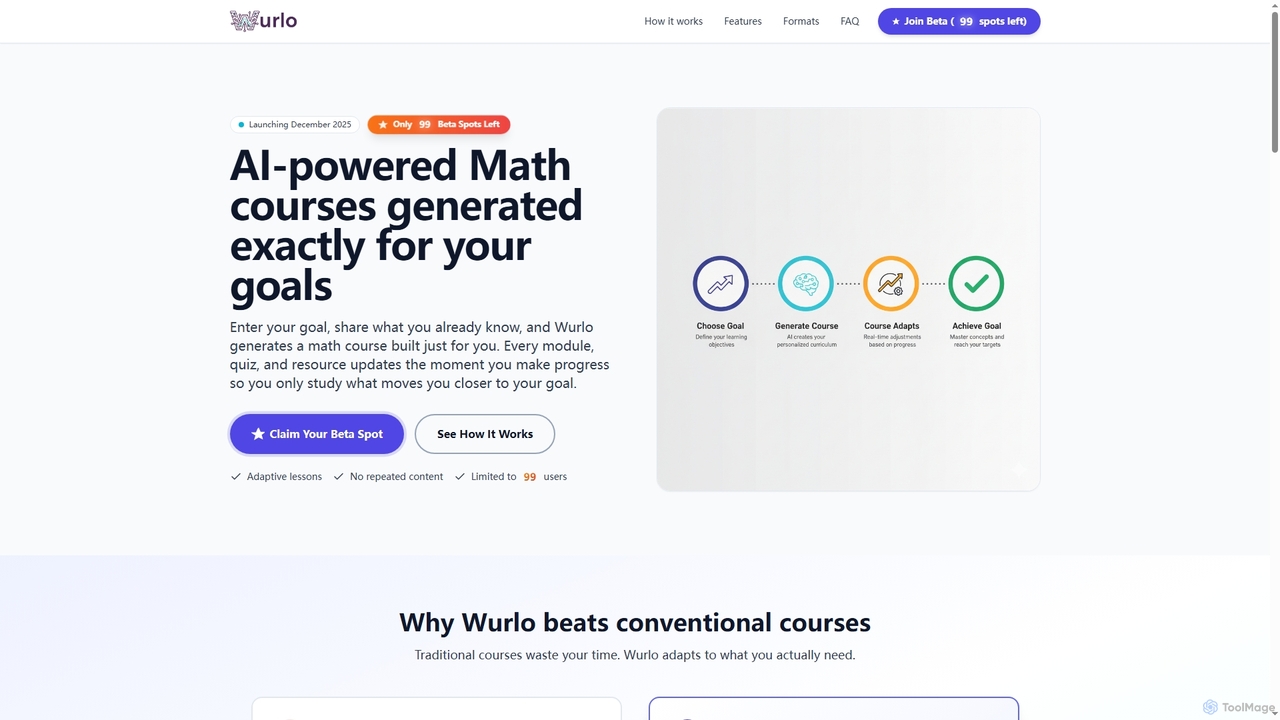
Wurlo is an AI-powered learning platform that generates personalized and adaptive math courses. It tailors content to your specific goals and existing knowledge, ensuring you only study what you need to learn, eliminating wasted time and redundant lessons.

Learning
Visits 4.3KFavorites 123Likes 133
Brilliant
Freemium

Brilliant

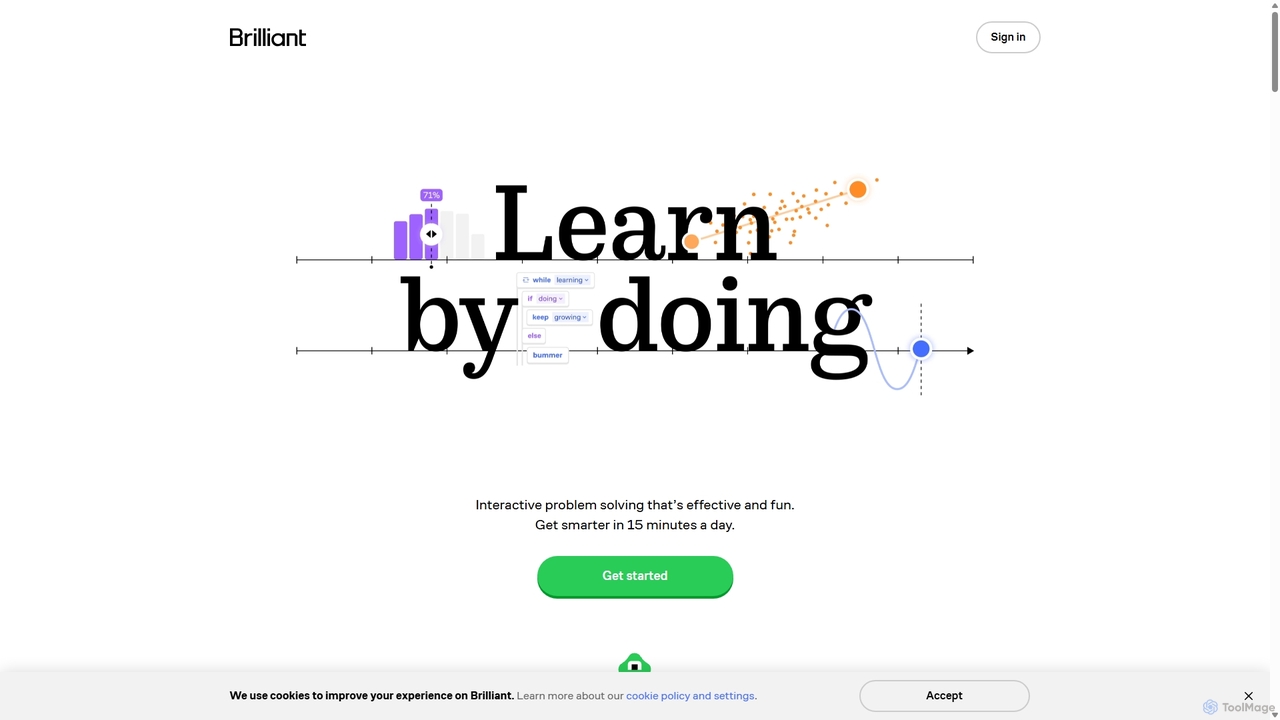
Brilliant is an interactive learning platform that helps you master concepts in math, science, computer science, and AI through hands-on problem-solving. It replaces traditional video lectures with engaging, bite-sized lessons designed to build your critical thinking and quantitative skills in just 15 minutes a day.

Learning Platform
Visits 2.6MFavorites 115Likes 91
Mileto
Freemium

Mileto

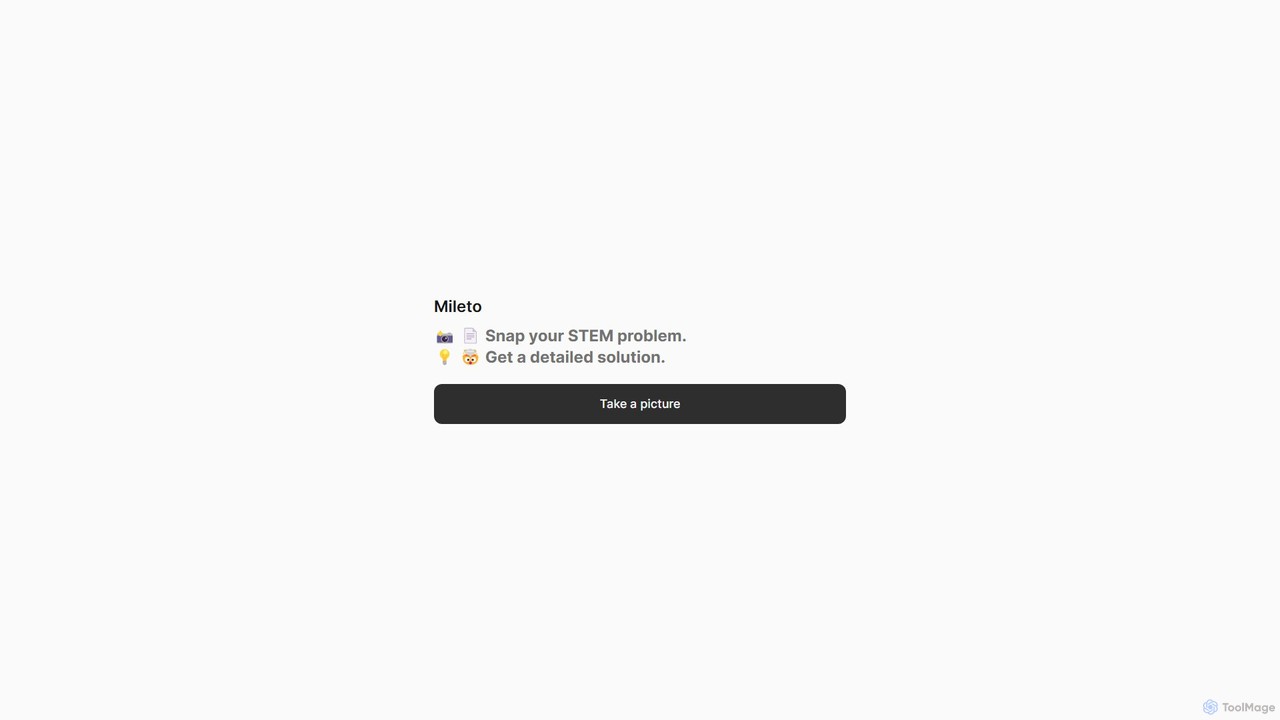
Mileto is an AI-powered educational tool that solves STEM problems from a photo. Simply snap a picture of your math, physics, or chemistry question, and Mileto provides a detailed, step-by-step solution, helping you understand the underlying concepts.

Homework Helper
Visits 4.3KFavorites 97Likes 104
LearnFast
Freemium

LearnFast

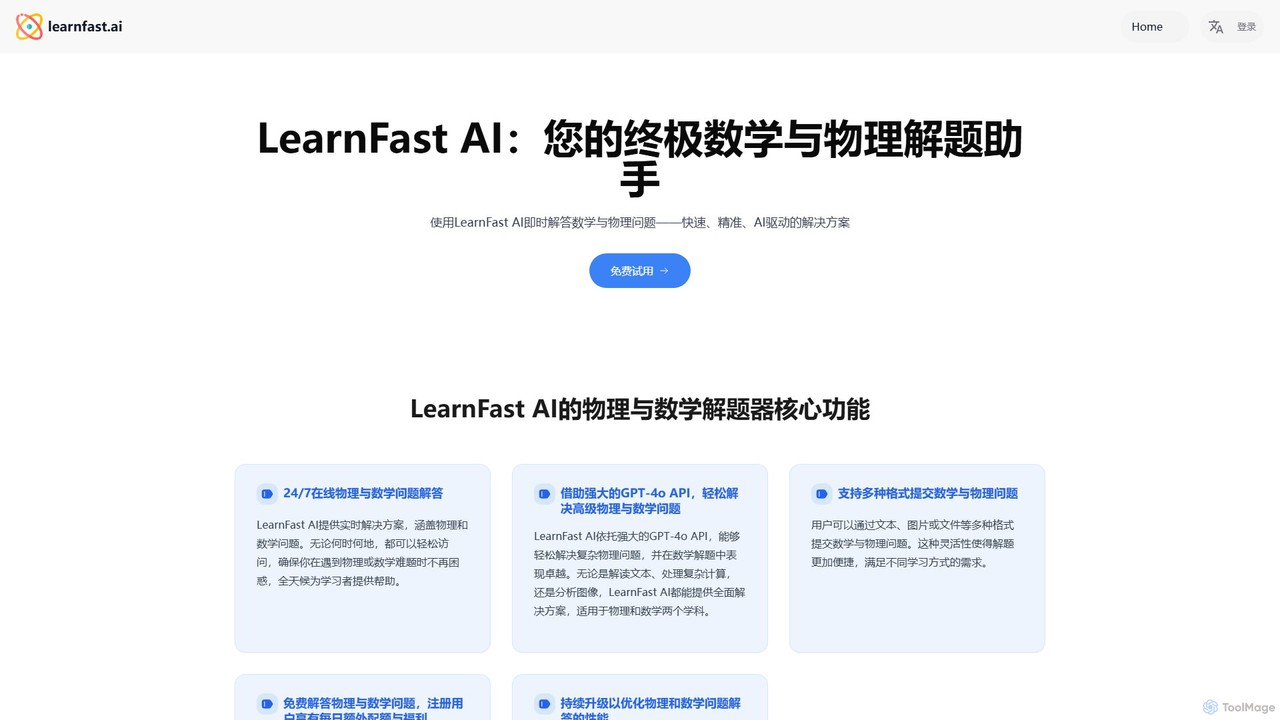
LearnFast is an AI-powered problem solver for mathematics and physics. Powered by GPT-4o, it provides instant, accurate, and step-by-step solutions to a wide range of problems. Users can submit questions via text, images, or files, making it an ideal learning companion for students, educators, and lifelong learners.

Homework Helper
Visits 111.5KFavorites 115Likes 106
astra_ai
Freemium

astra_ai

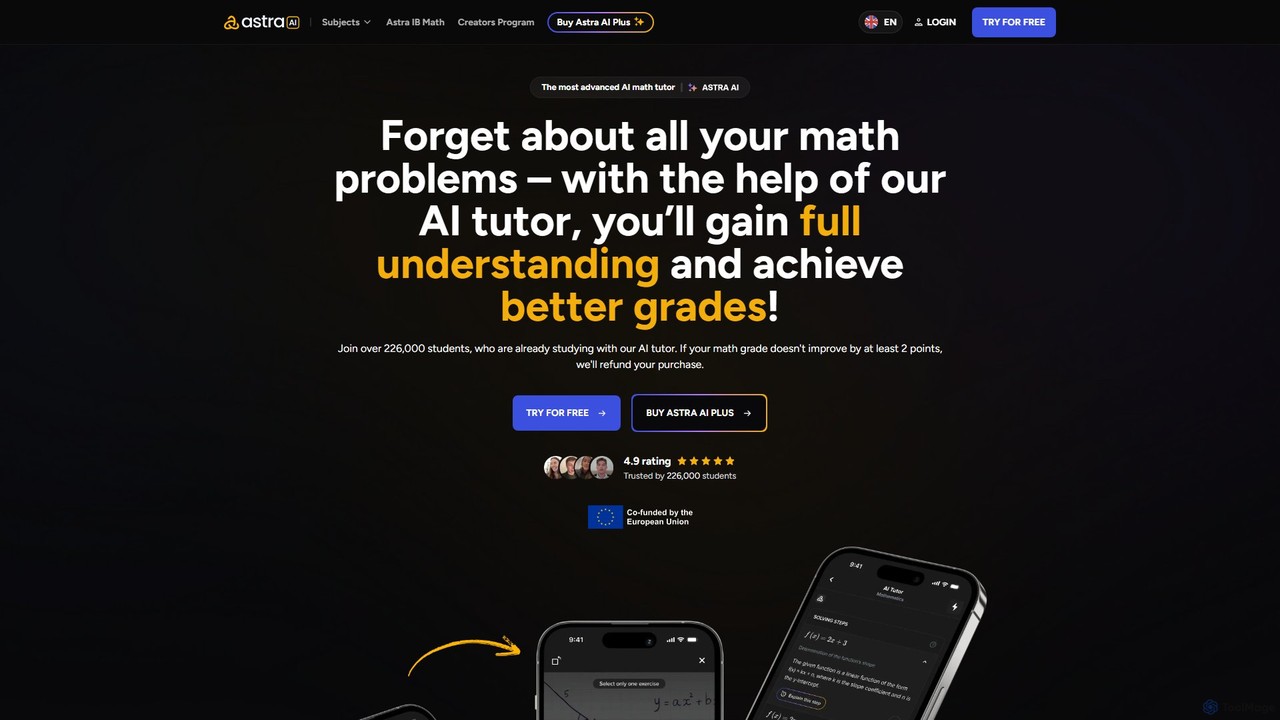
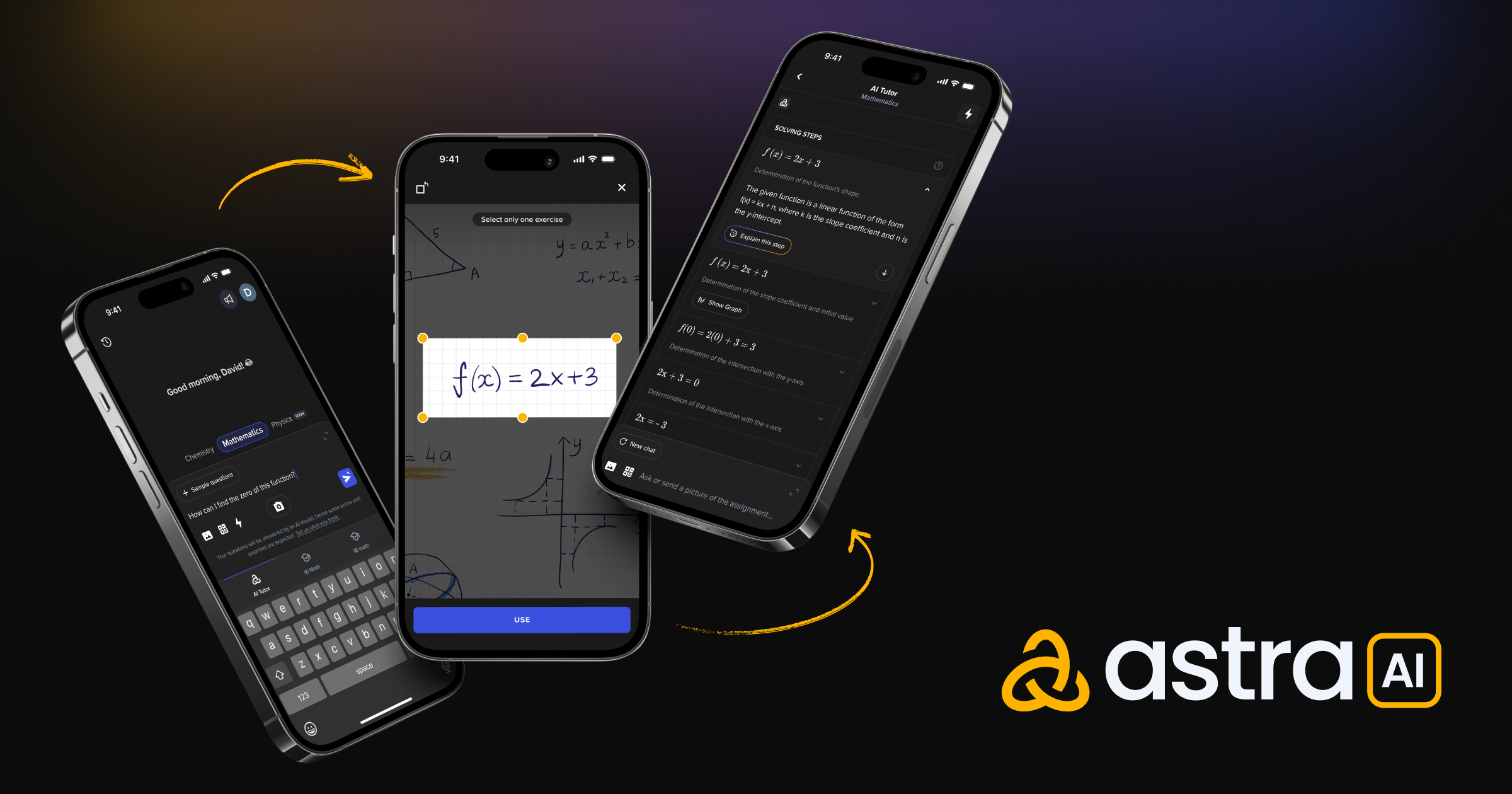
Astra AI is a 24/7 personal AI tutor designed to help students master Math, Chemistry, Physics, and German. By providing step-by-step, interactive explanations, it improves understanding and guarantees better grades. It offers specialized programs like Astra IB Math for targeted exam preparation, making learning accessible, affordable, and effective.

Tutoring
Visits 4.4MFavorites 131Likes 128
mymathsolver
Freemium

mymathsolver

mymathsolver is an advanced AI-powered math and physics solver. Driven by GPT-4o, it provides instant, detailed step-by-step solutions to a wide range of problems, from algebra to calculus. Users can input problems via text, images, or files. The platform features an interactive AI tutor bot, making it an ideal homework helper and learning companion for students and educators seeking to understand complex concepts, not just find answers.

Homework Helper
Visits 6.2KFavorites 107Likes 114
aimath
Freemium

aimath

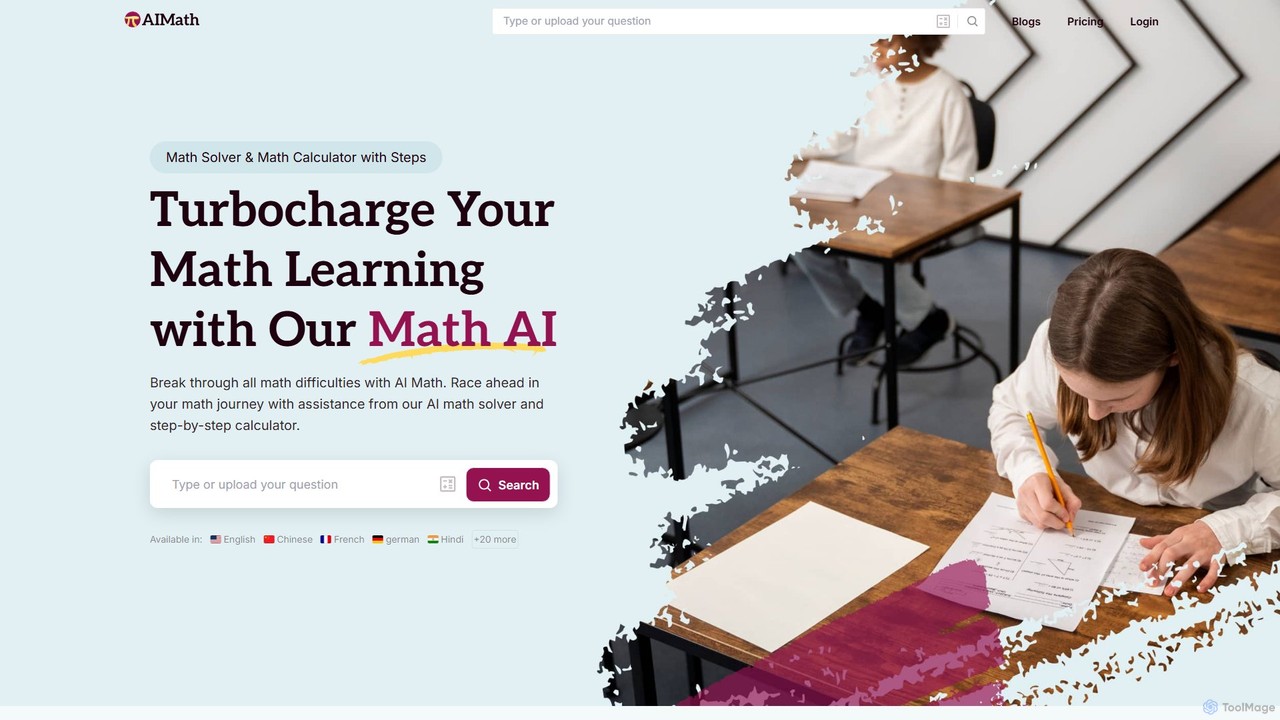
aimath is an AI-powered math solver that provides instant, step-by-step solutions to a wide range of math problems. From basic arithmetic to advanced calculus, it helps users understand concepts through detailed explanations. It features a photo math solver for solving problems from images, making it a versatile tool for students and educators.

Homework Helper
Visits 9.1KFavorites 108Likes 98
Math AI
Freemium

Math AI

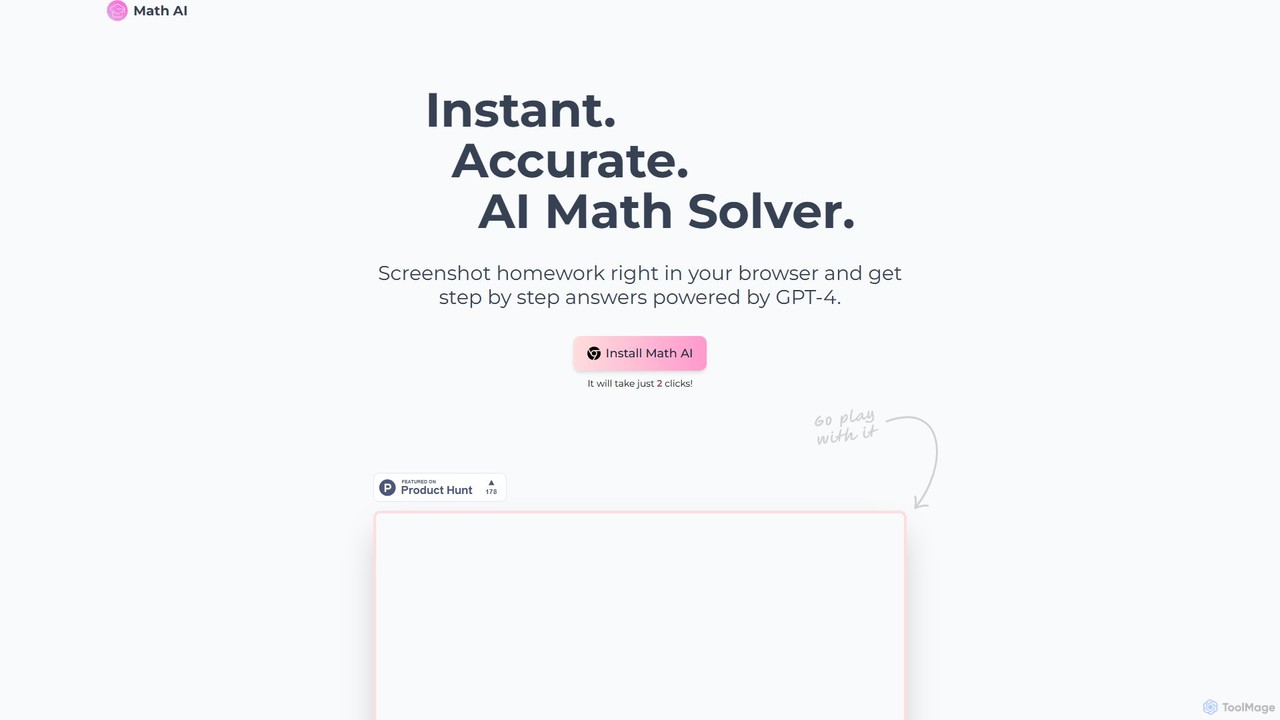
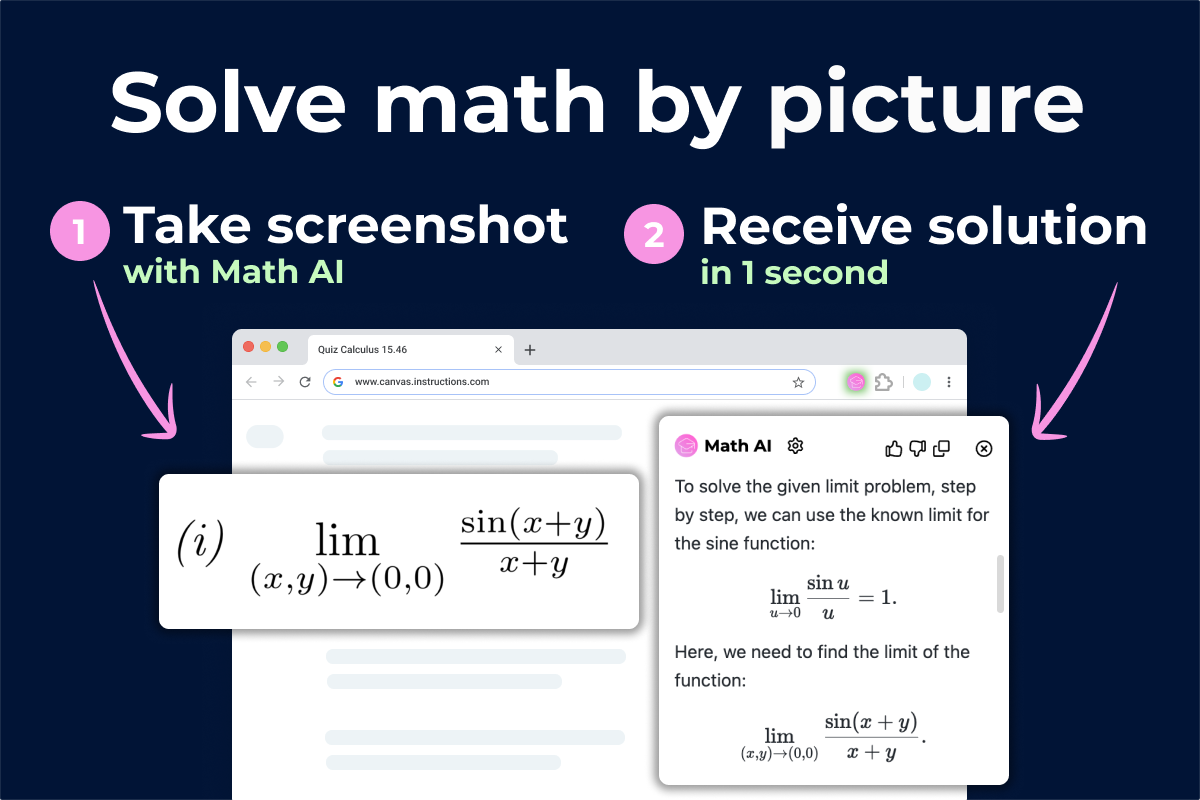
Math AI is a GPT-4 powered browser extension that acts as an instant AI Math Solver. Simply screenshot any homework problem in your browser, from math to physics and chemistry, and get accurate, step-by-step solutions. It's designed to help students understand complex concepts, not just find answers.

Homework Helper
Visits 18.5KFavorites 114Likes 132
SnapXam
Free

SnapXam

SnapXam is a free, AI-powered math tutor that provides instant, step-by-step solutions to a wide range of mathematical problems. From basic arithmetic to advanced calculus and differential equations, it helps students understand concepts, check homework, and prepare for exams 24/7.

Homework Help
Visits 81.6KFavorites 109Likes 103
ai_math
Freemium

ai_math

An AI-powered math solver that provides instant, step-by-step solutions to a wide range of mathematical problems. From algebra and calculus to geometry and statistics, ai_math helps students, educators, and professionals understand complex concepts and solve equations with ease. Simply input your problem via text or image upload to receive detailed explanations and accurate answers, making it the perfect tool for homework, exam prep, and self-study.

Math Solver
Visits 4.3KFavorites 171Likes 150
MathGPT
Freemium

MathGPT

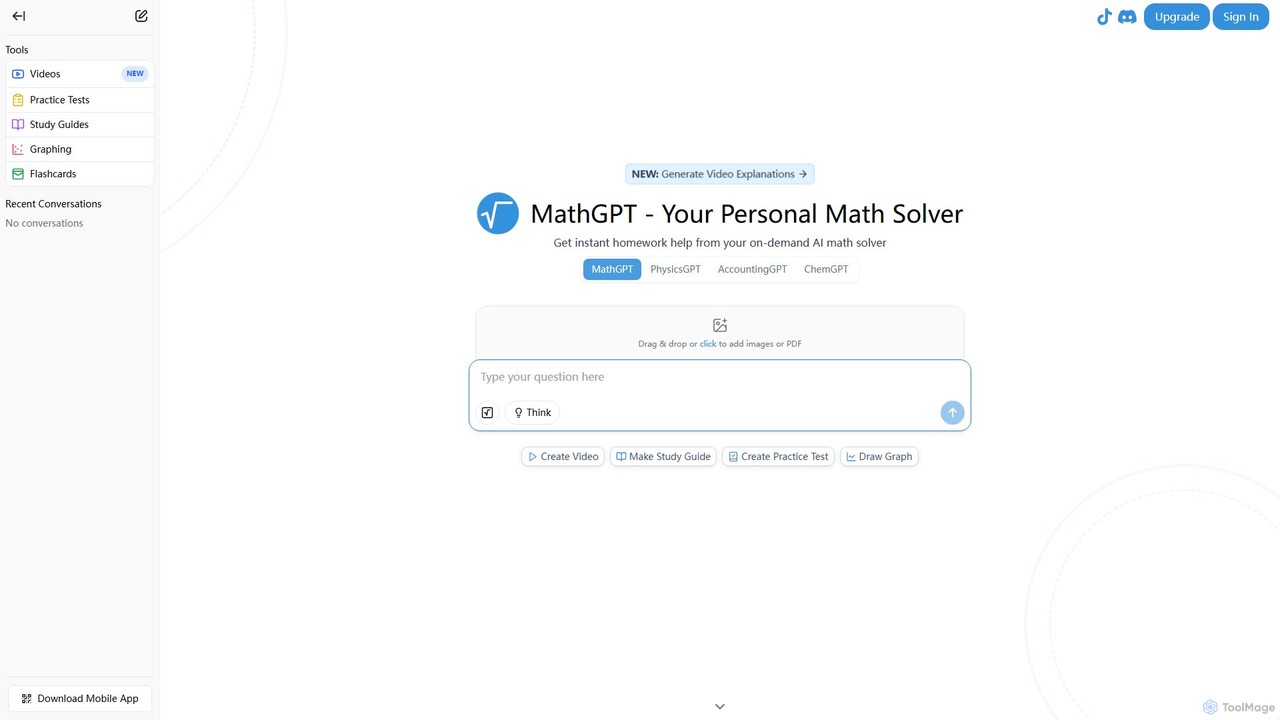
MathGPT is an AI-powered math solver and homework helper that provides instant, step-by-step solutions for a wide range of subjects including algebra, calculus, physics, and chemistry. It uniquely generates on-demand video explanations and interactive quizzes to enhance understanding, acting as a 24/7 personal tutor for students from elementary school to college.

Homework Helper
Visits 3.6MFavorites 102Likes 108
intmath
Freemium

intmath

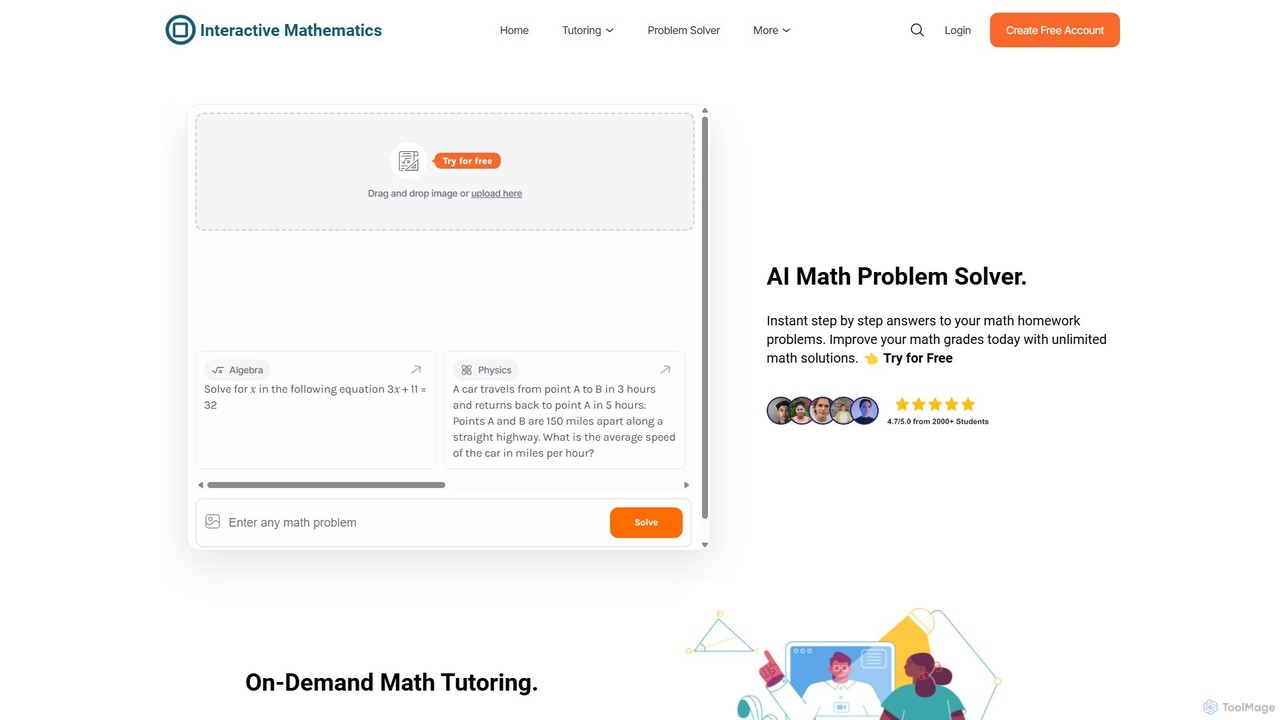
intmath is an AI-powered math problem solver and interactive learning platform. It provides instant, step-by-step solutions to a wide range of math problems, from basic algebra to advanced calculus. With features like photo-based problem submission and 24/7 on-demand tutoring, it's designed to help students improve their grades and deepen their understanding of mathematics.

Homework Helper
Visits 138.7KFavorites 118Likes 124
Thetawise
Freemium

Thetawise

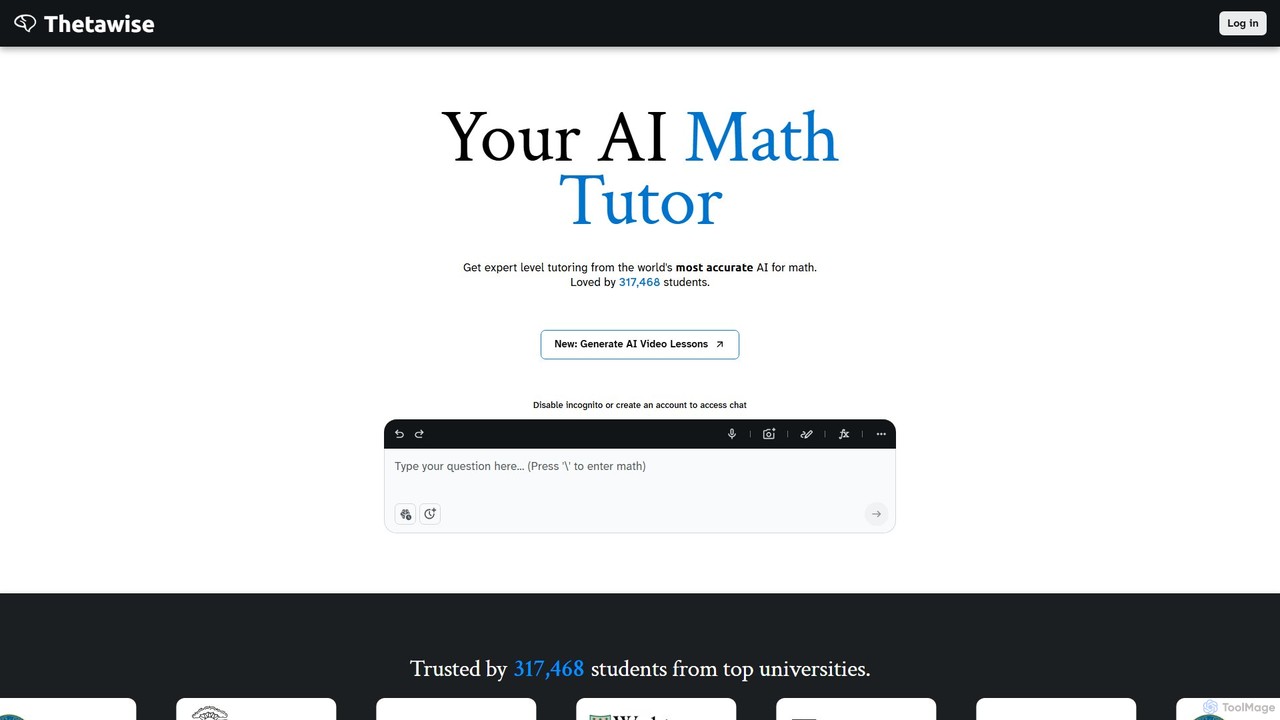
Thetawise is a highly accurate AI math tutor designed to help students master complex mathematical concepts. It provides instant, step-by-step solutions, features an advanced problem solver, and can even generate personalized AI video lessons. With multiple input methods like image uploads, handwriting, and voice-to-text, Thetawise makes learning math accessible, affordable, and available 24/7.

Tutoring
Visits 643.5KFavorites 101Likes 114

About Mathematics

AI Mathematics tools are a class of software designed to solve, analyze, and visualize complex mathematical problems using artificial intelligence. These tools leverage symbolic computation engines, numerical algorithms, and machine learning to automate tasks like solving algebraic equations, performing calculus, and modeling statistical data. They are instrumental for researchers, engineers, and students in accelerating discovery, optimizing designs, and gaining deeper insights from complex quantitative information. Unlike general scientific software, they focus specifically on mathematical structures, logic, and abstraction.

Core Features

  • Symbolic Computation: Manipulate and solve mathematical expressions with variables and symbols, not just numerical values.
  • Numerical Analysis: Execute high-precision numerical calculations, solve differential equations, and run complex simulations.
  • Data Visualization: Generate 2D and 3D plots, graphs, and interactive charts to represent functions and datasets visually.
  • Statistical Modeling: Build, analyze, and test statistical models, perform regression analysis, and conduct hypothesis testing.
  • Optimization Solvers: Find the optimal solutions for complex systems with multiple variables and constraints.

Use Cases

These tools are widely used in academic research (physics, engineering, economics), quantitative finance for modeling markets, data science for building predictive models, and across all levels of STEM education. For example, an engineer might simulate fluid dynamics, while a financial analyst could model portfolio risk.

How to Choose

When selecting an AI Mathematics tool, consider the following: your primary need (symbolic vs. numerical), integration capabilities with programming languages like Python or R, the availability of a graphical user interface versus a command-line environment, and the tool's performance on large-scale computations.

Featured tool rankings

Mathematics use cases

1

Academic Research and Equation Solving

A physicist researching quantum mechanics uses an AI mathematics tool to solve a complex system of differential equations. Instead of spending weeks on manual calculations, the tool provides a symbolic solution in minutes. This allows the researcher to quickly test different hypotheses and build a numerical simulation to visualize the results, significantly accelerating the pace of discovery.

2

Financial Modeling and Risk Analysis

A quantitative analyst at an investment firm uses an AI mathematics tool to model stock price movements and assess portfolio risk. The tool's statistical functions are used to perform time-series analysis and run Monte Carlo simulations. The results help the firm make data-driven investment decisions and manage exposure to market volatility more effectively.

3

Engineering Design and Simulation

A mechanical engineer designing a new aircraft wing uses a mathematics tool for finite element analysis (FEA). By defining the wing's geometry and material properties, the tool solves the underlying partial differential equations to simulate stress and airflow. This allows the engineer to optimize the design for strength and aerodynamics before building a costly physical prototype.

4

Data Science and Predictive Modeling

A data scientist working for an e-commerce company analyzes customer behavior data. They use an AI mathematics tool to perform logistic regression to predict which customers are likely to churn. The tool's visualization capabilities are then used to create charts that clearly communicate these insights to the marketing team, enabling them to launch targeted retention campaigns.

5

STEM Education and Interactive Learning

A university professor teaching calculus creates an interactive assignment using an AI mathematics tool. Students can input their own functions, see them plotted in real-time, and watch a step-by-step derivation of the solution. This hands-on approach helps demystify abstract concepts and provides immediate feedback, enhancing the learning experience beyond a traditional textbook.

6

Automated Theorem Proving in Computer Science

A computer scientist developing a critical safety system, such as an autonomous vehicle's control algorithm, uses an AI mathematics tool for formal verification. The tool helps construct a mathematical proof that the algorithm is logically sound and will behave as expected under all conditions. This provides a much higher level of assurance than traditional software testing alone.

Mathematics FAQ

What are AI Mathematics tools?

AI Mathematics tools are advanced software applications that use AI to solve complex mathematical problems. Unlike a standard calculator, they can handle symbolic algebra (working with variables like 'x'), perform calculus, solve differential equations, and run sophisticated statistical analyses. They essentially act as a powerful computational assistant for scientists, engineers, and researchers.

How to choose the right AI Mathematics tool?

Choosing the right tool depends on your specific needs. Consider these factors:

  • Problem Type: Do you need symbolic computation (for algebra and calculus) or numerical analysis (for simulations and data)?
  • Programming Integration: Do you need to call its functions from a language like Python, R, or C++?
  • User Interface: Are you comfortable with a command-line interface, or do you require a graphical user interface (GUI) with plotting tools?
  • Cost and Licensing: Evaluate whether a commercial tool with support or a free, open-source alternative better fits your budget and needs.
What's the difference between AI Math tools and programming libraries like NumPy?

The main difference is scope and level of abstraction. A library like NumPy provides fundamental building blocks for numerical computation within a general-purpose language (Python). An AI Mathematics tool is often a complete, integrated environment with high-level functions for symbolic math, advanced solvers, and built-in visualization. You can often solve complex problems with less code in a dedicated math tool than by building everything from scratch with a library.

Can these tools help with learning mathematics?

Absolutely. Many AI mathematics tools are excellent for education. They allow students to visualize complex functions in 2D or 3D, explore how changing a parameter affects a graph, and get step-by-step solutions to problems. This interactive approach can make abstract concepts more concrete and intuitive, serving as a powerful supplement to traditional teaching methods.

Who are the primary users of AI Mathematics tools?

The user base is broad and spans multiple fields. Key users include:

  • Scientists and Researchers: For modeling physical systems, analyzing experimental data, and developing new theories.
  • Engineers: For design, simulation, optimization, and control systems analysis.
  • Financial Analysts (Quants): For algorithmic trading, risk modeling, and pricing derivatives.
  • Data Scientists: For statistical modeling and developing machine learning algorithms.
  • Students and Educators: For teaching and learning complex mathematical and scientific concepts.