Atmo
Atmo is an ultra-precise AI weather forecasting platform powered by deep learning. It delivers forecasts up to 40,000 …
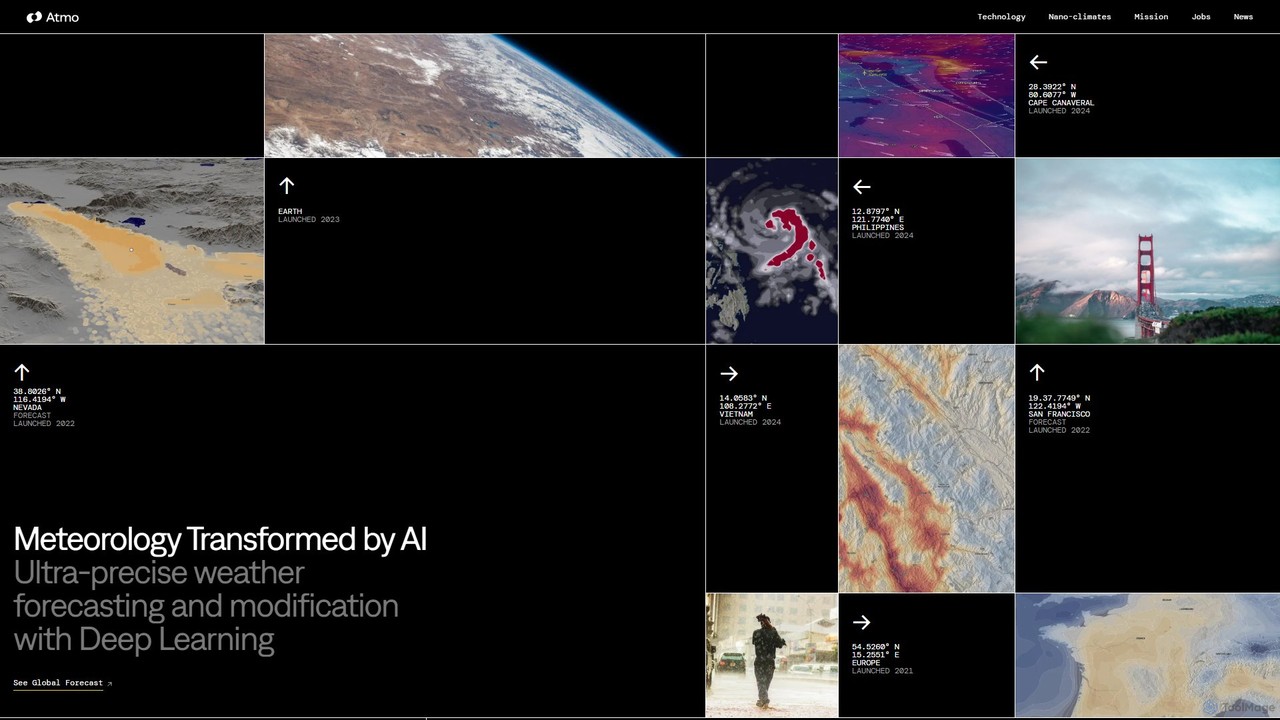
Atmo is an ultra-precise AI weather forecasting platform powered by deep learning. It delivers forecasts up to 40,000 times faster and 50% more accurately than traditional models, with resolutions as fine as 1km. Trusted by governments, militaries, and industries, Atmo provides critical insights for disaster management, mission planning, and climate change adaptation.
earth
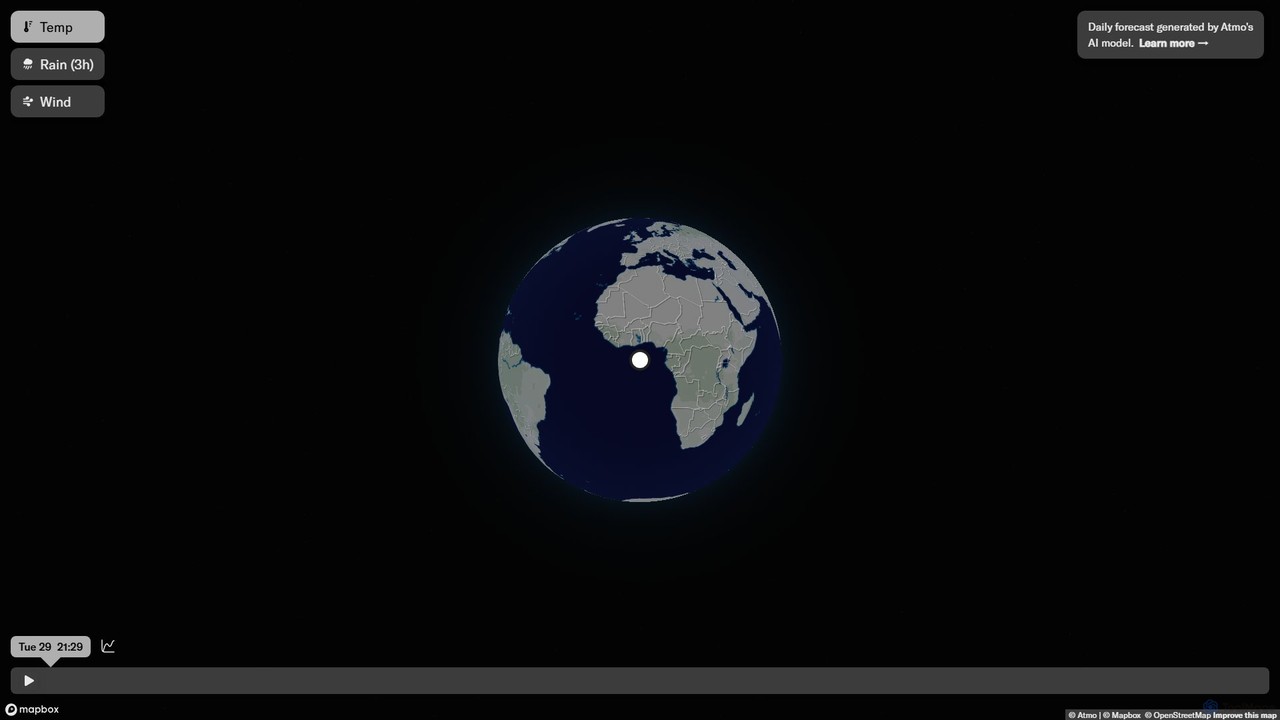
earth by Atmo is an advanced AI-powered global weather forecasting model. It provides highly accurate, high-resolution forecasts for …
earth by Atmo is an advanced AI-powered global weather forecasting model. It provides highly accurate, high-resolution forecasts for temperature, rain, and wind, visualized on an interactive global map. Designed for both public use and professional integration via API, it offers a modern alternative to traditional weather prediction methods.
About Meteorology
AI Meteorology tools are a specialized class of scientific software that leverage artificial intelligence to analyze atmospheric data and predict weather patterns. These tools process vast datasets from satellites, radar, and ground sensors using machine learning algorithms to generate highly accurate forecasts and climate models. Their primary value lies in enhancing predictive accuracy for critical industries, improving early warnings for severe weather, and accelerating climate change research. By identifying complex patterns that traditional physics-based models may miss, they offer a new level of precision in understanding our atmosphere.
Core Features
- Predictive Modeling: Utilizes machine learning to generate short-term and long-term weather forecasts with high accuracy.
- Extreme Weather Detection: Identifies precursors to severe events like hurricanes, tornadoes, and floods for earlier warnings.
- Climate Simulation: Models long-term climate scenarios to understand the potential impacts of environmental changes.
- Data Assimilation: Integrates and harmonizes diverse meteorological data sources into a cohesive analytical model.
- Hyperlocal Forecasting: Delivers granular, location-specific weather predictions for precise planning.
Use Cases
AI Meteorology tools are crucial for sectors dependent on weather conditions. In agriculture, they inform irrigation and harvest schedules. The renewable energy sector uses them to forecast solar and wind power generation. Logistics and aviation companies rely on them for route optimization and safety, while insurance firms use them for natural disaster risk assessment.
How to Choose
When selecting an AI Meteorology tool, evaluate the forecast resolution and validated accuracy. Consider the specialization of its models—whether for short-term forecasting, climate projection, or specific phenomena. Assess the quality and variety of its data sources and its API capabilities for integration with your existing business systems. Finally, consider the user interface and the level of technical support provided.
MeteorologyUse Cases
Renewable Energy Output Forecasting
Energy grid operators and renewable energy producers use AI meteorology tools to predict solar and wind power generation. By analyzing hyperlocal weather forecasts, cloud cover data, and wind speed predictions, these tools can forecast energy output for the next hours or days with high accuracy. This allows operators to balance the power grid effectively, schedule maintenance during low-production periods, and optimize energy trading on the spot market, leading to increased grid stability and profitability.
Agricultural Crop Yield Optimization
Farmers and agribusinesses leverage AI meteorology tools for precision agriculture. These platforms provide detailed forecasts on precipitation, temperature, and soil moisture, enabling farmers to optimize irrigation schedules, plan fertilizer application to avoid runoff, and determine the ideal time for planting and harvesting. By predicting potential weather risks like frost or drought weeks in advance, farmers can take proactive measures to protect crops, ultimately increasing yield, reducing resource waste, and improving sustainability.
Logistics and Supply Chain Route Planning
Logistics companies use AI-powered weather models to optimize shipping routes for ground, sea, and air transport. The system analyzes real-time and predictive weather data to identify potential disruptions like storms, heavy snow, or high winds. It can then automatically suggest alternative routes to avoid delays, reduce fuel consumption, and ensure the safety of cargo and personnel. This proactive approach to route planning minimizes the financial impact of adverse weather on the entire supply chain.
Insurance Risk Assessment for Natural Disasters
Insurance and reinsurance companies employ AI meteorology platforms to model the risk of natural catastrophes. By simulating thousands of potential hurricane paths, flood scenarios, or wildfire spreads under various climate conditions, these tools help insurers quantify potential losses. This allows for more accurate pricing of policies, better management of capital reserves, and proactive communication with policyholders in high-risk areas before an event occurs, improving both financial stability and customer relations.
Aviation Flight Path Optimization
Airlines and air traffic controllers use AI meteorology tools to enhance flight safety and efficiency. These systems provide high-resolution forecasts of turbulence, icing conditions, and jet stream locations. Pilots and dispatchers can use this information to plan optimal flight paths that avoid hazardous weather, reduce fuel burn by leveraging tailwinds, and minimize delays. This results in safer flights, lower operational costs, and an improved passenger experience.
Climate Change Impact Research
Climate scientists and researchers use AI-driven meteorological models to simulate future climate scenarios. These tools can process historical data and project long-term trends in temperature, sea levels, and extreme weather event frequency. This research is vital for informing public policy, guiding international climate agreements, and helping communities develop adaptation strategies for a changing climate. The AI's ability to model complex feedback loops within the climate system provides deeper insights than ever before.