ToolMage
Sign in

Best 3 Content Auditing AI tools for Seo

Popular Content Auditing AI tools in Seo include Raft, Aicontentscanner, and AI Copy Scanner, helping you work more efficiently.

Aicontentscanner
Free

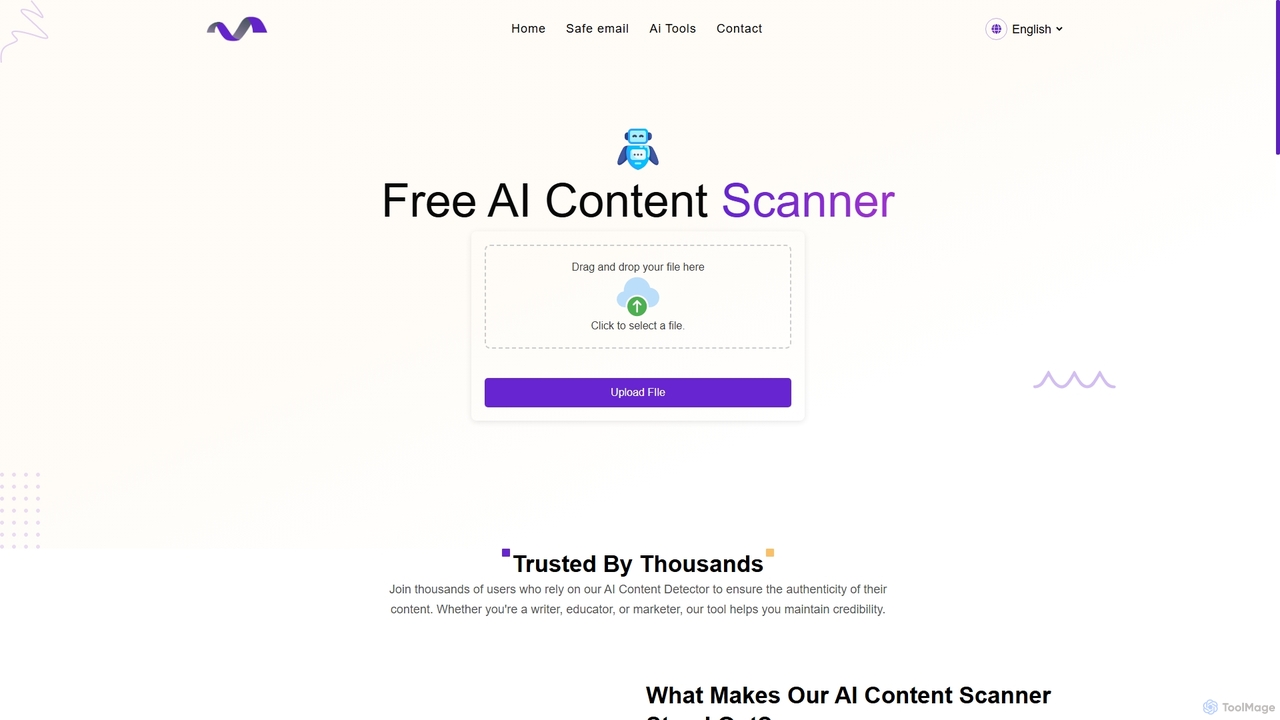
Aicontentscanner

A free and accurate AI content scanner designed to detect AI-generated text. Ideal for educators, content creators, and SEO specialists, it helps maintain content authenticity by quickly identifying text from models like GPT. Supports multiple file formats with a fast, user-friendly interface.

Academic Integrity
Visits 4.1KFavorites 117Likes 131
Raft
Freemium

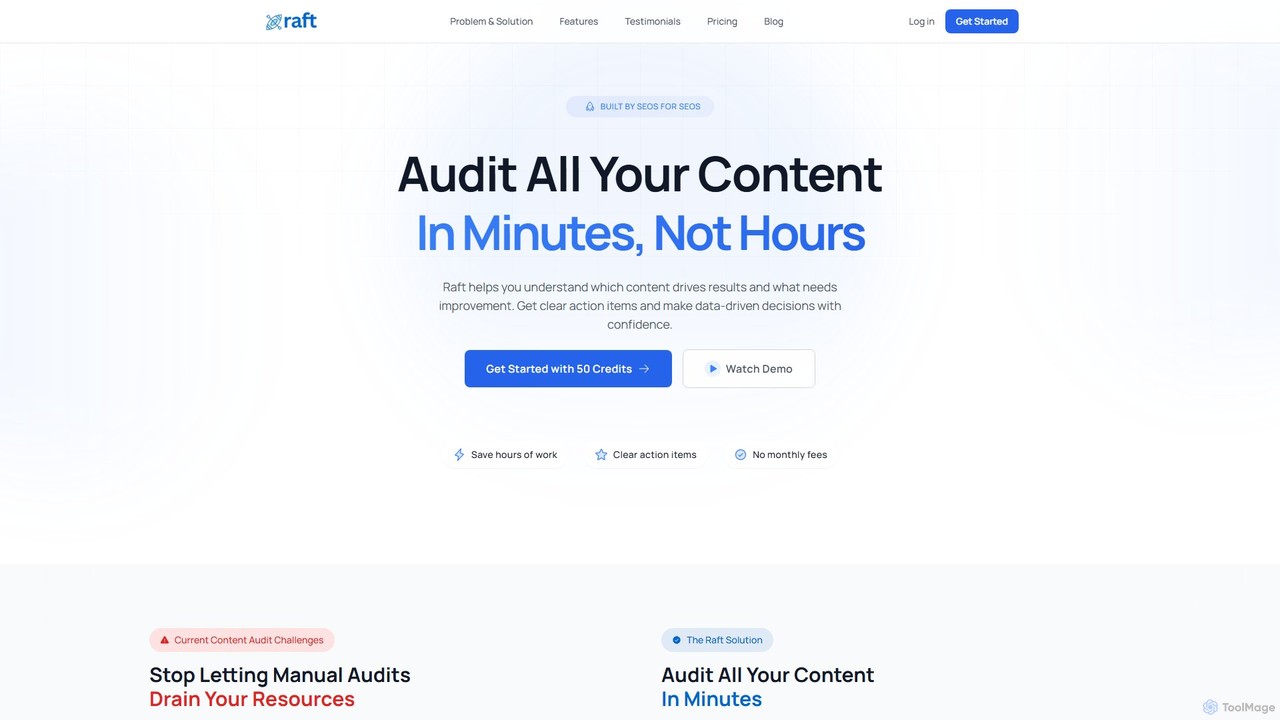
Raft

Raft is a specialized content audit tool designed for SEO professionals and content strategists. It automates the tedious process of content analysis, transforming hours of manual work into minutes. By consolidating key metrics and providing AI-powered insights, Raft helps users identify underperforming content, prioritize updates based on impact, and make data-driven decisions with confidence. Its flexible, credit-based pricing model eliminates the need for costly monthly subscriptions, making it an efficient solution for audits of any scale.

Content Strategy
Visits 4.2KFavorites 92Likes 97
AI Copy Scanner
Paid

AI Copy Scanner

AI Copy Scanner is a premium AI content detection tool designed for professionals. It offers high-accuracy analysis to distinguish between human-written and AI-generated text, helping marketers, educators, and publishers maintain content authenticity and quality standards. It provides detailed, sentence-level feedback and robust features for teams.

Plagiarism Detection
Visits 4.1KFavorites 126Likes 128

About Content Auditing

Content Auditing tools are AI-powered solutions designed for the systematic analysis of a website's existing content. These tools leverage advanced algorithms to evaluate content performance, identify gaps, and uncover optimization opportunities within the broader SEO strategy. They help businesses understand what content resonates with their audience, what needs improvement, and what should be removed or updated to enhance search engine visibility and user engagement.

Core Features

  • Content Inventory & Mapping: Automatically discover, categorize, and map all content assets on a website.
  • Performance Analysis: Evaluate content based on metrics like traffic, rankings, backlinks, and conversion rates.
  • Gap & Opportunity Identification: Pinpoint missing topics, keyword gaps, and areas for content expansion or consolidation.
  • Duplicate Content Detection: Identify identical or highly similar content that can negatively impact SEO.
  • Content Quality Scoring: Assess readability, relevance, freshness, and overall quality of content pieces.

Applicable Scenarios

Content Auditing tools are crucial for SEO specialists, content marketers, and webmasters. They are particularly valuable during website redesigns or migrations to ensure content integrity, for developing comprehensive content strategies, and for ongoing optimization efforts to maintain competitive search rankings.

How to Choose

When selecting a Content Auditing tool, consider its data integration capabilities with platforms like Google Analytics and Search Console. Evaluate the depth of its analysis, covering not just SEO metrics but also engagement and technical aspects. Look for robust reporting and visualization features, and ensure it offers scalability to handle your website's size and future growth.

Featured tool rankings

Content Auditing use cases

1

Optimizing Underperforming Blog Posts

An SEO specialist uses a Content Auditing tool to identify blog posts with high impressions but low click-through rates or declining organic traffic. The tool helps pinpoint specific issues like outdated information, poor keyword targeting, or lack of internal linking, guiding the specialist to update, consolidate, or rewrite content for improved search performance.

2

Identifying Content Gaps for New Campaigns

A content marketer planning a new campaign utilizes Content Auditing to analyze competitor content and existing site content. The tool reveals topics and keywords where the site lacks comprehensive coverage, allowing the marketer to strategically create new content that fills these gaps and captures untapped audience interest.

3

Streamlining Content Before Website Migration

A website manager preparing for a major site migration employs Content Auditing to review all existing pages. The audit helps identify redundant, outdated, or trivial content that can be removed, merged, or redirected, ensuring a cleaner, more efficient migration and preventing the transfer of low-value pages.

4

Enhancing E-commerce Product Page SEO

An e-commerce business owner uses Content Auditing to evaluate product descriptions and category pages. The tool helps detect thin content, missing keywords, or duplicate descriptions across similar products, enabling the owner to optimize these pages for better search visibility and higher conversion rates.

5

Improving Topical Authority for Publishers

An online publisher or blogger leverages Content Auditing to analyze their extensive content archive. The tool assists in grouping related articles, identifying opportunities to create pillar pages, and consolidating fragmented content, thereby strengthening topical authority and improving overall site structure for search engines.

6

Managing Content Across Multiple Enterprise Domains

An enterprise SEO team responsible for several brand websites uses Content Auditing to gain a unified view of content performance across all domains. This allows them to identify cross-domain content duplication, standardize content quality, and allocate resources effectively for content creation and optimization initiatives at scale.

Content Auditing FAQ

What is Content Auditing?

Content Auditing is the systematic process of evaluating all content assets on a website to assess their performance, relevance, and effectiveness. AI-powered tools automate this by analyzing metrics like organic traffic, keyword rankings, engagement rates, and content quality, providing insights to optimize content for better SEO and user experience.

How does AI enhance Content Auditing?

AI significantly enhances Content Auditing by automating data collection and analysis from various sources (e.g., Google Analytics, Search Console). It can quickly process vast amounts of content, identify patterns, detect duplicate content, score content quality, and suggest optimization opportunities at a scale and speed impossible for manual audits, leading to deeper, more actionable insights.

What are the key benefits of performing a Content Audit?

Performing a Content Audit offers several key benefits: it improves SEO by identifying content for optimization or removal, enhances user experience by ensuring content relevance and quality, refines content strategy by highlighting gaps and opportunities, and optimizes resource allocation by focusing efforts on high-impact content. Ultimately, it drives better organic visibility and engagement.

How often should a Content Audit be performed?

The frequency of Content Audits depends on the website's size, content volume, and rate of change. For most businesses, a comprehensive audit is recommended annually or bi-annually. However, smaller, more focused audits can be performed quarterly or whenever there are significant changes to the website, content strategy, or SEO landscape.

What's the difference between Content Auditing and Technical SEO Auditing?

Content Auditing focuses specifically on the quality, relevance, and performance of the actual content itself, including text, images, and media. It aims to optimize content for user intent and search engine algorithms. Technical SEO Auditing, on the other hand, examines the website's infrastructure, crawlability, indexability, site speed, and other technical factors that affect how search engines interact with the site, regardless of the content's quality.