Worldofgami
World of Gami is an AI-powered project management tool and a Trello alternative that gamifies task management. It …
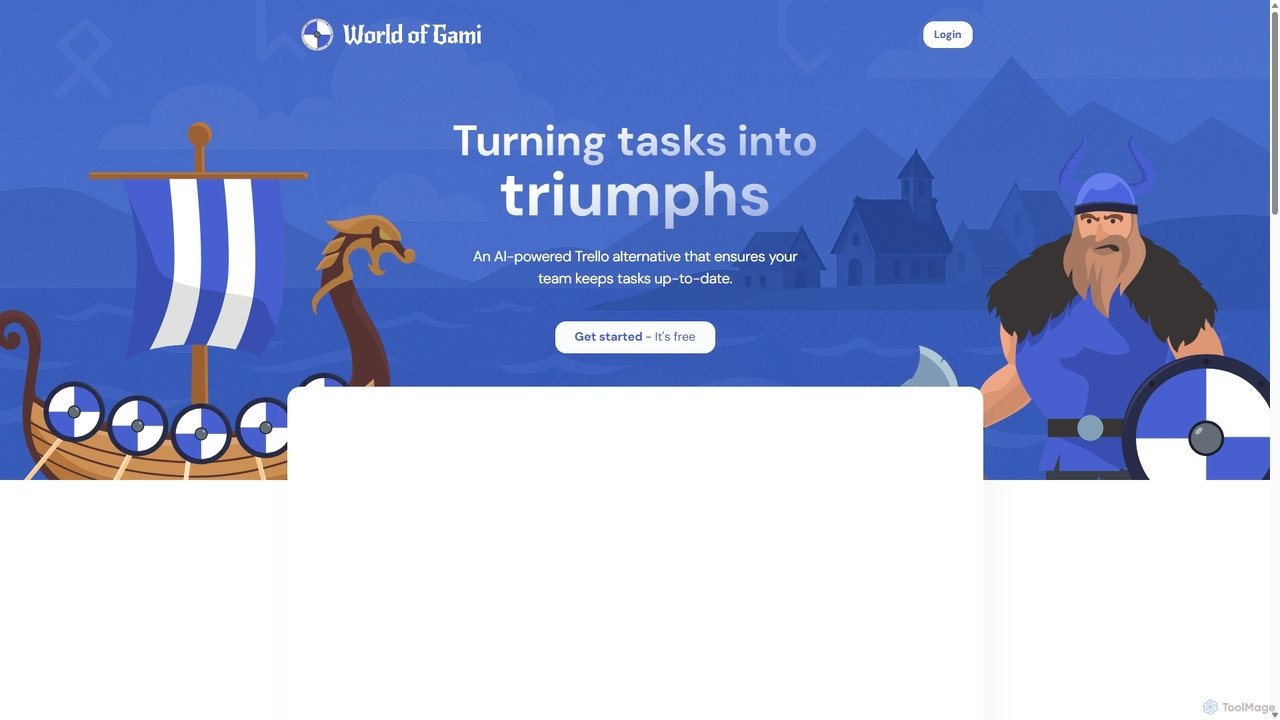
World of Gami is an AI-powered project management tool and a Trello alternative that gamifies task management. It transforms workflows into an engaging game, encouraging teams to keep tasks updated through competitive sprints. Features include AI task generation, Kanban boards, and Notion-like documentation, all designed to boost motivation, collaboration, and productivity in a fun, interactive environment.
About Gamification
Gamification tools are platforms that apply game-design elements and principles to non-game contexts, particularly within team collaboration environments. They leverage AI to create personalized challenges, track progress, and automatically issue rewards like points, badges, and leaderboard rankings. The primary goal is to increase user engagement, motivate specific behaviors, and make routine tasks more enjoyable. These tools transform standard workflows into interactive experiences that drive productivity and foster a sense of achievement.
Core Features
- Points & Rewards System: Automatically assigns points for completing tasks, achieving goals, or demonstrating desired behaviors.
- Badges & Achievements: Awards digital badges to recognize milestones, skill acquisition, and exceptional performance.
- Leaderboards & Rankings: Displays real-time rankings of individuals or teams to foster healthy competition and transparency.
- Progress Visualization: Uses progress bars, skill trees, and dashboards to provide clear visual feedback on individual and team advancement.
- Personalized Challenges: Employs AI to tailor challenges and goals based on an individual's role, performance history, and skill level.
Use Cases
Gamification tools are widely adopted in sales departments to motivate reps, in customer support centers to improve agent performance, and in software development for tracking sprint progress. They are also effective for employee onboarding, corporate training programs, and internal knowledge sharing platforms to encourage participation.
How to Choose
When selecting a gamification tool, consider its integration capabilities with your existing software stack (e.g., CRM, project management tools). Evaluate the level of customization for rules, rewards, and branding. Also, assess the quality of its analytics and reporting features to measure impact, and ensure the user interface is intuitive for all team members.

GamificationUse Cases
Boosting Sales Team Performance with Leaderboards
A sales manager wants to increase monthly recurring revenue (MRR) and foster friendly competition. They use a gamification tool integrated with their CRM. Sales representatives earn points for activities like logging calls, scheduling demos, and closing deals. A real-time leaderboard displayed on office screens shows top performers. At the end of the month, top-ranking members receive bonuses or prizes. This approach makes daily tasks more engaging and transparently rewards high-achievers, leading to a measurable uplift in sales activities and overall team motivation.
Enhancing Engagement in Customer Support Teams
A customer support lead aims to improve key metrics like first-response time and customer satisfaction (CSAT) scores. They implement a gamification system where agents earn badges for achieving a 95% CSAT score for a week or for resolving a certain number of tickets. These achievements are shared in a team channel, providing public recognition. This system motivates agents to not only work faster but also to provide higher quality support, turning performance metrics into achievable and rewarding goals.
Accelerating Agile Development Sprints
An engineering team uses a gamification tool integrated with their project management software (like Jira). Developers earn points for closing tickets, fixing bugs ahead of schedule, and completing peer reviews. The team collectively works towards unlocking a 'Sprint Master' achievement by meeting all their sprint goals. This visualizes progress in a more engaging way than a standard burndown chart and encourages proactive problem-solving and collaboration to ensure the entire team succeeds together.
Streamlining Employee Onboarding and Training
An HR department designs a gamified onboarding path for new hires. Instead of reading through documents, new employees complete interactive modules to earn 'Company Culture' or 'Product Expert' badges. A progress bar shows their journey towards becoming fully onboarded. This structured, goal-oriented approach makes the learning process less overwhelming and more engaging, helping new team members integrate faster and retain crucial information more effectively.
Encouraging Knowledge Sharing in a Digital Workplace
A company wants to build a vibrant internal knowledge base. Using a gamification platform, employees earn reputation points for writing articles, answering questions from colleagues, and having their answers marked as 'helpful'. A weekly leaderboard highlights the 'Top Contributors'. This incentivizes experts within the company to share their knowledge actively, transforming a static wiki into a dynamic, collaborative resource and breaking down information silos between departments.
Driving Participation in Corporate Wellness Initiatives
To promote employee health, a company launches a wellness challenge using a gamification app. Employees form teams and earn points for activities like daily steps, attending fitness classes, or completing meditation sessions. The app features a team leaderboard and awards virtual trophies for milestones. This turns individual health goals into a collaborative team effort, increasing accountability and making the wellness program more social and enjoyable for everyone involved.