ToolMage
Sign in

Best 2 Internal Communication AI tools for Team Collaboration

Popular Internal Communication AI tools in Team Collaboration include GoLinks and Unblocked, helping you work more efficiently.

Unblocked
Freemium

Unblocked

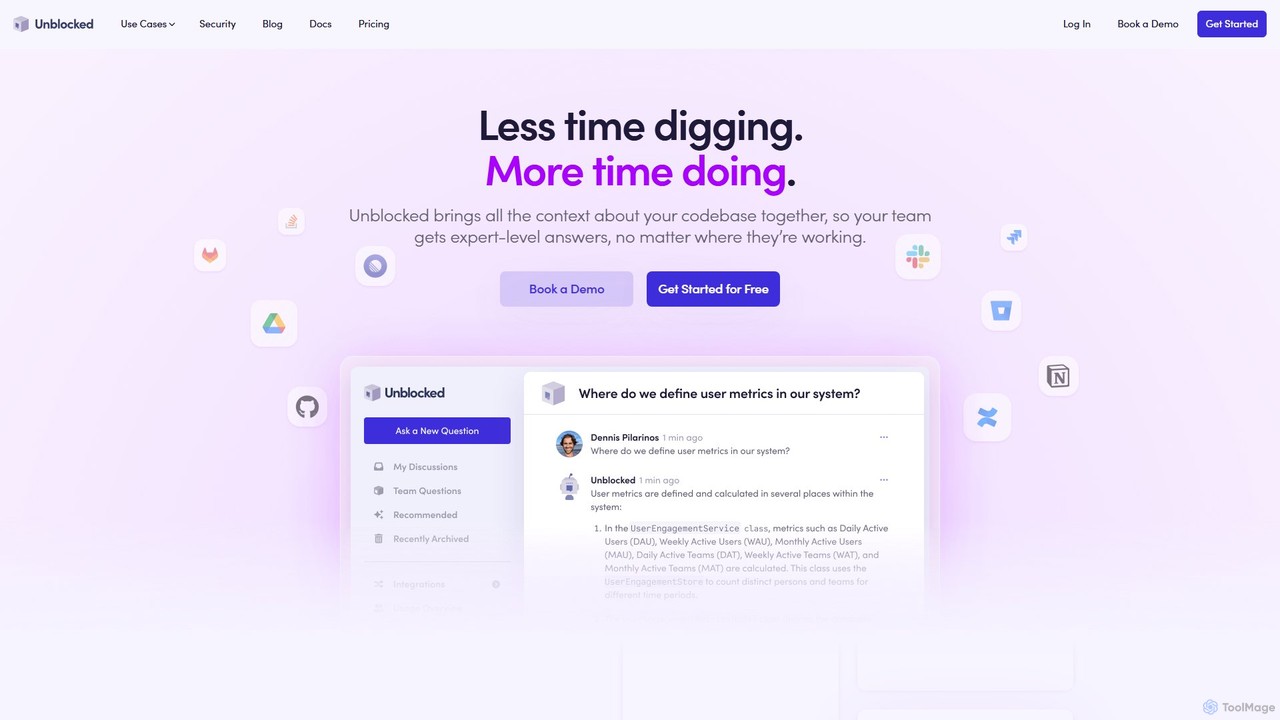
Unblocked is an AI-powered knowledge platform for development teams. It integrates with your entire toolchain—codebases, documentation, and communication channels—to provide instant, context-aware answers. This helps engineers reduce time spent searching for information, accelerates onboarding, and boosts overall productivity by making collective knowledge accessible to everyone.

Code Assistant
Visits 52.9KFavorites 116Likes 123
GoLinks
Freemium

GoLinks

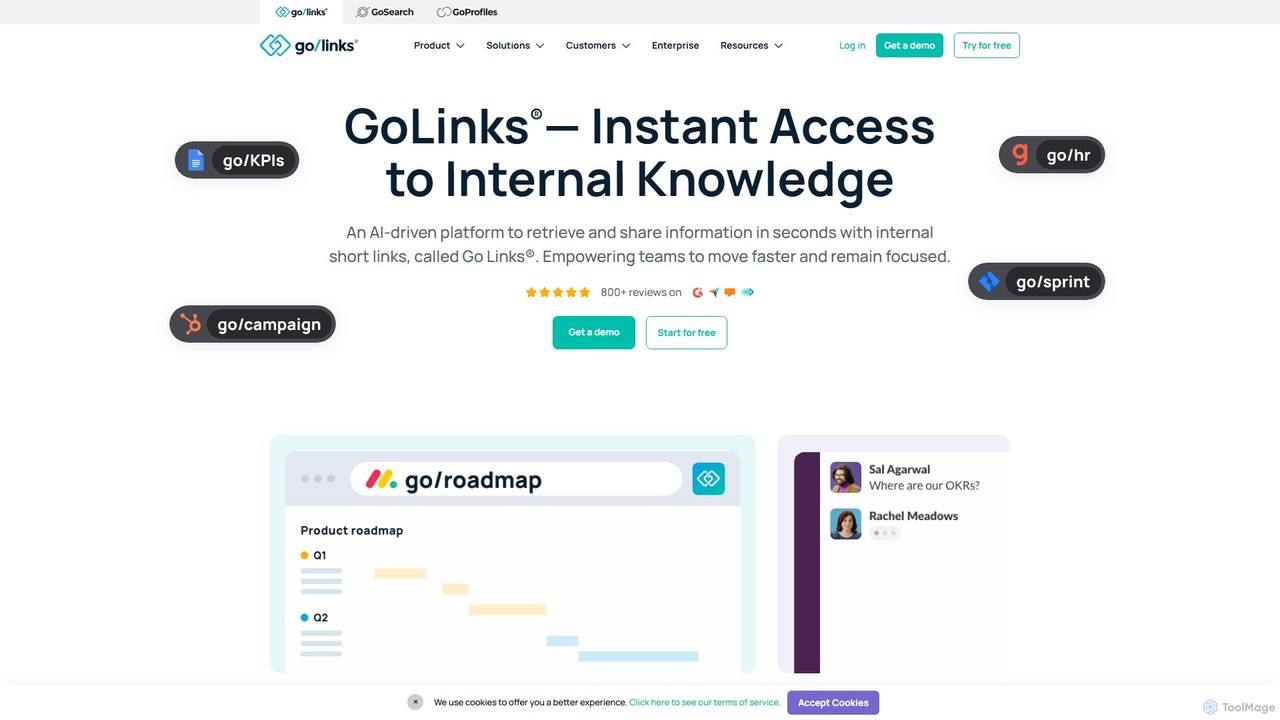
GoLinks is an AI-powered knowledge discovery and link management platform designed for businesses. It helps teams find and share information instantly using intuitive short links (go links) and a generative AI assistant, GoAI. It centralizes company resources, boosts productivity, and enhances security across all integrated applications.

Enterprise Search
Visits 57.5KFavorites 128Likes 138

About Internal Communication

AI Internal Communication tools are specialized platforms designed to streamline and enhance how information flows within an organization. Leveraging natural language processing and machine learning, they automate content distribution, personalize news feeds, and provide deep insights into employee engagement. These tools are crucial for building a cohesive company culture, ensuring alignment across departments, and improving access to critical knowledge, especially in large or remote-first companies. They represent a strategic evolution within the broader Team Collaboration landscape, focusing on structured, top-down communication rather than just real-time project chat.

Core Features

  • Intelligent News Feeds: Automatically curates and delivers relevant announcements and updates to employees based on their role, department, and interests.
  • AI-Powered Search: Enables employees to find information across company documents, intranets, and conversations using natural language queries.
  • Engagement Analytics: Measures the reach and impact of communications, analyzes employee sentiment, and identifies key discussion topics.
  • Automated Content Creation & Summarization: Assists communication teams in drafting announcements, summarizing long reports, and translating messages for a global workforce.
  • Personalized Onboarding Journeys: Guides new hires with automated information delivery, task reminders, and answers to frequently asked questions.

Use Cases

Primarily used by HR, Corporate Communications, and leadership teams in mid-to-large enterprises. They are essential for managing change communications, rolling out new policies, fostering a connected culture in remote or hybrid work environments, and creating a single source of truth for company information.

How to Choose

When selecting a tool, consider its integration capabilities with existing systems (like HRIS or chat platforms), the sophistication of its analytics and reporting, its content personalization features, and its scalability to support your organization's size and complexity. Also, evaluate the user experience for both content creators and employees.

Internal Communication use cases

1

Streamlining Company-Wide Policy Updates

An HR manager at a multinational corporation needs to roll out a new remote work policy to over 5,000 employees across different time zones and languages. Using an AI Internal Communication tool, they draft the announcement once. The AI then automatically translates it into multiple languages, schedules delivery for optimal engagement in each region, and personalizes a summary for different employee groups (e.g., managers vs. individual contributors). The platform's analytics dashboard allows the HR team to track readership in real-time, identify departments with low engagement, and automatically send reminders, ensuring critical information is received and acknowledged by everyone.

2

Creating a Centralized AI Knowledge Base

A fast-growing tech company finds its internal documentation scattered across Google Drive, Confluence, and Slack channels, making it hard for employees to find answers. They implement an AI Internal Communication platform with an intelligent search feature. The AI indexes all these disparate sources. Now, when a new sales representative asks, "What is our standard discount for enterprise clients?" in the search bar, the AI understands the intent and instantly pulls the relevant section from the official sales playbook, along with links to recent successful deal discussions in Slack, creating a single, reliable source of truth and reducing repetitive questions to senior staff.

3

Measuring Sentiment After Organizational Changes

Following a major company merger, the leadership team is concerned about employee morale and confusion. They use their AI Internal Communication platform to analyze sentiment across internal channels. The AI processes anonymized comments from announcement threads, forums, and surveys, identifying key themes of concern (e.g., job security, cultural integration) and tracking sentiment trends over time. This data provides the leadership with actionable insights, allowing them to address specific concerns proactively through targeted Q&A sessions and follow-up communications, helping to manage the change process more effectively and transparently.

4

Automating the New Hire Onboarding Experience

A company's HR team is overwhelmed with repetitive questions from new hires during their first week. They set up an automated onboarding journey in their internal communication tool. When a new employee joins, the AI assistant sends them a personalized welcome message and a schedule for their first week. Over the next few days, it automatically delivers essential reading materials, introduces them to key team members, and provides links to setup guides. The AI can also answer common questions like "Where do I find the IT support portal?" instantly, freeing up the HR team to focus on more strategic, human-centric aspects of onboarding.

5

Enhancing Cross-Departmental Project Updates

The marketing team is launching a major new campaign, and the sales and support teams need to be fully informed. Instead of a long email chain, the marketing lead posts a detailed update on the internal communication platform. The AI automatically generates a concise summary for executives, a version with technical details for the support team, and a version highlighting customer-facing talking points for the sales team. This targeted dissemination ensures that each department receives the most relevant information without information overload, improving alignment and preparedness for the campaign launch.

6

Managing Executive Communications and Town Halls

A CEO is preparing for a quarterly all-hands meeting (town hall). The communications team uses an AI tool to analyze questions submitted by employees beforehand, identifying recurring themes and sentiment to help shape the CEO's agenda. During the live event, an AI assistant transcribes the meeting in real-time and fields incoming questions, grouping similar ones together. After the meeting, the AI generates a summary of the key takeaways and an FAQ document based on the Q&A session, which is then automatically distributed to all employees. This streamlines the entire process, making executive communication more data-driven and accessible.

Internal Communication FAQ

What are AI Internal Communication tools?

AI Internal Communication tools are software platforms that use artificial intelligence to improve how companies share information and engage with their employees. Unlike simple intranets or chat apps, they actively analyze, personalize, and automate communication. Key features include intelligent news feeds that target content to specific employees, AI-powered search for finding company knowledge, and analytics to measure the effectiveness and sentiment of communications.

How do AI Internal Communication tools differ from team chat apps like Slack or Microsoft Teams?

While both fall under Team Collaboration, they serve different primary purposes. Team chat apps are designed for real-time, conversational collaboration, often centered around specific projects or teams (many-to-many communication). AI Internal Communication tools are built for structured, company-wide information dissemination (one-to-many or one-to-some). They focus on creating a single source of truth, managing official announcements, and providing analytics on engagement, which are not core features of standard chat platforms.

How do I choose the right AI Internal Communication platform for my company?

To choose the right platform, consider the following factors:

  • Integration: Does it connect seamlessly with your existing tools like HRIS (e.g., Workday), SSO (e.g., Okta), and chat platforms (e.g., Slack)?
  • Analytics: How deep are its analytics? Look for features like sentiment analysis, readership tracking by department, and topic trend identification.
  • Personalization: Can it effectively target communications to different employee segments based on role, location, or other attributes?
  • User Experience: Is the platform intuitive for both content administrators (HR, Comms) and end-users (all employees)?
  • Scalability: Can the tool grow with your company in terms of user numbers and feature complexity?
What are the key benefits of using AI in internal communications?

Using AI in internal communications offers several key benefits. It increases relevance by personalizing messages, ensuring employees see information that matters to them. It saves time for communication and HR teams by automating content creation, translation, and distribution. It provides data-driven insights into employee engagement and sentiment, allowing leadership to make more informed decisions. Finally, it improves knowledge discovery by making it easier for employees to find information, reducing wasted time and repetitive questions.

Who are the primary users of AI Internal Communication tools within an organization?

There are two main user groups. The primary administrators and content creators are typically from the Corporate Communications, Human Resources (HR), and Executive Leadership teams. They use the platform to draft, target, and analyze communications. The second, and largest, group is all employees, who use the platform as the primary channel to receive official company news, find information, and stay connected with the broader organization's goals and culture.