ToolMage
Sign in

Best 2 Data Management AI tools for Utilities

Popular Data Management AI tools in Utilities include EaseUS and Protectstar, helping you work more efficiently.

EaseUS
Freemium

EaseUS

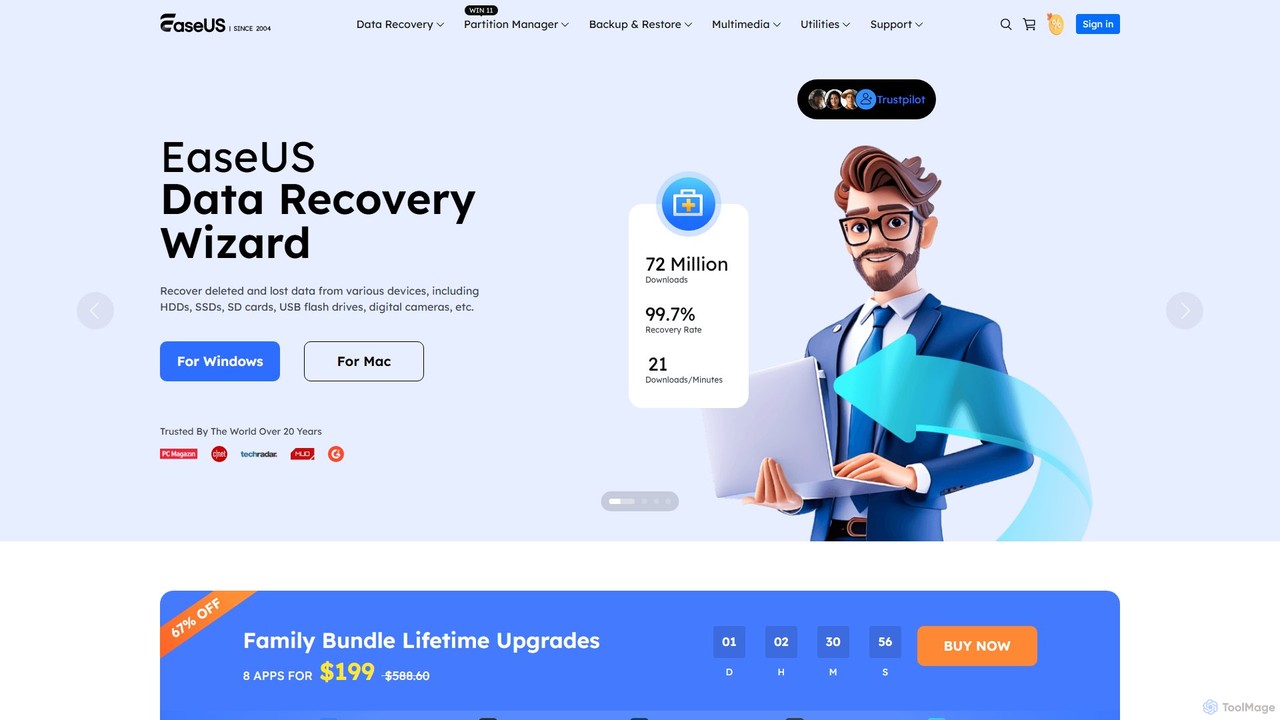
EaseUS offers a comprehensive suite of software for data management, recovery, and multimedia creation, enhanced with powerful AI. From AI-powered file repair and data recovery to creative tools like AI image generation and vocal removal, EaseUS provides reliable, user-friendly applications for both individual and enterprise users. It simplifies complex tasks like disk partitioning, system backup, and data transfer, making digital life easier and more secure.

Generative Art
Visits 5.4MFavorites 211Likes 188
Protectstar
Freemium

Protectstar

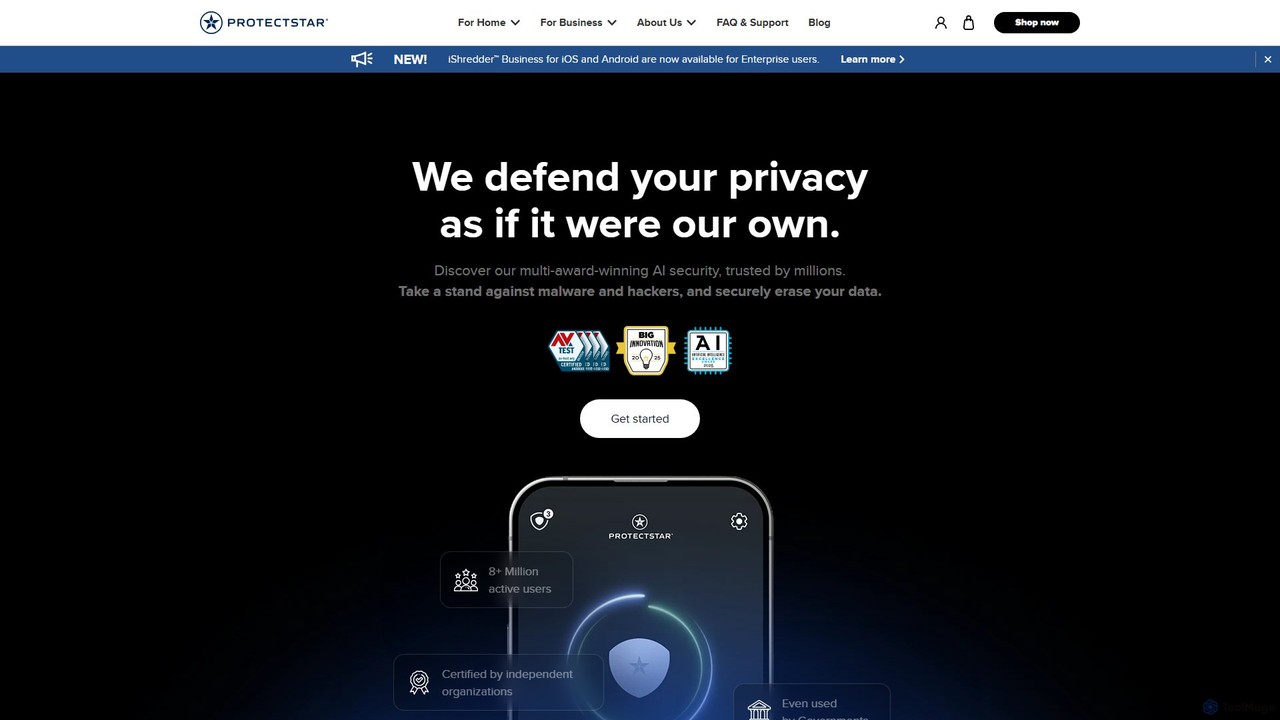
Protectstar offers a suite of AI-powered security applications for mobile devices. It provides comprehensive protection against spyware, viruses, and hackers with tools like Anti Spy, Antivirus AI, and iShredder. Trusted by millions, it uses advanced AI to detect threats in real-time while ensuring user privacy and data security through certified data erasure methods.

Antivirus
Visits 197.6KFavorites 138Likes 143

About Data Management

Data Management tools are AI-powered solutions designed to efficiently organize, store, process, and secure vast amounts of information. These tools leverage advanced algorithms and machine learning to automate data collection, integration, quality assurance, and analysis, transforming raw data into actionable insights. They are crucial for businesses seeking to maintain data integrity, ensure compliance, and make informed decisions, serving as a foundational component within the broader category of utility tools.

Core Features

  • Automated Data Ingestion: Automatically collects and imports data from diverse sources, reducing manual effort and errors.
  • Data Quality & Cleansing: Identifies and corrects inconsistencies, duplicates, and errors to ensure high data accuracy and reliability.
  • Data Integration (ETL/ELT): Extracts, transforms, and loads data between different systems, creating a unified view for analysis.
  • Metadata Management: Organizes and catalogs data definitions, lineage, and usage, improving data discoverability and governance.
  • Data Security & Compliance: Implements robust access controls, encryption, and auditing features to protect sensitive information and meet regulatory requirements.

Applicable Scenarios

Data Management tools are essential for organizations across various sectors. For instance, in finance, they help manage transactional data for fraud detection and regulatory reporting. E-commerce businesses use them to consolidate customer data from multiple platforms for personalized marketing. Healthcare providers leverage these tools to secure patient records and analyze clinical data for research and operational efficiency.

How to Choose

When selecting Data Management tools, consider the scale and complexity of your data, the types of sources you need to integrate, and your specific data quality and governance requirements. Evaluate the tool's automation capabilities, its compatibility with existing infrastructure, and its scalability to handle future data growth. Additionally, assess vendor support, pricing models, and compliance certifications to ensure a robust and reliable solution.

Data Management use cases

1

Streamlining Customer Data Consolidation

For marketing teams in retail, Data Management tools centralize customer information from CRM, e-commerce platforms, and social media. By automating data ingestion and deduplication, these tools create a unified customer profile, enabling highly targeted marketing campaigns and personalized customer experiences. This reduces manual data reconciliation efforts by up to 70% and improves campaign effectiveness.

2

Automating Financial Transaction Monitoring

Financial institutions utilize Data Management solutions to process vast volumes of daily transactions. These tools automate data cleansing and integration from various banking systems, then apply AI-driven anomaly detection to identify suspicious patterns indicative of fraud or compliance breaches. This significantly enhances security, reduces false positives, and ensures adherence to strict financial regulations.

3

Enhancing Supply Chain Visibility and Optimization

Logistics and manufacturing companies deploy Data Management tools to integrate data from inventory systems, shipping carriers, and production lines. By providing a real-time, consolidated view of the entire supply chain, these tools enable predictive analytics for demand forecasting, optimize inventory levels, and identify potential bottlenecks, leading to reduced operational costs and improved delivery times.

4

Ensuring Data Governance and Compliance in Healthcare

Healthcare organizations use Data Management platforms to manage sensitive patient health information (PHI). These tools enforce strict access controls, data encryption, and audit trails to comply with regulations like HIPAA. They automate data lineage tracking and quality checks, ensuring data integrity and accountability, which is critical for patient safety and legal adherence.

5

Accelerating Business Intelligence Reporting

Business analysts across industries leverage Data Management tools to prepare data for reporting and analytics. These solutions automate the extraction, transformation, and loading (ETL) of data from disparate sources into data warehouses or lakes. This significantly reduces the time spent on manual data preparation, allowing analysts to focus on generating insights and creating accurate, timely business intelligence dashboards.

6

Managing IoT Sensor Data for Predictive Maintenance

Industrial companies utilize Data Management tools to collect, process, and store massive streams of data from IoT sensors on machinery. These tools handle the high velocity and volume of sensor data, enabling real-time monitoring and predictive analytics. By identifying potential equipment failures before they occur, maintenance schedules can be optimized, minimizing downtime and extending asset lifespan.

Data Management FAQ

What are Data Management tools?

Data Management tools are software solutions that help organizations efficiently collect, store, organize, process, and secure their data assets. They leverage AI and automation to ensure data quality, accessibility, and compliance, transforming raw information into valuable insights. These tools are fundamental for maintaining data integrity and supporting informed decision-making across various business functions.

How do Data Management tools differ from traditional databases?

While traditional databases primarily focus on structured data storage and retrieval, Data Management tools offer a broader suite of capabilities. They encompass data integration (ETL), quality cleansing, governance, metadata management, and advanced analytics preparation, often handling diverse data types (structured, semi-structured, unstructured). They provide a holistic approach to the entire data lifecycle, whereas databases are a component within that larger ecosystem.

What are the key benefits of implementing AI-powered Data Management?

AI-powered Data Management offers significant benefits, including enhanced data quality through automated error detection and correction, improved operational efficiency by automating repetitive tasks like data ingestion and transformation, and faster access to actionable insights. It also strengthens data security and compliance by intelligently identifying and protecting sensitive information, leading to more reliable data for strategic decision-making and reduced risks.

What should I consider when choosing a Data Management solution?

When selecting a Data Management solution, evaluate its scalability to handle your current and future data volumes, its integration capabilities with your existing systems, and the robustness of its data quality and governance features. Consider the level of automation offered, the user-friendliness of its interface, and the vendor's support and security track record. Align the tool's features with your specific business needs and compliance requirements.

Who typically uses Data Management tools?

Data Management tools are utilized by a wide range of professionals across an organization. This includes data engineers who design and maintain data pipelines, data analysts and scientists who prepare and analyze data for insights, IT administrators responsible for data infrastructure, and compliance officers who ensure data adheres to regulations. Business leaders also rely on the outputs for strategic planning and operational oversight.