ToolMage
Sign in

Best 3 Translation AI tools for Utilities

Popular Translation AI tools in Utilities include PhraseClip, Travel Cat, and NewWord, helping you work more efficiently.

Travel Cat
Freemium

Travel Cat

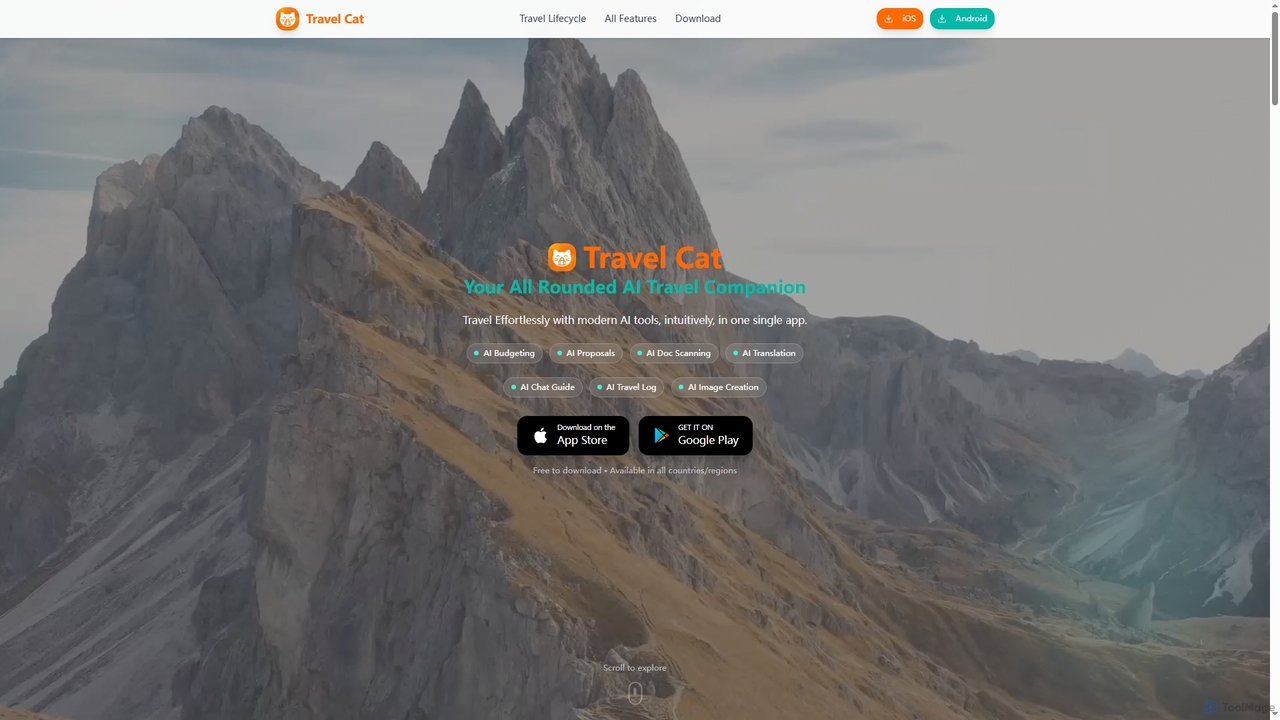
Travel Cat is an all-in-one AI travel companion app designed to manage the entire travel lifecycle. It simplifies trip planning with AI-powered budgeting, itinerary proposals, document scanning, and a location-aware chat guide, offering seamless support from discovery to sharing memories.

Organization
Visits 4.3KFavorites 99Likes 112
NewWord
Freemium

NewWord

NewWord is an AI-powered multilingual vocabulary notebook for iOS, designed for language learners. It supports over 40 languages, allowing users to build personal dictionaries effortlessly. Key features include AI-driven definitions, native speaker pronunciation, multiple simultaneous translations, and various import methods like photo scanning and text sharing. It's an ideal tool for students, professionals, and anyone looking to efficiently expand their vocabulary and master new languages.

Language Learning
Visits 4.2KFavorites 84Likes 108
PhraseClip
Freemium

PhraseClip

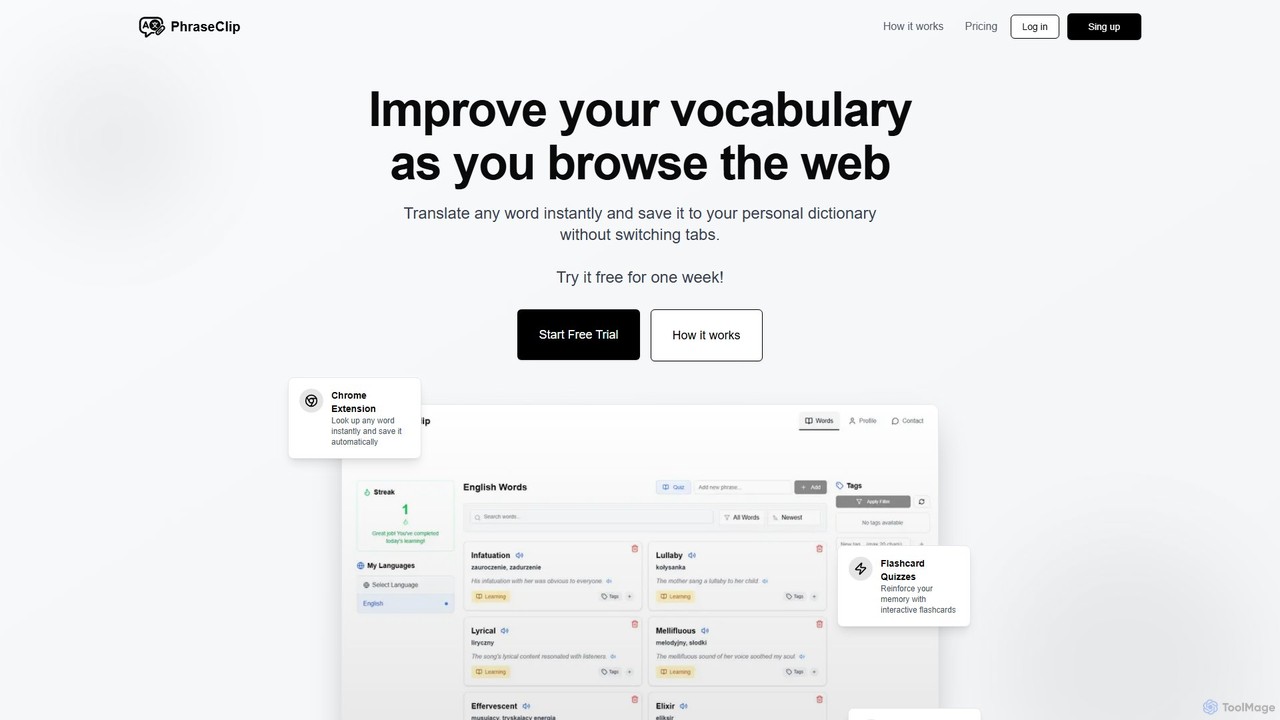
PhraseClip is a Chrome extension for language learners to expand their vocabulary while browsing. Instantly translate any word on any site with two clicks and save it to your personal dictionary. Each saved word includes AI-generated example sentences and pronunciation. Reinforce your learning with interactive flashcard quizzes and track your progress seamlessly, turning new words into long-term memory without interrupting your reading flow.

Language Learning
Visits 4.3KFavorites 113Likes 120

About Translation

AI Translation tools are applications that use artificial intelligence, particularly neural machine translation (NMT), to convert text or speech between languages. Unlike older rule-based systems, these tools analyze the context of entire sentences to produce more accurate, fluent, and natural-sounding translations. They are essential for breaking down communication barriers in global business, content localization, and personal interaction. Many advanced platforms also offer features like tone adjustment, formality control, and terminology management for specialized fields.

Core Features

  • Neural Machine Translation (NMT): Delivers context-aware and fluent translations that mimic human language patterns.
  • Real-time Speech Translation: Instantly translates spoken conversations, often with voice output, for seamless communication.
  • Document Translation: Translates entire files (e.g., PDF, DOCX, PPTX) while preserving the original layout and formatting.
  • Glossary Management: Allows users to create custom dictionaries to ensure consistent translation of specific brand names or technical terms.
  • Tone and Formality Control: Adjusts the translation style to be formal, informal, friendly, or other specific tones.

Applicable Scenarios

These tools are widely used in international business for localizing websites and marketing materials, in customer support to communicate with a global user base, and by content creators to reach a wider audience. They are also valuable for academic researchers translating scientific papers and legal professionals handling multilingual documents.

Selection Criteria

When choosing an AI Translation tool, evaluate the quality and range of supported language pairs. Consider key features like document format preservation, API access for software integration, and collaboration tools for team projects. Also, assess security protocols for handling sensitive data and select a pricing model that aligns with your translation volume.

Featured tool rankings

Translation use cases

1

Localizing Marketing Campaigns for Global Markets

A marketing team at an e-commerce company needs to launch a new product campaign across Europe and Asia. They use an AI translation tool to adapt all marketing copy, including website banners, email newsletters, and social media posts, into five languages. By utilizing the tool's glossary feature, they ensure the product name and key brand slogans are translated consistently. The tone control feature helps adjust the messaging to be more playful for a younger audience in one region and more formal for a professional audience in another, ensuring cultural relevance and maximizing engagement.

2

Facilitating Real-time Multilingual Customer Support

A customer support agent for a global SaaS platform receives a technical query from a user in Brazil who only speaks Portuguese. The agent, who speaks only English, uses a real-time translation tool integrated into their helpdesk software. As the customer types in Portuguese, the agent sees an instant English translation. The agent's English replies are automatically translated back into natural-sounding Portuguese for the customer. This seamless process allows the agent to resolve the complex technical issue efficiently without needing a human interpreter, improving first-contact resolution rates and customer satisfaction.

3

Translating Legal Contracts and Confidential Documents

A legal firm is working on an international merger and needs to review dozens of contracts written in German. Speed and confidentiality are critical. They use a secure, on-premise AI translation tool that specializes in legal terminology. The document translation feature allows them to upload entire DOCX files and receive formatted English versions in minutes, rather than days. The tool's high security standards ensure that sensitive client data never leaves their internal network. This accelerates the due diligence process significantly while maintaining strict confidentiality.

4

Automating Software and App UI Localization

A software development team uses an agile methodology to release weekly updates for their mobile app. To keep their global user base synchronized, they need to translate new UI strings (buttons, menus, notifications) quickly. They integrate an AI translation service's API into their CI/CD pipeline. Whenever a developer commits new code with text strings, the API is automatically called to fetch translations for ten target languages. The translated strings are then pushed directly into the app's language resource files, making the localization process nearly instantaneous and removing manual bottlenecks.

5

Enhancing International Business Meetings with Live Subtitles

A project manager in Germany is hosting a video conference with stakeholders in Japan and Mexico. To overcome the language barrier, they use a meeting software with an integrated real-time speech translation feature. As each person speaks in their native language (German, Japanese, or Spanish), the tool generates live, translated subtitles on-screen for all participants. This ensures everyone can follow the conversation accurately and participate actively without awkward pauses for interpretation. The result is a more efficient, inclusive, and collaborative meeting, leading to clearer decisions and stronger international partnerships.

6

Breaking Language Barriers for Personal Travel

A tourist traveling through Thailand uses a mobile AI translation app to navigate daily interactions. They use the camera translation feature to instantly read menus in restaurants and understand street signs. For conversations with local market vendors, they use the two-way speech translation mode: they speak English into the phone, which then speaks the Thai translation aloud. The vendor replies in Thai, and the app translates it back into English. This tool empowers the traveler to communicate effectively, ask for directions, negotiate prices, and have more meaningful cultural exchanges without needing to know the local language.

Translation FAQ

What are AI Translation tools?

AI Translation tools are software applications that use artificial intelligence, primarily Neural Machine Translation (NMT) models, to translate text, speech, and even text within images from one language to another. Unlike older technologies that translated word-for-word, AI translators analyze the full context of a sentence to provide more accurate, fluent, and natural-sounding translations. They are commonly used for business communication, content localization, academic research, and personal travel.

How to choose the right AI Translation tool?

Choosing the right tool depends on your specific needs. Consider the following factors:

  • Accuracy and Language Support: Check if the tool supports the language pairs you need and evaluate the translation quality, especially for nuanced or technical content.
  • Key Features: Do you need document translation with format preservation, real-time speech translation, or API access for integration?
  • Security and Privacy: For sensitive information, choose a tool with strong encryption and clear data privacy policies, or consider an on-premise solution.
  • Cost: Compare pricing models. Some charge per character or word, while others offer monthly subscriptions based on usage tiers.
What's the difference between AI translation and traditional machine translation?

The primary difference lies in the underlying technology. Traditional machine translation, like Statistical Machine Translation (SMT), worked by analyzing statistical patterns in large bilingual text corpora. It often translated phrases in isolation, leading to literal and grammatically awkward results. AI translation, based on Neural Machine Translation (NMT), uses deep learning models to process the entire source sentence as a single unit. This allows it to understand context, handle complex grammar, and produce translations that are significantly more fluent and human-like.

Can AI translation tools handle specialized terminology?

Yes, many advanced AI translation tools are designed to handle specialized terminology effectively. They often include features like custom glossaries or terminology databases. Users can upload a list of specific terms (e.g., brand names, technical jargon, legal phrases) and their required translations. The AI model will then prioritize these custom translations whenever those terms appear, ensuring consistency and accuracy across all documents. This is particularly valuable for industries like legal, medical, and engineering.

Is AI translation accurate enough to replace human translators?

While AI translation has become remarkably accurate for many tasks, it is generally seen as a tool to augment, not replace, human translators. For general communication, understanding documents, or translating standard business text, AI is often sufficient. However, for high-stakes content like creative marketing copy, legal contracts, or literary works, human expertise is crucial. Professional translators provide cultural nuance, creativity, and a final layer of quality assurance that AI cannot yet consistently replicate. The best results often come from a hybrid approach: using AI for the initial translation and having a human professional review and edit the output.