ToolMage
Sign in

Best 32 Summarizer AI tools for Writing

Popular Summarizer AI tools in Writing include Sider, iAsk, AskMyBook, Ninjachat, Kome, Scholarcy, Iweaver, AskYourPDF, UPDF AI, and Sharly, helping you work more efficiently.

genei
Freemium

genei

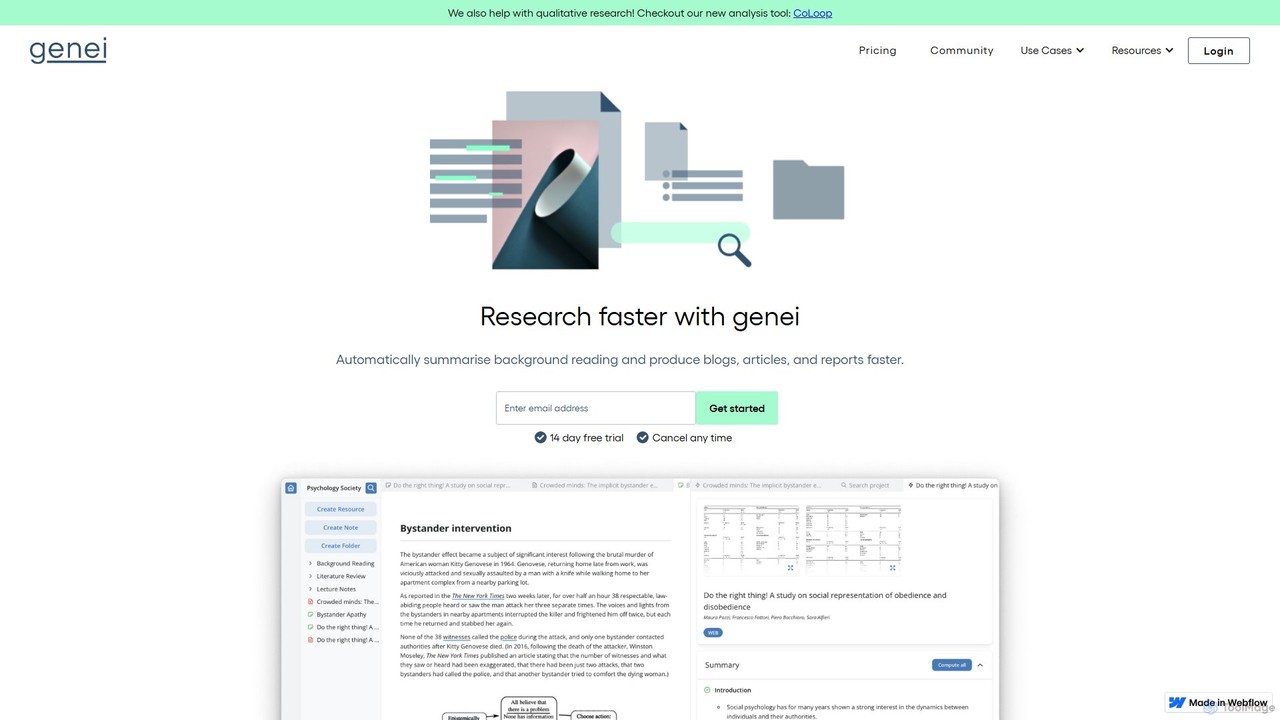
genei is an AI-powered research and summarization tool designed to enhance productivity for students, academics, and professionals. It helps users read faster, organize information, and uncover key insights by automatically summarizing documents, extracting keywords, and answering questions from your text. It supports PDFs and webpages, integrating research into a seamless workflow.

Study
Visits 30.6KFavorites 158Likes 159
Ninjachat
Freemium

Ninjachat

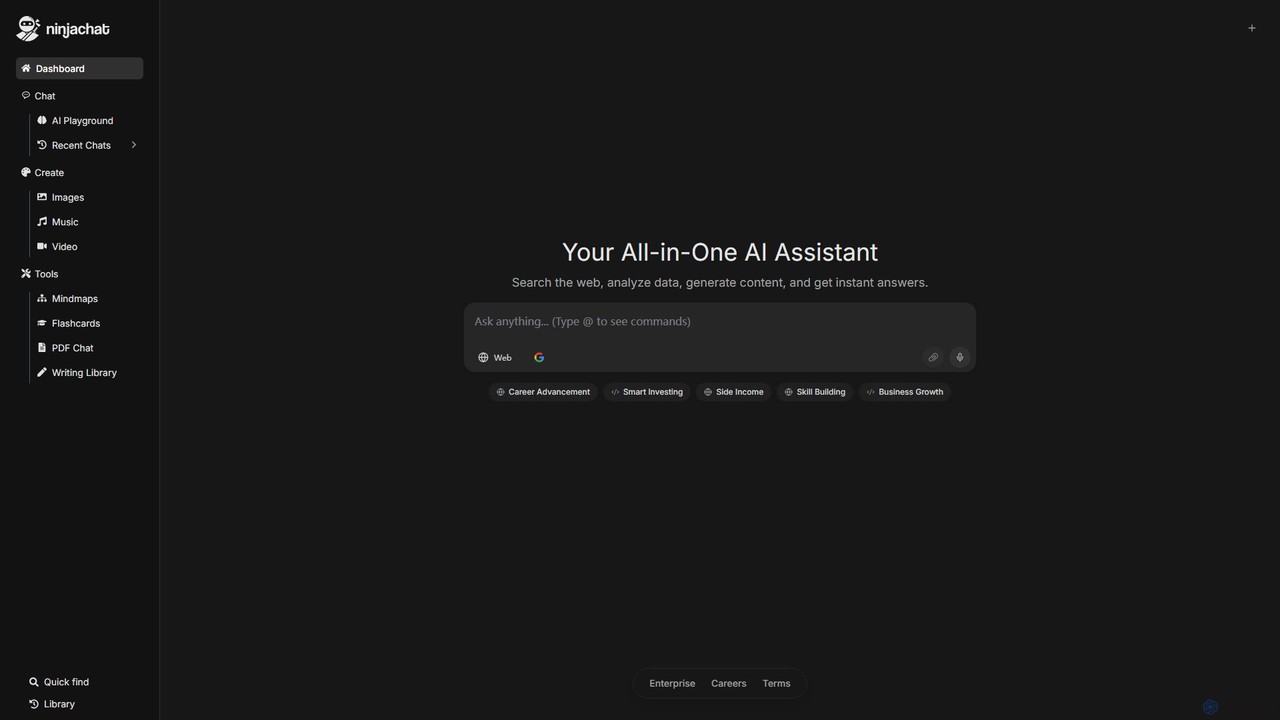
Ninjachat is an all-in-one AI assistant that provides access to a wide range of leading large language models (LLMs) through a single, unified interface. Compare outputs from models like GPT-4o, Gemini 1.5 Pro, Claude 3.7 Sonnet, and Llama 4 to find the best results for any task, from content creation and coding to complex research.

Code Assistant
Visits 765.5KFavorites 131Likes 129
Sharly
Freemium

Sharly

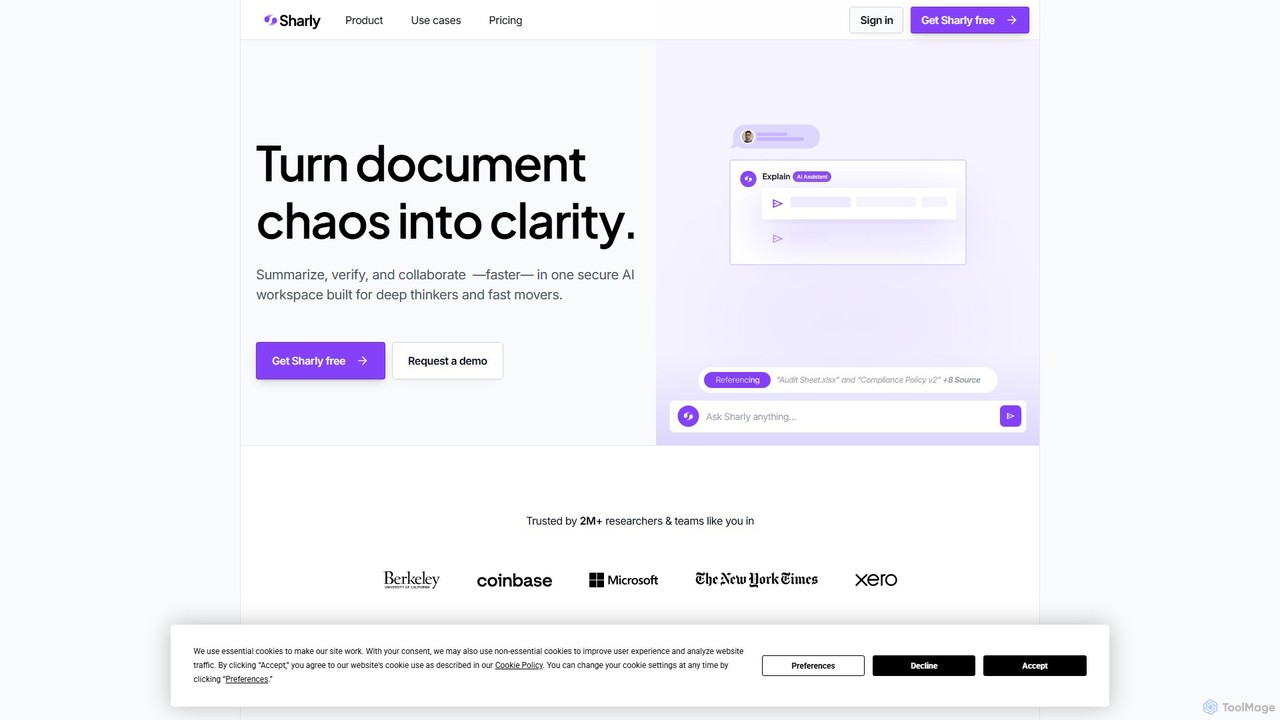
Sharly is an AI-powered research assistant designed to transform document chaos into clarity. It enables users to summarize, compare, cite, and collaborate on various documents within a single, secure workspace, accelerating research and decision-making for individuals, teams, and enterprises.

Compliance
Visits 96.2KFavorites 98Likes 100
pdfsummarizer
Free

pdfsummarizer

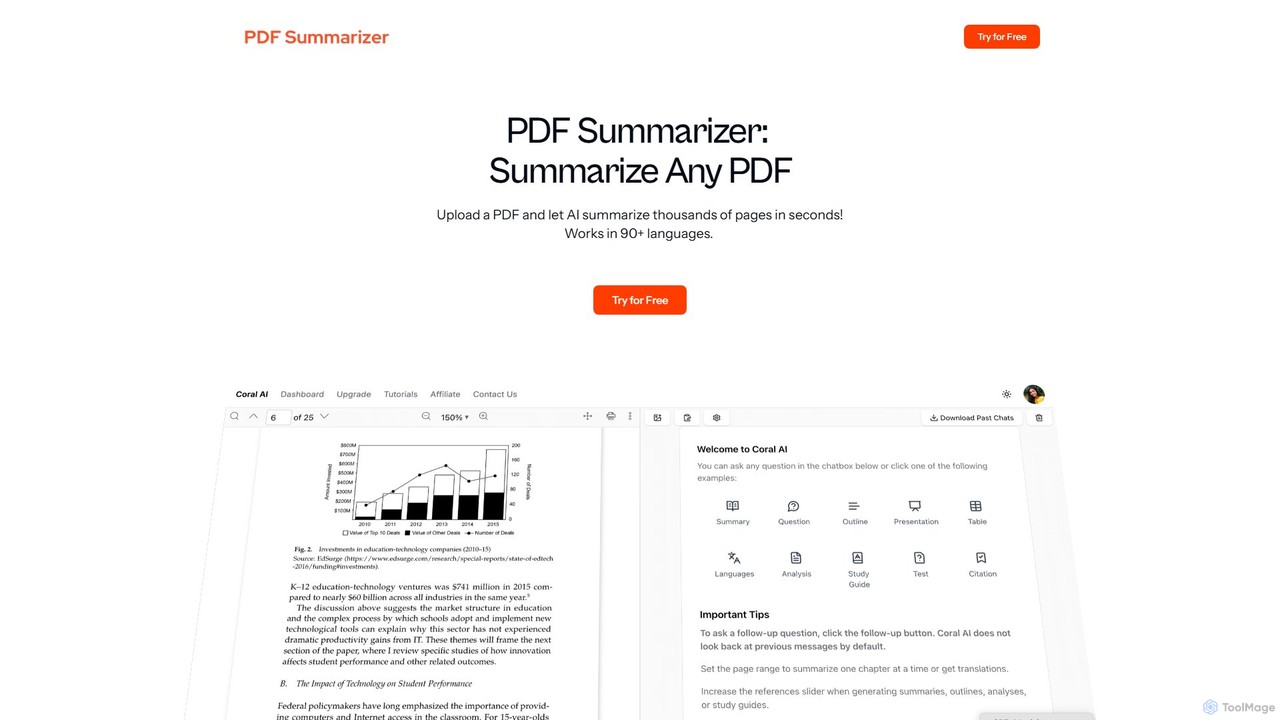
A free, secure AI tool that instantly summarizes PDF documents. Chat with your files, ask questions, get key insights, and translate content in multiple languages. No installation or registration required, works on any device.

Research
Visits 8.7KFavorites 91Likes 91
aizzy
Freemium

aizzy

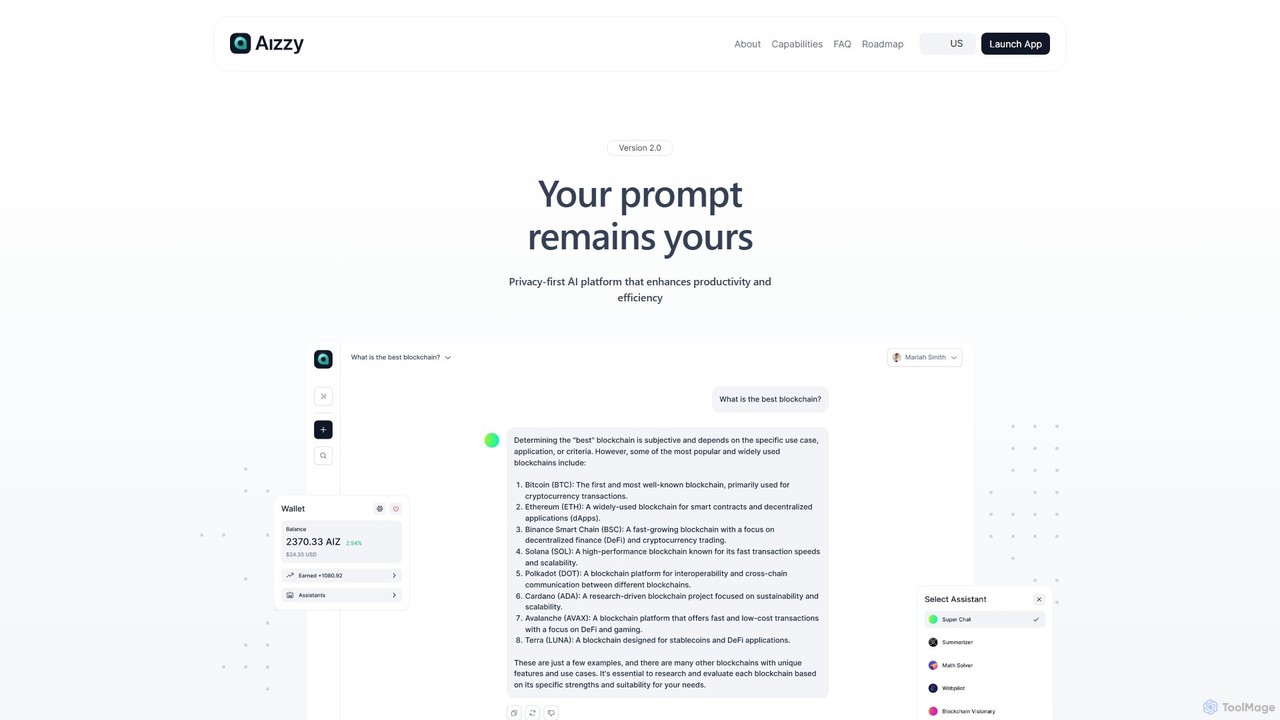
aizzy is a privacy-first AI platform that enhances productivity with a suite of tools, including a private chatbot, image generator, and document summarizer. It leverages blockchain technology and end-to-end encryption to ensure complete user anonymity, with zero tracking or IP collection.

Image Generator
Visits 13.4KFavorites 156Likes 178
Smart Doc AI

Smart Doc AI

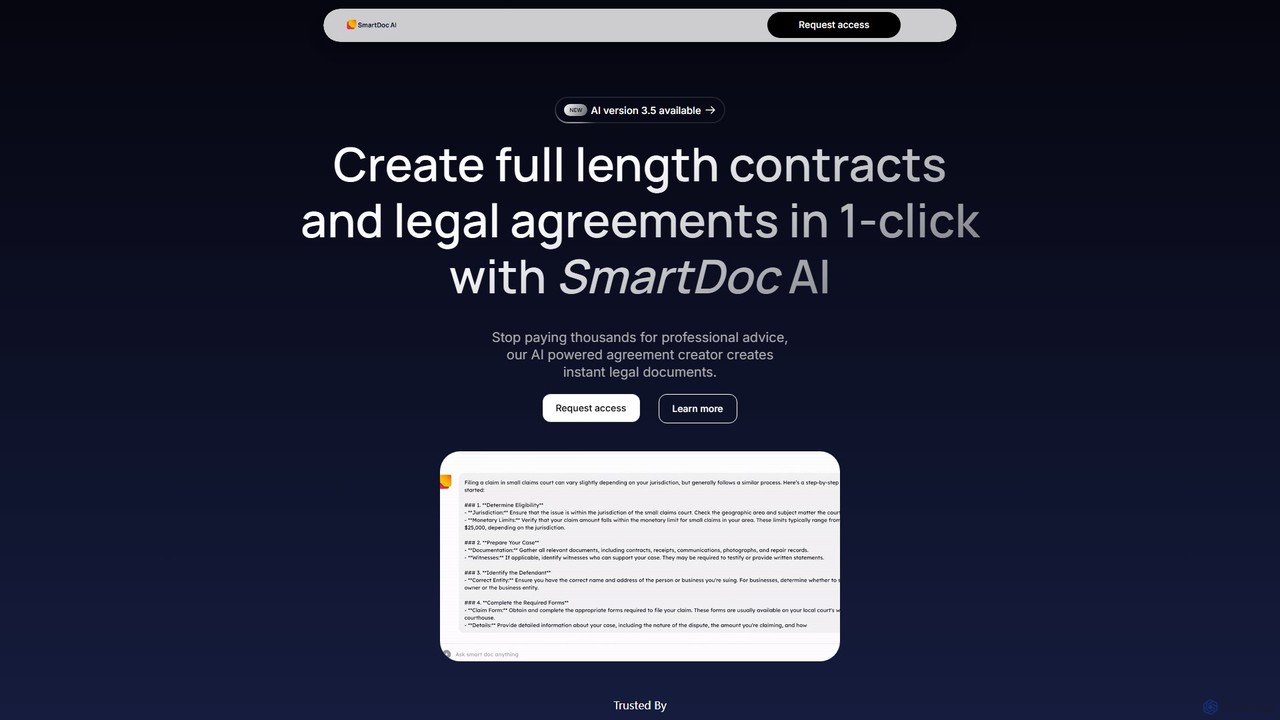
Smart Doc AI is an intelligent document processing platform that creates, summarizes, and analyzes complex documents. Interact with your files through a Q&A interface, generate professional reports, contracts, and manuals, and extract key insights in seconds, boosting productivity for professionals across various industries.

Contract Management
Visits 5.6KFavorites 152Likes 137
SpeakNotes
Freemium

SpeakNotes

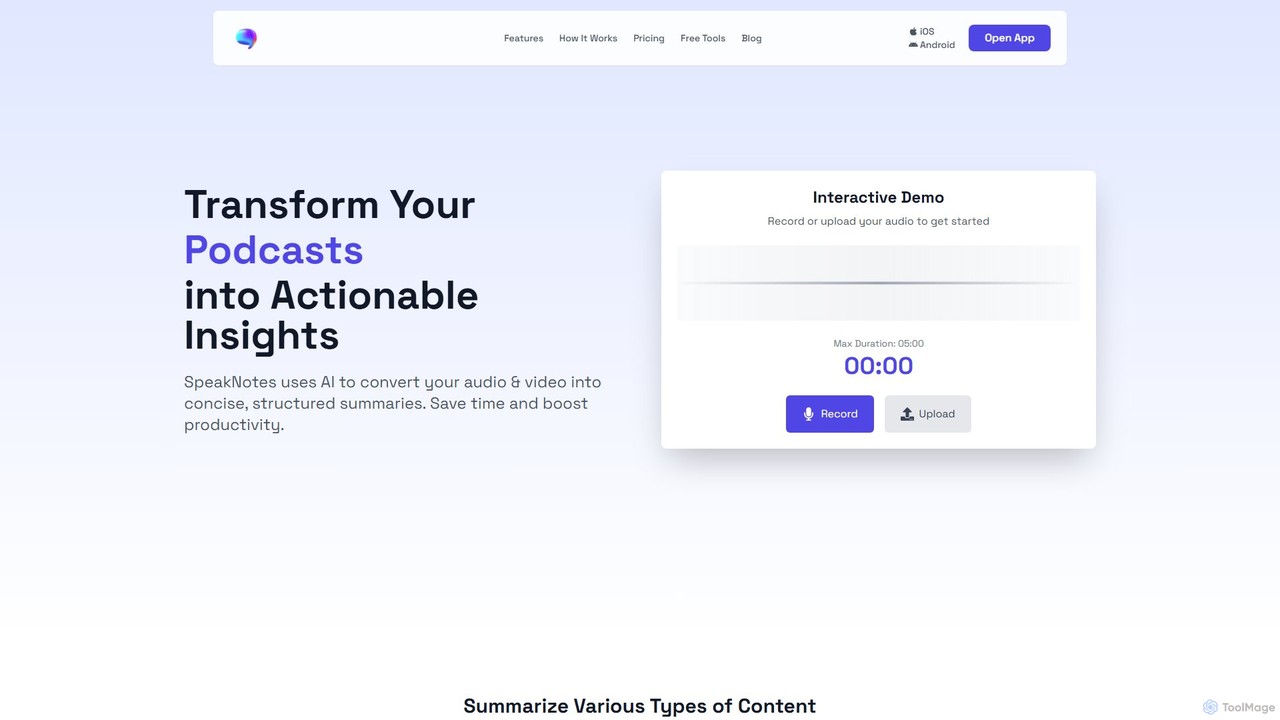
SpeakNotes is an AI-powered tool that transforms audio and video content into accurate transcripts and concise, structured summaries. It supports various file formats, multiple languages, and offers diverse output styles to boost productivity for students, professionals, and content creators.

Transcription
Visits 33.7KFavorites 154Likes 136
Doctrina
Freemium

Doctrina

Doctrina is an AI-powered education platform designed for students and teachers. It streamlines learning by offering tools to create quizzes and exams, enrich notes, and provide interactive assistance. With multi-language support and a focus on subjects like math and geometry, Doctrina aims to make education more engaging, efficient, and globally accessible.

Learning
Visits 19.7KFavorites 122Likes 133

About Summarizer

Summarizer tools are AI-powered applications designed to condense lengthy texts, articles, documents, or web pages into shorter, coherent summaries. Leveraging advanced Natural Language Processing (NLP) and machine learning algorithms, these tools identify and extract the most critical information and main ideas. They significantly enhance reading efficiency, facilitate quick comprehension of complex content, and help users grasp essential points without needing to read the entire source. As a specialized segment within AI writing tools, summarizers are invaluable for information synthesis and content digestion.

Core Features

  • Automatic Text Condensation: Automatically reduces long-form content to a concise summary.
  • Key Phrase Extraction: Identifies and highlights the most important keywords and phrases.
  • Abstractive & Extractive Summarization: Offers both generating new sentences (abstractive) and extracting original sentences (extractive).
  • Customizable Length: Allows users to specify the desired summary length or percentage.
  • Multi-format Support: Processes various input types like plain text, URLs, PDFs, and documents.

Applicable Scenarios

Summarizer tools are widely used across various professional and academic fields. Students can quickly grasp lecture notes or research papers, while journalists can rapidly digest news reports. Business professionals utilize them to summarize lengthy reports, meeting transcripts, or market analyses, enabling faster decision-making and efficient information sharing within teams.

How to Choose

When selecting a summarizer tool, consider its summarization accuracy and coherence, especially for complex topics. Evaluate the flexibility in output length and format options. Check for support of various input types like URLs or PDFs. Finally, assess its integration capabilities with existing workflows and overall ease of use for your specific needs.

Featured tool rankings

Summarizer use cases

1

Summarize Academic Papers for Research

Academic researchers and students often face an overwhelming volume of scientific papers. A summarizer tool allows them to input lengthy research articles or journals and instantly receive a concise summary. This helps in quickly assessing the relevance of a paper, identifying key findings, and saving significant time during literature reviews, enabling more efficient knowledge acquisition.

2

Condense Meeting Transcripts and Notes

For project managers and team leads, reviewing long meeting transcripts to extract action items and key decisions can be time-consuming. Using a summarizer, they can upload the full transcript and generate a summary highlighting discussion points, assigned tasks, and resolutions. This streamlines post-meeting follow-ups and ensures everyone is aligned on outcomes.

3

Get Main Points from News and Blog Articles

Content creators, journalists, and marketing professionals need to stay updated with current events and industry trends. A summarizer helps them process numerous news articles, blog posts, or online reports by providing quick overviews. This enables rapid content curation, trend identification, and efficient information gathering for their own content creation or strategic planning.

4

Condense Legal Contracts and Documents

Legal professionals frequently deal with extensive contracts, case files, and legal briefs. A summarizer can significantly reduce the time spent on initial review by generating concise summaries of these complex documents. This helps lawyers and paralegals quickly identify critical clauses, key arguments, and relevant precedents, accelerating their legal research and case preparation.

5

Generate Summaries for Educational Modules

E-learning developers and educators often need to provide brief overviews for course modules, video lectures, or reading materials. A summarizer tool can take the full content and generate engaging, concise descriptions. This helps learners quickly understand what each section covers, improving navigation and engagement within online learning platforms.

6

Prepare Executive Briefs from Business Reports

Business analysts and consultants frequently compile detailed reports that need to be presented to senior management in a condensed format. A summarizer allows them to transform lengthy business plans, market analyses, or performance reports into succinct executive briefs. This ensures that decision-makers receive essential information quickly, facilitating strategic discussions and timely actions.

Summarizer FAQ

What are AI Summarizer tools?

AI Summarizer tools are applications that use artificial intelligence, specifically Natural Language Processing (NLP), to automatically condense long texts into shorter, coherent summaries. They analyze content to identify main ideas and key information, presenting it in a digestible format. These tools are distinct from general writing assistants as their primary function is to distill existing content rather than generate new text.

How do I choose the best summarizer tool for my needs?

To choose the best summarizer, consider its accuracy in capturing main points and the coherence of its output. Evaluate whether it offers both abstractive (generating new sentences) and extractive (using original sentences) summarization. Check for customizable length options, support for various input formats (text, URL, PDF), and its integration capabilities with your existing workflow. User reviews and pricing models are also important factors.

What are the main benefits of using an AI summarizer?

The main benefits of using an AI summarizer include significant time savings by avoiding reading lengthy documents, improved comprehension of complex topics through condensed information, and enhanced productivity in research and content analysis. They help users quickly grasp essential facts, extract key insights, and efficiently process large volumes of information for various professional and academic purposes.

What is the difference between a summarizer and a general AI writing assistant?

A summarizer tool's core function is to condense existing content, focusing on extracting or generating a shorter version while retaining key information. In contrast, a general AI writing assistant, which falls under the broader 'Writing' category, is designed to generate new text from scratch, rewrite content, assist with grammar and style, or brainstorm ideas. While some writing assistants may include summarization features, a dedicated summarizer specializes in efficient text condensation.

How accurate and reliable are AI summarizer tools?

The accuracy and reliability of AI summarizer tools have significantly improved with advancements in NLP. Most tools can produce highly coherent and accurate summaries for well-structured texts. However, the quality can vary depending on the complexity, nuance, and domain-specific terminology of the original content. It's always recommended to review the generated summary, especially for critical information, to ensure it accurately reflects the source material.