Atech
Iot · 7.6K monthly visits
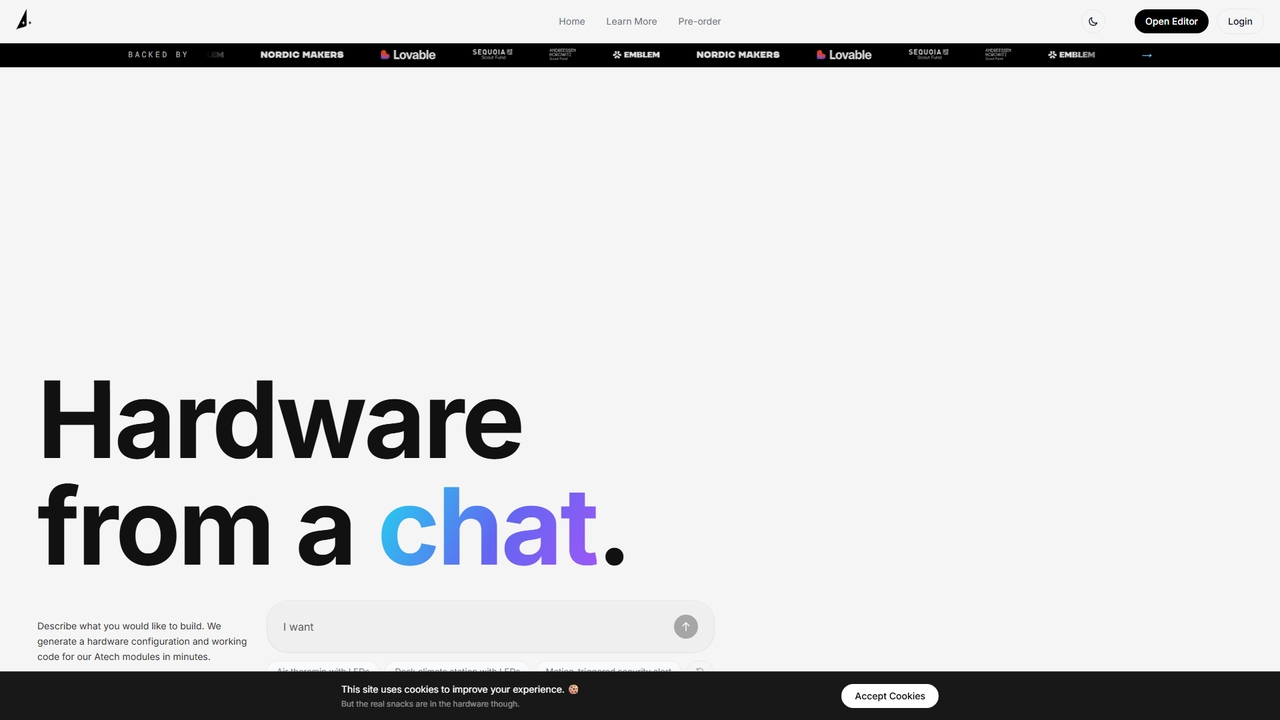
Atech turns plain-text hardware descriptions into a complete hardware configuration and working ESP32 firmware. Snap pre-built modules onto a motherboard without soldering.
Atech turns plain-text hardware descriptions into a complete hardware configuration and working ESP32 firmware. Snap pre-built modules onto a motherboard without soldering.
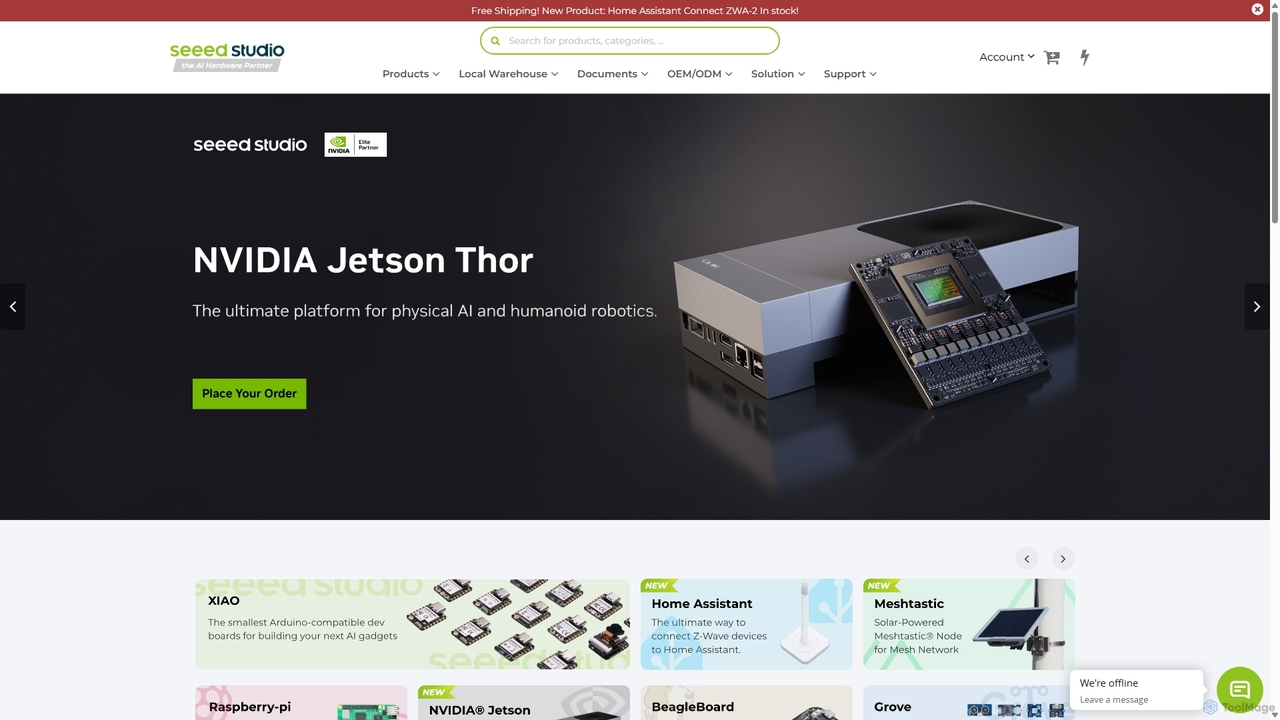
Seeed Studio is a leading IoT hardware platform for developers and businesses. It provides a vast range of open-source hardware, development kits, sensors, and AI-accelerated modules, specializing in edge computing. From prototyping with Raspberry Pi and NVIDIA Jetson to scalable manufacturing services (OEM/ODM), Seeed Studio empowers innovators to build and deploy real-world IoT and Edge AI solutions for smart agriculture, industry, and cities.
Atech turns plain-text hardware descriptions into a complete hardware configuration and working ESP32 firmware. Snap pre-built modules onto a motherboard without soldering.
Seeed Studio is a leading IoT hardware platform for developers and businesses. It provides a vast range of open-source hardware, development kits, sensors, and AI-accelerated modules, specializing in edge computing. From prototyping with Raspberry Pi and NVIDIA Jetson to scalable manufacturing services (OEM/ODM), Seeed Studio empowers innovators to build and deploy real-world IoT and Edge AI solutions for smart agriculture, industry, and cities.
| Feature | Atech | Seeed Studio |
|---|---|---|
| Primary category | Iot | Edge Computing |
| Added | 2026-04-28 | 2025-09-06 |
| Pricing | Not verified | Paid |
| Official website | atech.dev | seeedstudio.com |
| Product type | Website | Website |
| Performance data | ||
| User rating | Not verified | Not verified |
| Comments | 0 | 0 |
| Monthly visits | 7.6K | 1.3M |
| Monthly growth | Not verified | 2.6% |
| Favorites | 23 | 133 |
| Details | View details | View details |
Compare Atech and Seeed Studio by monthly reach, traffic trend, visit depth, top regions, and acquisition sources.
In the Atech vs Seeed Studio monthly traffic comparison, Atech currently shows 7.6K visits and Seeed Studio shows 1.3M; Seeed Studio has about 173 times the visible traffic of Atech, an absolute difference of about 1.3M visits. This reflects visible reach, not feature quality or paid users.
Only Seeed Studio has complete third-party traffic details; Atech uses visits recorded inside ToolMage. These scopes cannot estimate market share directly, and on-site views should not be treated as the product’s total website traffic.
| Country/region | Percentage | Traffic |
|---|---|---|
| 🇺🇸United States | 60.19% | 794.7K |
| 🇩🇪Germany | 14.86% | 196.2K |
| 🇮🇳India | 10.46% | 138.1K |
| 🇨🇳China | 7.39% | 97.6K |
| 🇯🇵Japan | 7.1% | 93.7K |
| Source type | Percentage | Traffic |
|---|---|---|
| Direct | 65.89% | 870K |
| Referral | 29.4% | 388.2K |
| 4.71% | 62.2K |
This in-depth Atech vs Seeed Studio comparison uses only the product records, taxonomy, audience, traffic, and community signals available on this page. Atech is primarily listed under “Iot”, while Seeed Studio is primarily listed under “Edge Computing”, so the first decision is whether your actual task matches their recorded scope.
The structured fields currently show these decision-relevant differences: Primary category (Atech: Iot; Seeed Studio: Edge Computing); Pricing (Atech: Not disclosed; Seeed Studio: Paid); Monthly visits (Atech: 7.6K; Seeed Studio: 1.3M); Favorites (Atech: 23; Seeed Studio: 133); Website (Atech: atech.dev; Seeed Studio: seeedstudio.com). These facts are more useful for selection than brand visibility alone.
In the Atech vs Seeed Studio monthly traffic comparison, Atech currently shows 7.6K visits and Seeed Studio shows 1.3M; Seeed Studio has about 173 times the visible traffic of Atech, an absolute difference of about 1.3M visits. This reflects visible reach, not feature quality or paid users.
Only Seeed Studio has complete third-party traffic details; Atech uses visits recorded inside ToolMage. These scopes cannot estimate market share directly, and on-site views should not be treated as the product’s total website traffic.
The current traffic scope is not sufficient for a reliable product ranking. Treat monthly visits as a market-interest signal, then decide using taxonomy, use cases, pricing, and a like-for-like trial rather than reading exposure as product capability.
Atech and Seeed Studio currently overlap in shared roles: Hardware Engineer, Hobbyist, and Maker. This can place both on the same shortlist, but it does not prove equal implementation, depth, or cost.
Atech's unique categories/tags are Iot, Ai Development, Prototyping, AI hardware generation, embedded systems, ESP32 firmware, hardware prototyping, and IoT development; Seeed Studio's are Edge Computing, Hardware, Electronics, Development Kit, edge AI, electronics, hardware, and IoT. These unique fields are the strongest differentiators: validate the product whose recorded scope matches the task instead of following traffic alone.
Atech has no verified rating, 0 comments, 23 favorites, and 22 likes;Seeed Studio has no verified rating, 0 comments, 133 favorites, and 144 likes。
Neither product has enough rating or comment samples for a credible reputation ranking.
Put Atech on the priority trial list when the task aligns with “Iot” and especially Iot, Ai Development, Prototyping, AI hardware generation, embedded systems, and ESP32 firmware, or the users include Embedded Developer, Hacker, IoT Developer, and Product Designer. This follows recorded positioning and does not imply unlisted capabilities are absent.
Atech also currently records: pricing is not verified, product type is website, 7.6K on-site monthly views, no verified user rating. Verify any hard requirement around price, platform, or reach before trial, and do not let sparse review data substitute for testing.
Put Seeed Studio on the priority trial list when the task aligns with “Edge Computing” and especially Edge Computing, Hardware, Electronics, Development Kit, edge AI, and electronics, or the users include Data Scientist, Embedded Systems Developer, IoT Solution Architect, and Product Manager. This follows recorded positioning and does not imply unlisted capabilities are absent.
Seeed Studio also currently records: pricing is paid, product type is website, 1.3M verified monthly visits, no verified user rating. Verify any hard requirement around price, platform, or reach before trial, and do not let sparse review data substitute for testing.
The available data describes positioning, public visibility, and community signals, but it cannot prove output quality, speed, integration effort, privacy, or long-term cost in your workflow. Before deciding, run the same representative tasks in Atech and Seeed Studio, then record completion time, accuracy, manual corrections, and the real paid threshold. A like-for-like trial turns this comparison into a defensible adoption decision.
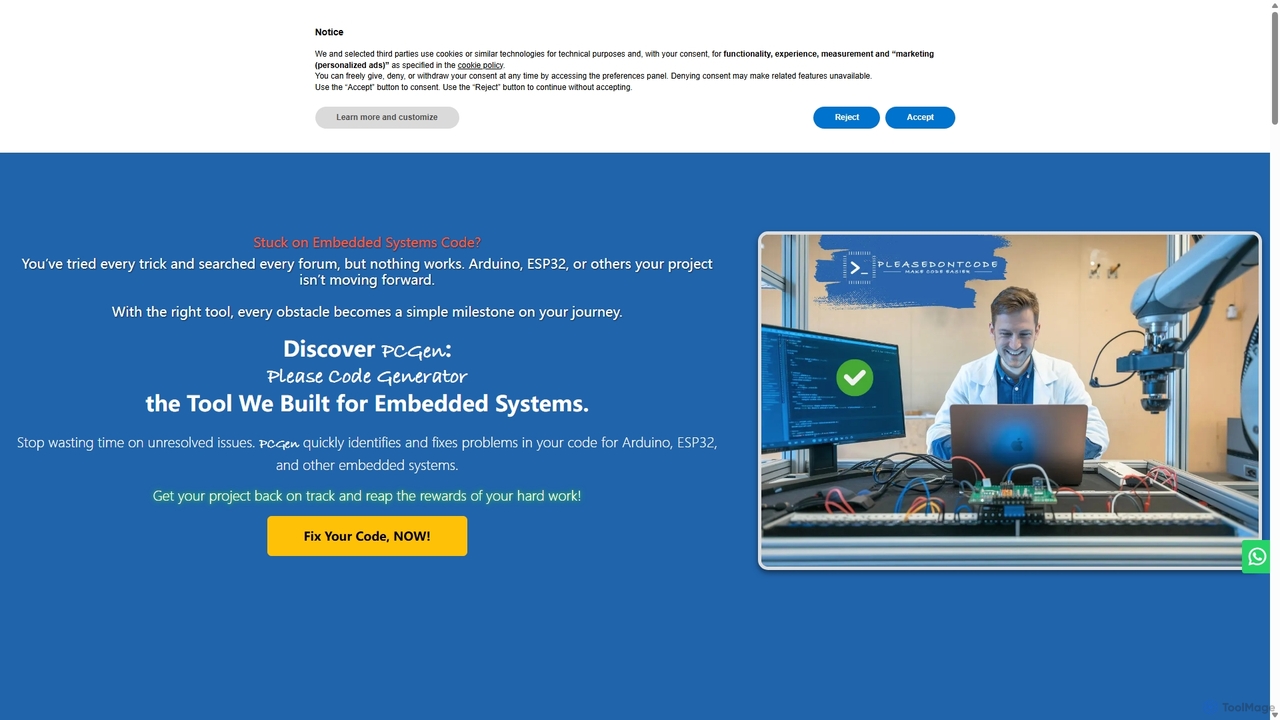
Pleasedontcode is a specialized AI code generator for embedded systems, designed to accelerate development for Arduino and ESP32 projects. It transforms natural language requirements into functional, error-free C++ code, fixes compilation errors, and guides users through a structured project setup, saving significant time for developers, hobbyists, and businesses.
Code Generation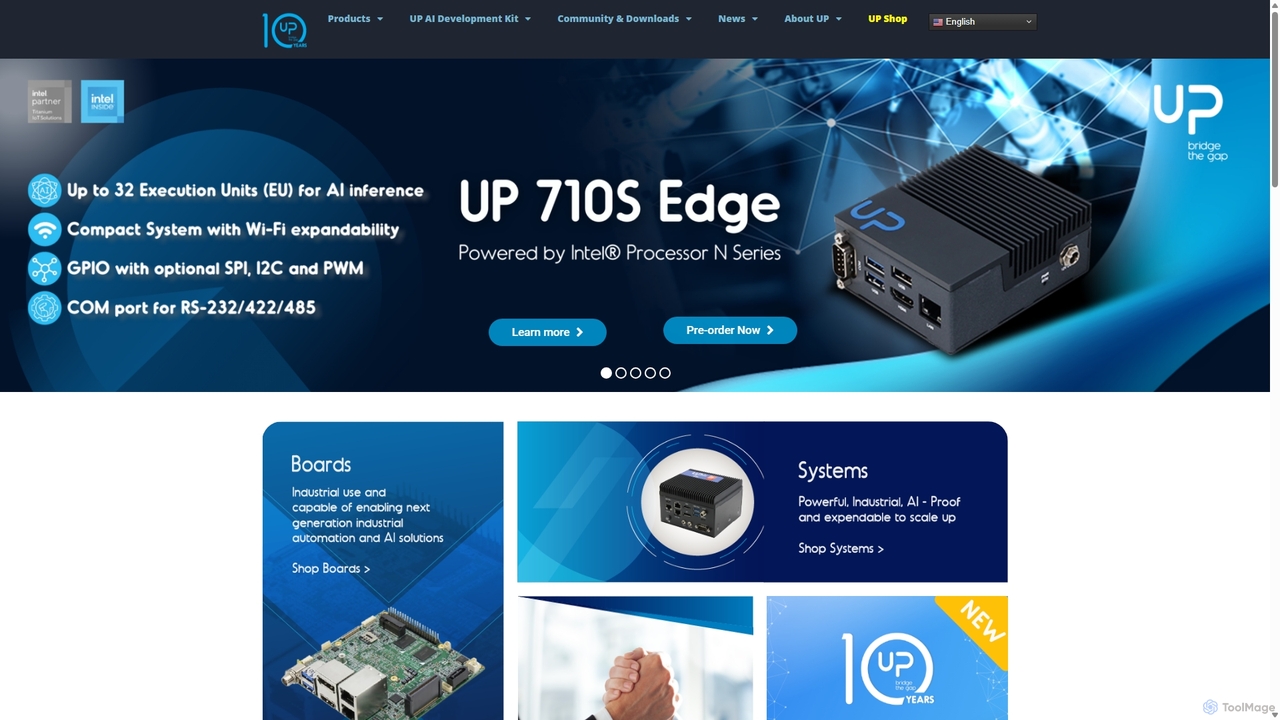
UP Board is a series of high-performance single-board computers (SBCs) designed for professional developers building edge AI, IoT, and robotics applications. Powered by robust Intel® processors and compatible with the Raspberry Pi ecosystem, it provides an ideal hardware platform for transitioning from prototype to mass production.
Edge Computing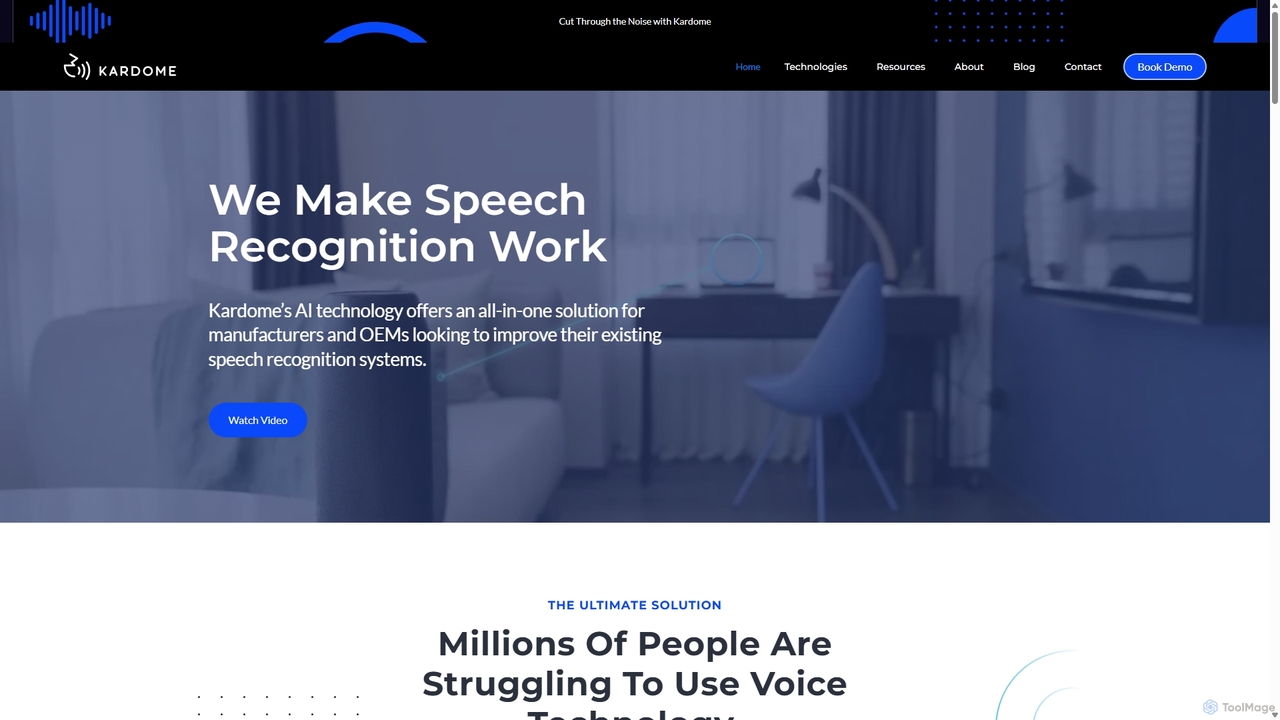
Kardome provides AI-powered voice enhancement technology for smart devices. Its core Spatial Hearing software isolates target speech in noisy, multi-speaker environments, delivering crystal-clear audio to any voice recognition system. It's designed for automotive, consumer electronics, and healthcare industries, offering solutions like custom wake words and voice biometrics that operate on the edge for enhanced privacy and performance.
Voice Technology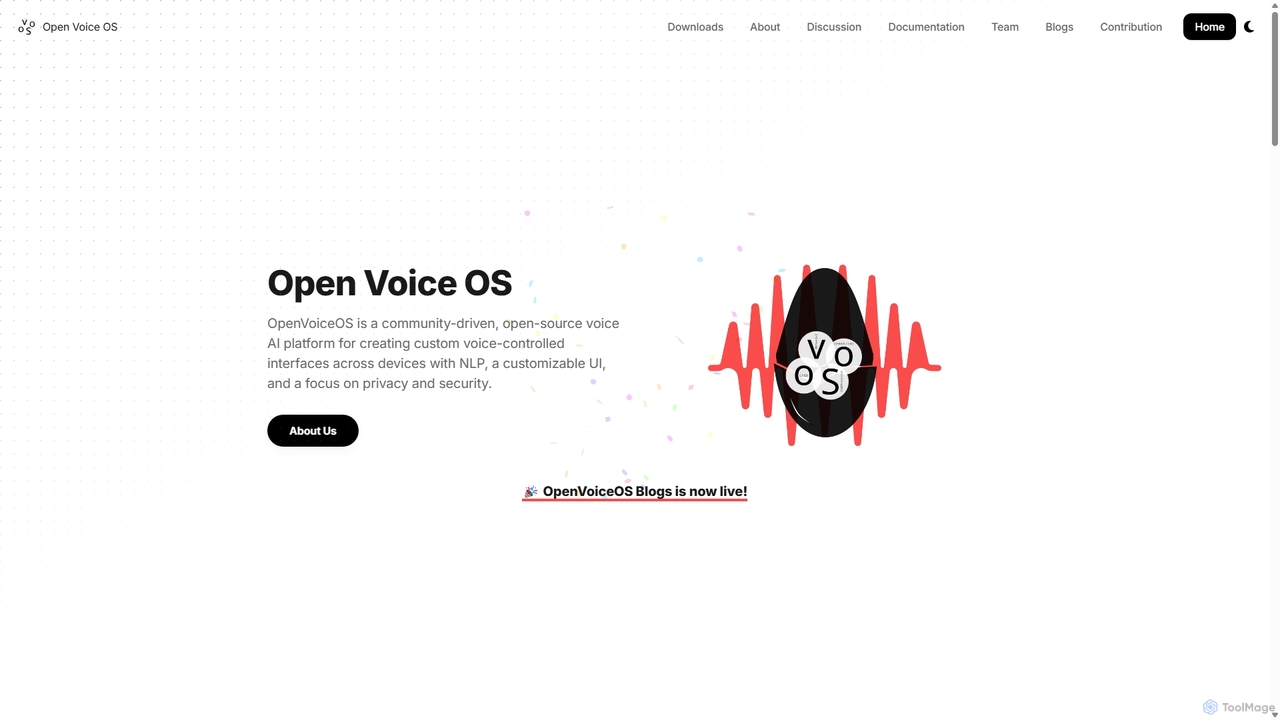
OpenVoiceOS is a community-driven, open-source voice AI platform for creating custom, private, and secure voice-controlled interfaces. It runs on various hardware like Raspberry Pi and Linux desktops, offering a flexible, plugin-based architecture for developers and DIY enthusiasts.
Voice & Speech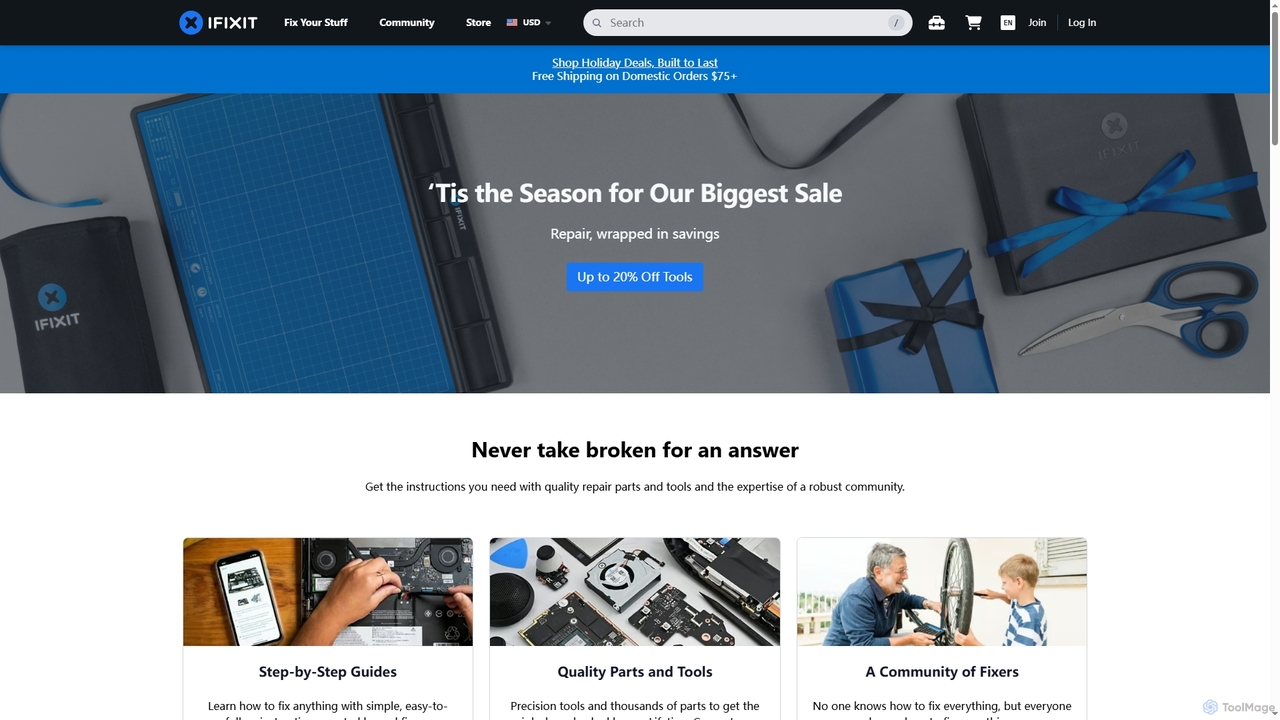
iFixit is the world's largest online repair community, providing free, step-by-step repair manuals, quality replacement parts, and precision tools. It empowers individuals to fix their own devices, from electronics to appliances, and actively advocates for the Right to Repair movement, fostering a more sustainable and repairable future for all.
Technical Support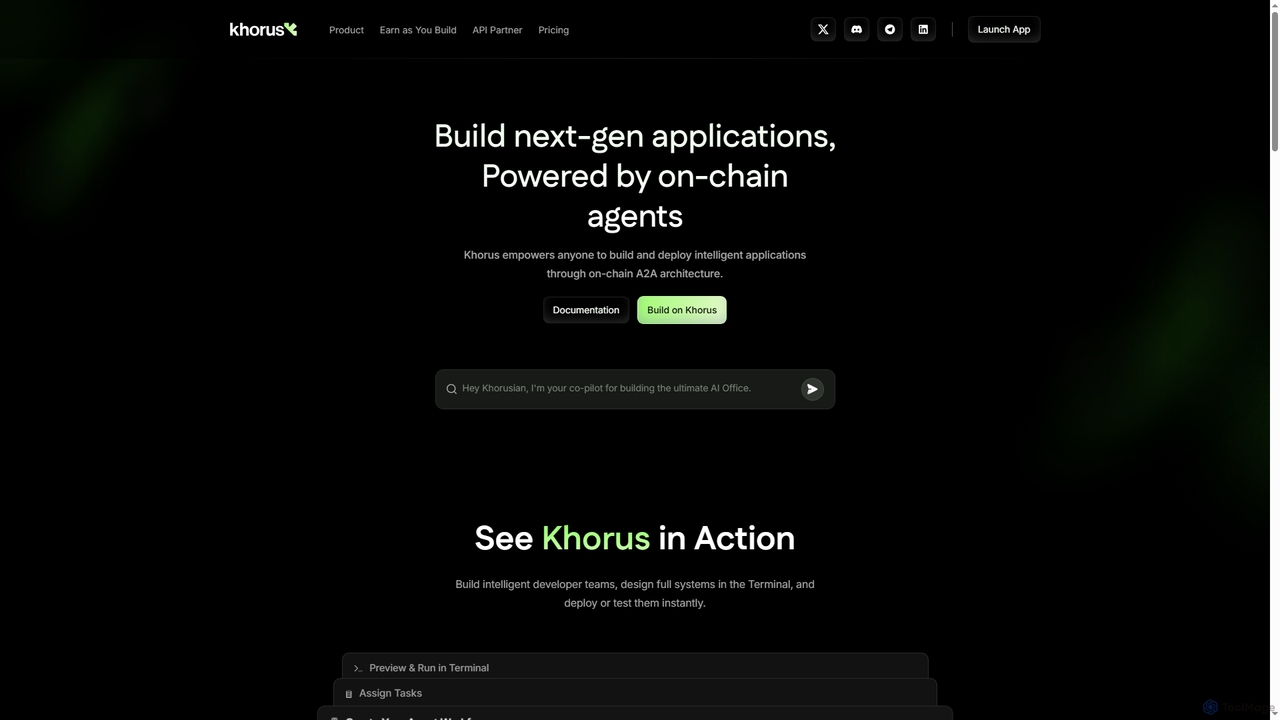
Khorus is a universal communication layer for intelligent systems, empowering developers to build and deploy next-gen AI applications through an on-chain Agent-to-Agent (A2A) architecture. It facilitates real-time collaboration, task delegation, and autonomous execution among AI agents and robotics, fostering a decentralized agent economy and marketplace for scalable modules and workflows.
Agent Orchestration
Neuton.AI is a no-code AutoML platform designed to create ultra-compact and efficient machine learning models (TinyML) for edge and IoT devices. It empowers developers to build and deploy AI on resource-constrained hardware like MCUs and sensors without deep technical expertise.
Machine Learning
Seeles is a pioneering end-to-end multimodal AI platform that transforms simple text prompts into fully playable 3D game worlds. It empowers creators of all levels to generate and infinitely remix interactive environments, characters, and game mechanics without coding. From racing games to mystery adventures, Seeles redefines creation and play by making game development accessible to everyone.
3D Modeling
Zaun is a personal AI workshop designed for creating, launching, and orchestrating intelligent AI agents with a strong emphasis on data privacy and user control. It empowers students, hobbyists, researchers, and AI enthusiasts to build custom agents for work, learning, or exploration, ensuring their data remains private and sovereign.
Agentcreation
Veltos is an AI-powered platform that transforms simple text prompts into fully playable 2D and 3D games, as well as interactive 3D worlds and simulations. It empowers creators of all skill levels to design and publish games rapidly without writing a single line of code, democratizing game development and fostering a new era of creative play.
Prompt Engineering
Lobe is a free, user-friendly desktop application for Mac and PC that simplifies the process of training custom machine learning models. It enables users to build, manage, and export image classification models without writing a single line of code, making AI accessible to everyone.
Machine Learning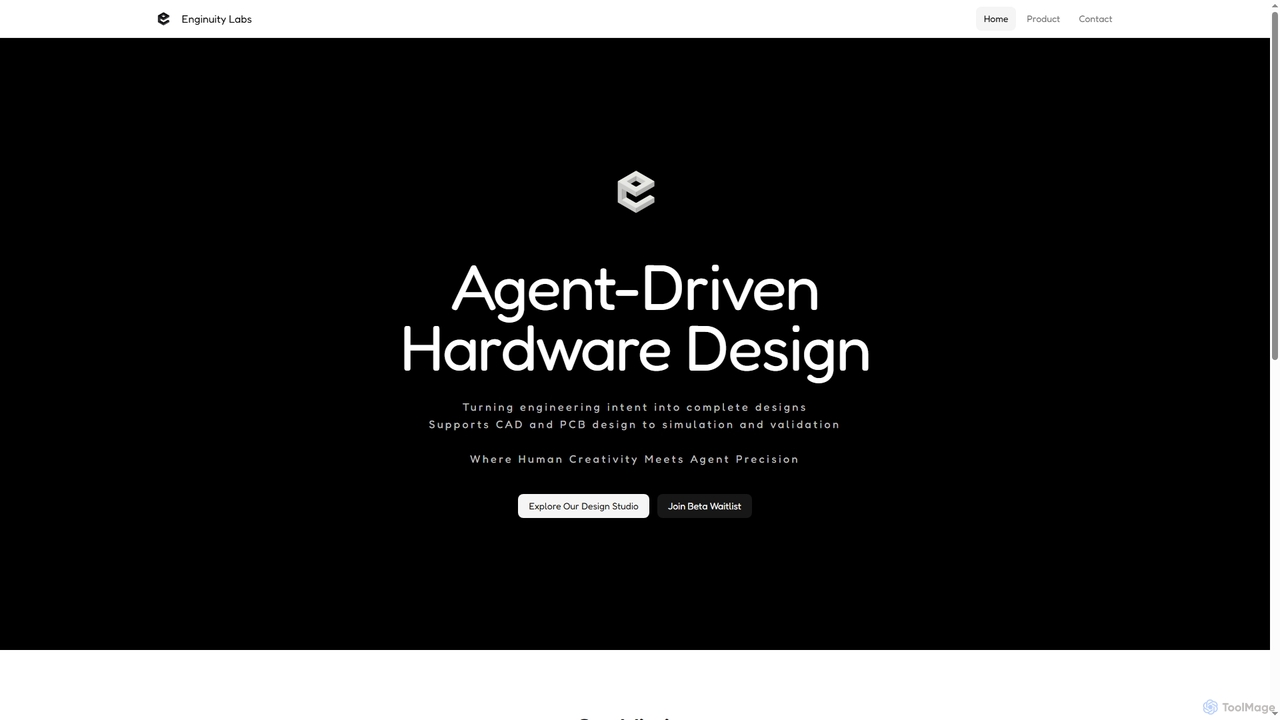
Enginuity Labs offers an AI-powered engineering design studio, integrating intelligent agents into CAD, PCB, and simulation workflows. It automates repetitive tasks, enhances team collaboration with AI insights, and empowers engineers to focus on creativity while AI manages complexity in design processes.
3D Modeling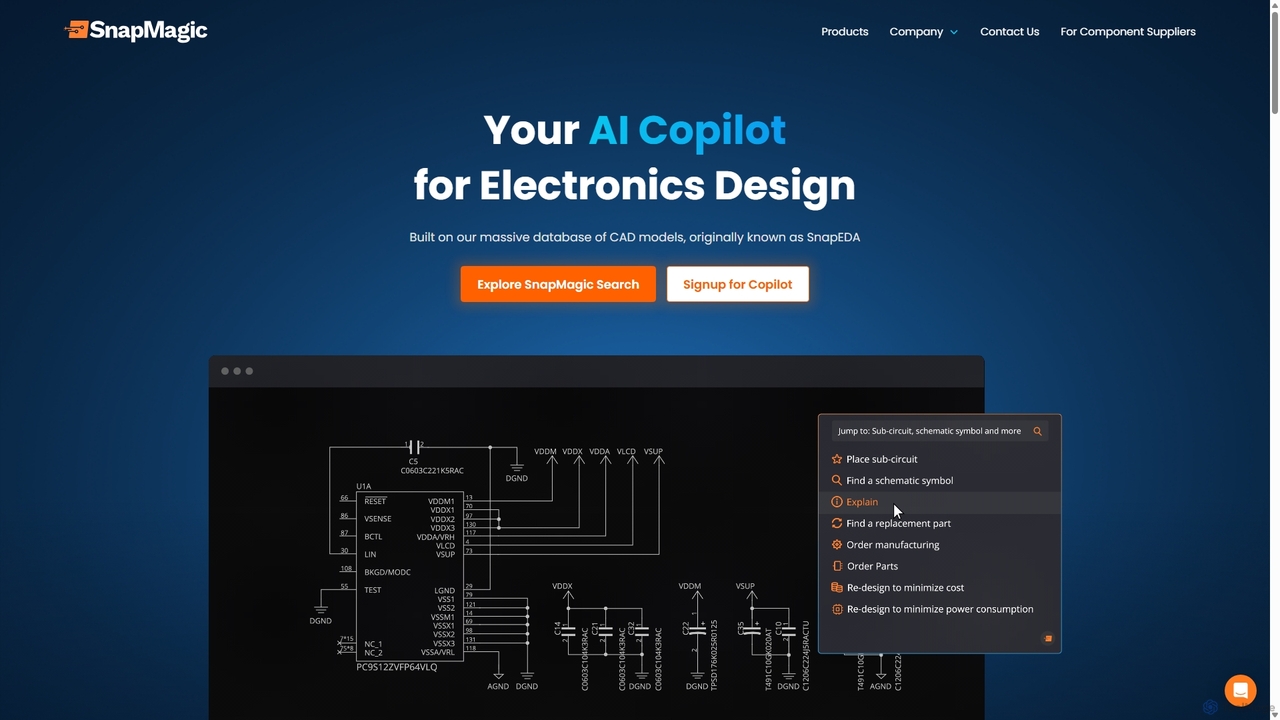
SnapMagic is an AI copilot for electronics design, automating and accelerating the circuit board creation process. It uses AI to auto-complete circuits, optimize your Bill of Materials (BOM) for cost and power, and provides real-time supply chain data. Engineers can interact with designs using natural language, streamlining repetitive tasks and fostering innovation from concept to manufacturing.
Hardware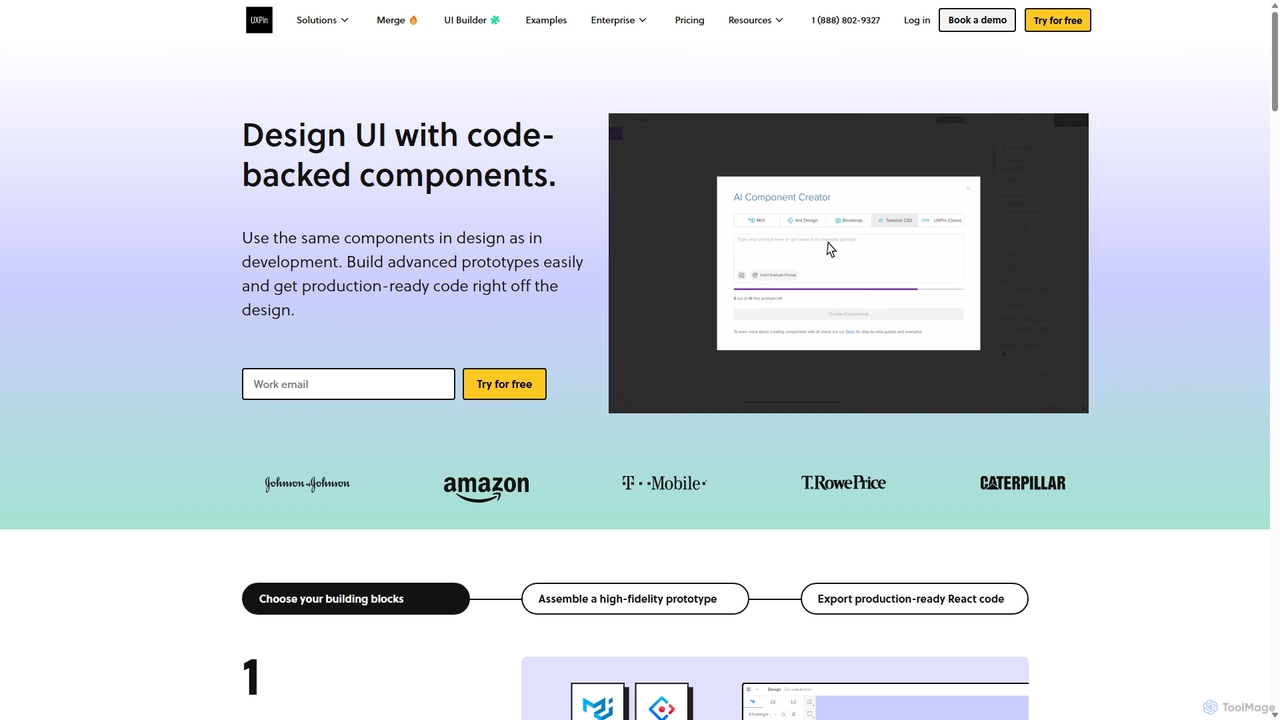
UXPin is a code-based design and prototyping tool that bridges the gap between design and engineering. It enables teams to create high-fidelity, interactive prototypes using real code components, ensuring consistency and dramatically speeding up the product development lifecycle from concept to launch.
Prototyping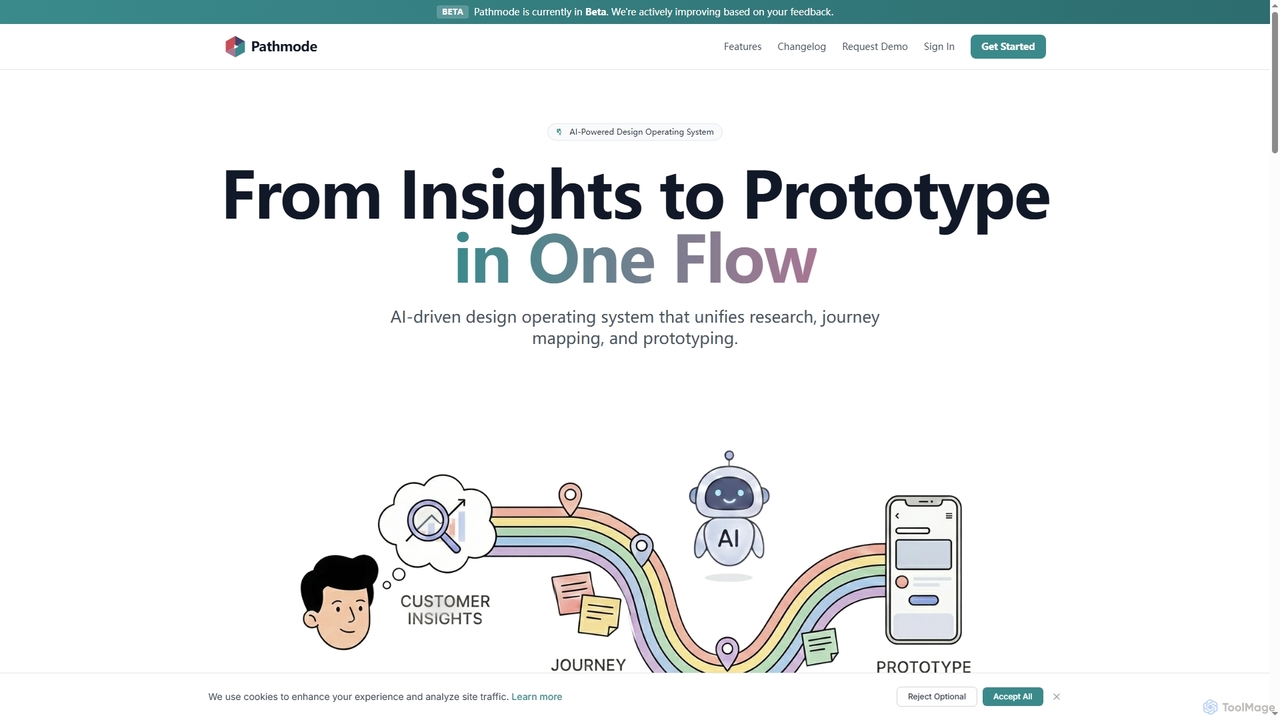
Pathmode is an AI-powered design operating system that unifies user research, automated journey mapping, and prototype specification into a single, seamless workflow. It transforms raw insights into actionable UI design specifications, eliminating manual handoffs and driving efficient product execution.
Design Assistant