Everest
Everest is a high-performance, edge-optimized AI compute unit designed for automating enterprise workloads and enabling efficient on-premises AI …
Everest is a high-performance, edge-optimized AI compute unit designed for automating enterprise workloads and enabling efficient on-premises AI model deployment. Based on provided information, it appears to be a physical hardware solution (C1 Unit) focused on significant cost savings compared to cloud services, low standby power consumption, and scalable automation for large-scale operations. It is currently available for pre-order.
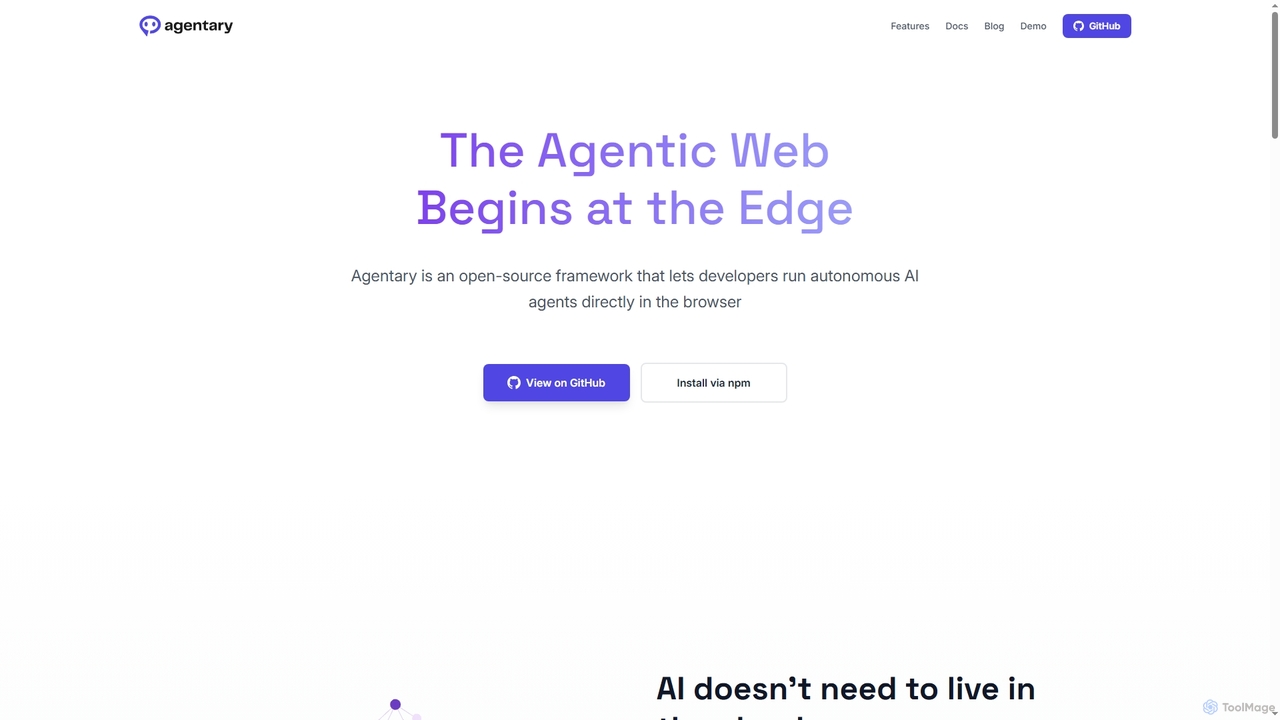
Agentary
Agentary is an open-source JavaScript SDK for developers to build and run autonomous AI agents directly in the …
Agentary is an open-source JavaScript SDK for developers to build and run autonomous AI agents directly in the browser. It leverages WebGPU and WebAssembly for on-device execution, ensuring complete data privacy, zero latency, and offline functionality. This serverless framework allows for the creation of fast, private, and intelligent web applications without cloud dependencies or API costs.
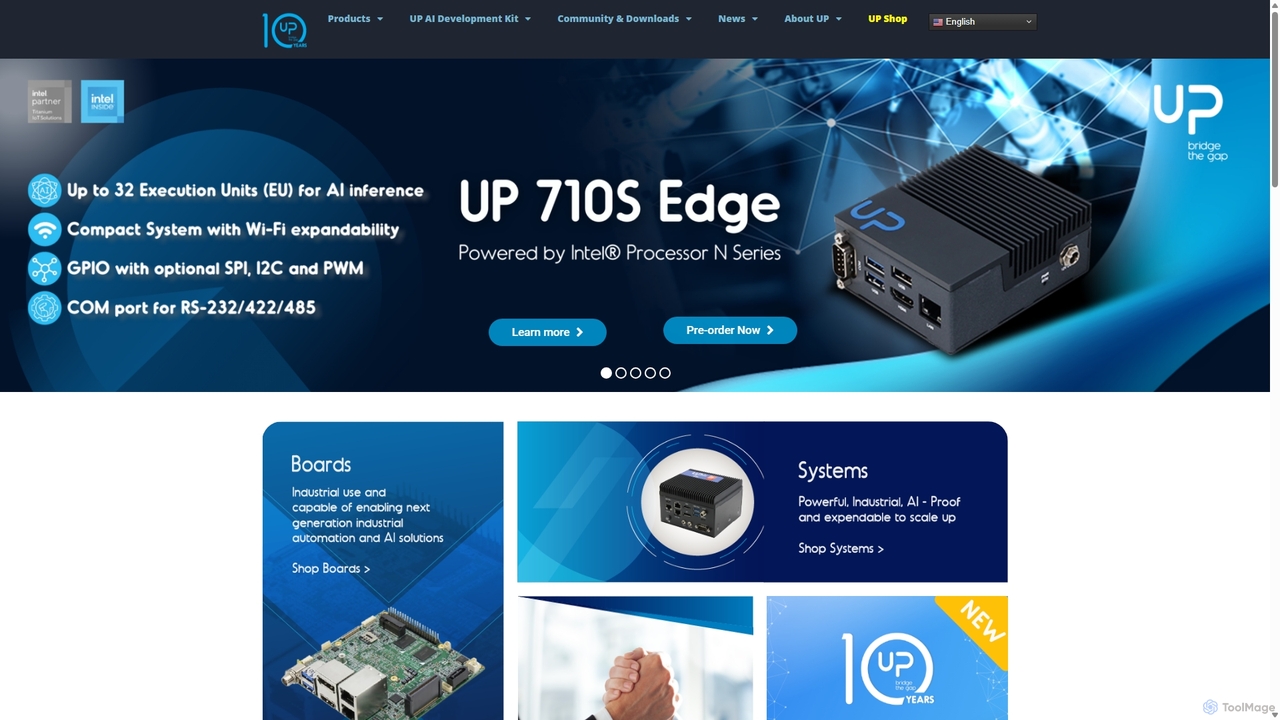
UP Board
UP Board is a series of high-performance single-board computers (SBCs) designed for professional developers building edge AI, IoT, …
UP Board is a series of high-performance single-board computers (SBCs) designed for professional developers building edge AI, IoT, and robotics applications. Powered by robust Intel® processors and compatible with the Raspberry Pi ecosystem, it provides an ideal hardware platform for transitioning from prototype to mass production.
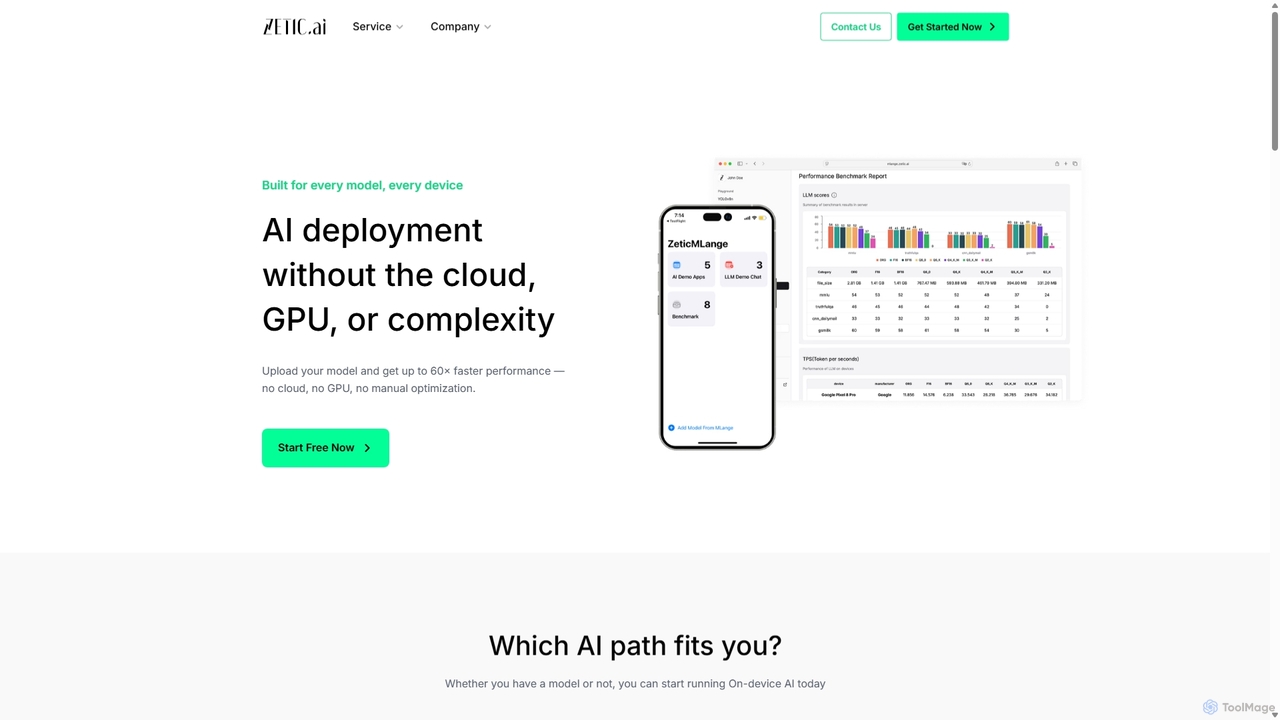
Zetic.ai
Zetic.ai is a platform that enables developers to deploy AI models directly on edge devices, eliminating the need …
Zetic.ai is a platform that enables developers to deploy AI models directly on edge devices, eliminating the need for expensive GPU servers. Its automated pipeline, ZETIC.MLange, optimizes and converts models for on-device execution, achieving up to 60x faster performance with NPU acceleration while ensuring data privacy and reducing latency.
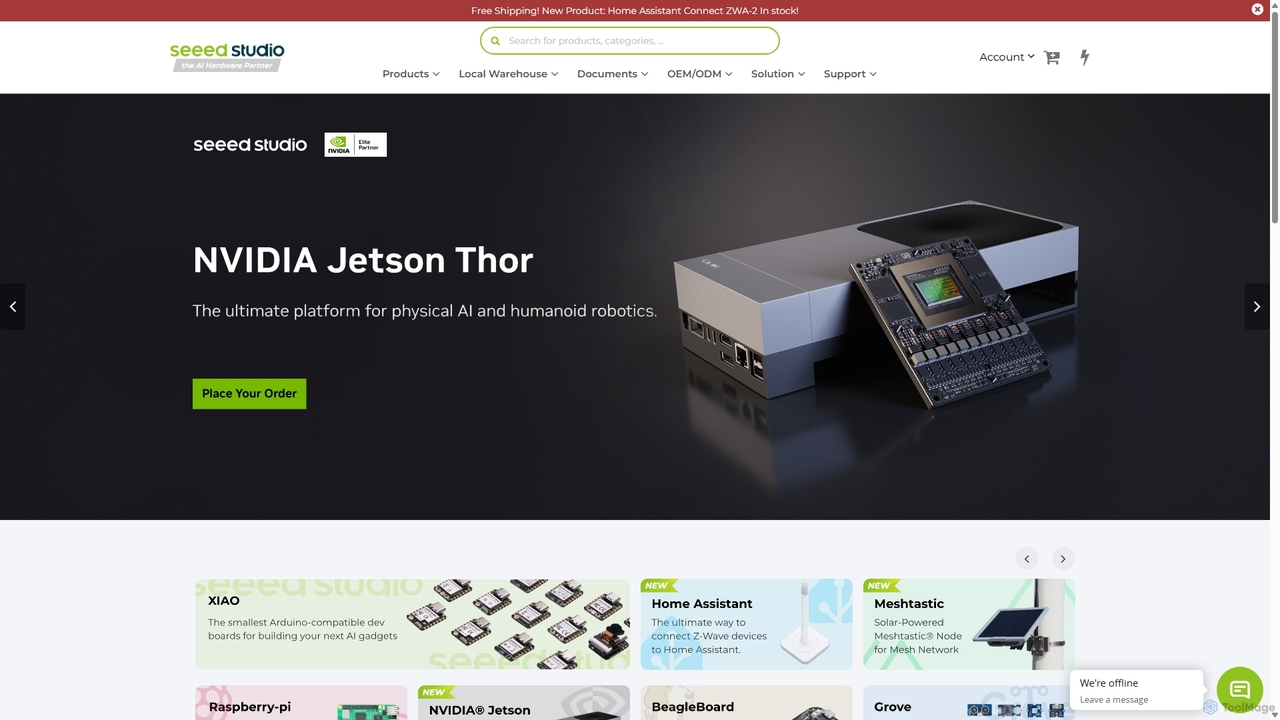
Seeed Studio
Seeed Studio is a leading IoT hardware platform for developers and businesses. It provides a vast range of …
Seeed Studio is a leading IoT hardware platform for developers and businesses. It provides a vast range of open-source hardware, development kits, sensors, and AI-accelerated modules, specializing in edge computing. From prototyping with Raspberry Pi and NVIDIA Jetson to scalable manufacturing services (OEM/ODM), Seeed Studio empowers innovators to build and deploy real-world IoT and Edge AI solutions for smart agriculture, industry, and cities.
Nexa AI
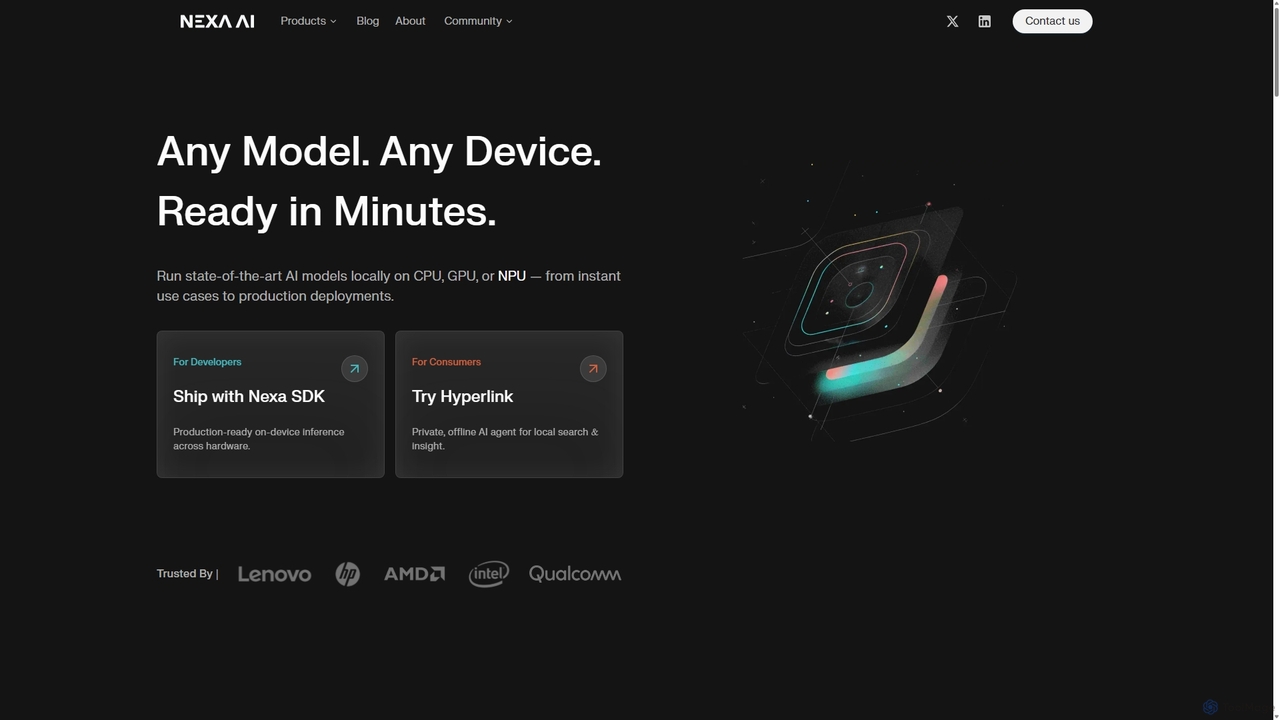
Nexa AI provides a powerful platform for running state-of-the-art AI models directly on any device. Its solutions, including …
Nexa AI provides a powerful platform for running state-of-the-art AI models directly on any device. Its solutions, including the Nexa SDK for developers and the Hyperlink app for consumers, prioritize privacy, offline reliability, and cost-effectiveness by enabling local AI inference on CPUs, GPUs, and NPUs, eliminating the need for cloud processing.
Wavify
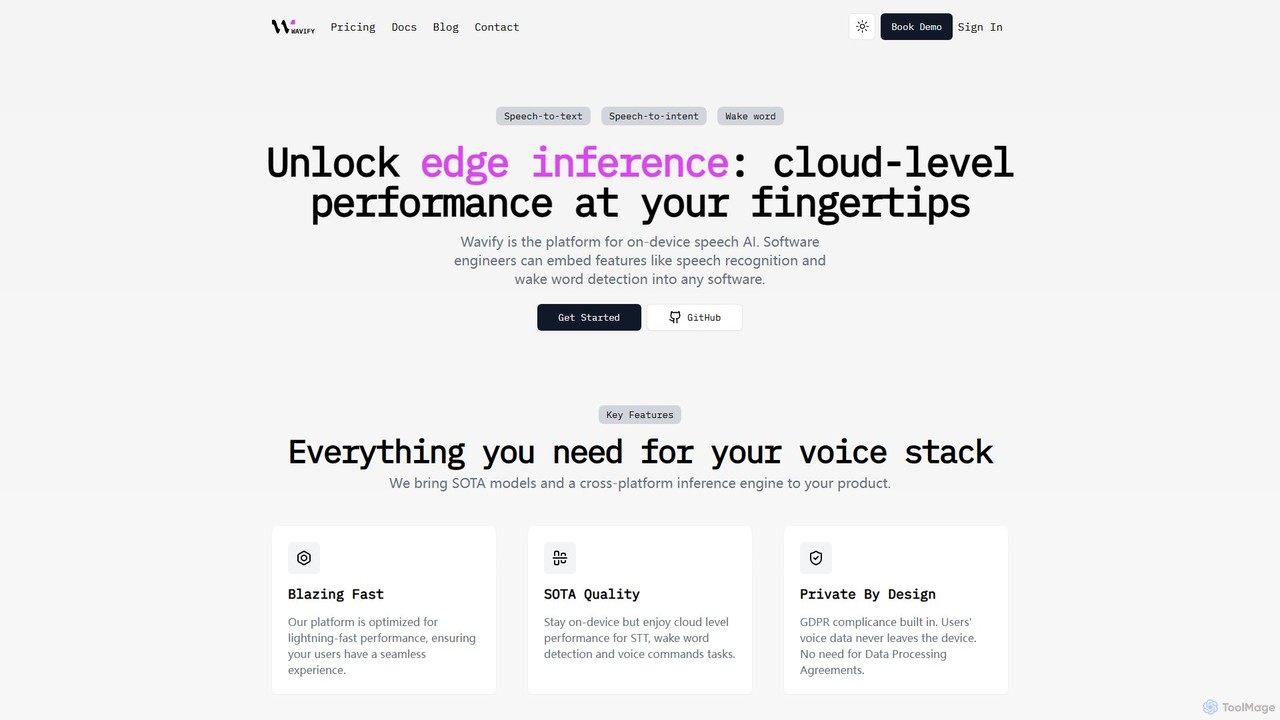
Wavify is a developer-focused platform for on-device speech AI. It provides high-performance, private, and cross-platform SDKs for integrating …
Wavify is a developer-focused platform for on-device speech AI. It provides high-performance, private, and cross-platform SDKs for integrating features like speech-to-text, wake word detection, and speech-to-intent into any application. It ensures cloud-level accuracy while processing all data locally on the user's device, guaranteeing privacy and offline functionality.
Hailo
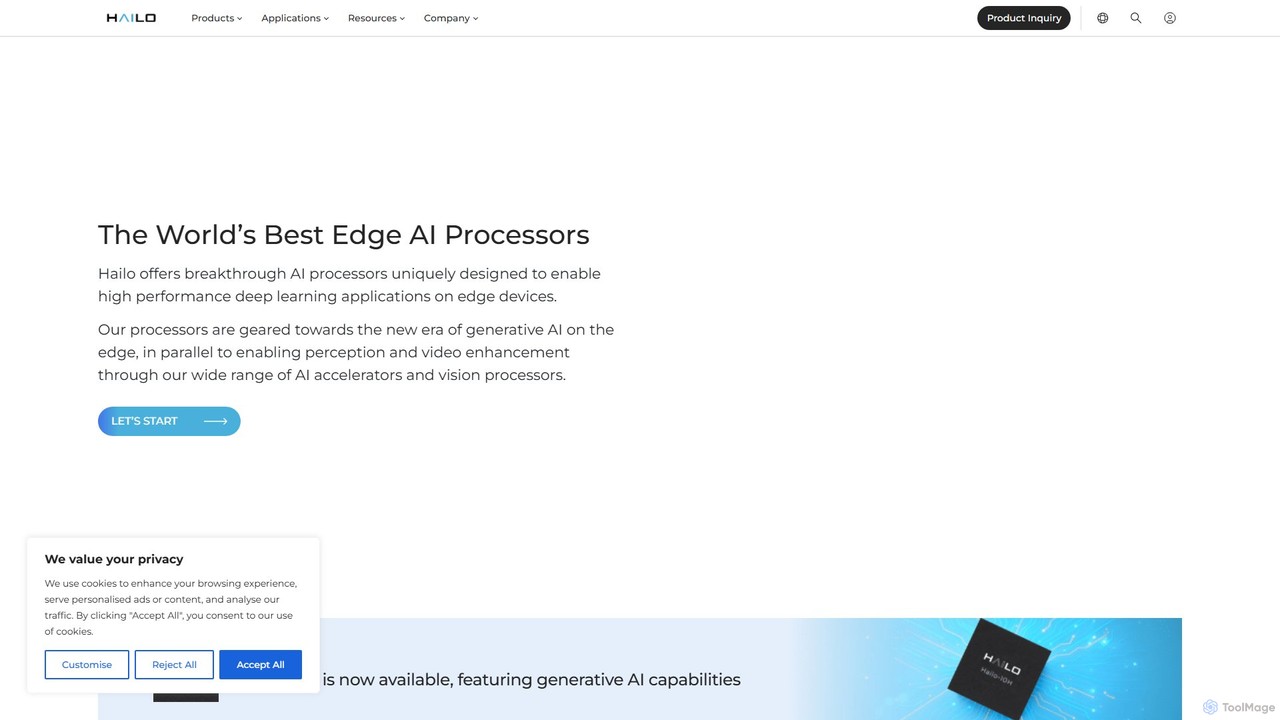
Hailo is a leading chipmaker of high-performance AI processors for edge devices. Their solutions, including the Hailo-8 and …
Hailo is a leading chipmaker of high-performance AI processors for edge devices. Their solutions, including the Hailo-8 and Hailo-10H accelerators, enable data center-class AI performance and generative AI capabilities directly on edge devices. They focus on exceptional power efficiency, low latency, and cost-effectiveness for sectors like automotive, smart cities, retail, and industrial automation.
About Edge Computing
Edge Computing tools are a class of software and hardware solutions that enable data processing near the source of data generation, rather than in a centralized cloud. These tools deploy AI models and applications directly onto devices like sensors, cameras, and local servers. This decentralized approach significantly reduces latency, conserves network bandwidth, and enhances data privacy by keeping sensitive information on-premise. As a key component of AI Infrastructure, edge computing is essential for applications requiring real-time responses and operational reliability in environments with limited connectivity.
Core Features
- Local Data Processing: Executes computations directly on the device or a nearby gateway, minimizing delays.
- Low Latency: Enables near-instantaneous responses, critical for time-sensitive applications like autonomous systems.
- Bandwidth Optimization: Reduces the volume of data sent to the cloud, lowering transmission costs.
- Offline Functionality: Allows applications to operate reliably even with intermittent or no internet connection.
- Enhanced Security: Keeps sensitive data on-premise, reducing exposure to external threats during transmission.
Use Cases
Edge computing is widely adopted in industries such as manufacturing for real-time quality control, retail for in-store customer analytics, and automotive for autonomous vehicle navigation. It is crucial for IoT developers, AI engineers, and network architects who build and deploy systems that cannot tolerate the delays of cloud communication, such as smart city infrastructure and remote industrial monitoring.
How to Choose
When selecting an edge computing tool, consider its hardware compatibility with your devices (e.g., NVIDIA Jetson, Raspberry Pi). Evaluate the ease of AI model deployment, management, and remote updates. Assess its support for various connectivity protocols (MQTT, 5G) and its built-in security features, such as data encryption and secure access controls. Finally, consider the scalability of the platform to manage a large fleet of distributed devices.
Edge ComputingUse Cases
Real-Time Defect Detection in Manufacturing
A quality control engineer on a high-speed production line needs to identify faulty products instantly. Using an edge computing solution, an AI vision model is deployed on a smart camera directly on the assembly line. This device analyzes the video feed in real-time to detect anomalies like cracks, misalignments, or incorrect labels. When a defect is found, the system immediately triggers an alert or activates a robotic arm to remove the item, all without the delay of sending video data to a remote cloud server for analysis. This significantly reduces waste and improves overall product quality.
In-Store Analytics for Smart Retail
A retail manager wants to understand customer behavior to optimize store layout and staffing without compromising privacy. Edge computing devices connected to in-store cameras process video footage locally. They generate anonymous data on customer foot traffic, dwell times in different aisles, and queue lengths at checkout counters. Because the video is analyzed on-site and only anonymized metadata is sent to a central dashboard, sensitive customer information is protected. The manager receives real-time insights to make data-driven decisions, such as repositioning popular products or allocating more staff during peak hours.
Autonomous Vehicle Navigation
An automotive engineer developing a self-driving car needs a system that can make split-second decisions. Relying on the cloud is not an option due to latency and potential connectivity loss. Edge computing platforms are installed directly in the vehicle to process vast amounts of data from LiDAR, radar, and cameras in real time. These onboard systems perform tasks like object detection, lane keeping, and collision avoidance. By processing data at the edge, the vehicle can react instantly to changing road conditions, ensuring the safety of passengers and pedestrians without depending on an external network connection.
Predictive Maintenance for Industrial Equipment
A maintenance manager for a wind farm needs to prevent costly turbine failures. Sensors on each turbine continuously collect data on vibration, temperature, and rotational speed. This data is fed into a local edge device at the base of the turbine. An AI model running on the device analyzes these patterns in real-time to detect subtle anomalies that precede a failure. Instead of streaming massive amounts of raw sensor data to the cloud, the edge device only sends an alert when it predicts a potential issue. This allows the maintenance team to schedule repairs proactively, preventing downtime and extending the equipment's lifespan.
Remote Patient Monitoring in Healthcare
A healthcare provider needs to monitor patients with chronic conditions at home. Wearable sensors track vital signs like heart rate and glucose levels. This data is sent to an edge gateway in the patient's home, which analyzes the information locally. The gateway can immediately detect critical changes and send an urgent alert to the medical team. For routine data, it aggregates and sends summarized reports periodically, reducing network traffic and cloud storage costs. This edge approach ensures timely intervention in emergencies and enhances patient data privacy by minimizing the transmission of raw health data over the internet.
Interactive Augmented Reality (AR) Experiences
An AR application developer aims to create a smooth, responsive experience on a smartphone. For the AR effect to work, the application must recognize objects and surfaces in the real world in real-time. Instead of sending a continuous video stream to the cloud for analysis, the phone's processor acts as the edge device. It runs optimized AI models to perform tasks like plane detection and object tracking locally. This allows virtual objects to be overlaid onto the real world with minimal lag, creating a seamless and immersive user experience that would be impossible if it relied on a slow cloud connection.