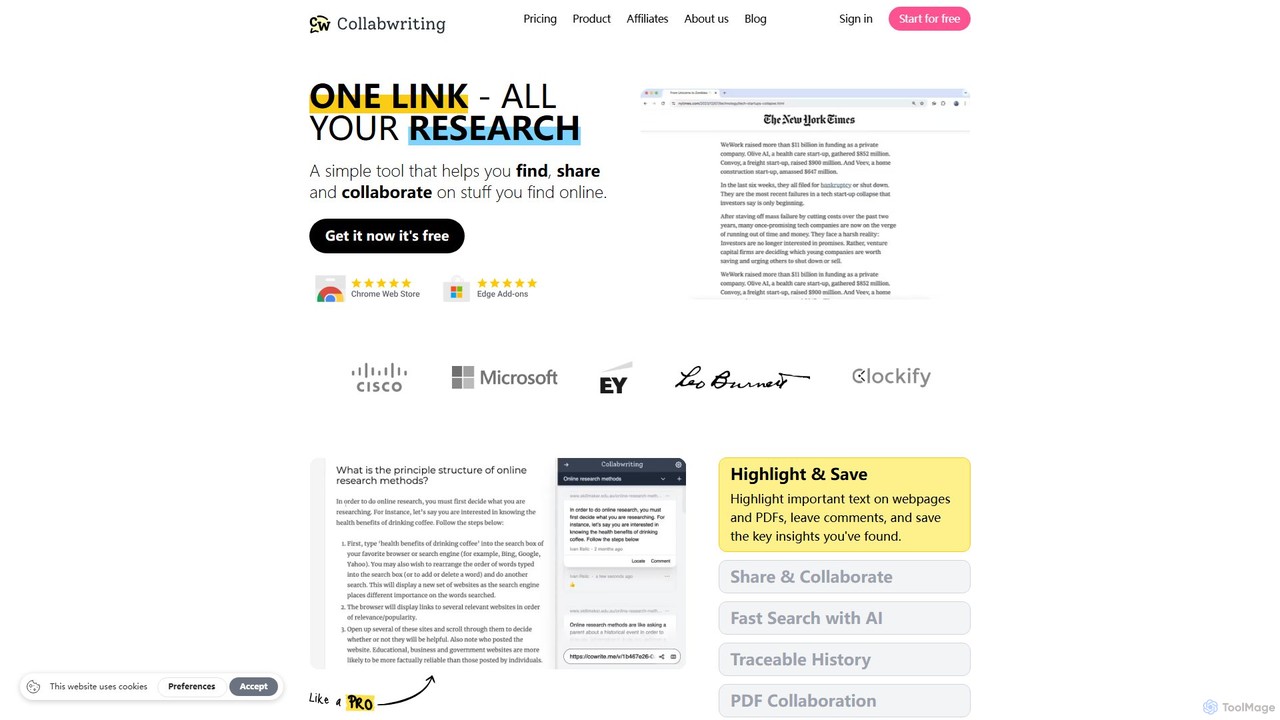
Collabwriting is an AI-powered research and collaboration tool that helps you find, save, and share information from webpages, PDFs, and Kindle. Highlight key text, add comments, and organize your findings with tags and topics. Its AI Copilot automates research, while seamless integrations with Notion and Google Docs streamline your workflow, making it ideal for teams and individuals.
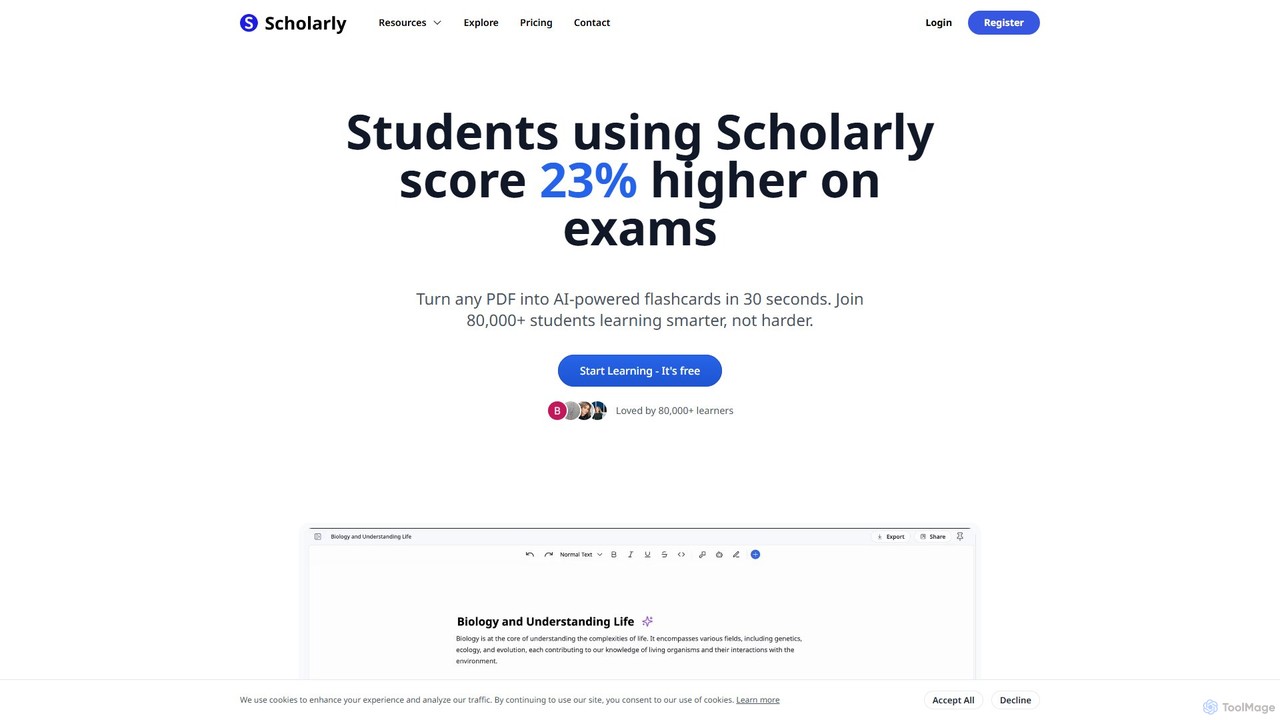
Scholarly is an AI-powered learning platform designed for students to enhance their study efficiency. It transforms PDFs into interactive flashcards, automates in-depth research, provides a 24/7 AI tutor, and helps organize notes. By leveraging AI, Scholarly aims to help students learn smarter, improve information retention, and achieve higher exam scores.
Product overview
Collabwriting Product overview
Collabwriting is an AI-powered research and collaboration tool that helps you find, save, and share information from webpages, PDFs, and Kindle. Highlight key text, add comments, and organize your findings with tags and topics. Its AI Copilot automates research, while seamless integrations with Notion and Google Docs streamline your workflow, making it ideal for teams and individuals.
Scholarly Product overview
Scholarly is an AI-powered learning platform designed for students to enhance their study efficiency. It transforms PDFs into interactive flashcards, automates in-depth research, provides a 24/7 AI tutor, and helps organize notes. By leveraging AI, Scholarly aims to help students learn smarter, improve information retention, and achieve higher exam scores.
Detailed feature comparison
| Feature | Collabwriting | Scholarly |
|---|---|---|
| Primary category | Knowledge Management | Study |
| Added | 2025-08-14 | 2025-08-14 |
| Pricing | Freemium | Freemium |
| Official website | collabwriting.com | scholarly.so |
| Product type | Website | Website |
| Performance data | ||
| User rating | Not verified | Not verified |
| Comments | 0 | 0 |
| Monthly visits | 940 | 118.8K |
| Monthly growth | 4.6% | 32.1% |
| Favorites | 120 | 111 |
| Details | View details | View details |
Collabwriting vs Scholarly monthly traffic
Compare Collabwriting and Scholarly by monthly reach, traffic trend, visit depth, top regions, and acquisition sources.
How to interpret the traffic data
In the Collabwriting vs Scholarly monthly traffic comparison, Collabwriting currently shows 940 visits and Scholarly shows 118.8K; Scholarly has about 126.4 times the visible traffic of Collabwriting, an absolute difference of about 117.9K visits. This reflects visible reach, not feature quality or paid users.
Both tools provide verified traffic details, so monthly trends, visit depth, regions, and acquisition sources can be compared on the same basis.
Collabwriting monthly traffic:
Latest traffic
Monthly traffic trend
- 2025/9: 36.1K Monthly visits
- 2026/1: 27.9K Monthly visits
- 2026/2: 13.1K Monthly visits
- 2026/3: 2.9K Monthly visits
- 2026/4: 899 Monthly visits
- 2026/5: 940 Monthly visits
Scholarly monthly traffic:
Latest traffic
Monthly traffic trend
- 2025/9: 153.2K Monthly visits
- 2026/1: 129K Monthly visits
- 2026/2: 95.9K Monthly visits
- 2026/3: 93.9K Monthly visits
- 2026/4: 89.9K Monthly visits
- 2026/5: 118.8K Monthly visits
Top regions
Top 5 countries/regions
| Country/region | Percentage | Traffic |
|---|---|---|
| 🇺🇸United States | 83.55% | 99.3K |
| 🇬🇧United Kingdom | 6.77% | 8K |
| 🇮🇳India | 4.45% | 5.3K |
| 🇳🇬Nigeria | 2.79% | 3.3K |
| 🇻🇳Vietnam | 2.44% | 2.9K |
Traffic sources
| Source type | Percentage | Traffic |
|---|---|---|
| Direct | 90.61% | 107.6K |
| Referral | 9.39% | 11.2K |
Search keywords
Usage comparison
Compare the core capabilities of Collabwriting and Scholarly
Collabwriting Core features
Scholarly Core features
Use cases
Collabwriting Use cases
Scholarly Use cases
Collabwriting vs Scholarly:In-depth comparison and selection guidance
First decide whether the products solve the same kind of need
This in-depth Collabwriting vs Scholarly comparison uses only the product records, taxonomy, audience, traffic, and community signals available on this page. Collabwriting is primarily listed under “Knowledge Management”, while Scholarly is primarily listed under “Study”, so the first decision is whether your actual task matches their recorded scope.
The structured fields currently show these decision-relevant differences: Primary category (Collabwriting: Knowledge Management; Scholarly: Study); Monthly visits (Collabwriting: 940; Scholarly: 118.8K); Monthly growth (Collabwriting: 4.6%; Scholarly: 32.1%); Favorites (Collabwriting: 120; Scholarly: 111); Website (Collabwriting: collabwriting.com; Scholarly: scholarly.so). These facts are more useful for selection than brand visibility alone.
What market visibility and monthly traffic mean
In the Collabwriting vs Scholarly monthly traffic comparison, Collabwriting currently shows 940 visits and Scholarly shows 118.8K; Scholarly has about 126.4 times the visible traffic of Collabwriting, an absolute difference of about 117.9K visits. This reflects visible reach, not feature quality or paid users.
Both tools provide verified traffic details, so monthly trends, visit depth, regions, and acquisition sources can be compared on the same basis.
If public market visibility is an important first-pass criterion, investigate Scholarly first. The final choice should still follow taxonomy, use case, and a real trial because higher traffic does not prove broader capabilities or better workflow fit.
Product positioning, use cases, and roles
Collabwriting and Scholarly currently overlap in shared categories: Research and Writing. This can place both on the same shortlist, but it does not prove equal implementation, depth, or cost.
Collabwriting's unique categories/tags are Knowledge Management, AI research, annotation tool, collaboration, content curation, Google Docs integration, knowledge management, and Notion integration; Scholarly's are Study, academic writing, AI tutor, exam preparation, flashcard generator, learning, note-taking, and PDF summarizer. These unique fields are the strongest differentiators: validate the product whose recorded scope matches the task instead of following traffic alone.
What ratings, comments, and favorites can tell you
Collabwriting has no verified rating, 0 comments, 120 favorites, and 130 likes;Scholarly has no verified rating, 0 comments, 111 favorites, and 87 likes。
Neither product has enough rating or comment samples for a credible reputation ranking.
Selection guidance by actual need
When to evaluate Collabwriting first
Put Collabwriting on the priority trial list when the task aligns with “Knowledge Management” and especially Knowledge Management, AI research, annotation tool, collaboration, content curation, and Google Docs integration. This follows recorded positioning and does not imply unlisted capabilities are absent.
Collabwriting also currently records: pricing is freemium, product type is website, 940 verified monthly visits, no verified user rating. Verify any hard requirement around price, platform, or reach before trial, and do not let sparse review data substitute for testing.
When to evaluate Scholarly first
Put Scholarly on the priority trial list when the task aligns with “Study” and especially Study, academic writing, AI tutor, exam preparation, flashcard generator, and learning. This follows recorded positioning and does not imply unlisted capabilities are absent.
Scholarly also currently records: pricing is freemium, product type is website, 118.8K verified monthly visits, no verified user rating. Verify any hard requirement around price, platform, or reach before trial, and do not let sparse review data substitute for testing.
How to validate the recommendation before deciding
The available data describes positioning, public visibility, and community signals, but it cannot prove output quality, speed, integration effort, privacy, or long-term cost in your workflow. Before deciding, run the same representative tasks in Collabwriting and Scholarly, then record completion time, accuracy, manual corrections, and the real paid threshold. A like-for-like trial turns this comparison into a defensible adoption decision.
Comparison FAQ
How should I choose between Collabwriting and Scholarly?
Where does this comparison data come from?
What do unknown fields mean?
Related AI tools

Shepherd
Shepherd is an AI-powered learning companion designed to revolutionize your study process. Chat with your PDFs, get instant summaries, and receive personalized tutoring. It helps you create entire courses, generate flashcards and quizzes, take organized notes, and manage your tasks, making learning more efficient, interactive, and tailored to your needs.
Study Tools
genei
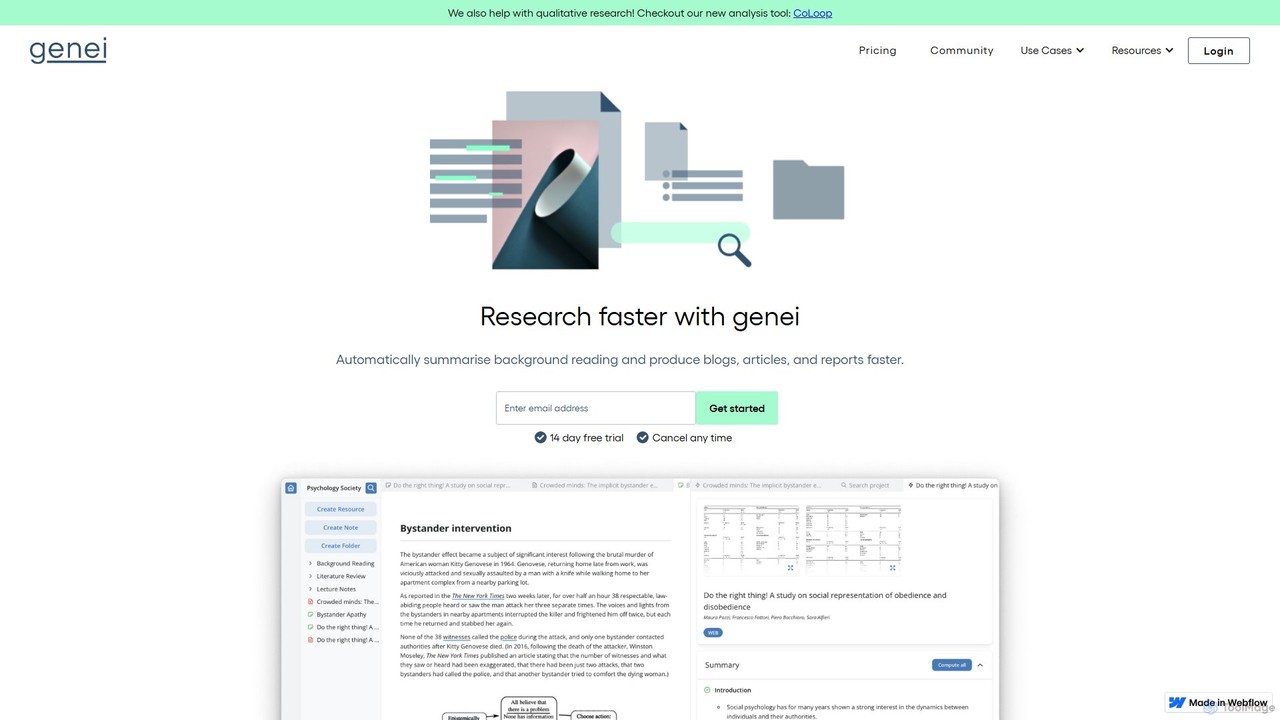
genei is an AI-powered research and summarization tool designed to enhance productivity for students, academics, and professionals. It helps users read faster, organize information, and uncover key insights by automatically summarizing documents, extracting keywords, and answering questions from your text. It supports PDFs and webpages, integrating research into a seamless workflow.
Study
RecapioGPT
RecapioGPT is an AI-powered second brain and content summarizer that transforms YouTube videos, articles, and web posts into a searchable knowledge base. Chat with your content, get daily recaps, and organize insights to save time and learn smarter.
Research
PackPack
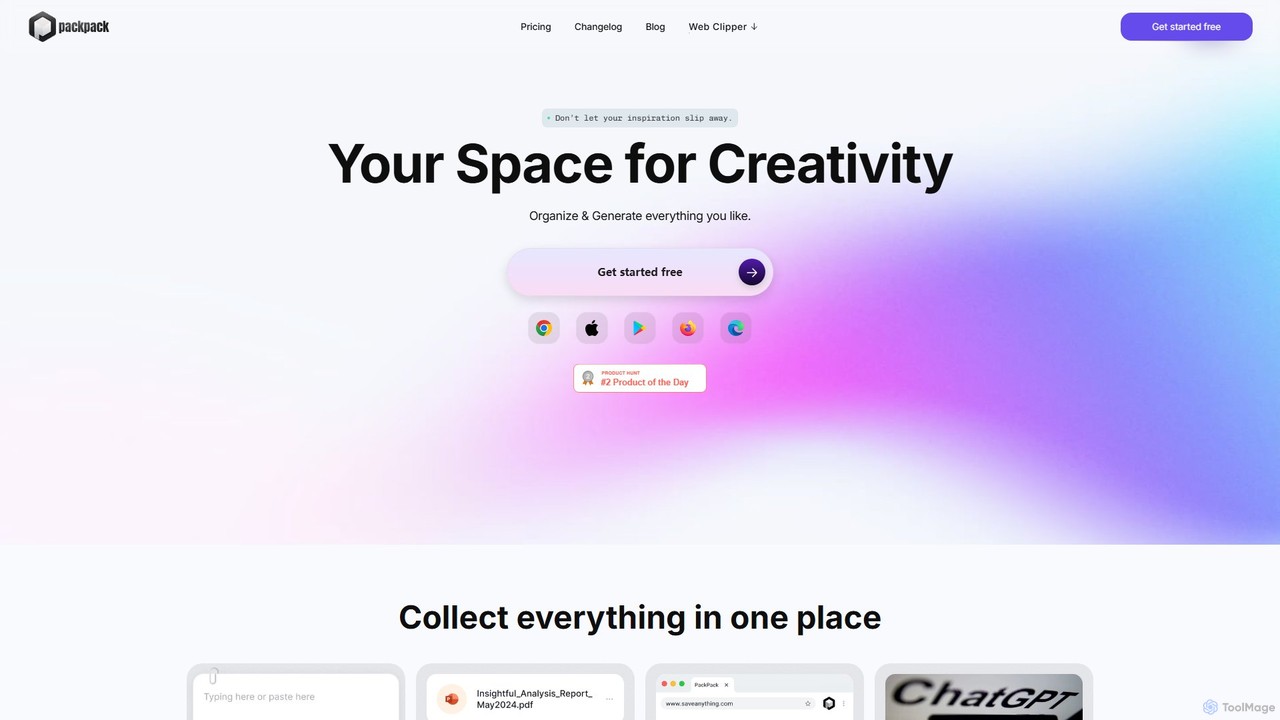
PackPack is an AI-powered digital workspace designed to centralize your creativity and research. It allows you to collect bookmarks, articles, images, files, and notes in one place. With features like AI-powered Q&A, summarization, and automatic image tagging, PackPack transforms scattered information into an organized, searchable knowledge base, boosting productivity for creatives, researchers, and professionals.
Bookmarking
YouMind
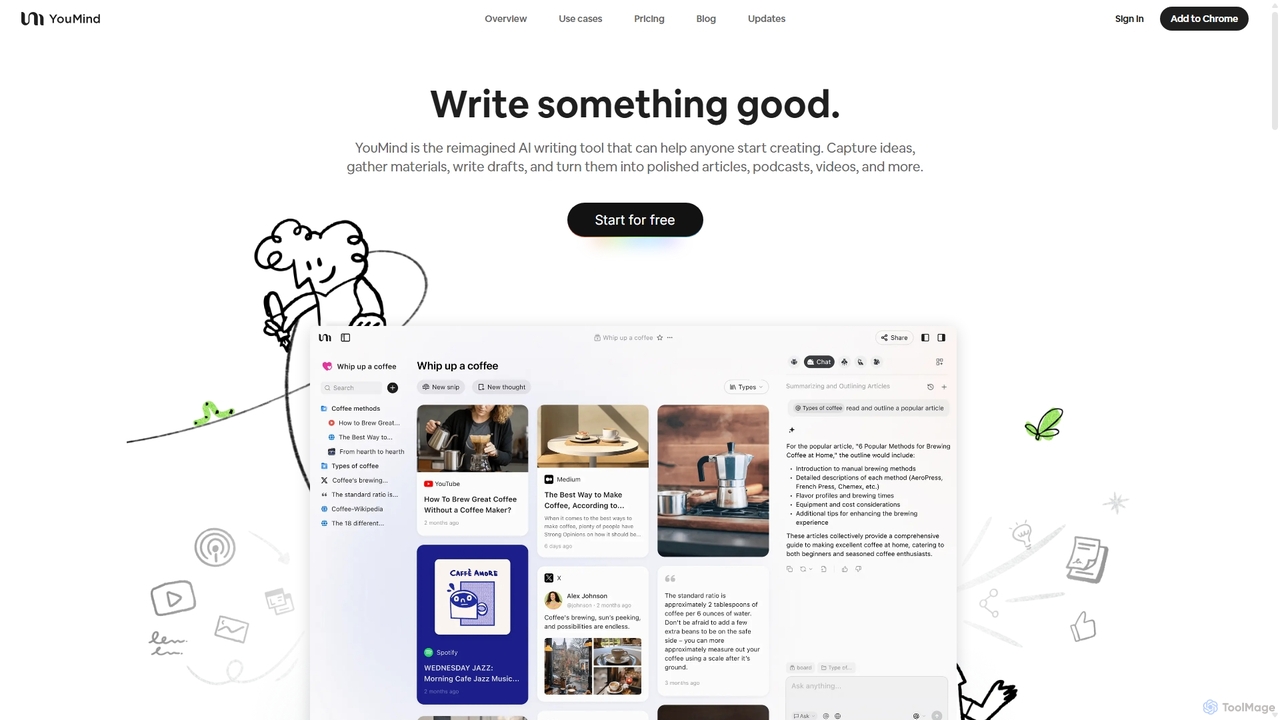
YouMind is an AI-powered creation studio designed to streamline the entire content creation workflow. It integrates material collection from various sources like YouTube, podcasts, and articles into a unified workspace. Users can research, organize, and collaborate with top AI models to transform their ideas into polished articles, videos, and more, all within a single, project-based environment.
Knowledge Management
Knowee AI
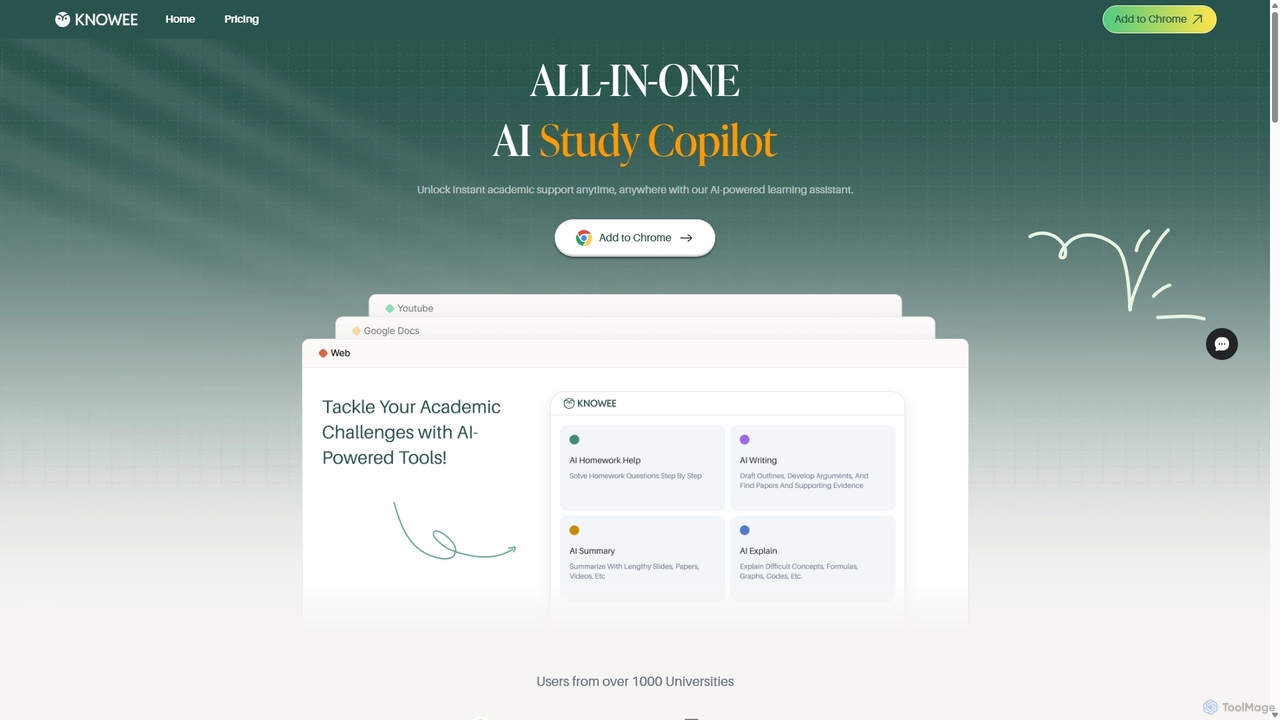
Knowee AI (formerly StudyGPT) is an all-in-one AI-powered study copilot designed for students and researchers. It offers instant academic support, including a homework helper, essay writing assistant, math solver, and a powerful scholar search engine. It integrates seamlessly into your workflow via a Chrome extension and works directly in Google Docs.
Learning
Mindgrasp
Mindgrasp is an AI-powered learning platform that helps students and professionals learn 10x faster. It instantly transforms any document, video, lecture, or link into summaries, detailed notes, flashcards, and quizzes. Its AI Tutor provides instant answers and assistance, making studying and research more efficient and accessible.
Study
Upword
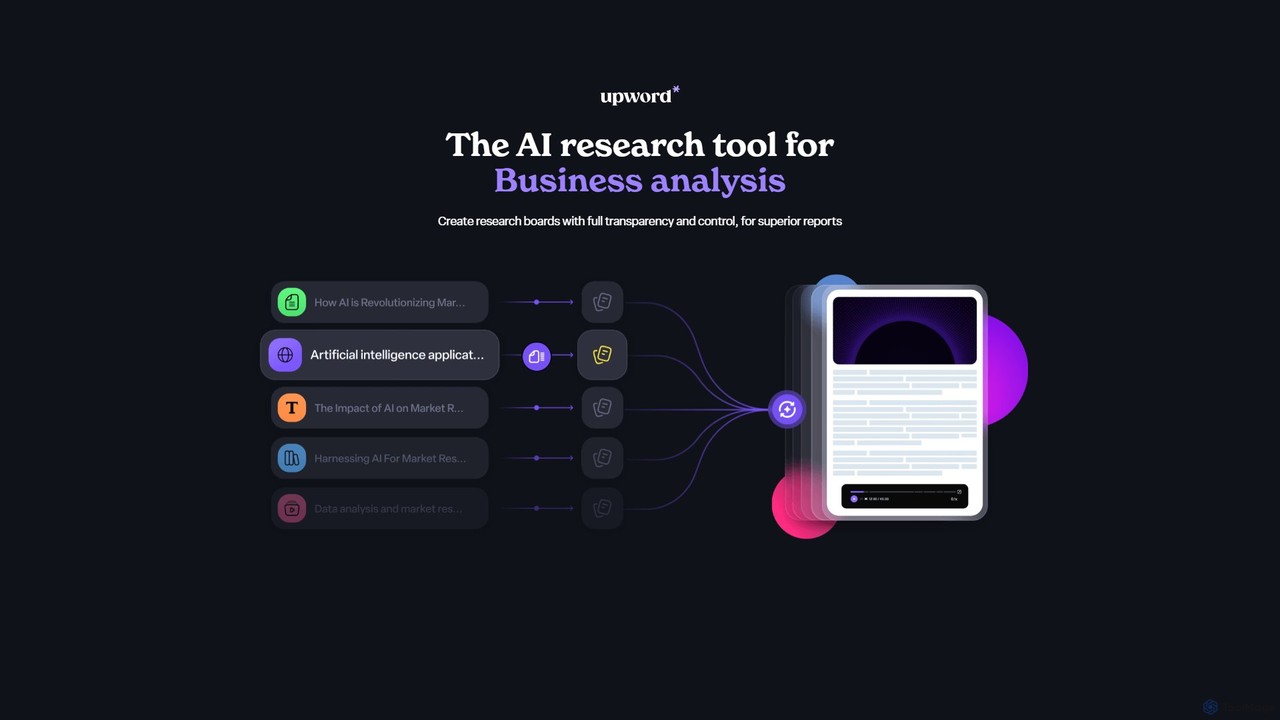
Upword is an AI-powered research platform designed for business analysis and knowledge management. It helps users summarize content from various sources like PDFs, URLs, and YouTube videos, create detailed reports with AI assistance, and organize all research in a centralized, collaborative library. It offers full control over the AI process, ensuring transparent and trustworthy results.
Analysis
Lilys AI
Lilys AI is a powerful knowledge assistant that instantly summarizes diverse content formats, including YouTube videos, audio files, PDFs, websites, and Excel sheets. It extracts key insights, creates structured notes, and allows you to build a searchable personal knowledge base. Ideal for students, researchers, and professionals looking to save time and accelerate learning by quickly grasping the core ideas from lengthy materials.
Research
Deta Surf
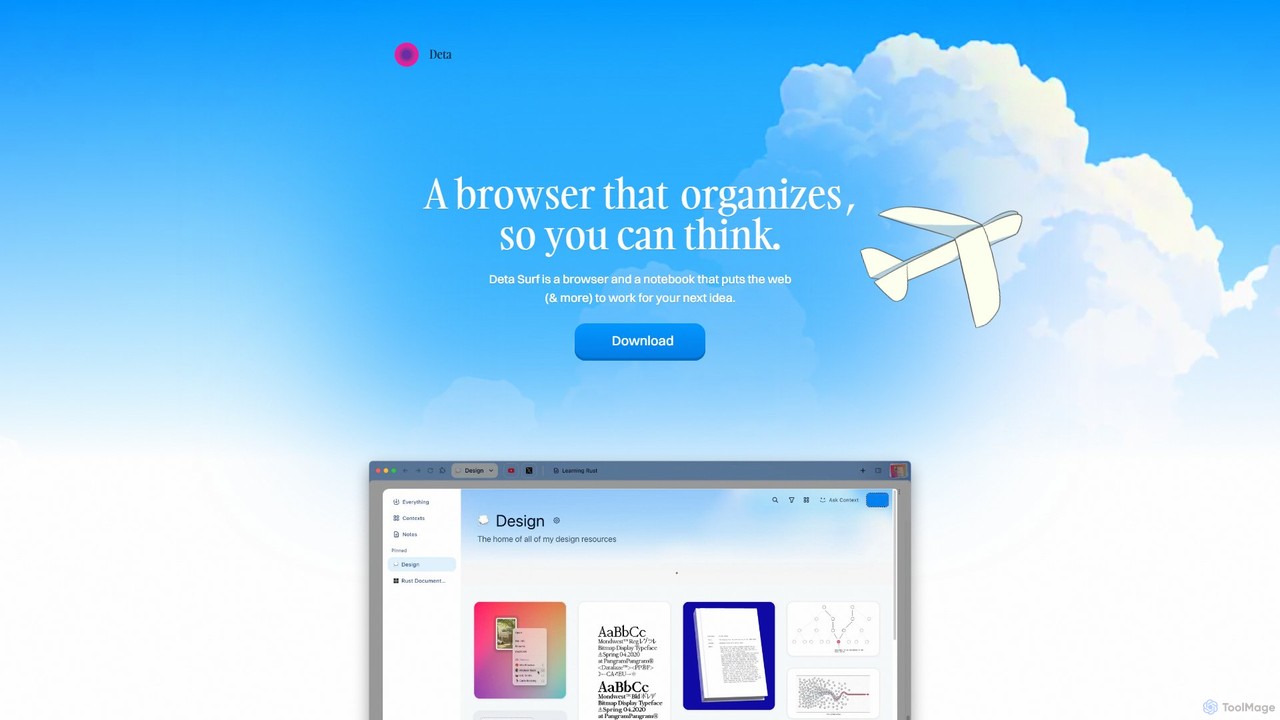
Deta Surf is an intelligent browser and notebook that organizes your web experience. It uses AI to help you collect, remember, and synthesize information, all while keeping your data private and local on your device. It's designed to reduce context switching and enhance your thinking and creativity.
Browser
Lazy
Lazy is a universal capture tool designed to eliminate context switching. It allows you to instantly clip information from any app, website, or document using a simple shortcut. With AI-powered features like summarization and voice input, Lazy helps you build a centralized knowledge base without interrupting your workflow.
Bookmarking
Stacks
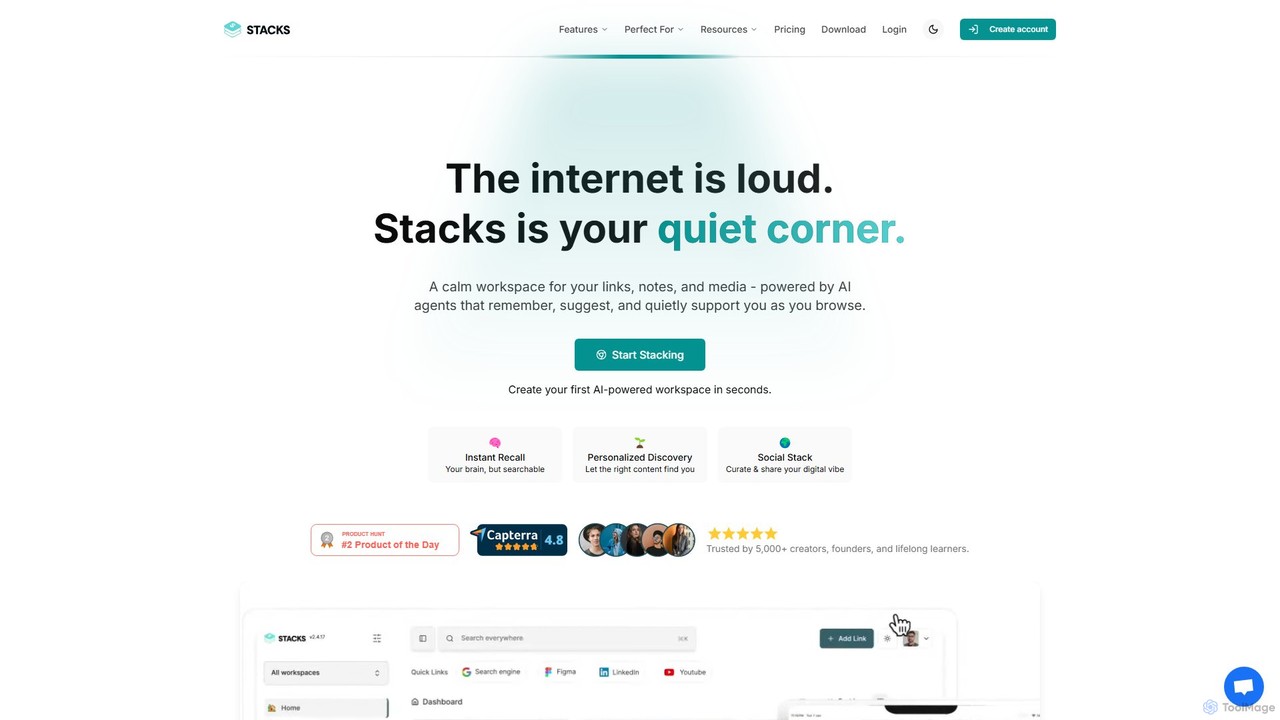
Stacks is an AI-powered workspace that organizes your digital footprint. It goes beyond simple bookmarking to understand the *intent* behind your saved links, notes, and files, creating a personalized knowledge hub that connects ideas and supports your workflow.
Bookmarking
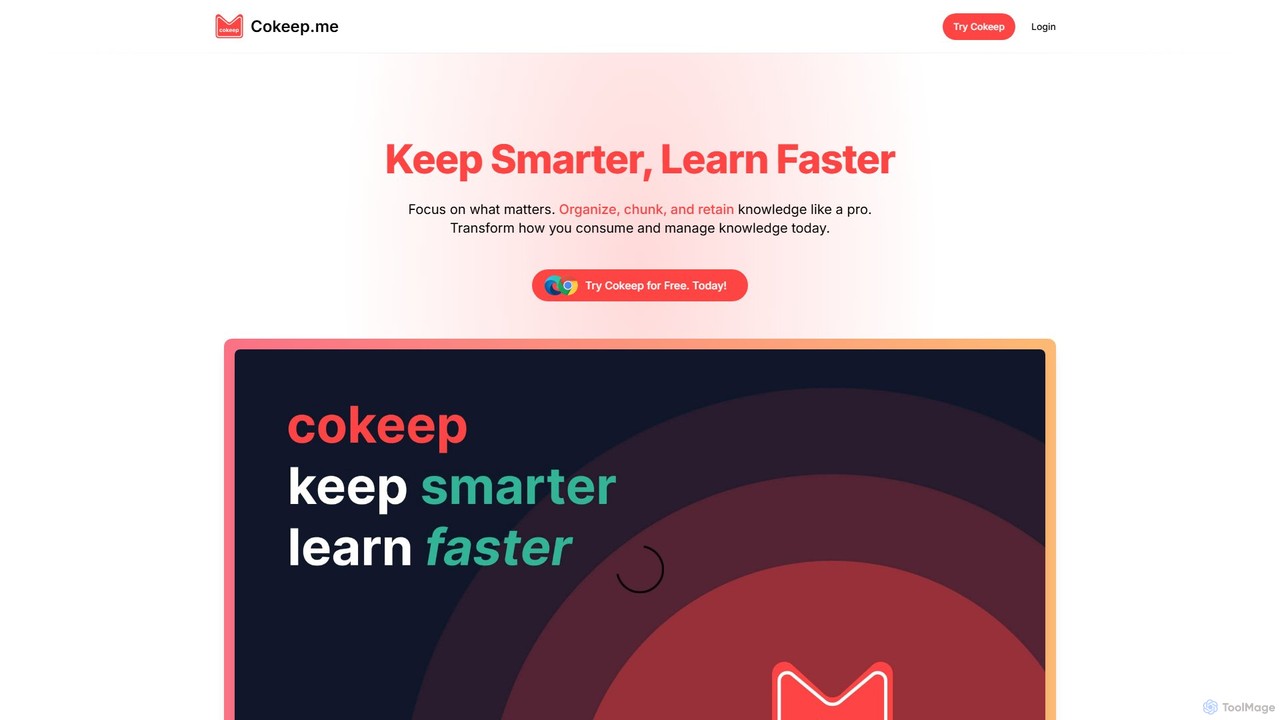
Cokeep
Cokeep is an AI-powered knowledge management tool designed to help you save, organize, and learn from online content more effectively. It transforms articles and videos into digestible summaries, automatically tags information, and provides a collaborative space to manage your learning resources, helping you combat information overload and retain knowledge faster.
Learning
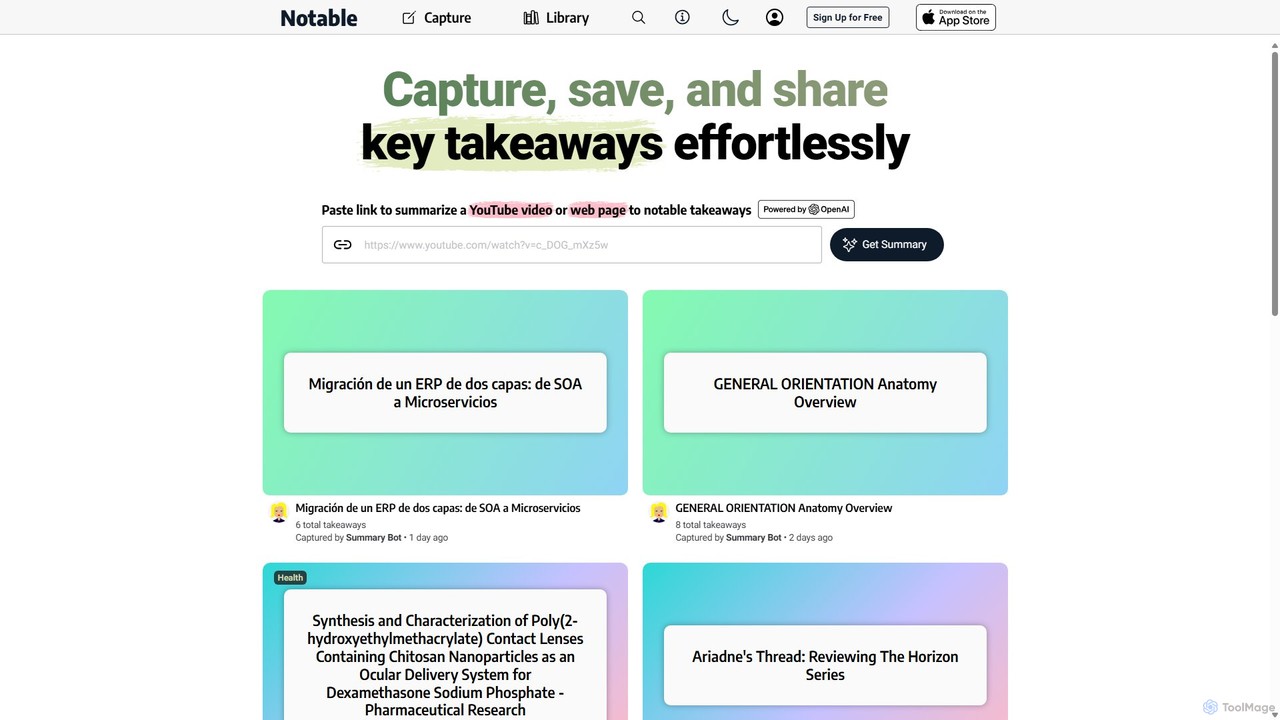
Notable AI
Notable AI is an intelligent tool designed to capture, summarize, and organize key takeaways from web pages and YouTube videos. Simply paste a link, and the AI generates concise summaries, helping you build a personal knowledge library and share insights effortlessly.
Research
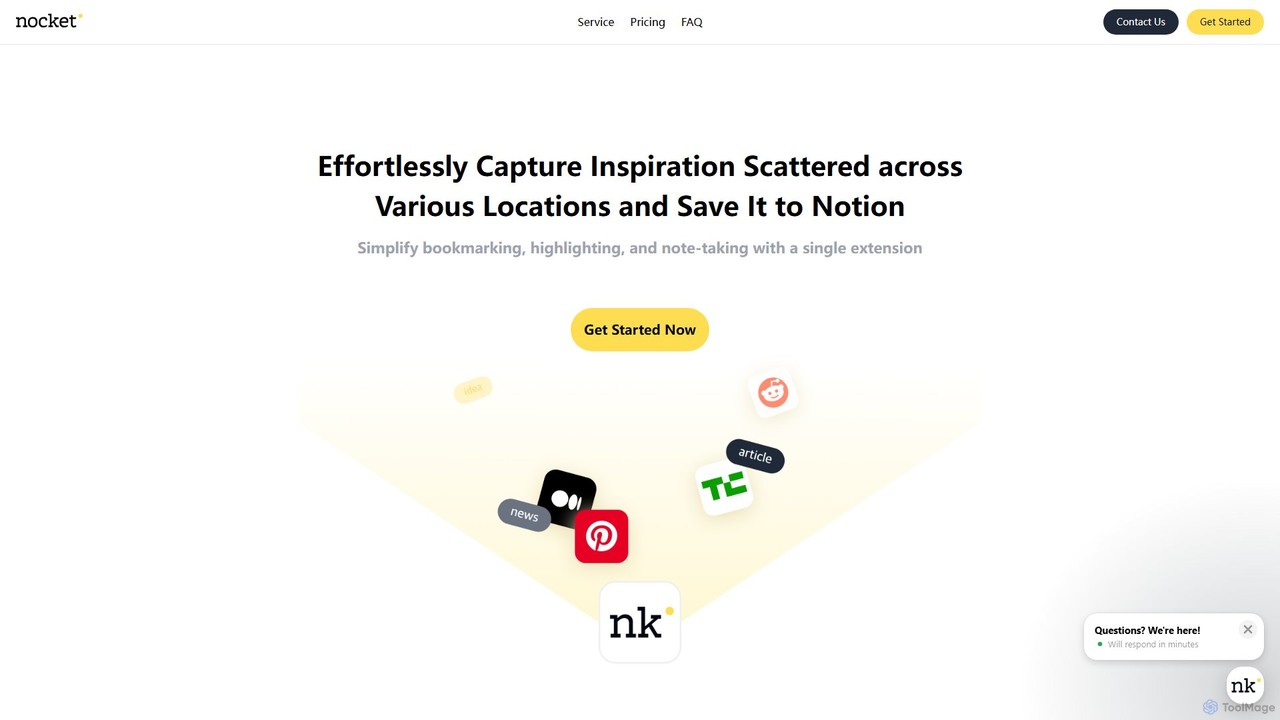
nocket
nocket is a powerful browser extension designed to streamline your knowledge management workflow. It allows you to effortlessly capture web pages, highlight text, and take notes, saving everything directly into your Notion workspace. With AI-powered summarization for websites and YouTube videos, nocket transforms scattered inspiration into an organized, actionable knowledge base.
Bookmarking