ToolMage
Sign in
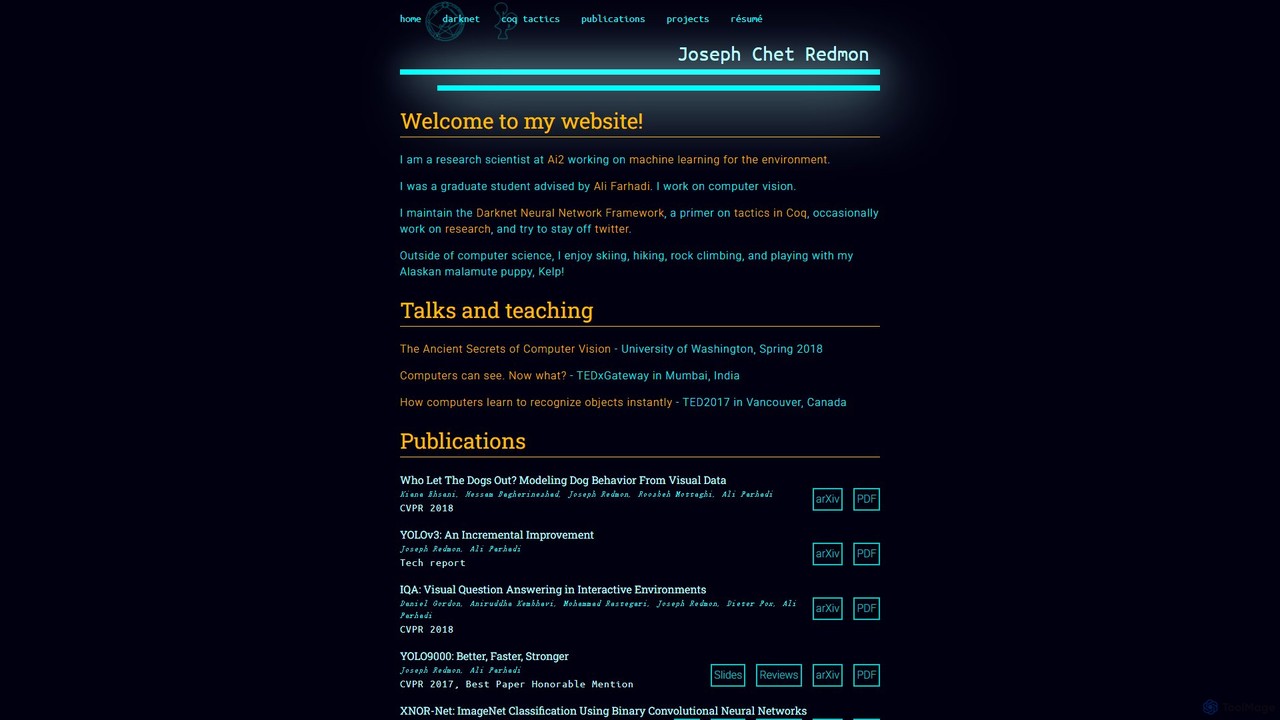
Darknet
Object Detection · 53.5K monthly visits

Darknet is a high-performance, open-source neural network framework written in C and CUDA. Created by Joseph Redmon, it is renowned for its speed and efficiency, famously powering the YOLO (You Only Look Once) real-time object detection system. It's designed to be small, easy to install, and supports both CPU and GPU computations, making it a popular choice for researchers and developers in computer vision.

VS
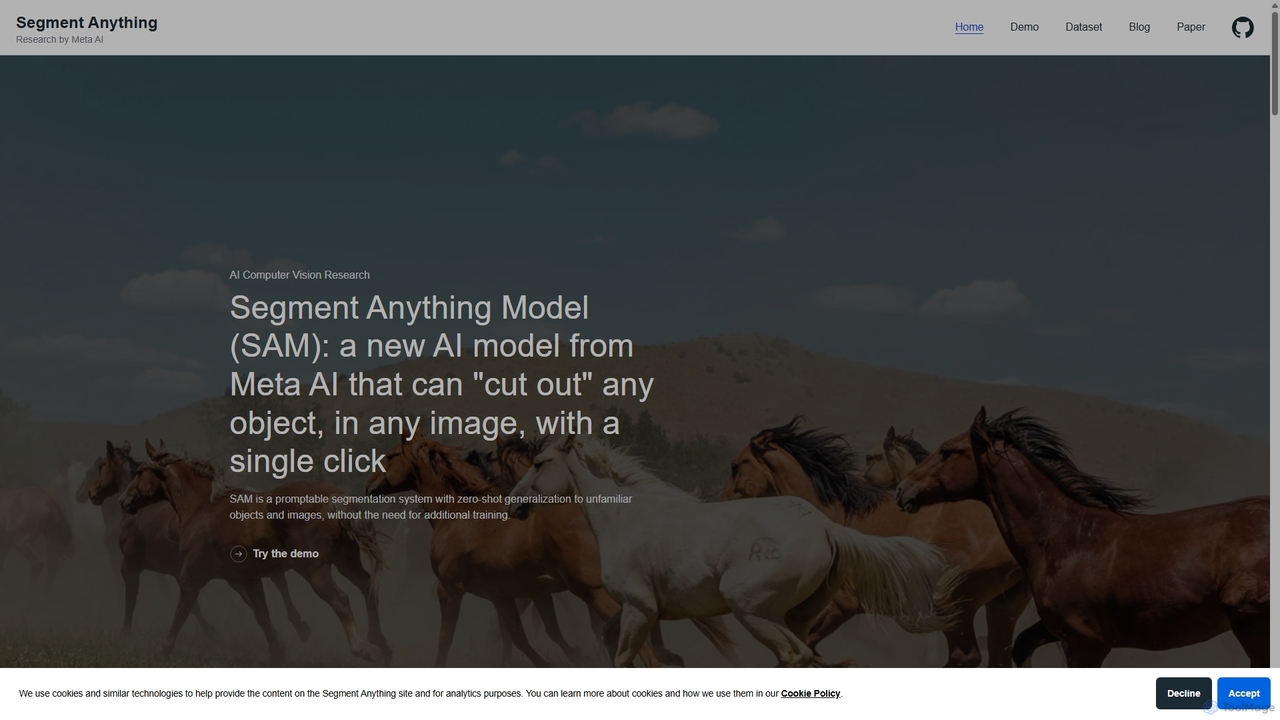
Segment Anything
Data Annotation · 4.4K monthly visits

Segment Anything (SAM) is a groundbreaking AI model from Meta AI for image segmentation. It can identify and "cut out" any object in any image with a single click or prompt. Featuring zero-shot generalization, SAM understands objects without prior specific training, making it incredibly versatile for researchers, developers, and creators in computer vision, image editing, and data annotation.

Darknet vs Segment Anything: pricing, features, traffic, and use cases

Compare Darknet and Segment Anything across positioning, pricing, traffic, and user feedback using structured factual data.

Updated Aug 21, 2026

Product overview

Darknet Product overview

Darknet is a high-performance, open-source neural network framework written in C and CUDA. Created by Joseph Redmon, it is renowned for its speed and efficiency, famously powering the YOLO (You Only Look Once) real-time object detection system. It's designed to be small, easy to install, and supports both CPU and GPU computations, making it a popular choice for researchers and developers in computer vision.
Preview

Segment Anything Product overview

Segment Anything (SAM) is a groundbreaking AI model from Meta AI for image segmentation. It can identify and "cut out" any object in any image with a single click or prompt. Featuring zero-shot generalization, SAM understands objects without prior specific training, making it incredibly versatile for researchers, developers, and creators in computer vision, image editing, and data annotation.

Preview

Detailed feature comparison

FeatureDarknetSegment Anything
Primary categoryObject DetectionData Annotation
Added2025-08-152025-09-07
PricingFreeFree
Official websitepjreddie.comsegment-anything.com
Product typeWebsiteWebsite
Performance data
User ratingNot verifiedNot verified
Comments00
Monthly visits53.5K4.4K
Monthly growth-5.5%Not verified
Favorites107138
DetailsView detailsView details

Darknet vs Segment Anything monthly traffic

Compare Darknet and Segment Anything by monthly reach, traffic trend, visit depth, top regions, and acquisition sources.

How to interpret the traffic data

In the Darknet vs Segment Anything monthly traffic comparison, Darknet currently shows 53.5K visits and Segment Anything shows 4.4K; Darknet has about 12.2 times the visible traffic of Segment Anything, an absolute difference of about 49.1K visits. This reflects visible reach, not feature quality or paid users.

Only Darknet has complete third-party traffic details; Segment Anything uses visits recorded inside ToolMage. These scopes cannot estimate market share directly, and on-site views should not be treated as the product’s total website traffic.

Darknet monthly traffic:

Latest traffic

Monthly visits
53.5K
Avg. visit duration
0:21
Pages per visit
1.9
Bounce rate
42.12%
Data updated 2026-06-15

Monthly traffic trend

  • 2025/9: 58.1K Monthly visits
  • 2026/1: 71.8K Monthly visits
  • 2026/2: 46.4K Monthly visits
  • 2026/3: 58.7K Monthly visits
  • 2026/4: 56.7K Monthly visits
  • 2026/5: 53.5K Monthly visits

Top regions

Top 5 countries/regions
Country/regionPercentageTraffic
🇺🇸United States40.82%21.9K
🇺🇿Uzbekistan21.45%11.5K
🇮🇳India16.54%8.9K
🇮🇹Italy11.99%6.4K
🇮🇩Indonesia9.2%4.9K

Traffic sources

Source typePercentageTraffic
Direct83.31%44.6K
Referral15.11%8.1K
Email1.58%846

Search keywords

darknetdarknet vision artificialjeremy irvin olmojoseph redmonyolo

Segment Anything monthly traffic:

Latest traffic

Monthly visits
4.4K
Traffic-based selection guidance: The current traffic scope is not sufficient for a reliable product ranking. Treat monthly visits as a market-interest signal, then decide using taxonomy, use cases, pricing, and a like-for-like trial rather than reading exposure as product capability.

Usage comparison

Compare the core capabilities of Darknet and Segment Anything

Darknet Core features

Object Detection
Machine Learning Frameworks

Segment Anything Core features

Data Annotation
Computer Vision
Image Segmentation
Ai Models

Use cases

Darknet Use cases

computer vision
machine learning
object detection
open source
c++
CUDA
developer framework
neural network
real-time detection
YOLO

Segment Anything Use cases

computer vision
machine learning
object detection
open source
AI model
background removal
data annotation
image editing
image segmentation
Meta AI
zero-shot learning

Best suited roles

Darknet Best suited roles

No verified data available

Segment Anything Best suited roles

AI Researcher
Content Creator
Data Analyst
Data Scientist
Graphic Designer
Machine Learning Engineer
Photographer
Software Developer

Darknet vs Segment Anything:In-depth comparison and selection guidance

First decide whether the products solve the same kind of need

This in-depth Darknet vs Segment Anything comparison uses only the product records, taxonomy, audience, traffic, and community signals available on this page. Darknet is primarily listed under “Object Detection”, while Segment Anything is primarily listed under “Data Annotation”, so the first decision is whether your actual task matches their recorded scope.

The structured fields currently show these decision-relevant differences: Primary category (Darknet: Object Detection; Segment Anything: Data Annotation); Monthly visits (Darknet: 53.5K; Segment Anything: 4.4K); Favorites (Darknet: 107; Segment Anything: 138); Website (Darknet: pjreddie.com; Segment Anything: segment-anything.com); Added (Darknet: 2025-08-15; Segment Anything: 2025-09-07). These facts are more useful for selection than brand visibility alone.

What market visibility and monthly traffic mean

In the Darknet vs Segment Anything monthly traffic comparison, Darknet currently shows 53.5K visits and Segment Anything shows 4.4K; Darknet has about 12.2 times the visible traffic of Segment Anything, an absolute difference of about 49.1K visits. This reflects visible reach, not feature quality or paid users.

Only Darknet has complete third-party traffic details; Segment Anything uses visits recorded inside ToolMage. These scopes cannot estimate market share directly, and on-site views should not be treated as the product’s total website traffic.

The current traffic scope is not sufficient for a reliable product ranking. Treat monthly visits as a market-interest signal, then decide using taxonomy, use cases, pricing, and a like-for-like trial rather than reading exposure as product capability.

Product positioning, use cases, and roles

Darknet and Segment Anything currently overlap in shared tags: computer vision, machine learning, object detection, and open source. This can place both on the same shortlist, but it does not prove equal implementation, depth, or cost.

Darknet's unique categories/tags are Object Detection, Machine Learning Frameworks, c++, CUDA, developer framework, neural network, real-time detection, and YOLO; Segment Anything's are Data Annotation, Computer Vision, Image Segmentation, Ai Models, AI model, background removal, data annotation, and image editing. These unique fields are the strongest differentiators: validate the product whose recorded scope matches the task instead of following traffic alone.

What ratings, comments, and favorites can tell you

Darknet has no verified rating, 0 comments, 107 favorites, and 84 likes;Segment Anything has no verified rating, 0 comments, 138 favorites, and 137 likes。

Neither product has enough rating or comment samples for a credible reputation ranking.

Selection guidance by actual need

When to evaluate Darknet first

Put Darknet on the priority trial list when the task aligns with “Object Detection” and especially Object Detection, Machine Learning Frameworks, c++, CUDA, developer framework, and neural network. This follows recorded positioning and does not imply unlisted capabilities are absent.

Darknet also currently records: pricing is free, product type is website, 53.5K verified monthly visits, no verified user rating. Verify any hard requirement around price, platform, or reach before trial, and do not let sparse review data substitute for testing.

When to evaluate Segment Anything first

Put Segment Anything on the priority trial list when the task aligns with “Data Annotation” and especially Data Annotation, Computer Vision, Image Segmentation, Ai Models, AI model, and background removal, or the users include AI Researcher, Content Creator, Data Analyst, and Data Scientist. This follows recorded positioning and does not imply unlisted capabilities are absent.

Segment Anything also currently records: pricing is free, product type is website, 4.4K on-site monthly views, no verified user rating. Verify any hard requirement around price, platform, or reach before trial, and do not let sparse review data substitute for testing.

How to validate the recommendation before deciding

The available data describes positioning, public visibility, and community signals, but it cannot prove output quality, speed, integration effort, privacy, or long-term cost in your workflow. Before deciding, run the same representative tasks in Darknet and Segment Anything, then record completion time, accuracy, manual corrections, and the real paid threshold. A like-for-like trial turns this comparison into a defensible adoption decision.

Comparison FAQ

How should I choose between Darknet and Segment Anything?
Compare positioning, pricing, taxonomy, and traffic maturity, then verify the latest details on each official website.
Where does this comparison data come from?
The factual baseline is derived from product, taxonomy, traffic, and community data. Reviewed editorial conclusions show their source and verification date.
What do unknown fields mean?
Unknown means there is not enough reliable evidence; the page does not fill gaps with assumptions.

Related AI tools

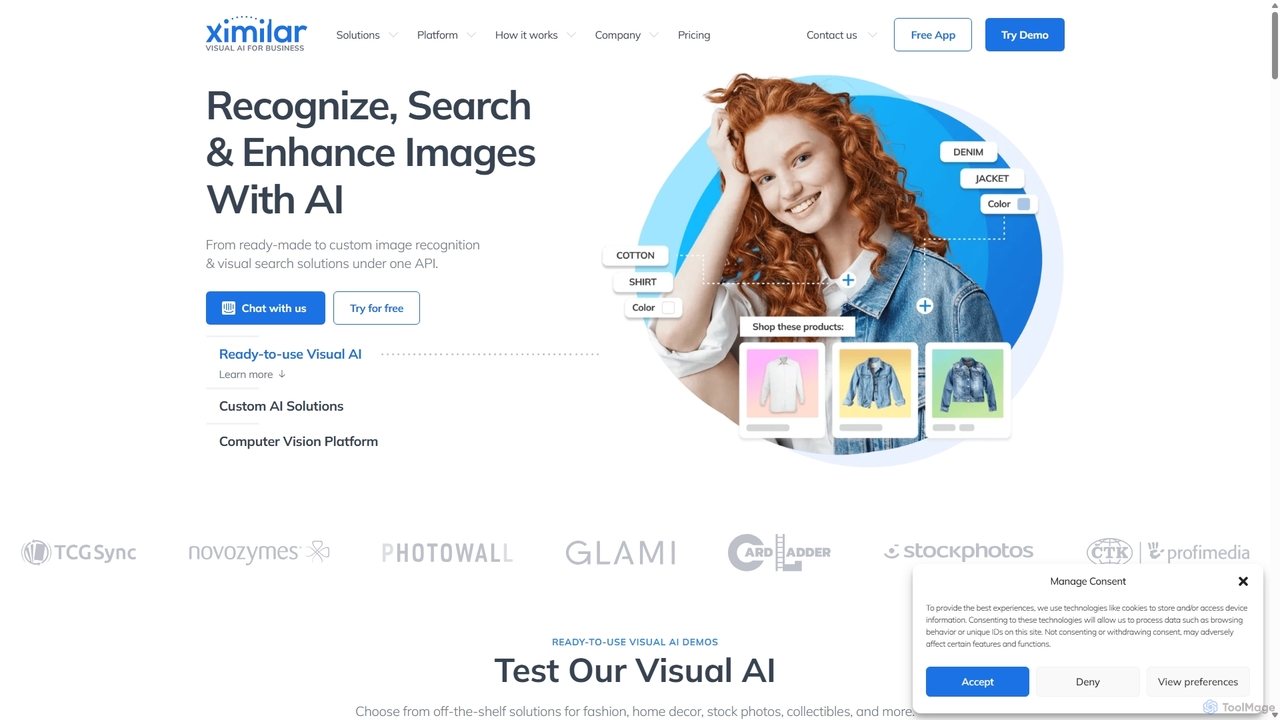
Ximilar
Freemium

Ximilar

Ximilar is a comprehensive visual AI platform offering advanced image recognition, visual search, and object detection solutions through a single API. It empowers businesses to build and deploy custom computer vision models without coding, catering to industries like e-commerce, fashion, collectibles, and stock photography.

Image Recognition
Visits 22.5KFavorites 116Likes 125
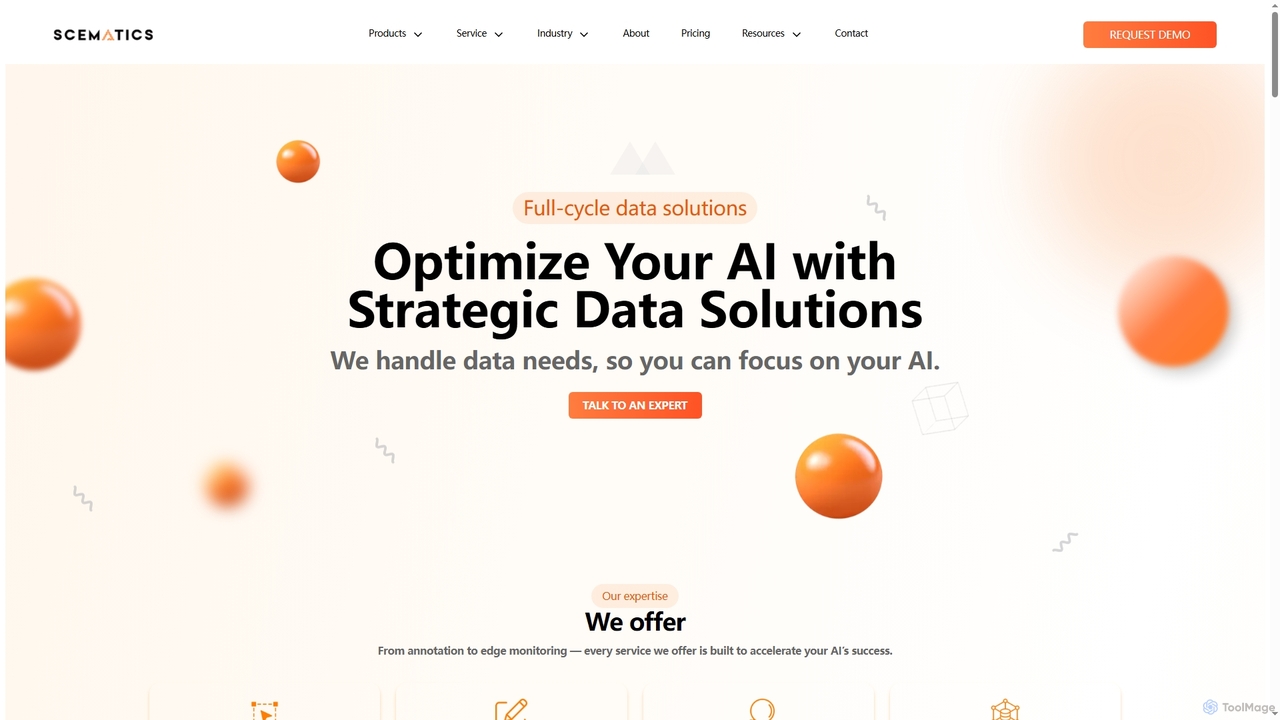
Scematics
Paid

Scematics

Scematics is an all-in-one data annotation and labeling platform that provides strategic data solutions to optimize AI models. It offers intuitive tools, expert annotation services, edge case monitoring, and synthetic data generation, enabling teams to build high-quality, scalable training datasets for various AI applications across diverse industries.

3D
Visits 4.3KFavorites 120Likes 112
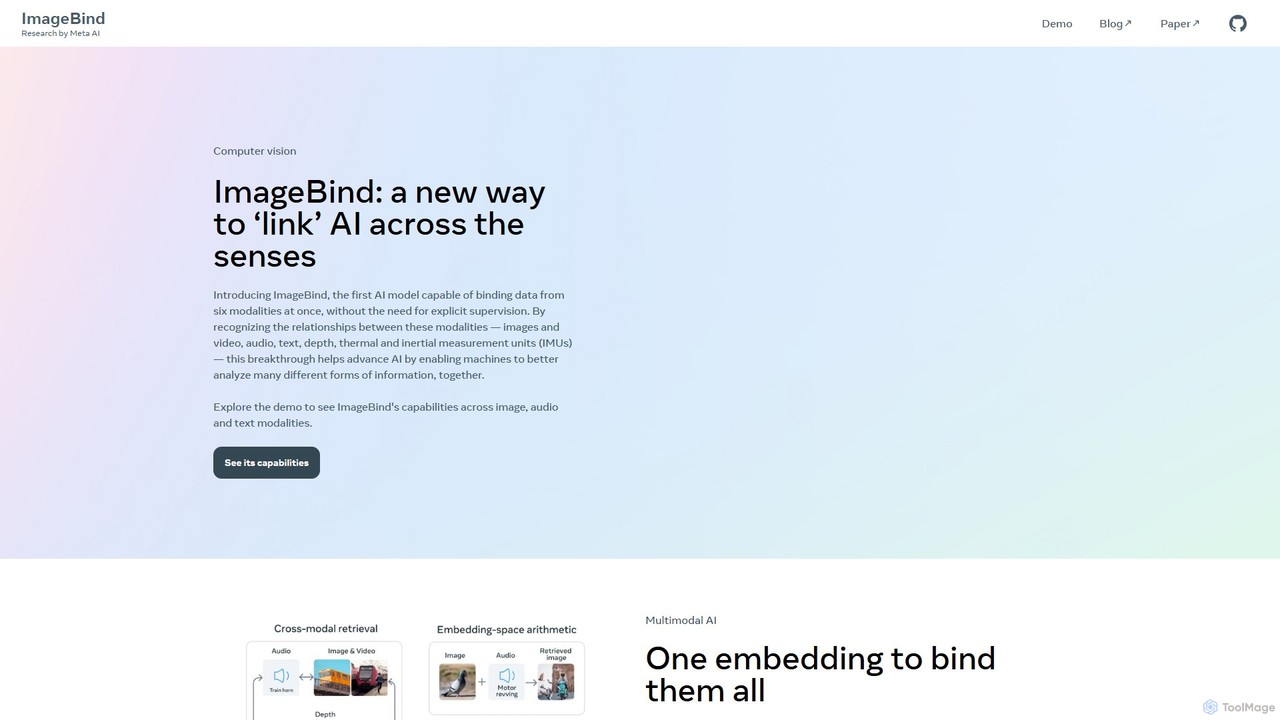
ImageBind
Free

ImageBind

ImageBind is a pioneering AI model from Meta AI that creates a unified embedding space for six different data modalities: images, video, audio, text, depth, and thermal. This breakthrough enables machines to understand relationships between senses, facilitating advanced cross-modal search, generation, and analysis without explicit supervision. It's an open-source model designed to push the boundaries of multimodal AI.

Multimodal Models
Visits 5.4KFavorites 113Likes 128
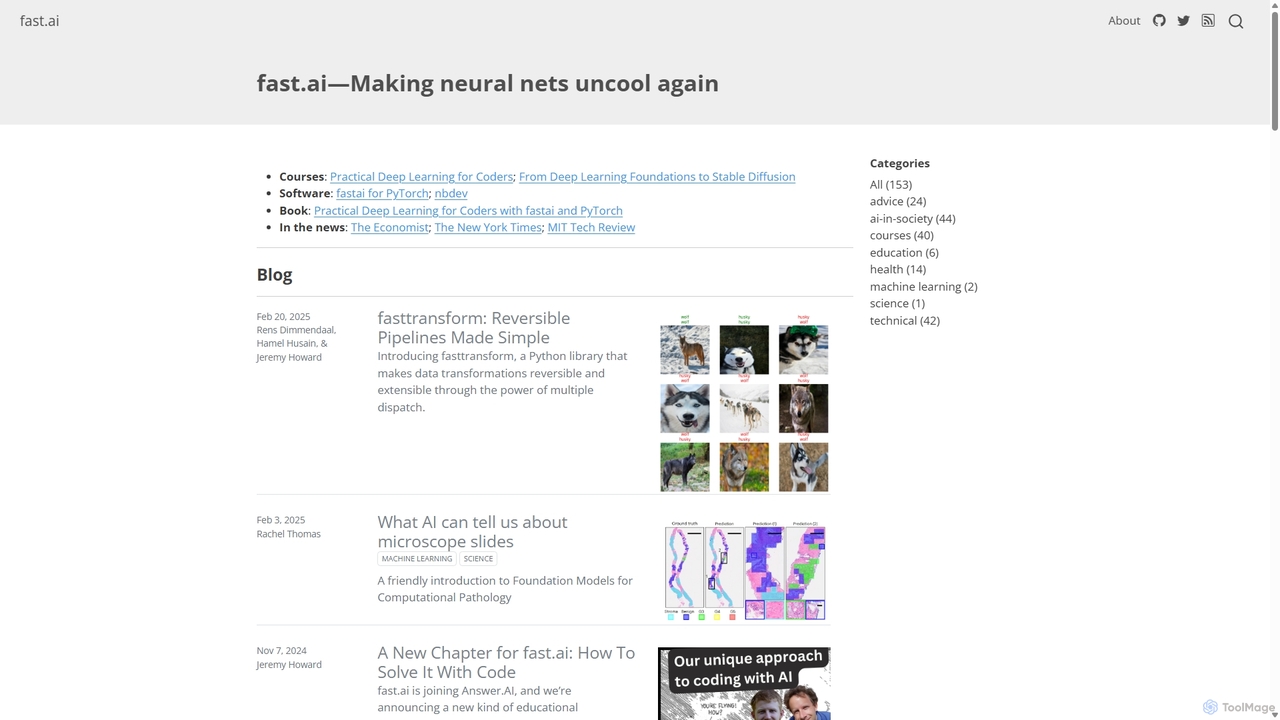
Fast.ai
Free

Fast.ai

Fast.ai is a research institute dedicated to making deep learning accessible to everyone. It offers free courses, an open-source software library (fastai), cutting-edge research, and a vibrant community, empowering coders of all backgrounds to become deep learning practitioners.

Machine Learning
Visits 419.4KFavorites 154Likes 138
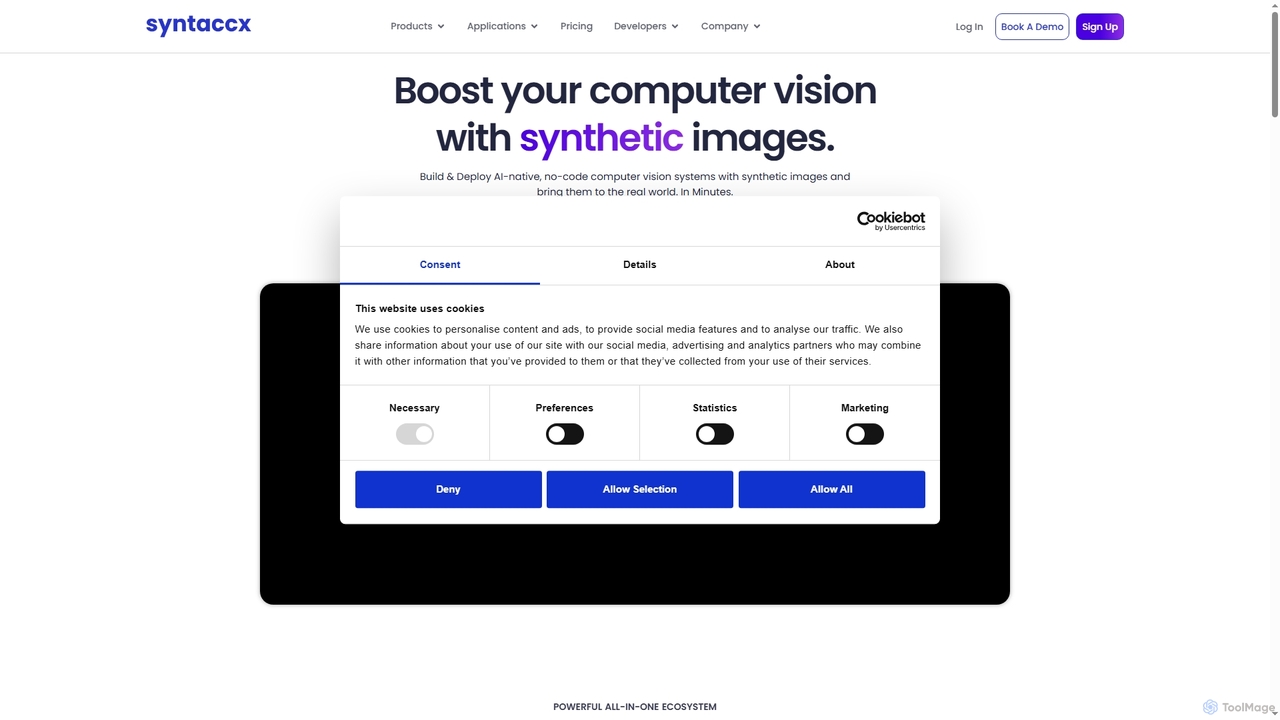
Syntaccx
Freemium

Syntaccx

An all-in-one, no-code computer vision platform that generates synthetic training data from CAD/3D models. It enables users to create, train, and deploy robust AI vision models in minutes, significantly reducing costs and development time without requiring deep expertise.

Modeling
Visits 4.3KFavorites 138Likes 131
Prodigy
Paid

Prodigy

Prodigy is a scriptable annotation tool for AI, Machine Learning, and NLP, designed for developers. It enables rapid creation of high-quality training and evaluation data through model-assisted, human-in-the-loop workflows. It runs on your own infrastructure, ensuring complete data privacy and control.

Annotation
Visits 48.7KFavorites 119Likes 121
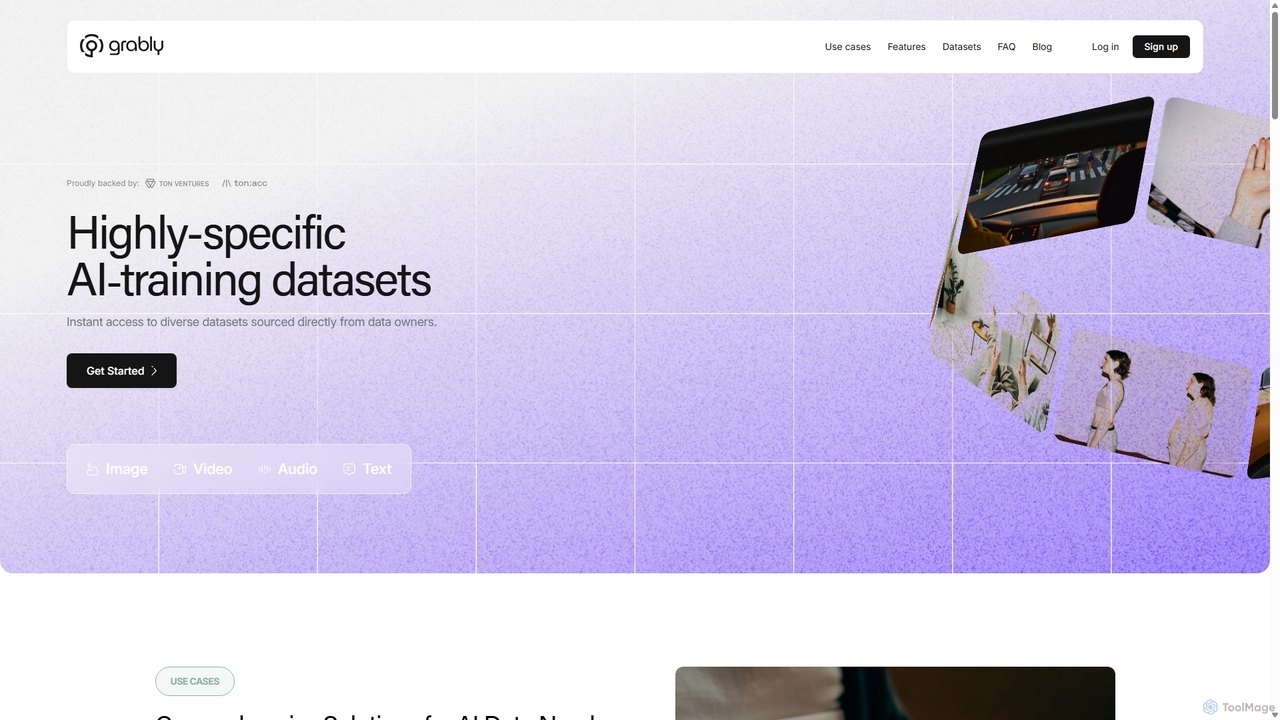
Grably
Paid

Grably

Grably is a decentralized data ownership network (DeDON) providing high-quality, ethically sourced AI training data. It offers a vast collection of off-the-shelf datasets, custom data collection, curation, and annotation services to accelerate AI development while allowing users to monetize their data securely and transparently.

Data Labeling
Visits 5.1KFavorites 113Likes 104
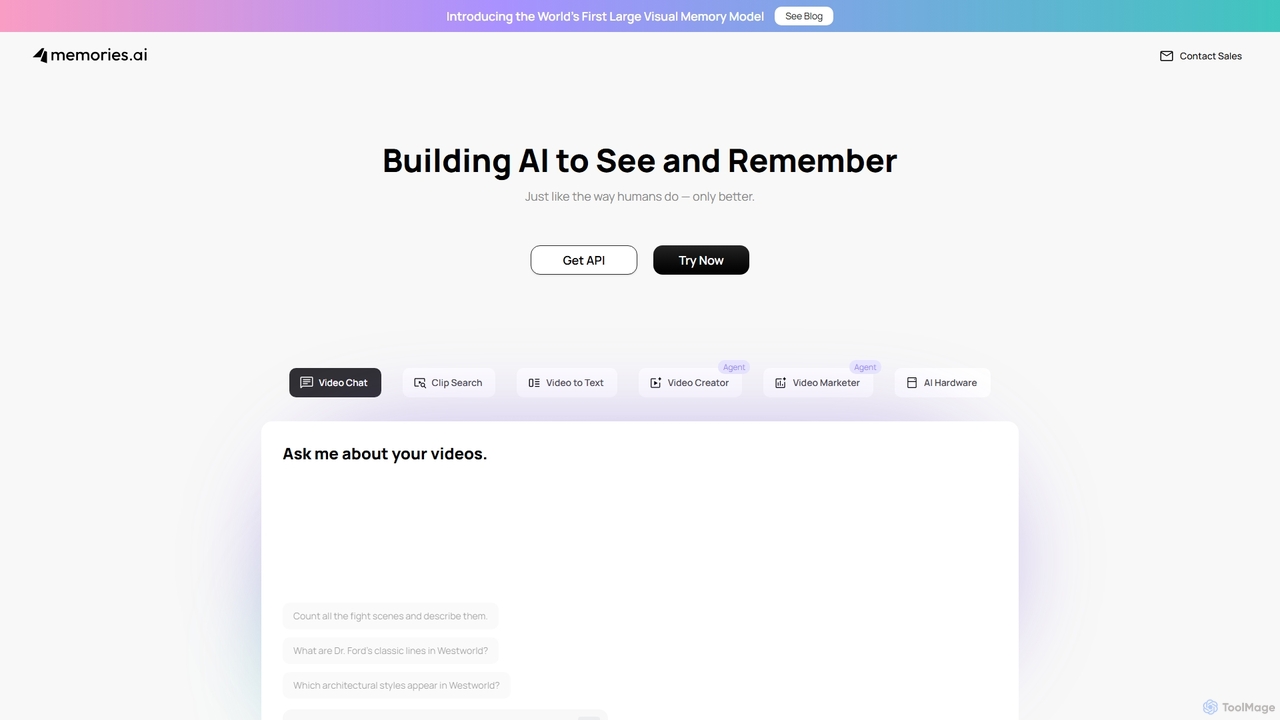
Memories.ai
Freemium

Memories.ai

Memories.ai is an advanced AI video analysis platform that transforms raw video footage into searchable, actionable insights. It leverages computer vision and machine learning to automate tasks like object detection, transcription, and content tagging. Ideal for businesses, marketers, and content creators, it provides tools for security monitoring, campaign analysis, and efficient video data management, effectively creating a "human-like visual memory" for your content archives.

Api
Visits 612.3KFavorites 107Likes 95
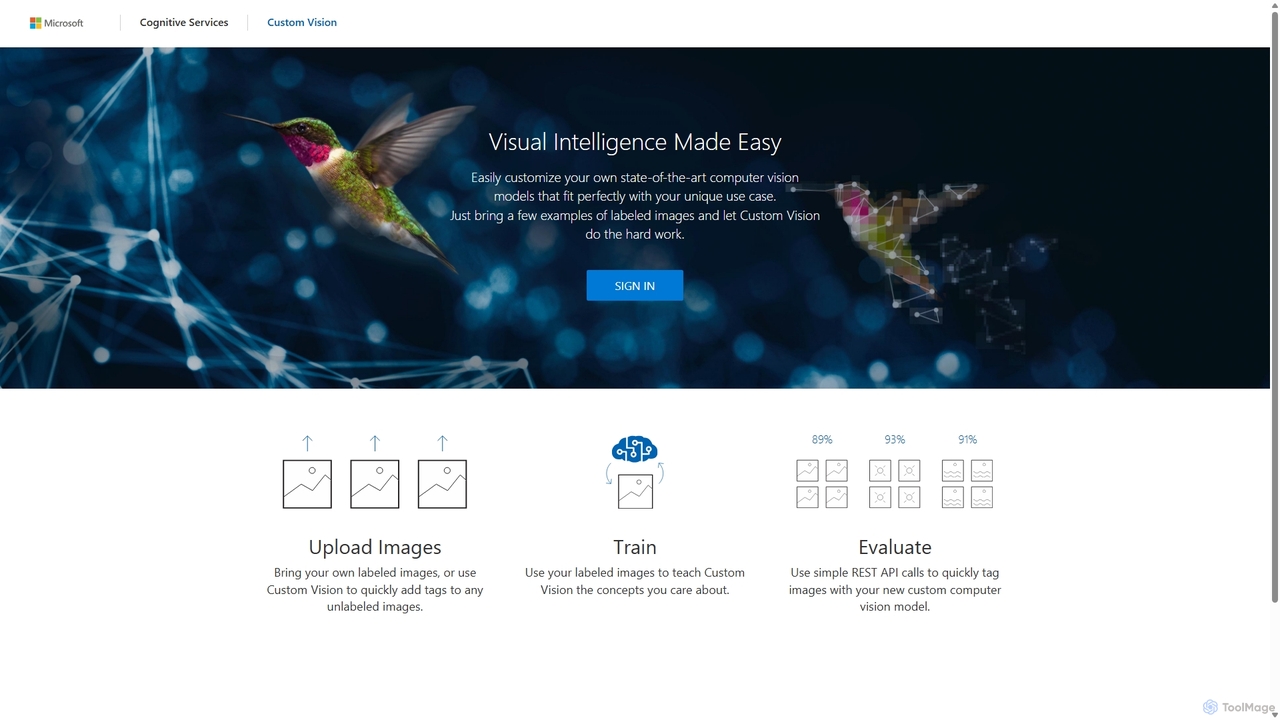
Custom Vision
Freemium

Custom Vision

An AI service from Microsoft Azure that allows you to build, deploy, and improve your own custom image classifiers and object detectors. Easily create state-of-the-art computer vision models tailored to your specific needs with a user-friendly interface and a powerful REST API, no deep machine learning expertise required.

Machine Learning
Visits 9.5KFavorites 128Likes 115
Ultralytics
Freemium

Ultralytics

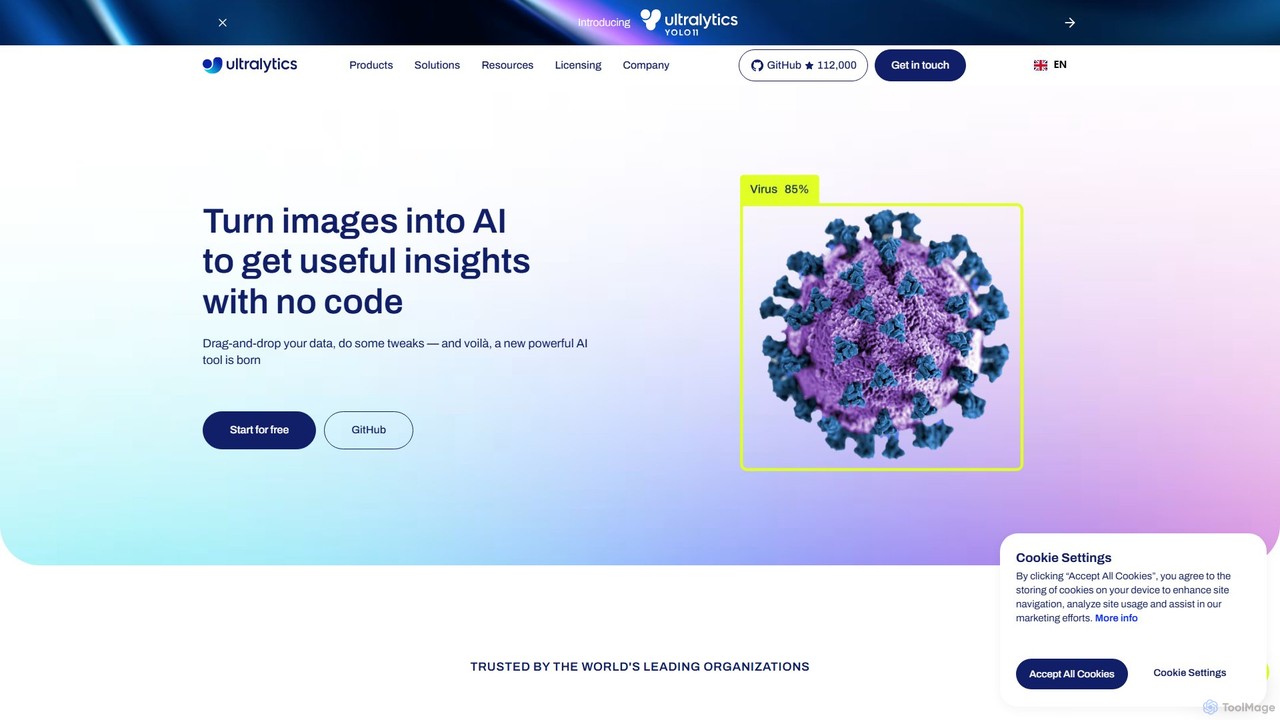
Ultralytics is a leading Vision AI company, creators of the world-renowned YOLO (You Only Look Once) models. They provide a comprehensive ecosystem, including the open-source YOLOv8 framework and the Ultralytics HUB, a no-code platform for training and deploying AI models.

Machine Learning
Visits 1.1MFavorites 108Likes 115
Datature
Freemium

Datature

Datature is an end-to-end Vision AI platform designed for developers and enterprises. It streamlines the entire machine learning lifecycle, from collaborative data annotation and no-code model training to flexible deployment. The platform empowers teams to build, fine-tune, and deploy production-ready computer vision models for diverse applications across industries like healthcare, retail, and manufacturing.

Machine Learning
Visits 46.8KFavorites 144Likes 142
Label Your Data
Paid

Label Your Data

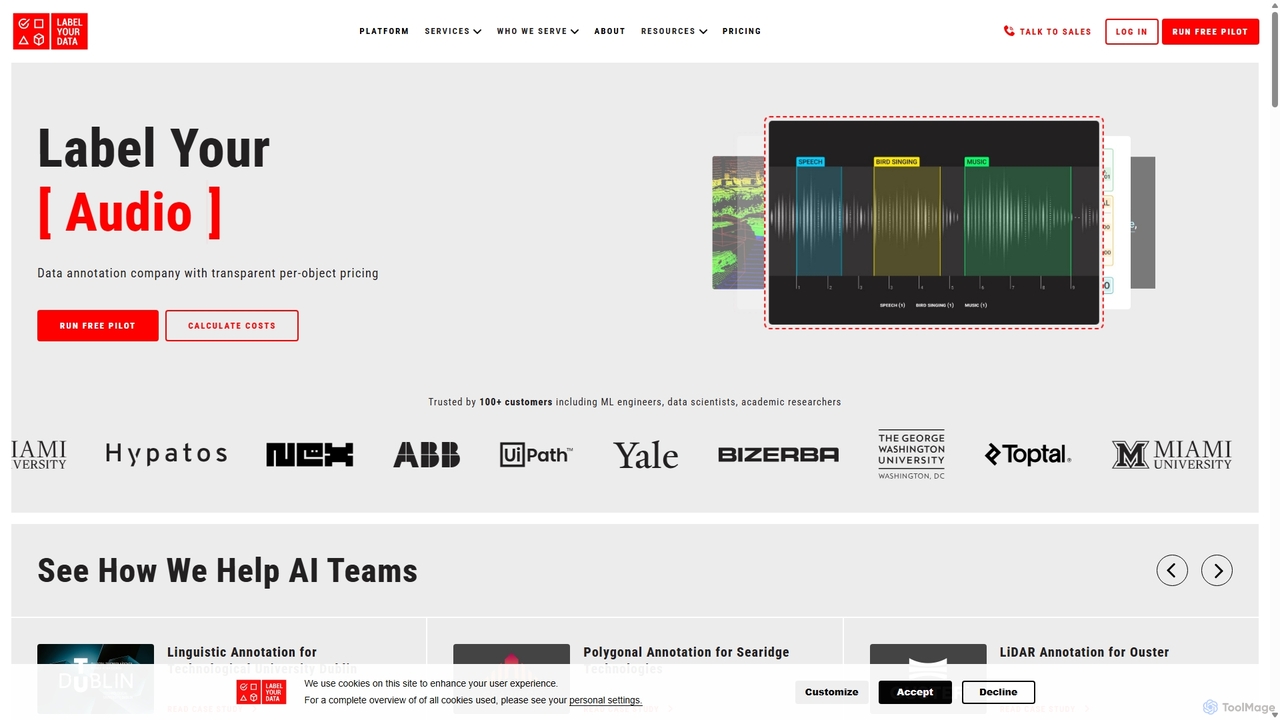
A professional data annotation service and platform providing high-quality, accurate labeled datasets for machine learning. It supports diverse data types like images, video, text, and audio, offering flexible pricing, a self-serve platform, and fully managed services to scale AI projects of any size.

Data Management
Visits 79.4KFavorites 130Likes 132
Augmented Startups
Freemium

Augmented Startups

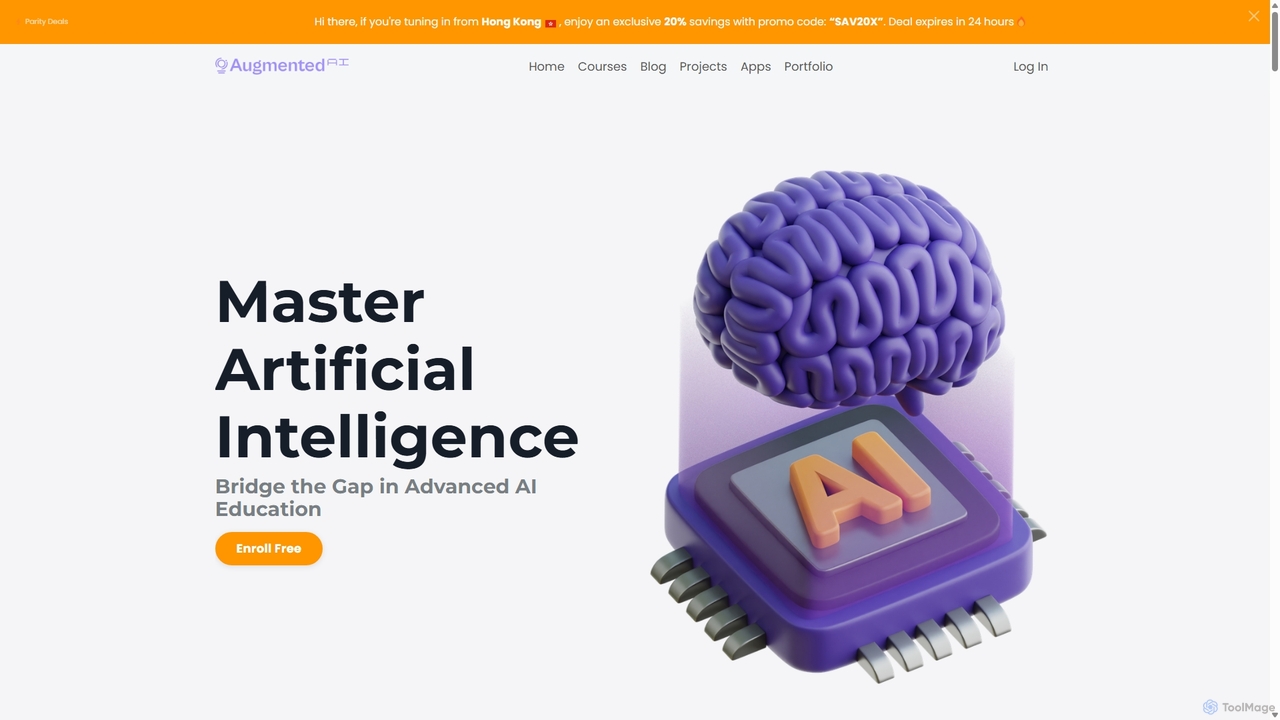
Augmented Startups is an online AI university offering practical, project-based courses for all skill levels. It specializes in advanced topics like Computer Vision, Large Language Models (LLMs), Robotics, and Autonomous Vehicles. The platform provides comprehensive learning paths with code, datasets, and expert support to help students and professionals build real-world AI applications and bridge the gap between theory and practical implementation.

Code Libraries
Visits 23.6KFavorites 105Likes 123
Slaice
Freemium

Slaice

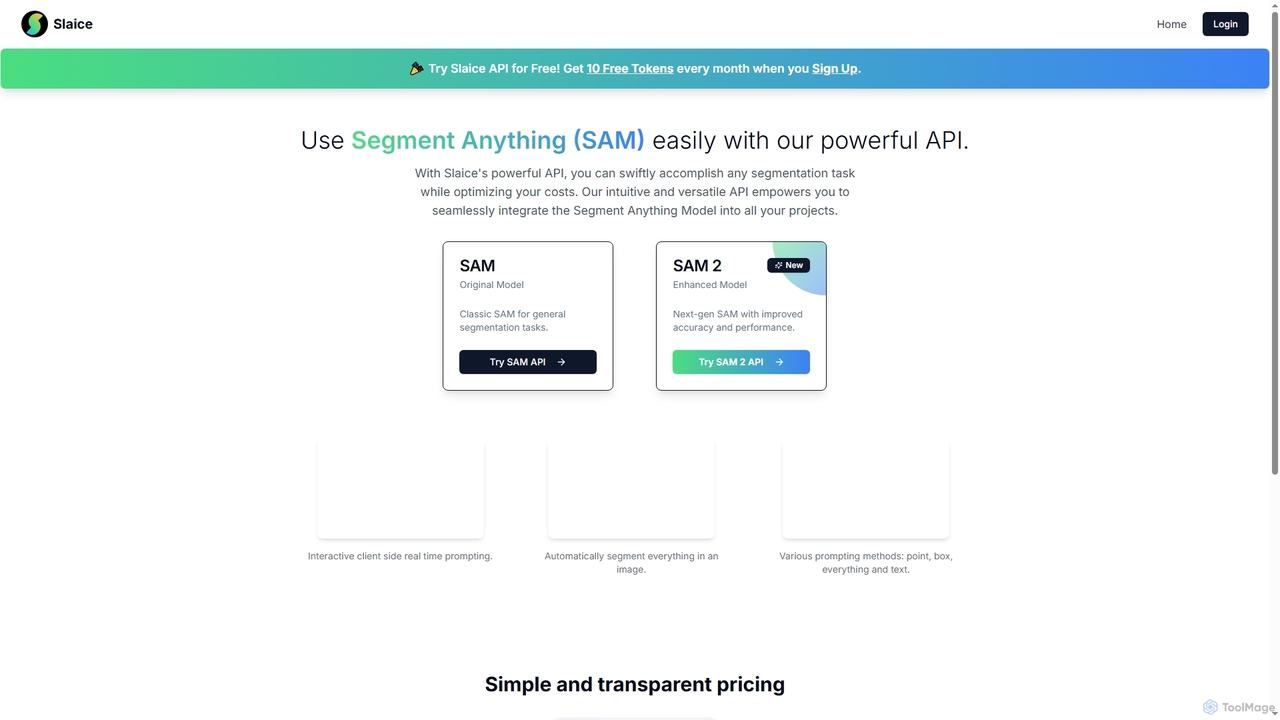
Slaice provides a powerful and intuitive API for seamless integration of the Segment Anything Model (SAM) into any project. It offers both the classic SAM and the enhanced SAM 2, enabling efficient and cost-optimized image segmentation tasks. Users can leverage various prompting methods like point, box, everything, and text for precise object isolation.

Object Detection
Visits 6.4KFavorites 150Likes 142
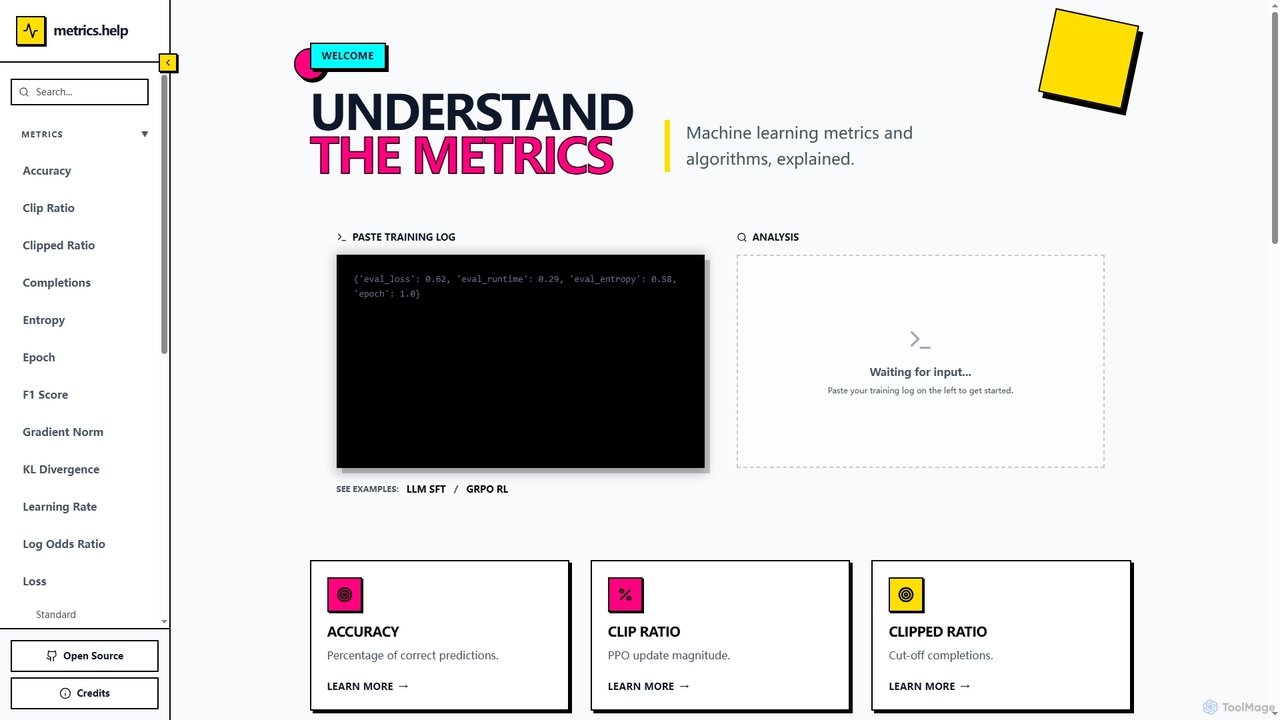
Metrics Help
Free

Metrics Help

Metrics Help is an open-source web tool for machine learning practitioners. It functions as a comprehensive guide and an interactive analyzer for ML training metrics. Users can paste training logs to get instant explanations for key metrics like accuracy, loss, and perplexity, aiding in model performance analysis and debugging.

Model Training
Visits 4.4KFavorites 108Likes 113