

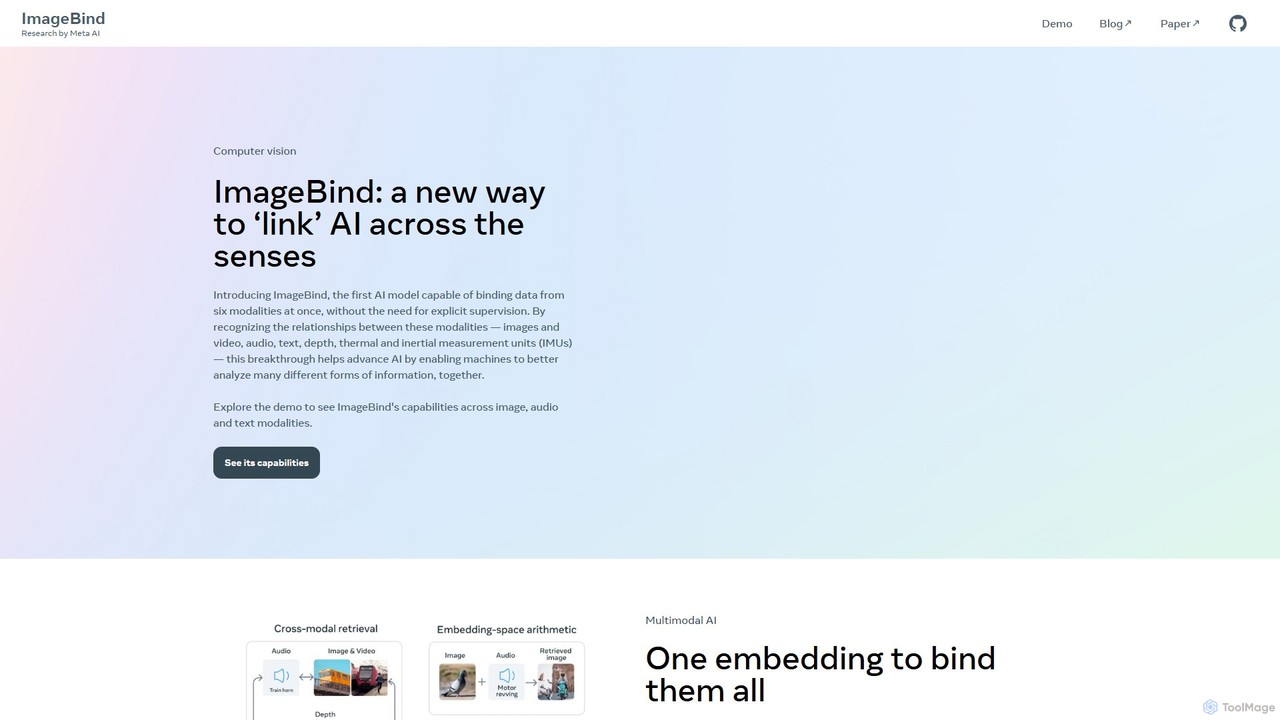
ImageBind Overview
ImageBind is a groundbreaking research project and open-source model developed by Meta AI, representing a significant leap forward in multimodal artificial intelligence. Its core innovation is the ability to learn a single, joint embedding space that binds together six distinct data types—or modalities—at once: images and video, audio, text, depth (3D), thermal (infrared), and inertial measurement units (IMUs). Unlike previous models that required paired data for training, ImageBind can establish these connections without explicit supervision, allowing it to understand the inherent relationships between different sensory inputs, much like humans do.
This unified approach enables a machine to associate the image of a beach with the sound of waves, or a video of a car with its engine's roar, purely by understanding their shared conceptual meaning within this common space. The model is not just a theoretical breakthrough; it provides tangible capabilities that can upgrade existing AI systems, empowering them with new multimodal functionalities.
How to use ImageBind
ImageBind is accessible to both the general public and the developer community in different ways:
1. Interactive Demo: For non-technical users, Meta AI provides a web-based demo. Here, you can experience its cross-modal capabilities firsthand. You can upload an image to retrieve corresponding audio clips, input text to generate both an image and a suitable soundscape, or combine audio and image prompts to find a new, related image. This demo is an excellent way to intuitively grasp the model's power.
2. For Developers and Researchers: ImageBind is an open-source model. Developers and researchers can access the source code, pre-trained models, and the detailed research paper. This allows them to integrate ImageBind's capabilities into their own applications, products, or research projects. By using the model's embedding space, they can build systems for cross-modal search, multimodal content generation, or enhance robots' environmental perception.
Core Features of ImageBind
- Unified Multimodal Embedding: Creates a single vector space where data from all six modalities can be compared and combined, breaking down silos between different data types.
- Six-Modality Support: Integrates images, audio, text, depth, thermal, and IMU data, offering one of the most comprehensive multimodal understandings available.
- Cross-Modal Retrieval and Search: Enables searching for content in one modality using a query from another (e.g., using an audio clip to find a matching video).
- Cross-Modal Generation: Can generate content in one modality based on input from another, such as creating an image from an audio description.
- Emergent Zero-Shot Recognition: Achieves state-of-the-art performance on recognition tasks without being explicitly trained for them, outperforming many specialized models.
- Multimodal Arithmetic: Allows for novel combinations and manipulations of concepts across modalities, such as adding or subtracting features (e.g., 'image of a car' + 'sound of rain' to find images of cars in the rain).
- Extensibility for Existing Models: Can be used to upgrade existing unimodal AI models, giving them powerful new multimodal capabilities without retraining from scratch.
Use Cases for ImageBind
The capabilities of ImageBind unlock a wide range of innovative applications:
- Creative Media & Content Creation: Automatically generating sound effects for videos, suggesting background music for a photo slideshow, or creating art from a piece of music.
- Advanced Search Systems: Building search engines that can take any combination of image, text, and audio as input to find highly relevant and nuanced results.
- Robotics and Autonomous Systems: Enhancing a robot's ability to perceive and understand its environment by fusing data from its cameras (image, depth), microphones (audio), and motion sensors (IMU).
- Accessibility Tools: Developing applications that can generate rich, detailed descriptions of a scene for visually impaired users by combining visual and auditory information.
- Scientific Analysis: Aiding researchers in analyzing complex datasets that involve multiple sensor types, such as in climate science (thermal, visual) or biology.
Advantages of ImageBind
ImageBind stands out due to its innovative approach and superior capabilities:
- Groundbreaking Approach: Learning a single embedding space without paired data is a major paradigm shift in multimodal AI.
- Superior Performance: It has demonstrated state-of-the-art results in emergent zero-shot tasks, proving its effectiveness and robustness.
- Open Source and Accessible: By making the model open source, Meta AI fosters collaboration and accelerates innovation across the entire AI community.
- High Versatility: Its ability to handle six modalities and perform diverse tasks from retrieval to generation makes it an extremely flexible and powerful tool.
Pricing and Plans
ImageBind is a research project and an open-source model released by Meta AI. It is available completely free of charge for research and development purposes. There are no subscription fees, usage tiers, or commercial plans associated with the model itself. Researchers and developers can freely download and use the code and pre-trained models from the official sources provided by Meta AI.
Traffic
Latest traffic
Status
Monthly traffic trend
- 2025-9: 1.3K
- 2026-1: 8.9K
- 2026-2: 5.7K
- 2026-3: 2.3K
- 2026-4: 192
- 2026-5: 1.1K
Geography
Top 5 countries / regions
- 🇺🇸United States57.2%
- 🇬🇪Georgia42.8%
Top keywords
| Keyword | Cost per click |
|---|---|
| imagebind | $0.00 |
| image bind ai | $0.00 |
| imaghe bind | $0.00 |
| meta image | $2.14 |
| meta multimodal embedding | $0.00 |
ImageBind Alternatives

GenAI List
GenAI List is a comprehensive online directory dedicated to tracking, exploring, and comparing generative AI models. It serves as an essential guide to the rapidly evolving AI landscape, featuring thousands of models from various organizations. Users can discover new releases, filter by type, openness, and capabilities, and gain insights into practitioner opinions.
Model Discovery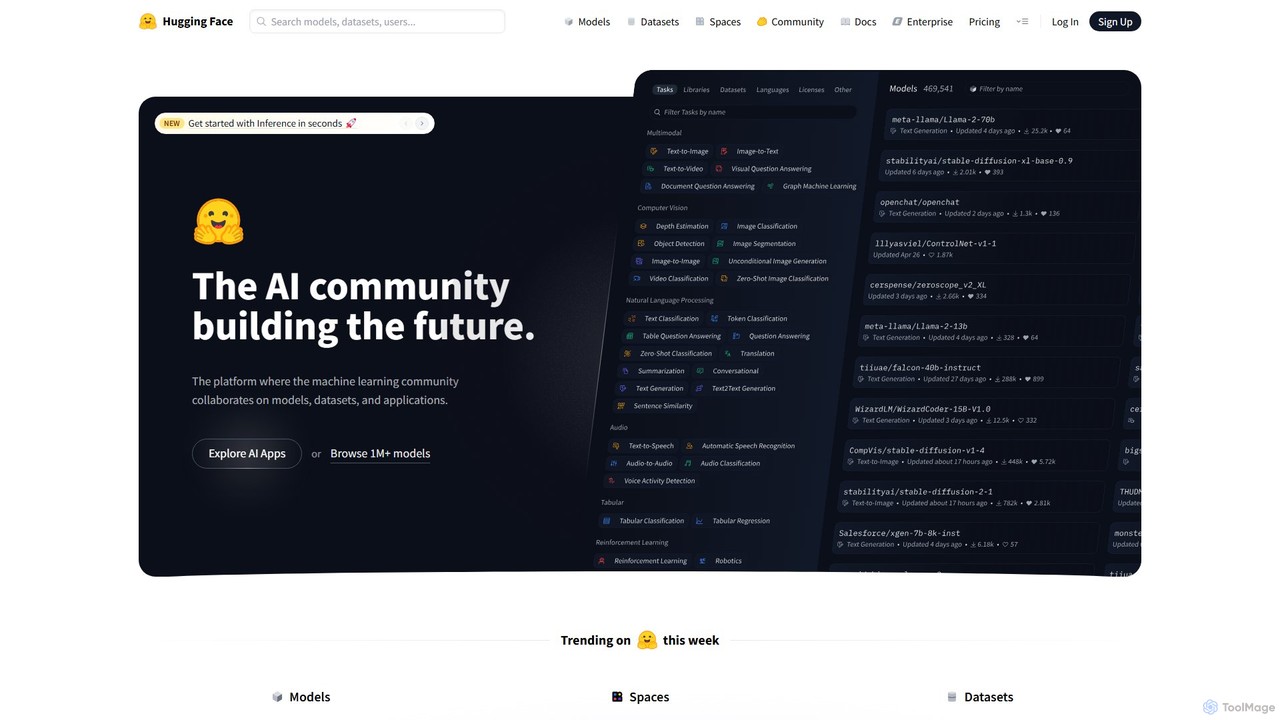
Hugging Face
Hugging Face is the leading open-source platform and community for machine learning. It provides tools for developers and researchers to build, train, and deploy state-of-the-art models, offering a vast hub of pre-trained models, datasets, and demo applications.
Dataset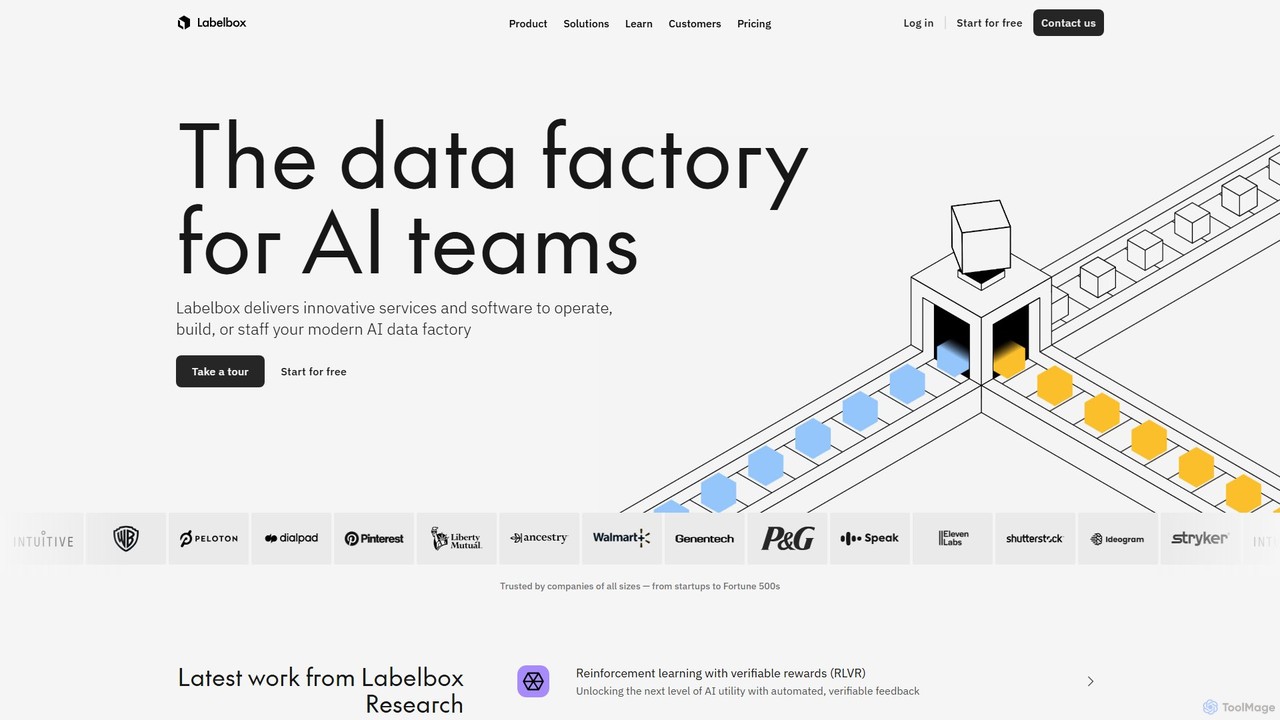
Labelbox
Labelbox is a comprehensive data-centric AI platform, or "Data Factory," designed for AI teams. It provides integrated software, expert services, and a talent marketplace to create, manage, and evaluate high-quality training data for advanced AI models, including LLMs and multimodal systems.
Labeling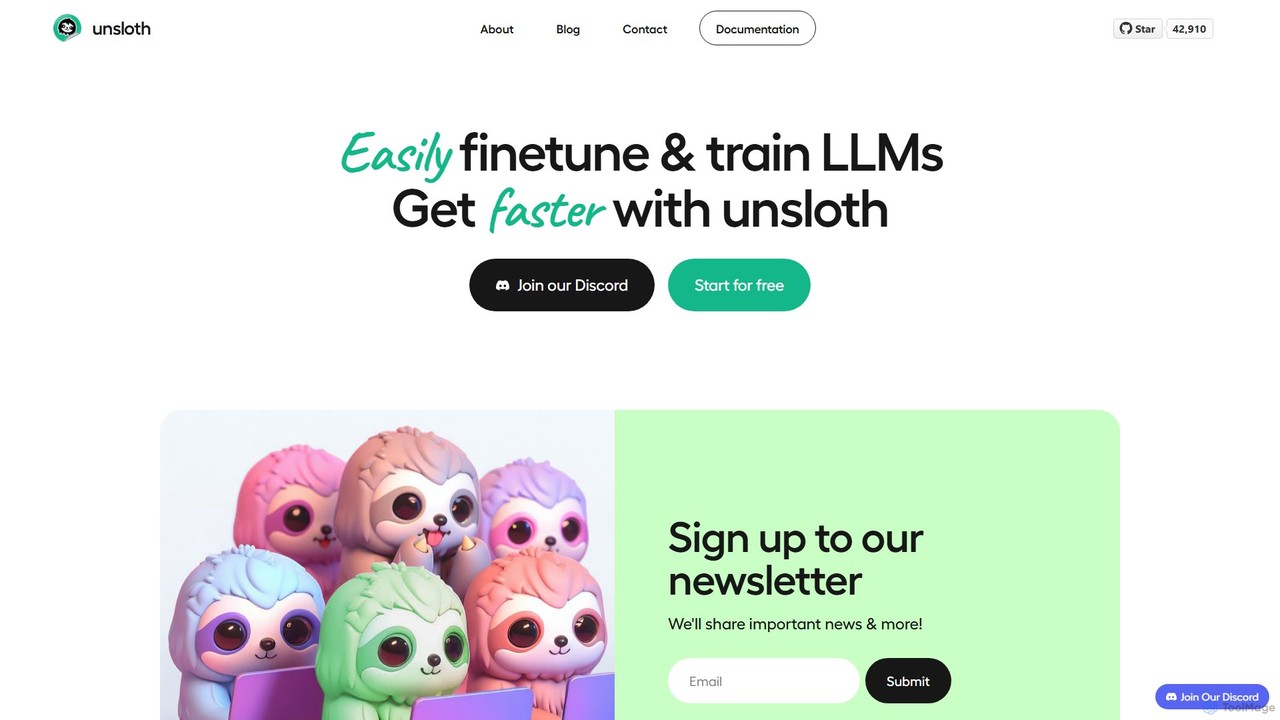
Unsloth
Unsloth is a high-performance open-source library designed to dramatically accelerate the fine-tuning of Large Language Models (LLMs). It enables training up to 30x faster while using up to 90% less memory, making advanced AI model customization accessible on standard hardware.
Machine Learning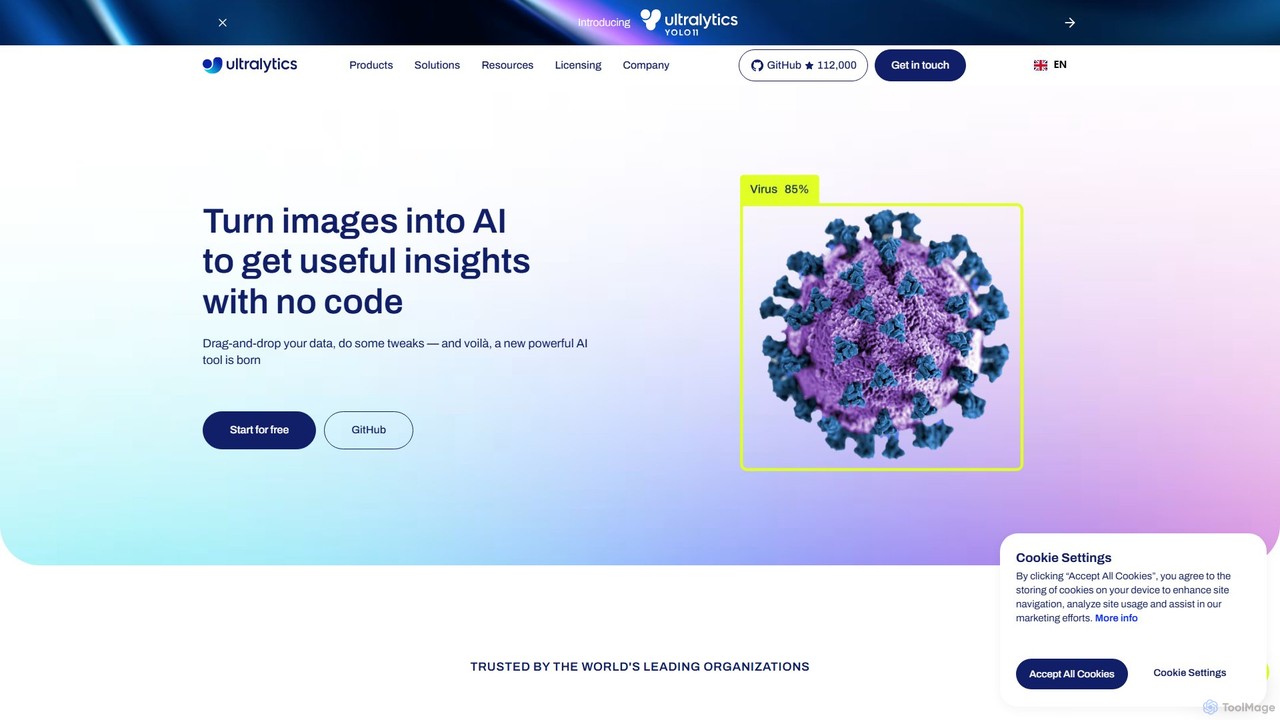
Ultralytics
Ultralytics is a leading Vision AI company, creators of the world-renowned YOLO (You Only Look Once) models. They provide a comprehensive ecosystem, including the open-source YOLOv8 framework and the Ultralytics HUB, a no-code platform for training and deploying AI models.
Machine LearningImageBind Categories
ImageBind Embed Widget
Copy this embed code to place the badge on your blog, article, or product site and send readers directly to this ToolMage detail page.

Related AI tools
Segment Anything
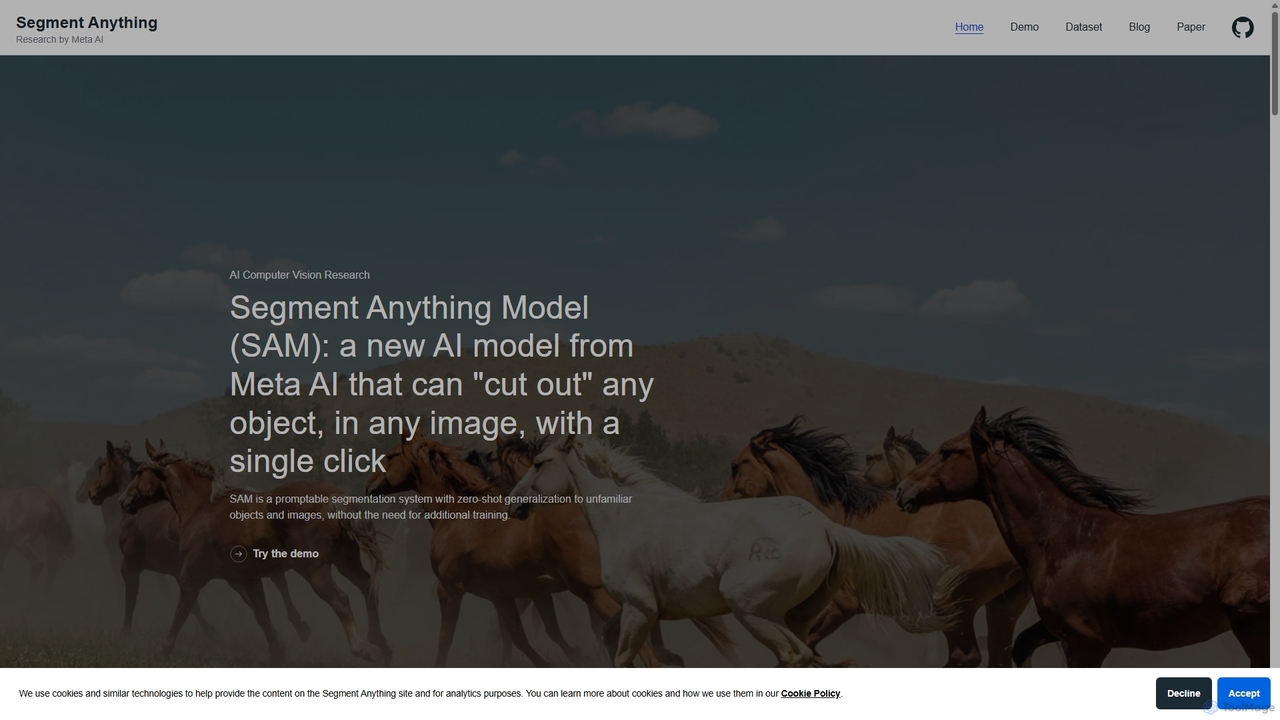
Segment Anything (SAM) is a groundbreaking AI model from Meta AI for image segmentation. It can identify and "cut out" any object in any image with a single click or prompt. Featuring zero-shot generalization, SAM understands objects without prior specific training, making it incredibly versatile for researchers, developers, and creators in computer vision, image editing, and data annotation.
Data AnnotationGenAI List
GenAI List is a comprehensive online directory dedicated to tracking, exploring, and comparing generative AI models. It serves as an essential guide to the rapidly evolving AI landscape, featuring thousands of models from various organizations. Users can discover new releases, filter by type, openness, and capabilities, and gain insights into practitioner opinions.
Model Discovery
Google Research
Google Research is a premier hub for exploring groundbreaking advancements in science and AI. It provides open access to a vast repository of research papers, project showcases, and open-source resources across diverse fields like machine learning, quantum computing, and healthcare. It's an essential platform for researchers, developers, and enthusiasts to stay at the forefront of technological innovation and understand its real-world impact.
Learning Platform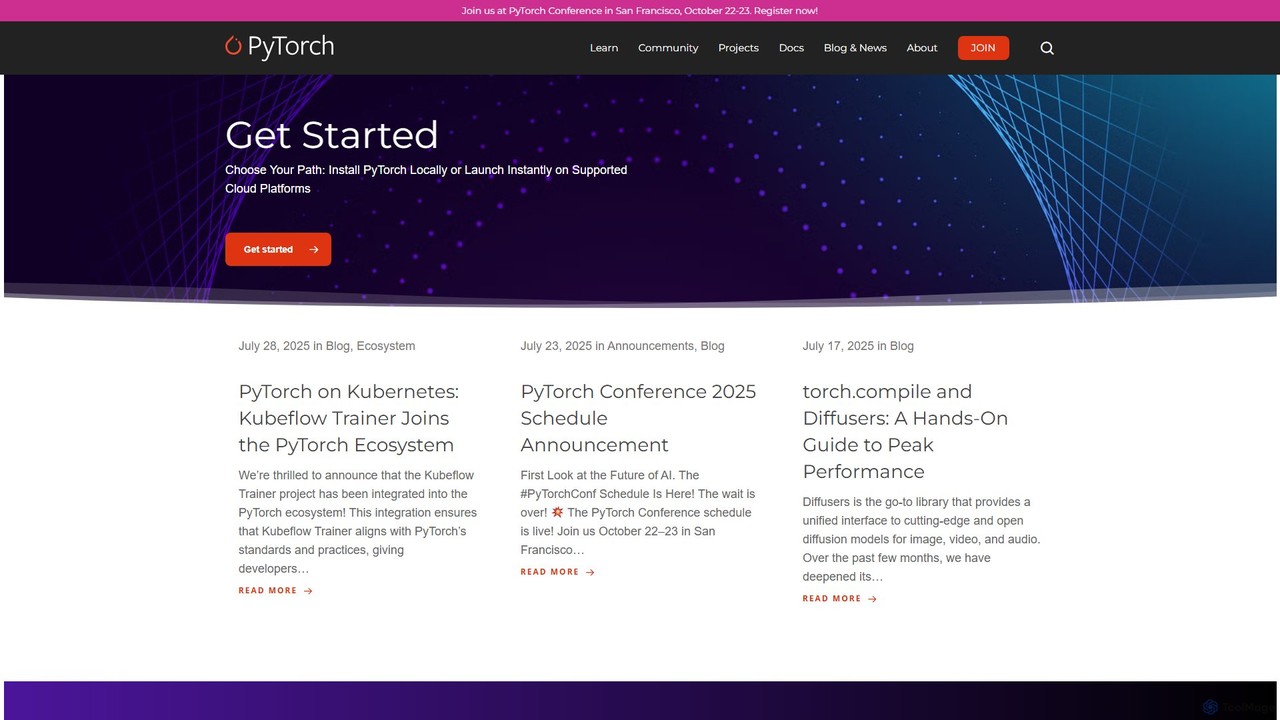
PyTorch
PyTorch is an open-source machine learning framework based on the Torch library, used for applications such as computer vision and natural language processing. It offers a flexible, Python-first environment that accelerates the path from research prototyping to production deployment.
Deep Learning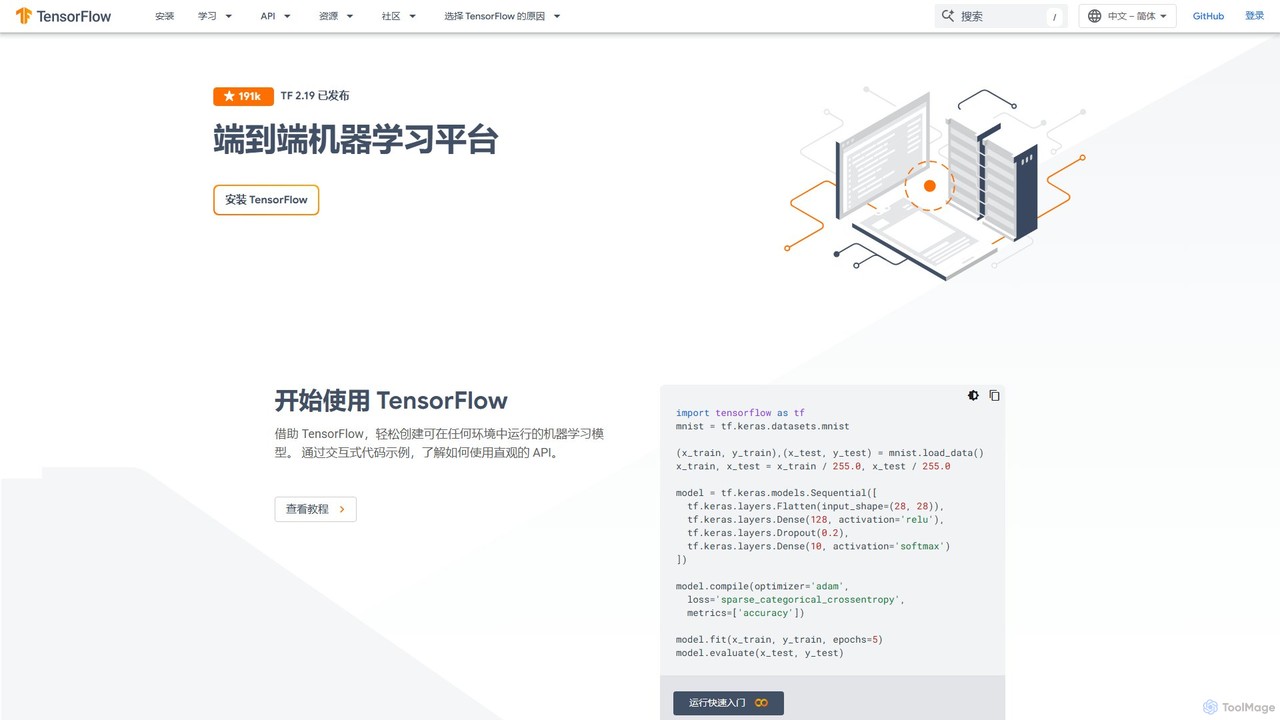
TensorFlow
TensorFlow is an end-to-end open-source platform for machine learning developed by Google. It provides a comprehensive, flexible ecosystem of tools, libraries, and community resources that lets researchers and developers build and deploy ML-powered applications. From beginners to experts, TensorFlow offers intuitive high-level APIs for easy model building and powerful low-level APIs for advanced research, enabling deployment across servers, edge devices, and browsers.
Frameworks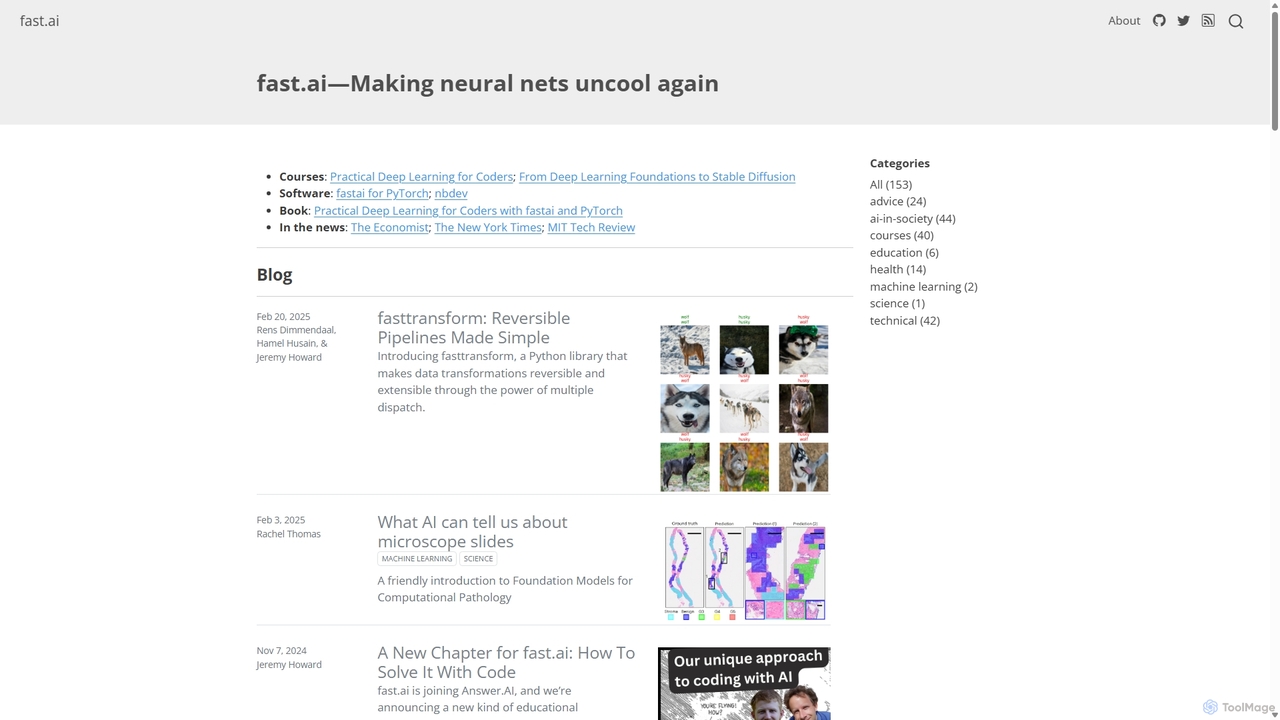
Fast.ai
Fast.ai is a research institute dedicated to making deep learning accessible to everyone. It offers free courses, an open-source software library (fastai), cutting-edge research, and a vibrant community, empowering coders of all backgrounds to become deep learning practitioners.
Machine Learning
MindSpore
MindSpore is an open-source, all-scenario AI computing framework designed for developers and data scientists. It provides a developer-friendly experience with flexible deployment across cloud, edge, and device environments. It excels in distributed training for large models and offers specialized toolkits for scientific computing (AI4S), ensuring high performance and efficiency, especially on Ascend hardware.
Scientific Computing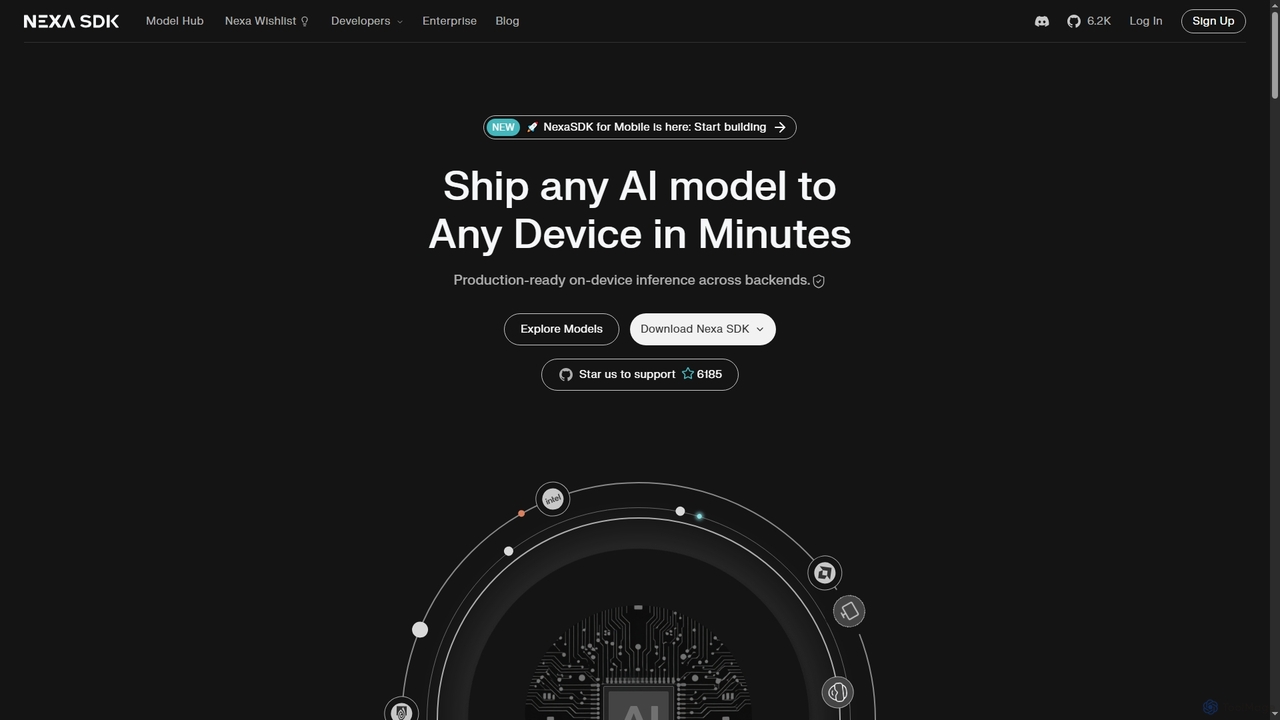
Nexa SDK
Nexa SDK is a powerful toolkit enabling developers to deploy any AI model, including frontier and state-of-the-art models, to any device (mobile, PC, IoT, automotive) in minutes. It offers production-ready on-device inference with hardware acceleration across NPUs, GPUs, and CPUs, optimized for speed and energy efficiency.
Ai Development KitHugging Face
Hugging Face is the leading open-source platform and community for machine learning. It provides tools for developers and researchers to build, train, and deploy state-of-the-art models, offering a vast hub of pre-trained models, datasets, and demo applications.
DatasetLabelbox
Labelbox is a comprehensive data-centric AI platform, or "Data Factory," designed for AI teams. It provides integrated software, expert services, and a talent marketplace to create, manage, and evaluate high-quality training data for advanced AI models, including LLMs and multimodal systems.
Labeling
Jyek
Jyek is an AI agent platform that understands objectives, creates execution plans, uses tools, and delivers verifiable results for complex, multi-step tasks.
AutomationUnsloth
Unsloth is a high-performance open-source library designed to dramatically accelerate the fine-tuning of Large Language Models (LLMs). It enables training up to 30x faster while using up to 90% less memory, making advanced AI model customization accessible on standard hardware.
Machine LearningUltralytics
Ultralytics is a leading Vision AI company, creators of the world-renowned YOLO (You Only Look Once) models. They provide a comprehensive ecosystem, including the open-source YOLOv8 framework and the Ultralytics HUB, a no-code platform for training and deploying AI models.
Machine Learning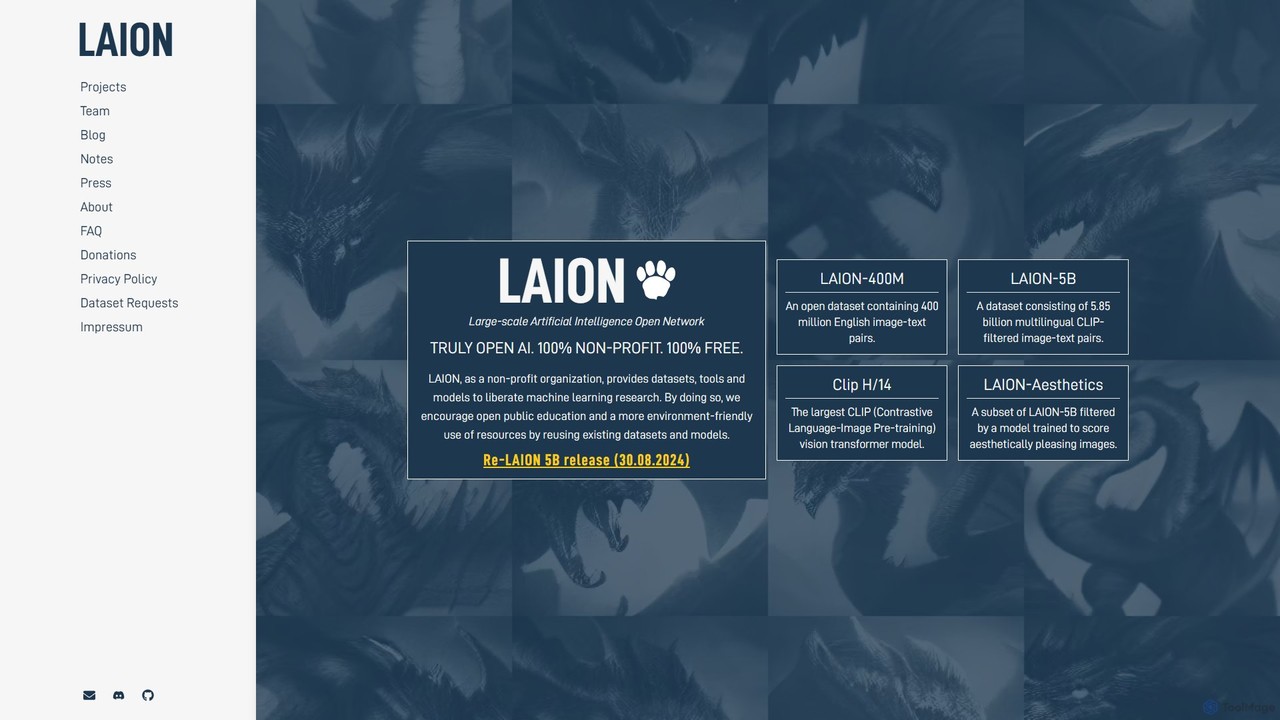
LAION
LAION (Large-scale Artificial Intelligence Open Network) is a non-profit organization dedicated to democratizing AI research. It provides massive, open-source datasets, pre-trained models, and tools to the public, fostering open research, education, and resource-efficient development in machine learning.
Datasets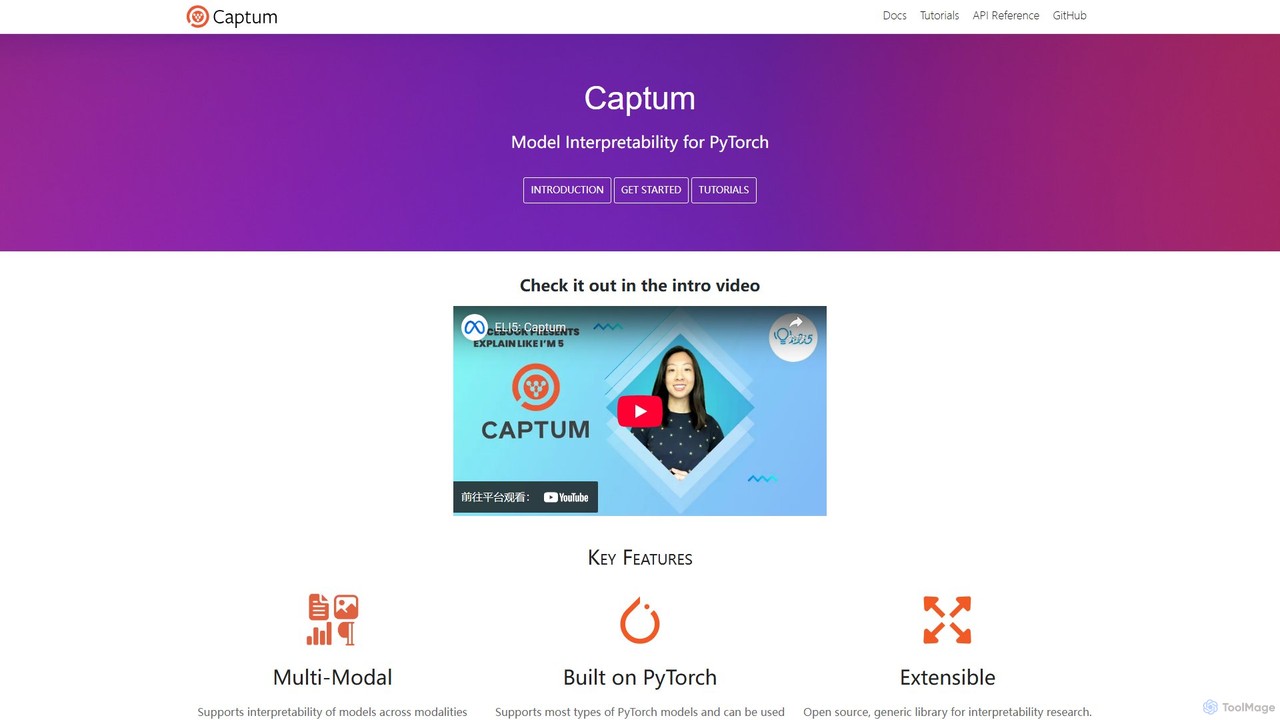
Captum
Captum is an open-source model interpretability and explainability library for PyTorch. It provides state-of-the-art algorithms to help developers and researchers understand which features influence a model's predictions. Supporting multi-modal data like text, vision, and more, Captum makes it easy to debug models, improve transparency, and benchmark new interpretability techniques within the PyTorch ecosystem.
Model Explainability
ImageBind Comments (0)
Sign in to comment.
Sign inNo comments yet.