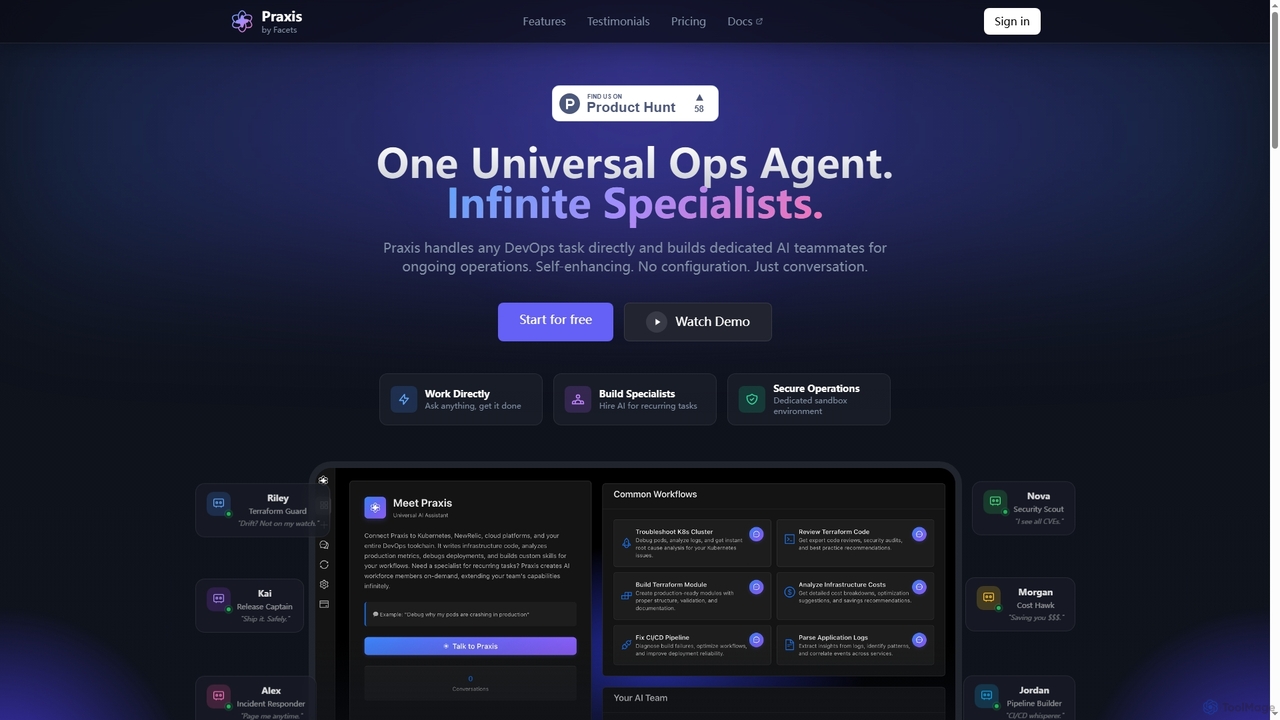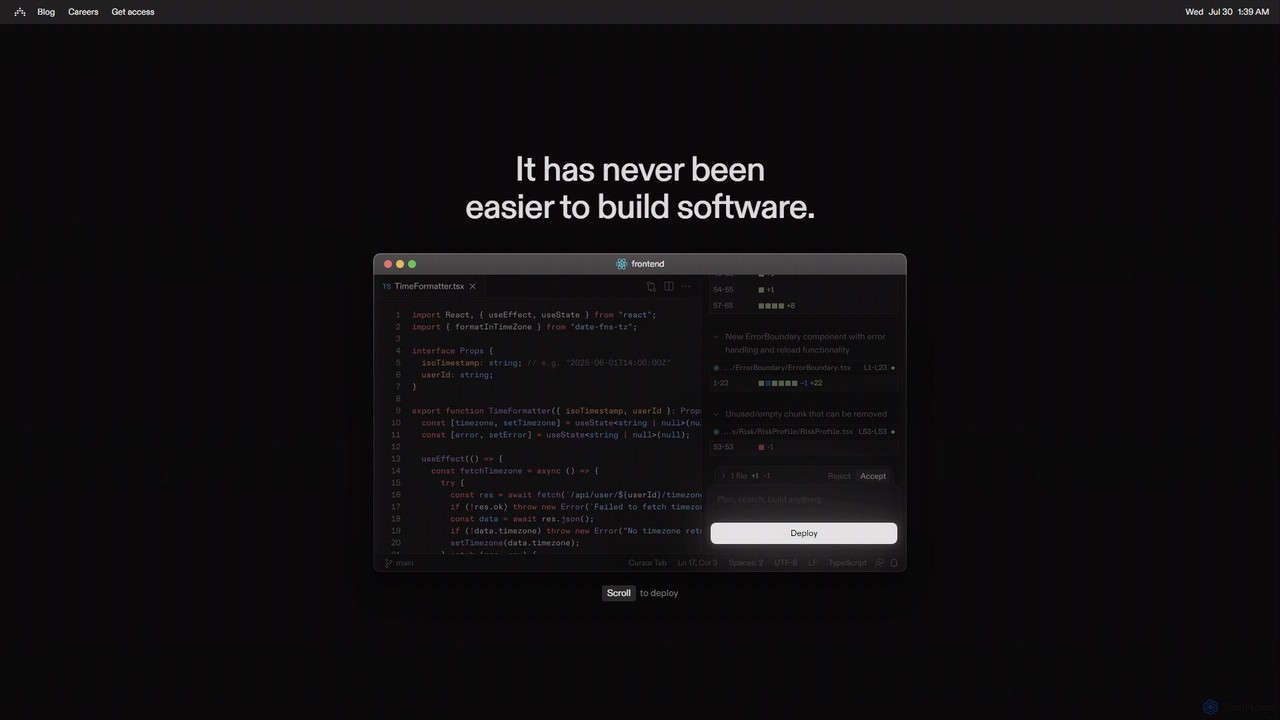
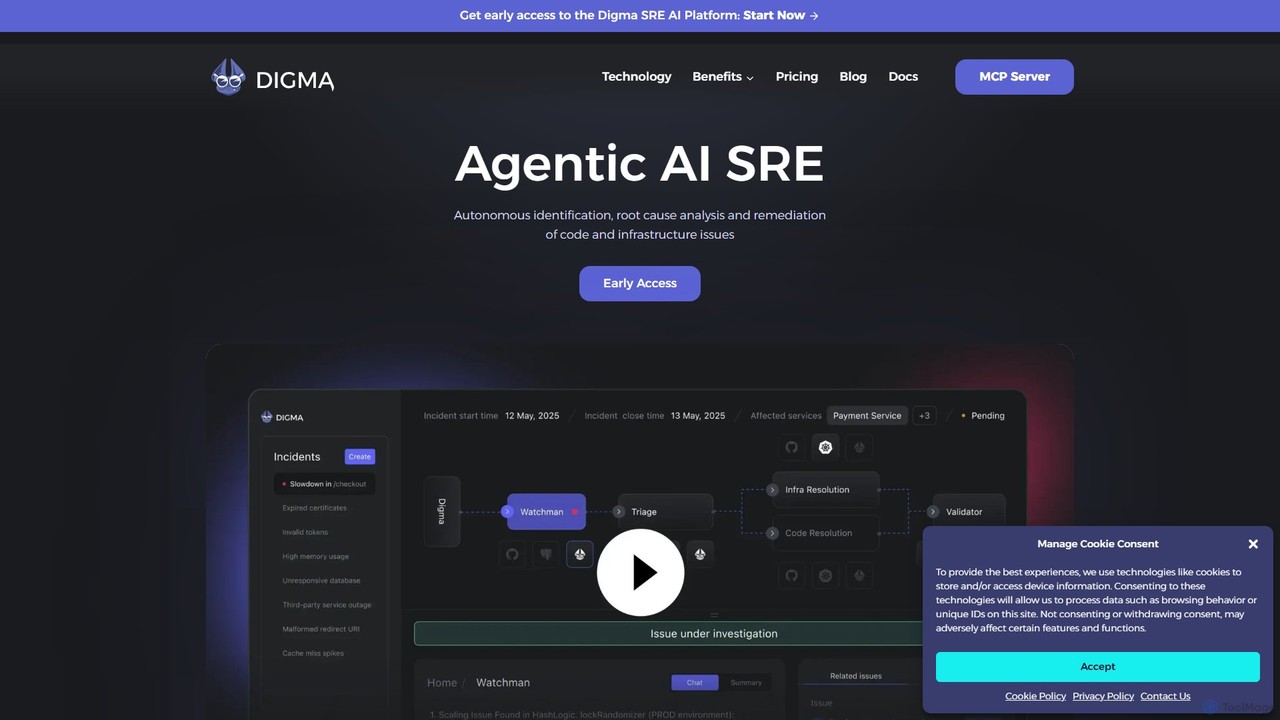
Digma is an agentic AI SRE platform that uses Dynamic Code Analysis (DCA) to autonomously identify, analyze, and remediate code and infrastructure issues before they reach production. It integrates with your observability stack to provide real-time insights, prevent breaking changes, and optimize application performance, significantly reducing resolution time and engineering effort.
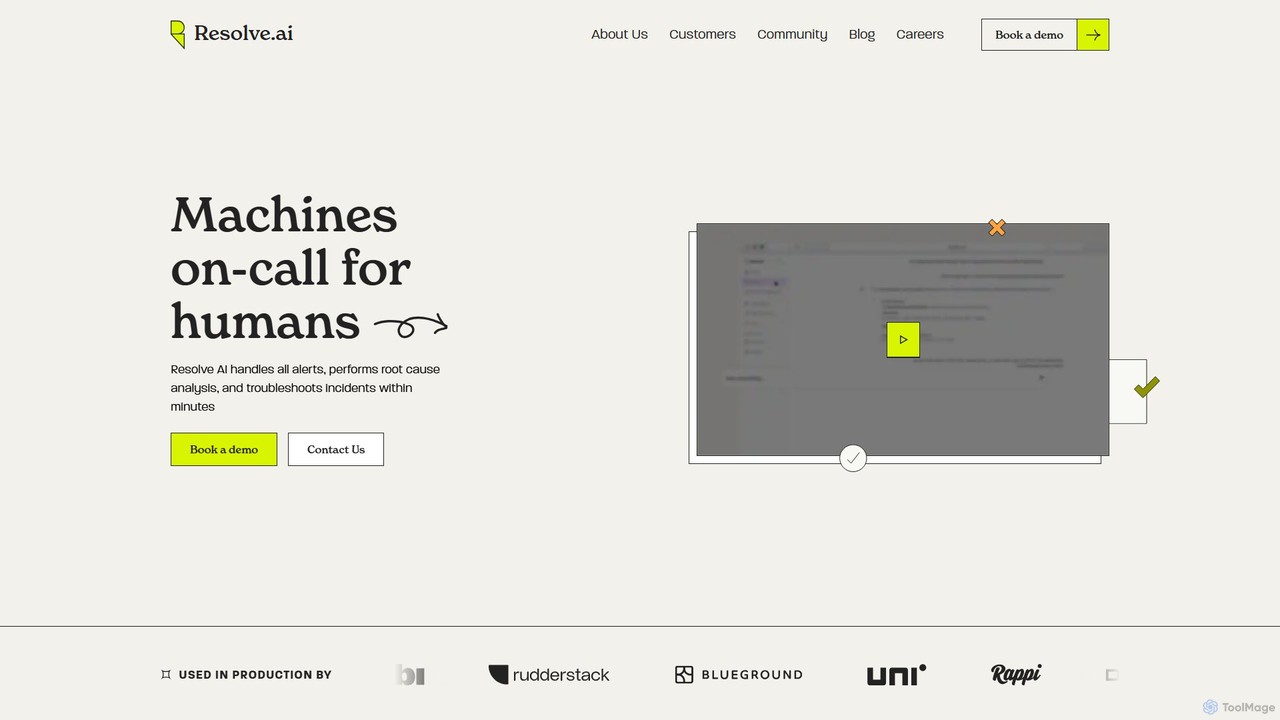
Resolve.ai is an Agentic AI SRE platform that automates incident response and root cause analysis. It acts as a virtual team member on-call, investigating alerts, testing hypotheses, and identifying issues in minutes to reduce MTTR, decrease engineer burnout, and increase system uptime.
Product overview
Digma Product overview
Digma is an agentic AI SRE platform that uses Dynamic Code Analysis (DCA) to autonomously identify, analyze, and remediate code and infrastructure issues before they reach production. It integrates with your observability stack to provide real-time insights, prevent breaking changes, and optimize application performance, significantly reducing resolution time and engineering effort.
Resolve.ai Product overview
Resolve.ai is an Agentic AI SRE platform that automates incident response and root cause analysis. It acts as a virtual team member on-call, investigating alerts, testing hypotheses, and identifying issues in minutes to reduce MTTR, decrease engineer burnout, and increase system uptime.
Detailed feature comparison
| Feature | Digma | Resolve.ai |
|---|---|---|
| Primary category | Code Quality | Incident Management |
| Added | 2025-08-16 | 2025-08-06 |
| Pricing | Freemium | Paid |
| Official website | digma.ai | resolve.ai |
| Product type | Website | Website |
| Performance data | ||
| User rating | Not verified | Not verified |
| Comments | 0 | 0 |
| Monthly visits | 12.6K | 84K |
| Monthly growth | 47.7% | 2% |
| Favorites | 114 | 170 |
| Details | View details | View details |
Digma vs Resolve.ai monthly traffic
Compare Digma and Resolve.ai by monthly reach, traffic trend, visit depth, top regions, and acquisition sources.
How to interpret the traffic data
In the Digma vs Resolve.ai monthly traffic comparison, Digma currently shows 12.6K visits and Resolve.ai shows 84K; Resolve.ai has about 6.7 times the visible traffic of Digma, an absolute difference of about 71.4K visits. This reflects visible reach, not feature quality or paid users.
Both tools provide verified traffic details, so monthly trends, visit depth, regions, and acquisition sources can be compared on the same basis.
Digma monthly traffic:
Latest traffic
Monthly traffic trend
- 2025/9: 58.2K Monthly visits
- 2026/1: 40.5K Monthly visits
- 2026/2: 22.3K Monthly visits
- 2026/3: 14.2K Monthly visits
- 2026/4: 8.5K Monthly visits
- 2026/5: 12.6K Monthly visits
Top regions
Top 5 countries/regions
| Country/region | Percentage | Traffic |
|---|---|---|
| 🇺🇸United States | 38.68% | 4.9K |
| 🇮🇳India | 28.47% | 3.6K |
| 🇩🇪Germany | 11.82% | 1.5K |
| 🇧🇾Belarus | 11.19% | 1.4K |
| 🇬🇧United Kingdom | 9.84% | 1.2K |
Search keywords
Resolve.ai monthly traffic:
Latest traffic
Monthly traffic trend
- 2025/9: 28.4K Monthly visits
- 2026/1: 74.1K Monthly visits
- 2026/2: 126.4K Monthly visits
- 2026/3: 93.4K Monthly visits
- 2026/4: 82.4K Monthly visits
- 2026/5: 84K Monthly visits
Top regions
Top 5 countries/regions
| Country/region | Percentage | Traffic |
|---|---|---|
| 🇺🇸United States | 59.57% | 50K |
| 🇮🇳India | 23.74% | 19.9K |
| 🇬🇧United Kingdom | 7.77% | 6.5K |
| 🇳🇬Nigeria | 4.64% | 3.9K |
| 🇧🇷Brazil | 4.28% | 3.6K |
Traffic sources
| Source type | Percentage | Traffic |
|---|---|---|
| Direct | 79.92% | 67.1K |
| Referral | 16.76% | 14.1K |
| 3.32% | 2.8K |
Search keywords
Usage comparison
Compare the core capabilities of Digma and Resolve.ai
Digma Core features
Resolve.ai Core features
Use cases
Digma Use cases
Resolve.ai Use cases
Digma vs Resolve.ai:In-depth comparison and selection guidance
First decide whether the products solve the same kind of need
This in-depth Digma vs Resolve.ai comparison uses only the product records, taxonomy, audience, traffic, and community signals available on this page. Digma is primarily listed under “Code Quality”, while Resolve.ai is primarily listed under “Incident Management”, so the first decision is whether your actual task matches their recorded scope.
The structured fields currently show these decision-relevant differences: Primary category (Digma: Code Quality; Resolve.ai: Incident Management); Pricing (Digma: Freemium; Resolve.ai: Paid); Monthly visits (Digma: 12.6K; Resolve.ai: 84K); Monthly growth (Digma: 47.7%; Resolve.ai: 2%); Favorites (Digma: 114; Resolve.ai: 170). These facts are more useful for selection than brand visibility alone.
What market visibility and monthly traffic mean
In the Digma vs Resolve.ai monthly traffic comparison, Digma currently shows 12.6K visits and Resolve.ai shows 84K; Resolve.ai has about 6.7 times the visible traffic of Digma, an absolute difference of about 71.4K visits. This reflects visible reach, not feature quality or paid users.
Both tools provide verified traffic details, so monthly trends, visit depth, regions, and acquisition sources can be compared on the same basis.
If public market visibility is an important first-pass criterion, investigate Resolve.ai first. The final choice should still follow taxonomy, use case, and a real trial because higher traffic does not prove broader capabilities or better workflow fit.
Product positioning, use cases, and roles
Digma and Resolve.ai currently overlap in shared categories: Observability; shared tags: observability, OpenTelemetry, root cause analysis, site reliability engineering, and sre. This can place both on the same shortlist, but it does not prove equal implementation, depth, or cost.
Digma's unique categories/tags are Code Quality, Debugging, Developer Tools, AI agent, CI/CD, code analysis, debugging, and developer tool; Resolve.ai's are Incident Management, Automation, alert fatigue, automation, devops, incident response, MTTR, and on-call. These unique fields are the strongest differentiators: validate the product whose recorded scope matches the task instead of following traffic alone.
What ratings, comments, and favorites can tell you
Digma has no verified rating, 0 comments, 114 favorites, and 122 likes;Resolve.ai has no verified rating, 0 comments, 170 favorites, and 152 likes。
Neither product has enough rating or comment samples for a credible reputation ranking.
Selection guidance by actual need
When to evaluate Digma first
Put Digma on the priority trial list when the task aligns with “Code Quality” and especially Code Quality, Debugging, Developer Tools, AI agent, CI/CD, and code analysis. This follows recorded positioning and does not imply unlisted capabilities are absent.
Digma also currently records: pricing is freemium, product type is website, 12.6K verified monthly visits, no verified user rating. Verify any hard requirement around price, platform, or reach before trial, and do not let sparse review data substitute for testing.
When to evaluate Resolve.ai first
Put Resolve.ai on the priority trial list when the task aligns with “Incident Management” and especially Incident Management, Automation, alert fatigue, automation, devops, and incident response. This follows recorded positioning and does not imply unlisted capabilities are absent.
Resolve.ai also currently records: pricing is paid, product type is website, 84K verified monthly visits, no verified user rating. Verify any hard requirement around price, platform, or reach before trial, and do not let sparse review data substitute for testing.
How to validate the recommendation before deciding
The available data describes positioning, public visibility, and community signals, but it cannot prove output quality, speed, integration effort, privacy, or long-term cost in your workflow. Before deciding, run the same representative tasks in Digma and Resolve.ai, then record completion time, accuracy, manual corrections, and the real paid threshold. A like-for-like trial turns this comparison into a defensible adoption decision.
Comparison FAQ
How should I choose between Digma and Resolve.ai?
Where does this comparison data come from?
What do unknown fields mean?
Related AI tools

Signal0ne
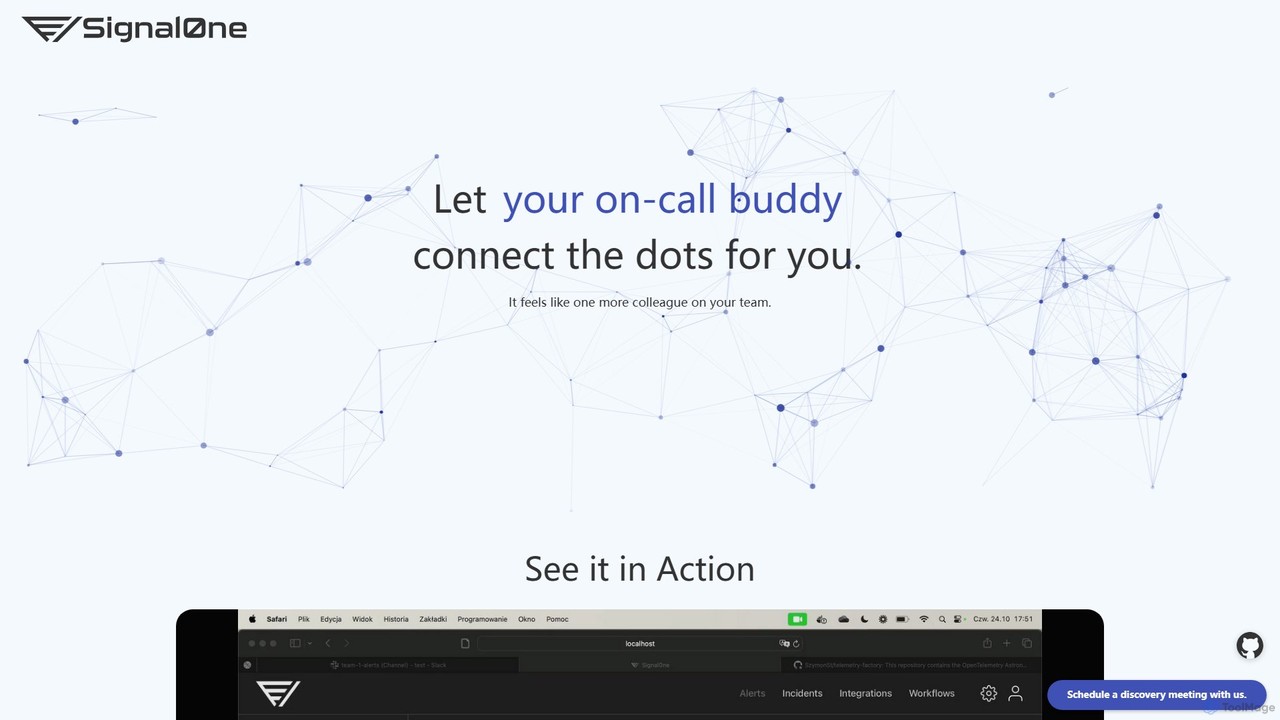
Signal0ne is an AI-powered AIOps platform that acts as an on-call assistant for DevOps and SRE teams. It automates root cause analysis by correlating signals from your existing observability stack, enriching alerts with crucial context, and suggesting mitigation steps. This helps teams reduce alert fatigue and significantly decrease Mean Time To Resolution (MTTR).
Observability
Kubiks
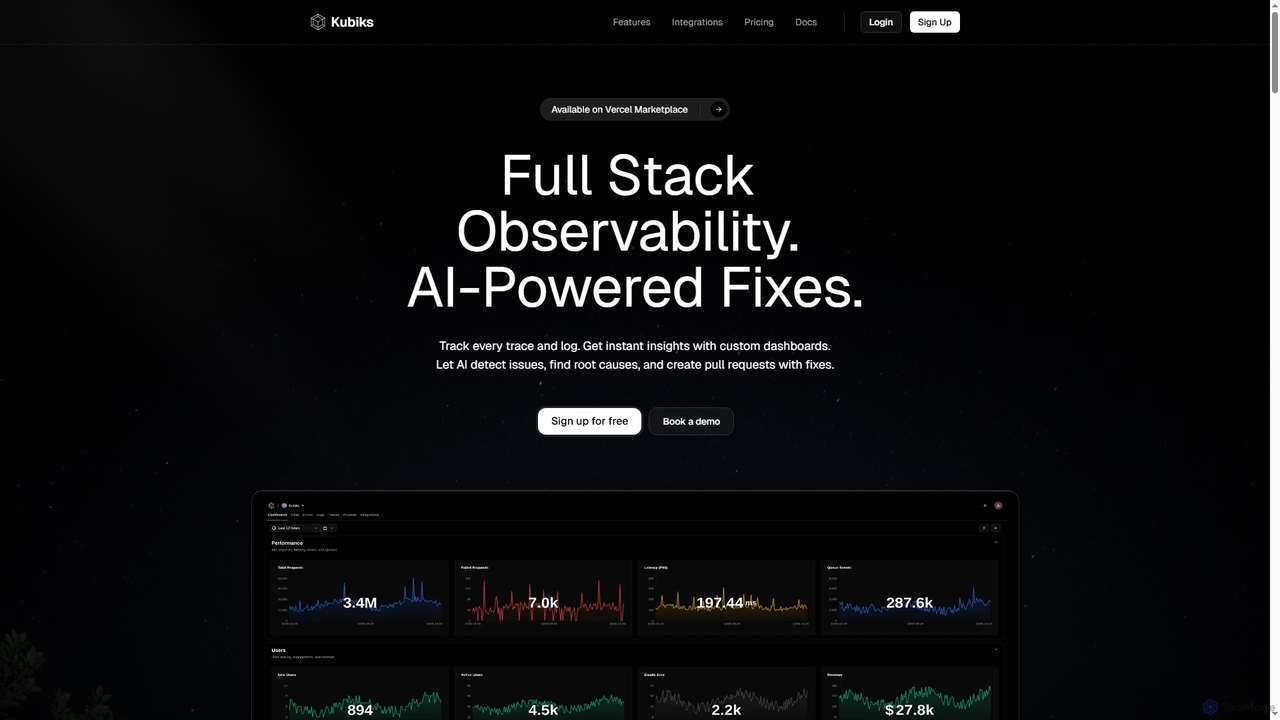
Kubiks is an AI-powered full-stack observability platform providing distributed tracing, logging, and custom dashboards. It automatically detects issues, identifies root causes, and generates pull requests with fixes, helping engineering teams debug faster and proactively resolve problems.
Debugging
Parity
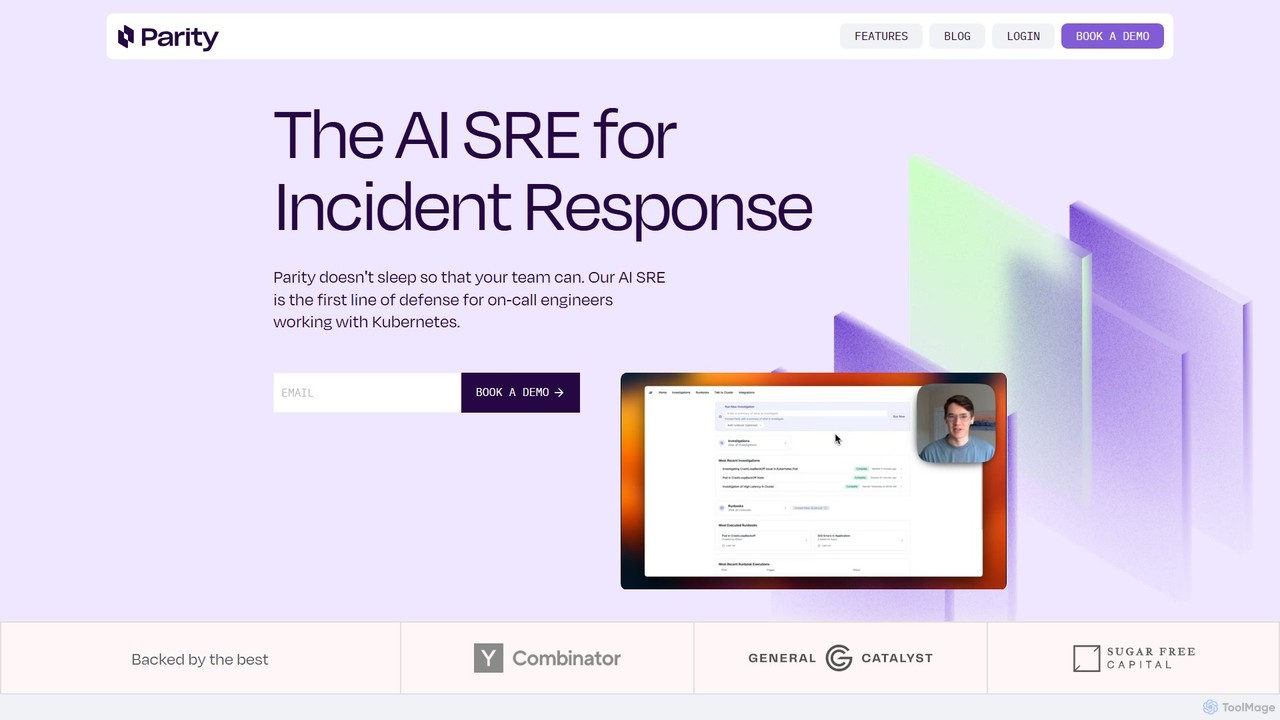
Parity is an AI-powered Site Reliability Engineer (SRE) designed for incident response in Kubernetes environments. It automates investigations, performs rapid root cause analysis, and executes runbooks, allowing on-call teams to resolve issues faster and reduce operational workload.
Devops
smallhours
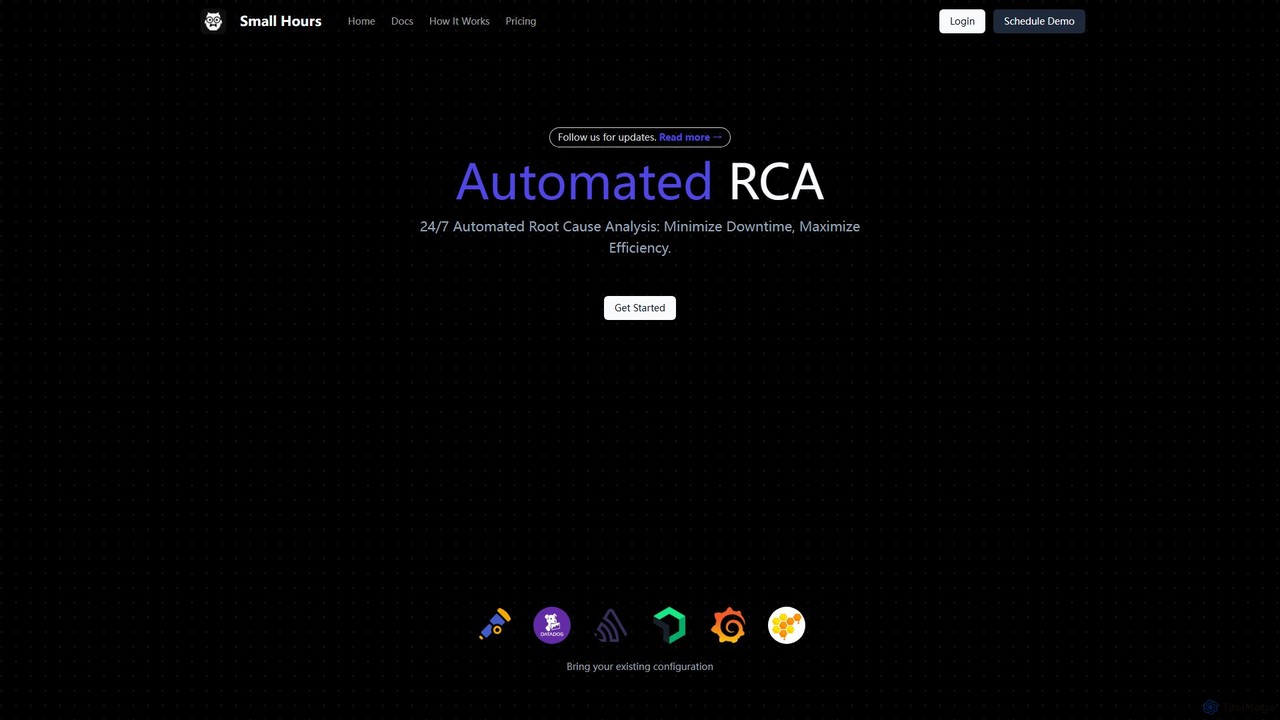
smallhours is an AI-powered platform for developers that automates root cause analysis (RCA) 24/7. It integrates with your stack via OpenTelemetry to monitor systems, diagnose issues using your codebase and runbooks as context, and accelerates resolution time by 10x, minimizing downtime and streamlining on-call duties.
Debugging
Metoro
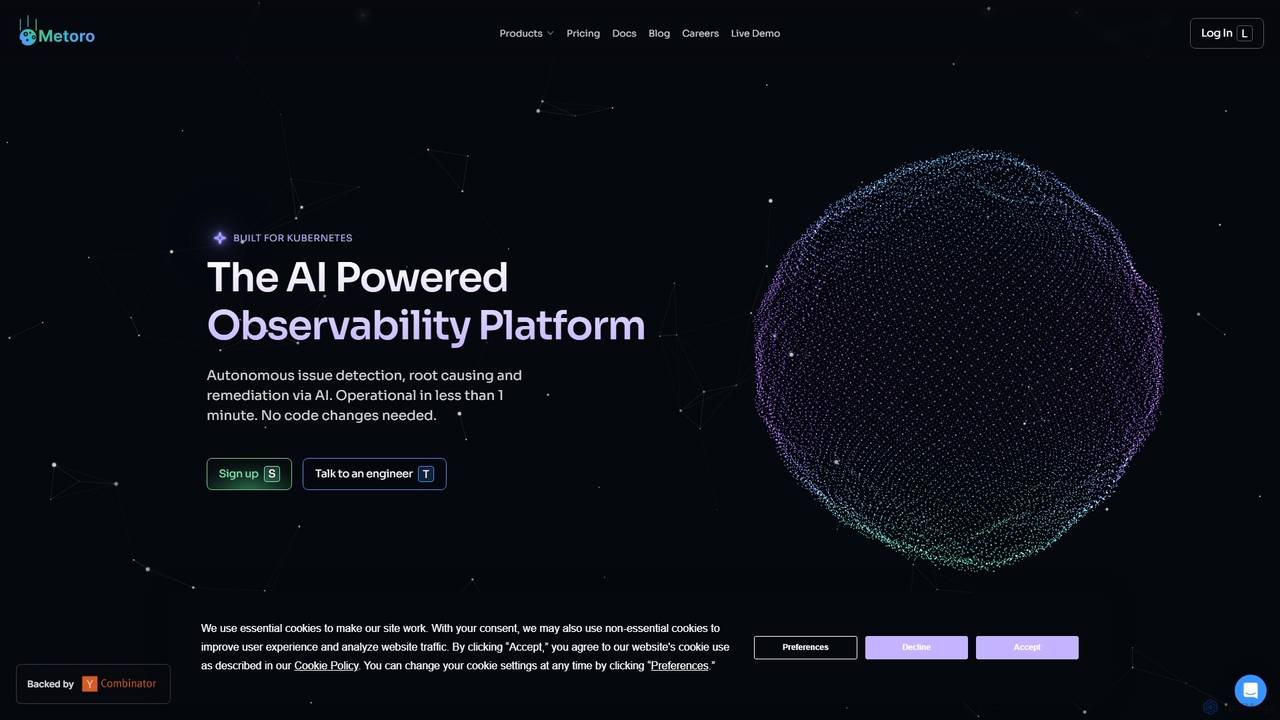
Metoro is an AI-powered observability platform designed for Kubernetes. It uses eBPF technology for zero-instrumentation monitoring, enabling autonomous issue detection, root cause analysis, and automated code fixes via pull requests. Operational in under a minute, it offers a comprehensive and cost-effective alternative to traditional monitoring tools.
Observability
drdroid
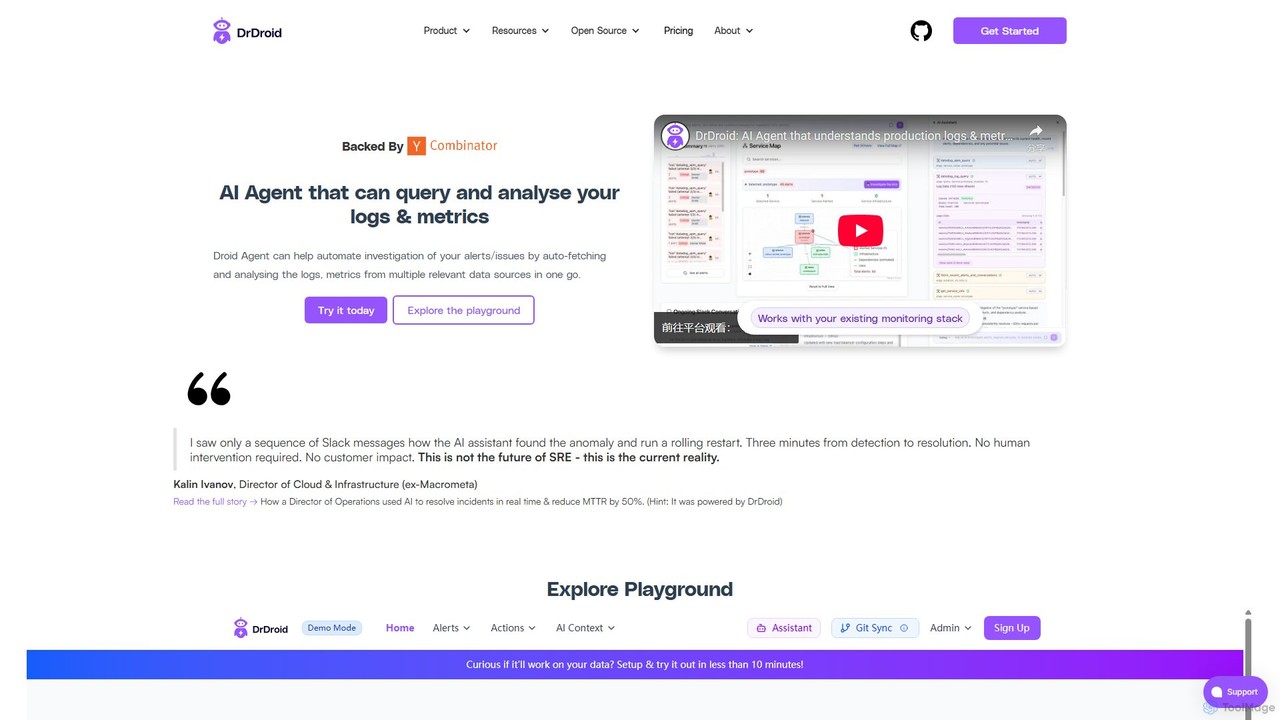
drdroid is an AI-powered agent for observability and production monitoring, designed for SRE and DevOps teams. It automates incident investigation by querying and analyzing logs and metrics from multiple sources. By integrating with your existing stack via Slack, it helps reduce alert fatigue, slash MTTR (Mean Time to Resolution), and transform runbooks into self-healing systems, acting as a 24/7 AI SRE.
Monitoring
Anomify
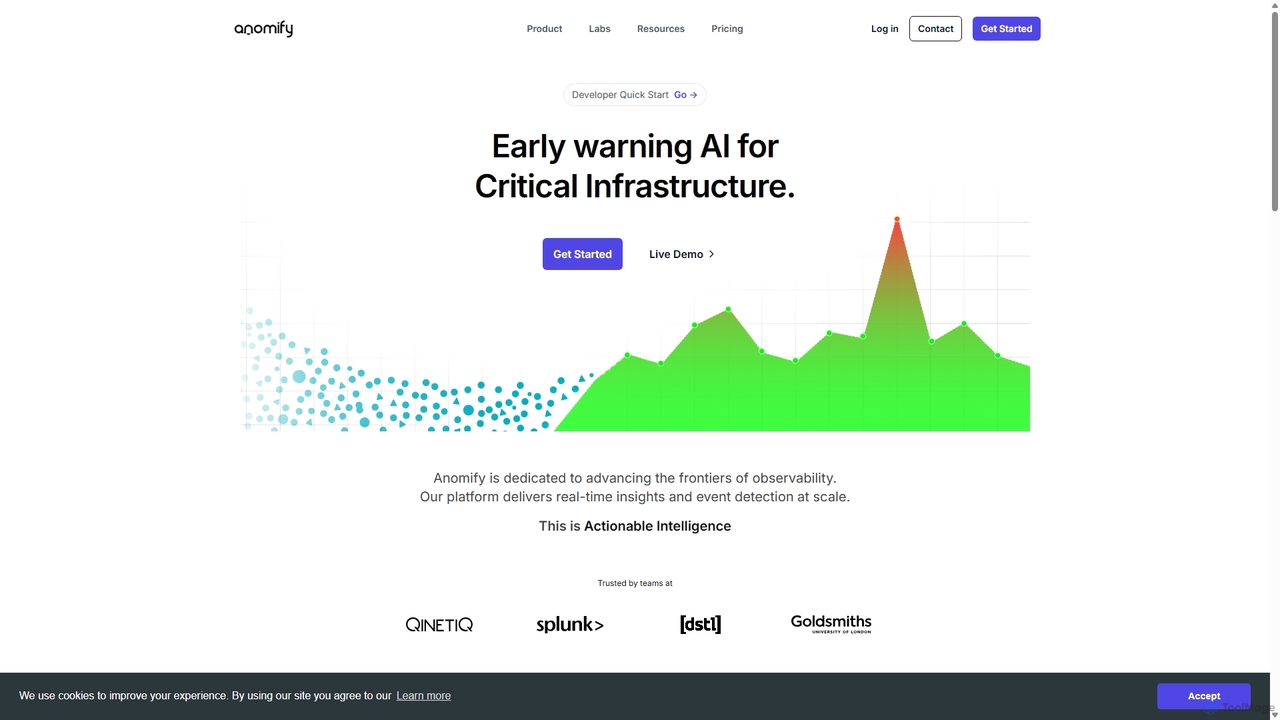
Anomify is an AI-powered early warning platform for critical infrastructure, offering real-time anomaly detection and observability at scale. It leverages multi-stage machine learning to analyze time-series data, significantly reduce false positives, and accelerate root cause analysis. Designed for DevOps, SREs, and IT teams, Anomify transforms monitoring from reactive to proactive, ensuring system performance and reliability.
Anomaly Detection
KubeHA
KubeHA is a GenAI-powered SaaS platform for Kubernetes, offering an all-in-one solution for Monitoring, Observability, Remediation, and Exploration (MORE). It unifies logs, metrics, traces, and events to provide AI-driven root cause analysis, smart fix suggestions, and 1-click remediation, eliminating tool sprawl and simplifying complex operations for SRE and DevOps teams.
Devops
Jyek
Jyek is an AI agent platform that understands objectives, creates execution plans, uses tools, and delivers verifiable results for complex, multi-step tasks.
Automation
Rootly
Rootly is an AI-powered, end-to-end incident management platform designed for engineering and SRE teams. It automates the entire incident lifecycle, from on-call scheduling and alert response to resolution and post-incident analysis. By integrating seamlessly with tools like Slack, Jira, and Datadog, Rootly streamlines workflows, reduces manual tasks, and helps teams resolve issues faster, ultimately improving system reliability and operational efficiency.
Incident Management
Multiplayer
Multiplayer is a full-stack session recording platform that captures frontend and backend data, providing complete context for debugging, testing, and AI-powered feature development. It integrates seamlessly with AI IDEs and engineering workflows to accelerate problem resolution and build new features with confidence.
Ai Integration
sre.ai
sre.ai is an AI-powered DevOps platform for Salesforce, designed for enterprise teams. It utilizes intelligent agents to automate deployments, resolve conflicts, run simulations, and accelerate the entire development lifecycle, enhancing speed and reliability.
Crm

Antimetal
Antimetal is an AI-powered infrastructure intelligence platform designed for DevOps and SRE teams. It proactively monitors your systems, automatically diagnoses issues, and provides actionable solutions to fix and prevent infrastructure problems, enhancing system reliability and reducing downtime.
Infrastructure & Devops
Atla AI
Atla AI is an observability and evaluation platform designed for AI agents. It helps developers find, understand, and fix agent failures by providing deep insights into their behavior. The platform automatically detects errors, identifies recurring patterns, and offers actionable suggestions to continuously improve agent performance and completion rates.
Model Evaluation