

Digma Overview
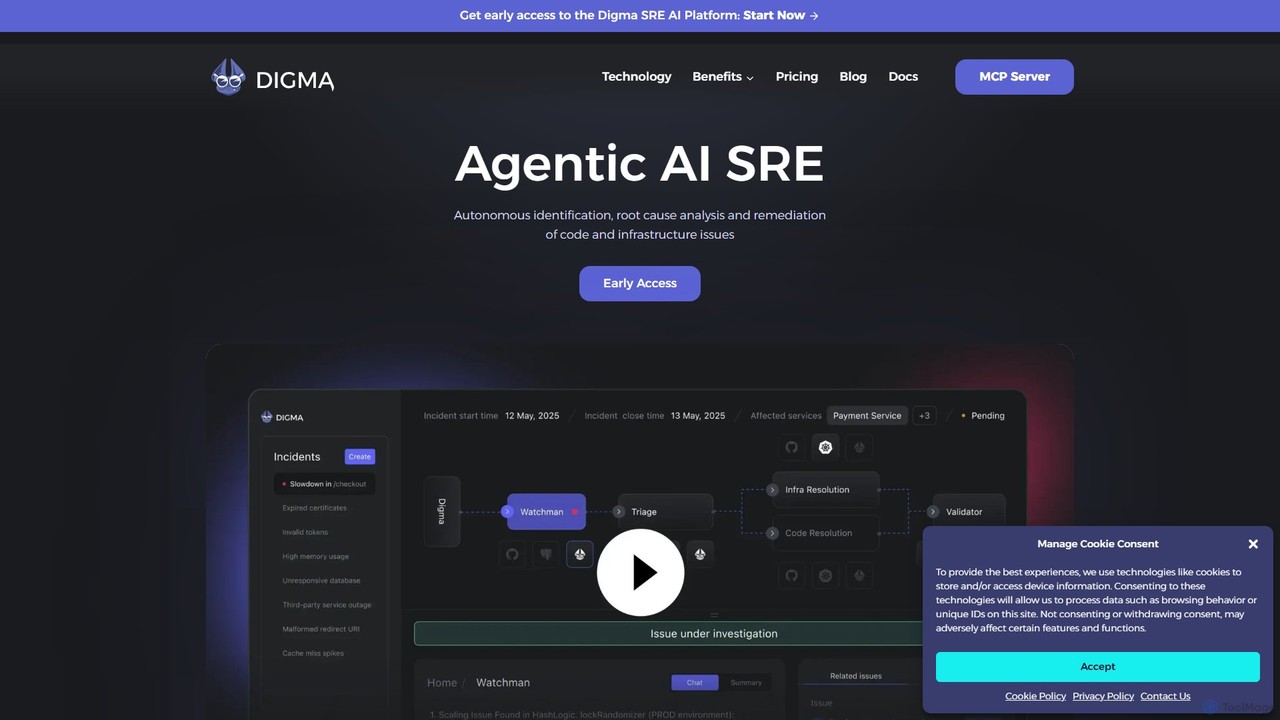
Digma is a pioneering Agentic AI SRE (Site Reliability Engineer) platform designed to revolutionize the software development lifecycle. It operates on a "shift-left" principle, moving issue detection from production environments back into the development phase. By leveraging its proprietary Dynamic Code Analysis (DCA) engine, Digma autonomously identifies, performs root cause analysis, and suggests remediation for complex issues within code and infrastructure. This proactive approach helps engineering teams prevent critical bugs, performance bottlenecks, and breaking changes from ever reaching end-users, thereby cutting resolution time by up to 85% and allowing developers to focus on innovation rather than firefighting.
The platform seamlessly integrates with existing observability stacks and key data sources like OpenTelemetry, PostgreSQL, GitHub, and Kubernetes. It analyzes runtime data from pre-production environments to build a deep understanding of your application's behavior. Unlike traditional static analysis tools, Digma provides context-aware insights based on how your code actually performs, making its feedback highly accurate and actionable.
How to use Digma
Using Digma is designed to be a non-intrusive part of the development workflow. First, you connect Digma to your existing data sources, including your observability stack (it's OTEL-compliant), code repositories, and container orchestration platforms. Digma can be run entirely locally on a developer's machine or within your private cloud, ensuring your code and data remain secure. Once connected, the DCA engine starts processing raw observability data from your staging or testing environments. As you write and review code, Digma analyzes the runtime impact of your changes. It highlights potential issues like performance regressions, inefficient database queries, or scalability problems directly in your development environment or as feedback on pull requests. For identified issues, Digma not only pinpoints the exact root cause but also offers precise remediation, which can be applied via generated pull requests or configuration updates.
Core Features of Digma
- Agentic AI SRE: Provides autonomous identification, root cause analysis, and remediation of issues, acting as an AI partner for your engineering team.
- Dynamic Code Analysis (DCA) Engine: A powerful engine that analyzes runtime observability data to uncover critical, actionable insights about your application's real-world behavior.
- Pre-Production Issue Prevention: Identifies and prioritizes issues based on their potential impact in pre-production environments, preventing them from escalating.
- Performance Bottleneck Detection: Automatically pinpoints performance problems such as slow database queries, N+1 issues, and API endpoint inefficiencies.
- Breaking Change & Dependency Analysis: Highlights how code modifications impact other services and components at runtime, preventing unexpected breaking changes.
- Automated, Context-Aware Fixes: Suggests safe, smart, and production-aware fixes, and can integrate them directly into the pull request.
- Local-First and Secure: Runs locally or on a private cloud, requiring no code changes and ensuring that sensitive data never leaves your environment.
- Digma MCP Server: An advanced component that enhances AI coding agents by providing them with runtime context from your APM dashboards, leading to smarter code generation and fix suggestions.
Use Cases for Digma
Digma is invaluable for modern software development teams. Developers use it during code reviews to get immediate feedback on the performance implications of their changes, catching bottlenecks before they are merged. For teams managing complex microservices architectures, Digma helps visualize and understand dependencies, preventing breaking changes that could cause cascading failures. SREs and DevOps engineers leverage Digma to reduce mean time to resolution (MTTR) by getting automatic root cause analysis instead of manually sifting through logs and metrics. It's also used for continuous optimization, helping teams systematically improve app performance and reduce cloud infrastructure costs by eliminating inefficiencies.
Advantages of Digma
The primary advantage of Digma is its proactive, preventative approach. By shifting observability left, it saves countless engineering hours and reduces the high cost of fixing bugs in production. Its ability to run locally ensures complete data privacy and security, a critical concern for many organizations. Digma requires no code changes and is OTEL-compliant, making adoption frictionless. The platform empowers individual developers with a continuous feedback loop, helping them grow their skills and build more robust software, regardless of company-wide adoption.
Pricing and Plans
Digma offers a flexible pricing structure to suit different needs:
- Free for Developers: A perpetually free plan for individual developers running Digma locally on their laptop. It includes local environment support, unlimited services/endpoints, and basic performance analysis for a single user.
- Digma for Teams: Priced at $450/month (billed annually), this plan is for teams connecting to a central environment. It runs on-premise or in a private cloud, includes 5 micro-services (with 10 endpoints each), advanced performance analysis, and unlimited users. A 30-day free trial is available.
- Digma MCP Server: A forthcoming plan designed for teams using Digma's capabilities through AI agents. It will offer unlimited micro-services and endpoints.
Traffic
Latest traffic
Status
Monthly traffic trend
- 2025-9: 58.2K
- 2026-1: 40.5K
- 2026-2: 22.3K
- 2026-3: 14.2K
- 2026-4: 8.5K
- 2026-5: 12.6K
Geography
Top 5 countries / regions
- 🇺🇸United States38.7%
- 🇮🇳India28.5%
- 🇩🇪Germany11.8%
- 🇧🇾Belarus11.2%
- 🇬🇧United Kingdom9.8%
Top keywords
| Keyword | Cost per click |
|---|---|
| digma | $3.78 |
| digma.ai blog event transportation | $0.00 |
| jaeger tracing | $0.00 |
| kotlin | $0.90 |
| what is kotlin | $0.89 |
Digma Alternatives
Resolve.ai
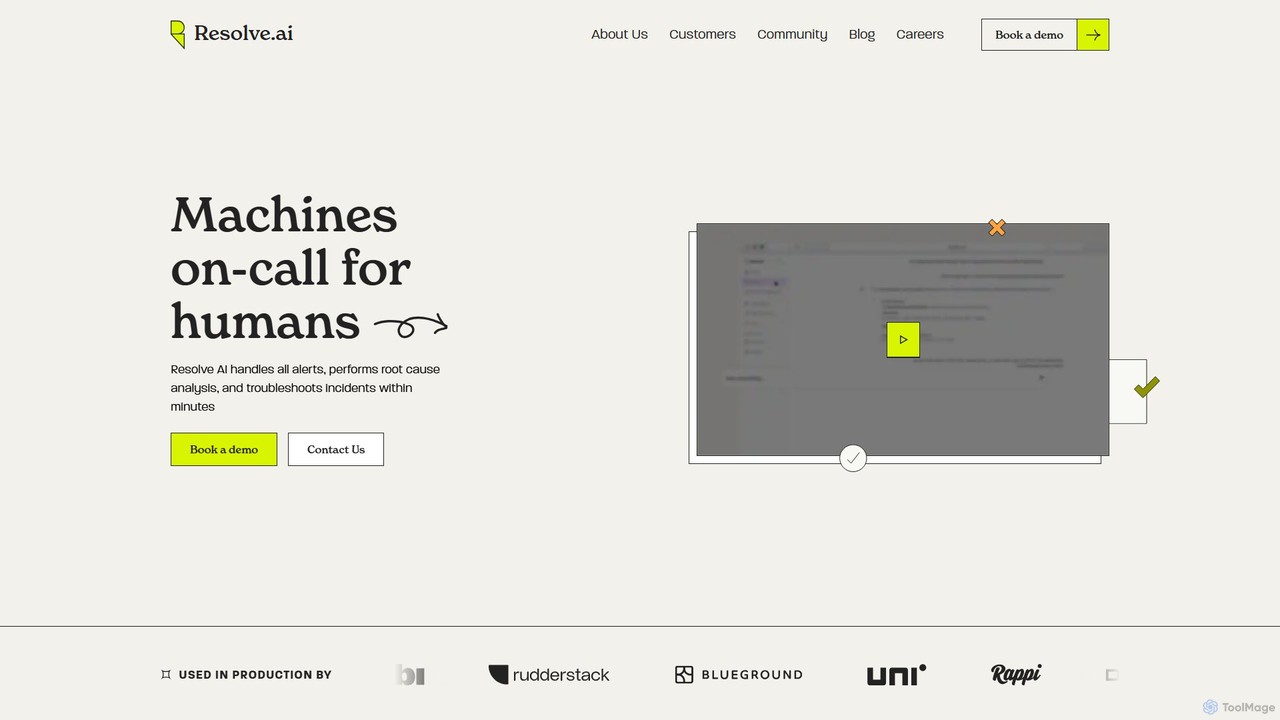
Resolve.ai is an Agentic AI SRE platform that automates incident response and root cause analysis. It acts as a virtual team member on-call, investigating alerts, testing hypotheses, and identifying issues in minutes to reduce MTTR, decrease engineer burnout, and increase system uptime.
Incident Management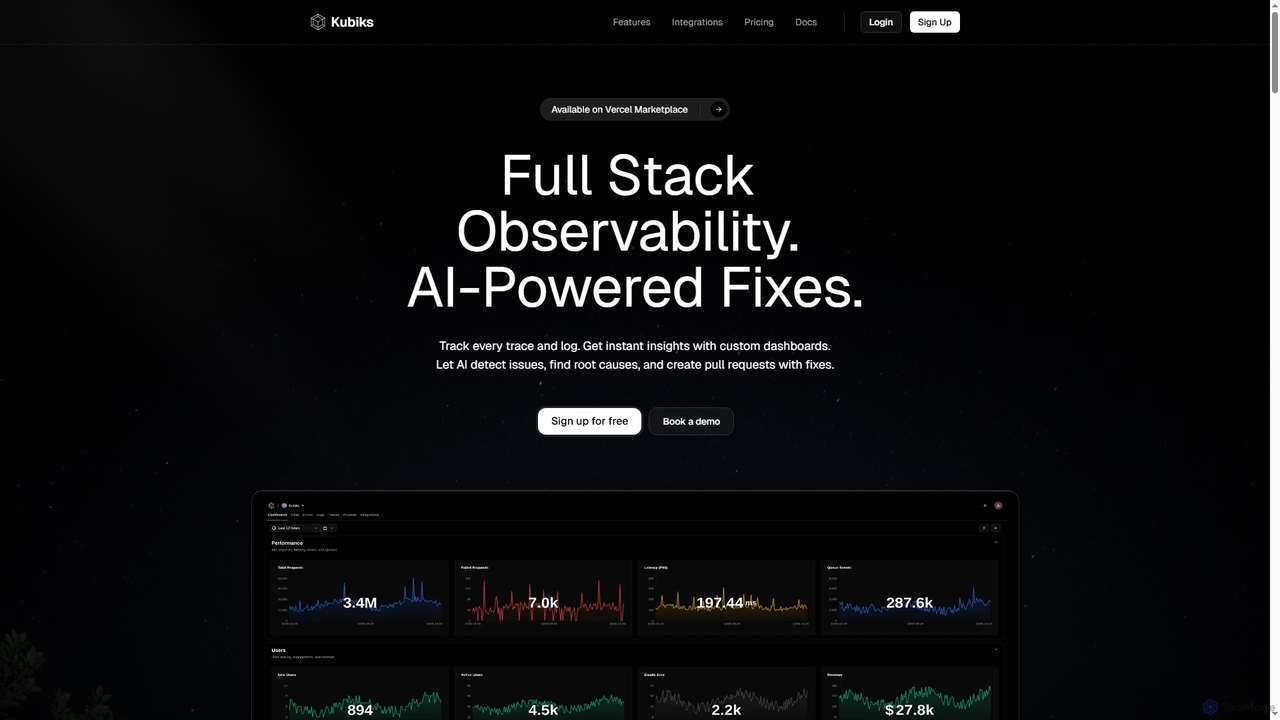
Kubiks
Kubiks is an AI-powered full-stack observability platform providing distributed tracing, logging, and custom dashboards. It automatically detects issues, identifies root causes, and generates pull requests with fixes, helping engineering teams debug faster and proactively resolve problems.
Debugging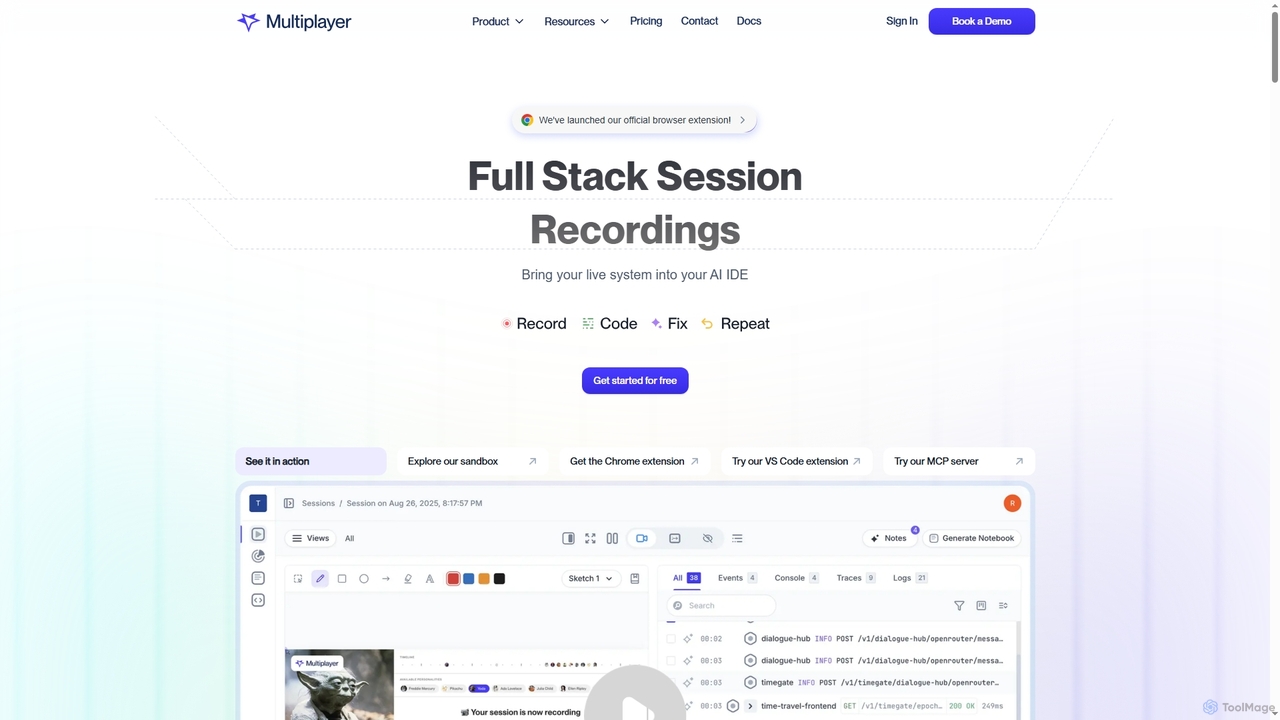
Multiplayer
Multiplayer is a full-stack session recording platform that captures frontend and backend data, providing complete context for debugging, testing, and AI-powered feature development. It integrates seamlessly with AI IDEs and engineering workflows to accelerate problem resolution and build new features with confidence.
Ai Integration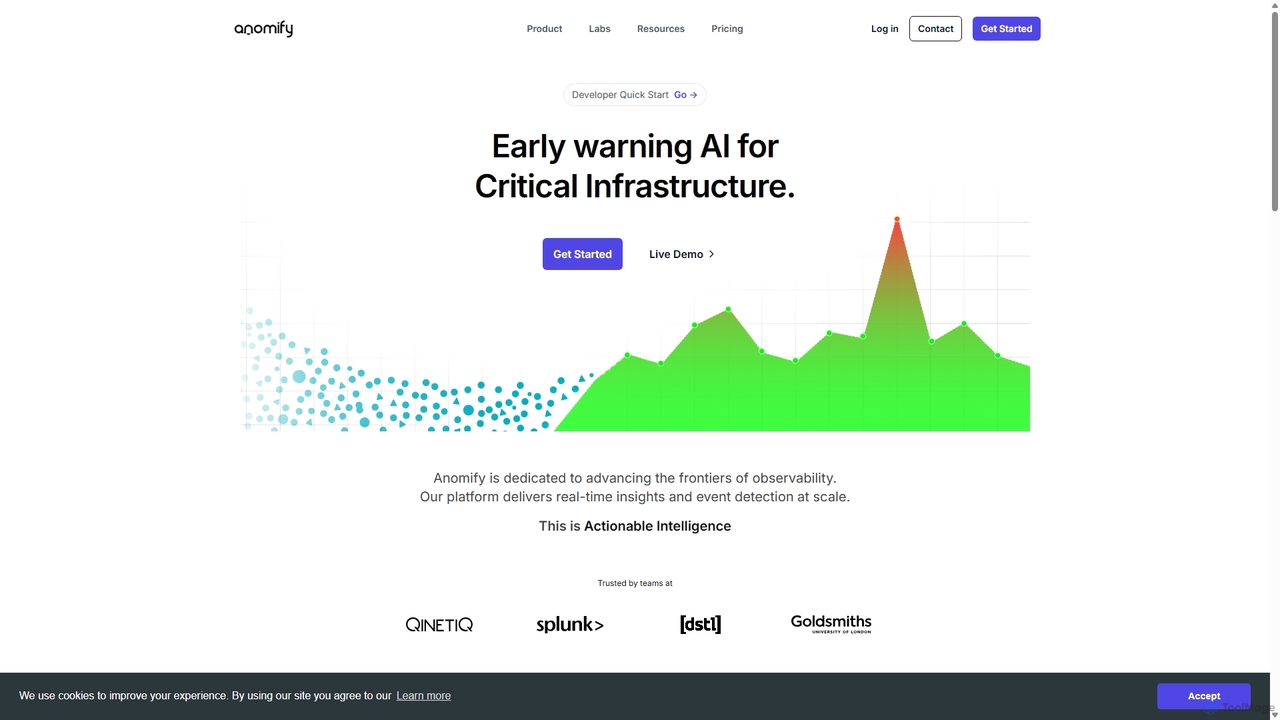
Anomify
Anomify is an AI-powered early warning platform for critical infrastructure, offering real-time anomaly detection and observability at scale. It leverages multi-stage machine learning to analyze time-series data, significantly reduce false positives, and accelerate root cause analysis. Designed for DevOps, SREs, and IT teams, Anomify transforms monitoring from reactive to proactive, ensuring system performance and reliability.
Anomaly Detection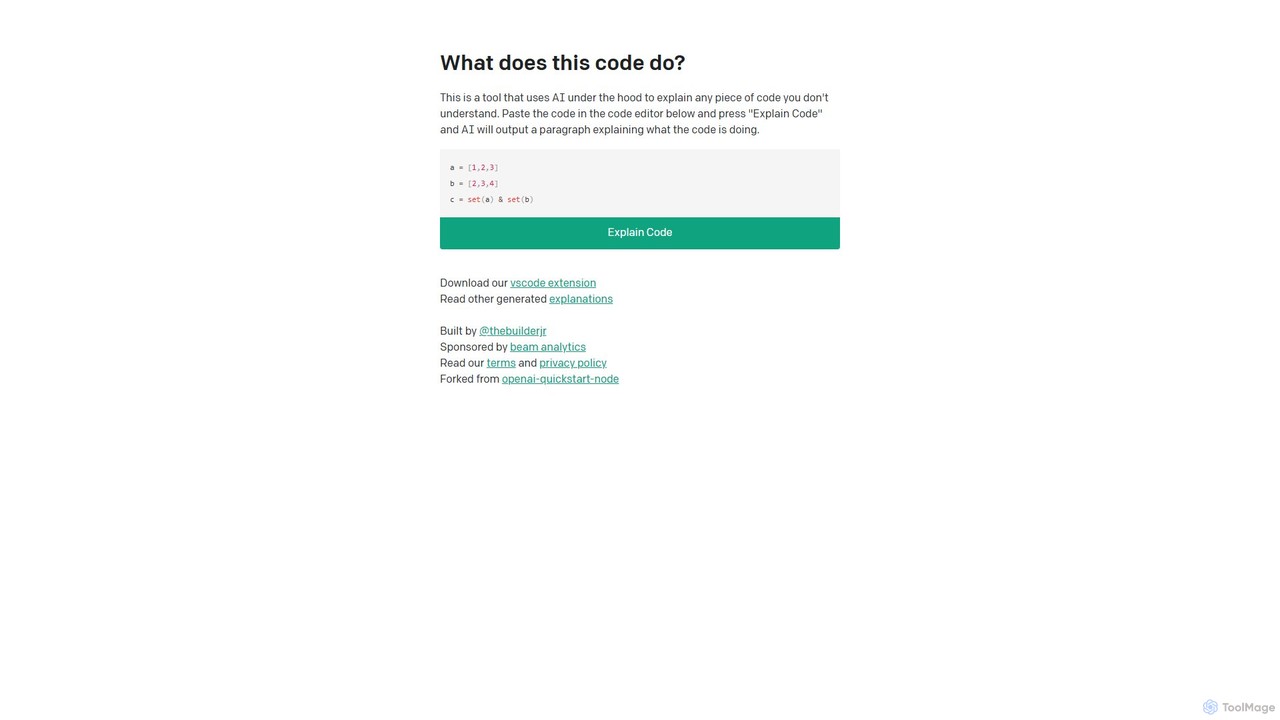
WhatDoesThisCodeDo
An AI-powered tool that explains any piece of code in plain English. Simply paste your code to get a clear, concise explanation of its functionality. It supports numerous programming languages and offers a VSCode extension for seamless integration.
Code AssistantDigma Categories
Digma Embed Widget
Copy this embed code to place the badge on your blog, article, or product site and send readers directly to this ToolMage detail page.

Related AI tools
Resolve.ai
Resolve.ai is an Agentic AI SRE platform that automates incident response and root cause analysis. It acts as a virtual team member on-call, investigating alerts, testing hypotheses, and identifying issues in minutes to reduce MTTR, decrease engineer burnout, and increase system uptime.
Incident ManagementKubiks
Kubiks is an AI-powered full-stack observability platform providing distributed tracing, logging, and custom dashboards. It automatically detects issues, identifies root causes, and generates pull requests with fixes, helping engineering teams debug faster and proactively resolve problems.
Debugging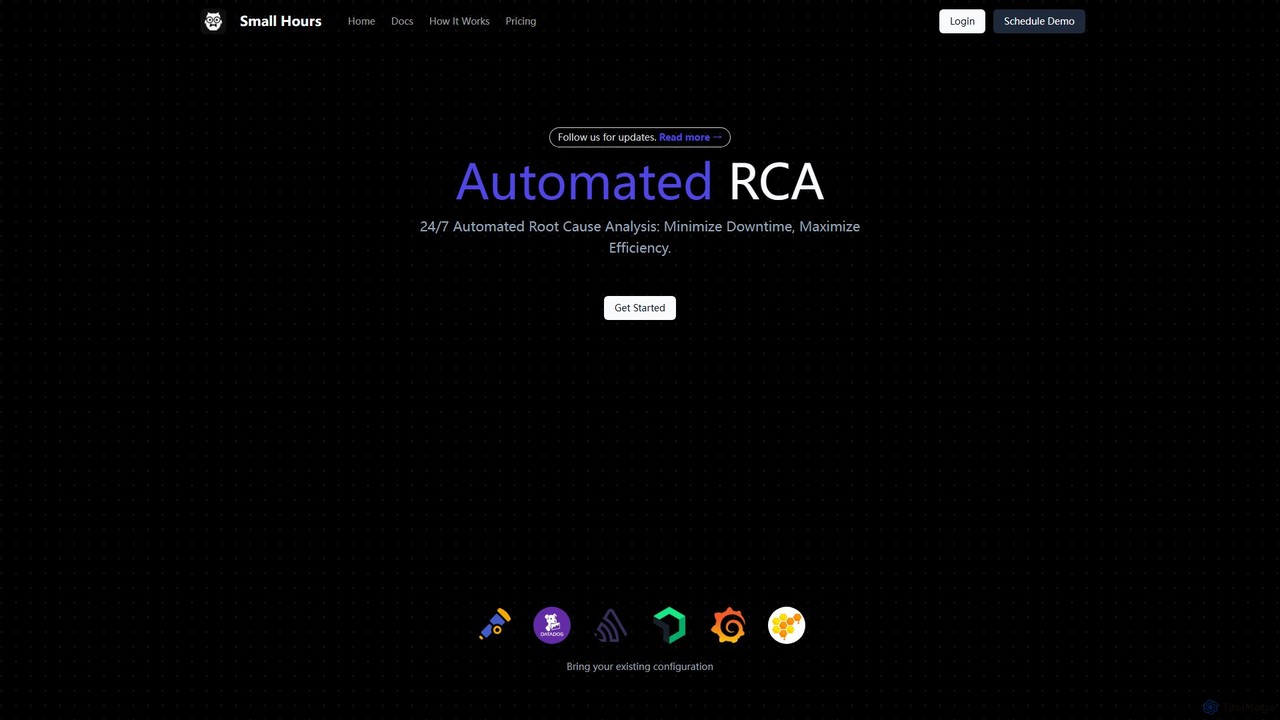
smallhours
smallhours is an AI-powered platform for developers that automates root cause analysis (RCA) 24/7. It integrates with your stack via OpenTelemetry to monitor systems, diagnose issues using your codebase and runbooks as context, and accelerates resolution time by 10x, minimizing downtime and streamlining on-call duties.
DebuggingMultiplayer
Multiplayer is a full-stack session recording platform that captures frontend and backend data, providing complete context for debugging, testing, and AI-powered feature development. It integrates seamlessly with AI IDEs and engineering workflows to accelerate problem resolution and build new features with confidence.
Ai Integration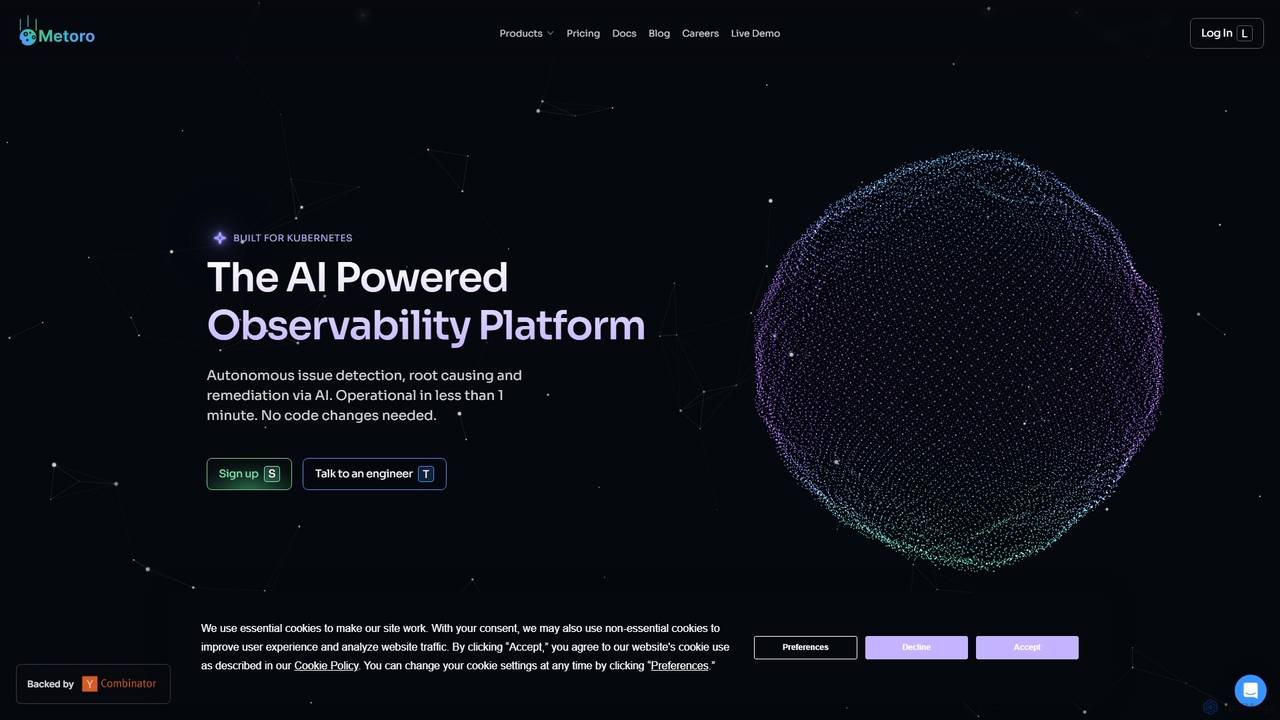
Metoro
Metoro is an AI-powered observability platform designed for Kubernetes. It uses eBPF technology for zero-instrumentation monitoring, enabling autonomous issue detection, root cause analysis, and automated code fixes via pull requests. Operational in under a minute, it offers a comprehensive and cost-effective alternative to traditional monitoring tools.
Observability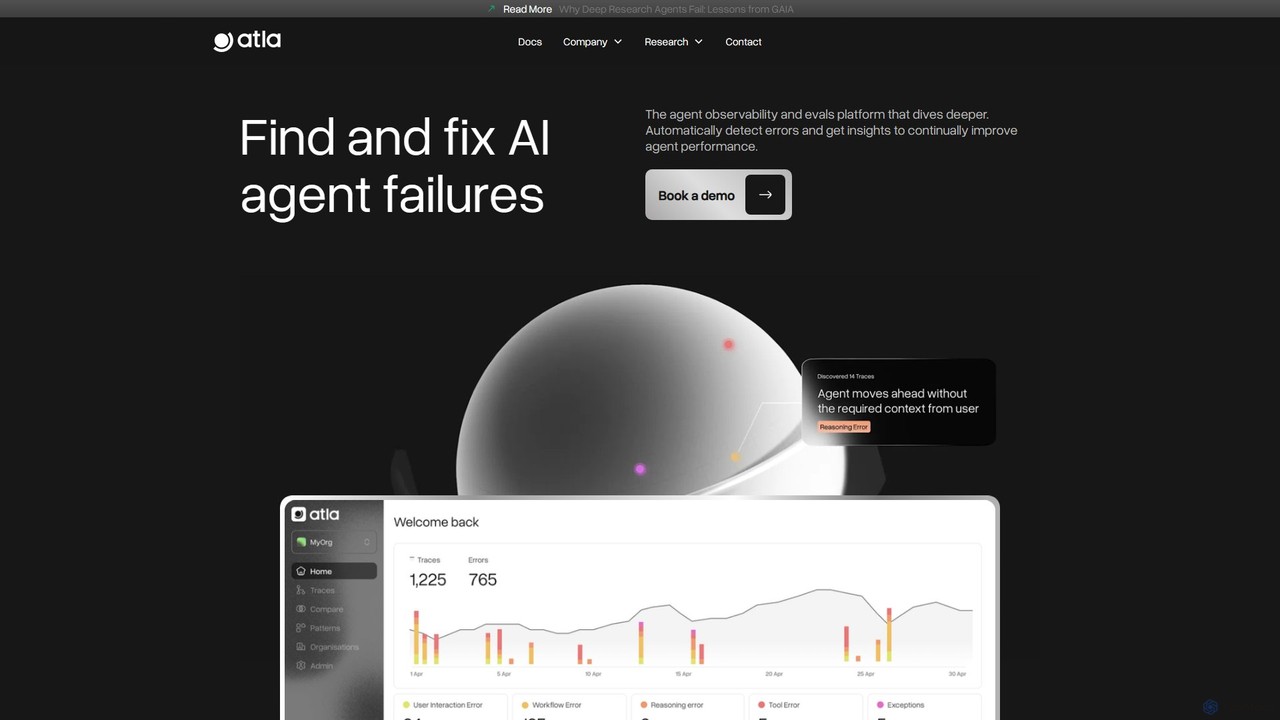
Atla AI
Atla AI is an observability and evaluation platform designed for AI agents. It helps developers find, understand, and fix agent failures by providing deep insights into their behavior. The platform automatically detects errors, identifies recurring patterns, and offers actionable suggestions to continuously improve agent performance and completion rates.
Model EvaluationAnomify
Anomify is an AI-powered early warning platform for critical infrastructure, offering real-time anomaly detection and observability at scale. It leverages multi-stage machine learning to analyze time-series data, significantly reduce false positives, and accelerate root cause analysis. Designed for DevOps, SREs, and IT teams, Anomify transforms monitoring from reactive to proactive, ensuring system performance and reliability.
Anomaly DetectionWhatDoesThisCodeDo
An AI-powered tool that explains any piece of code in plain English. Simply paste your code to get a clear, concise explanation of its functionality. It supports numerous programming languages and offers a VSCode extension for seamless integration.
Code Assistant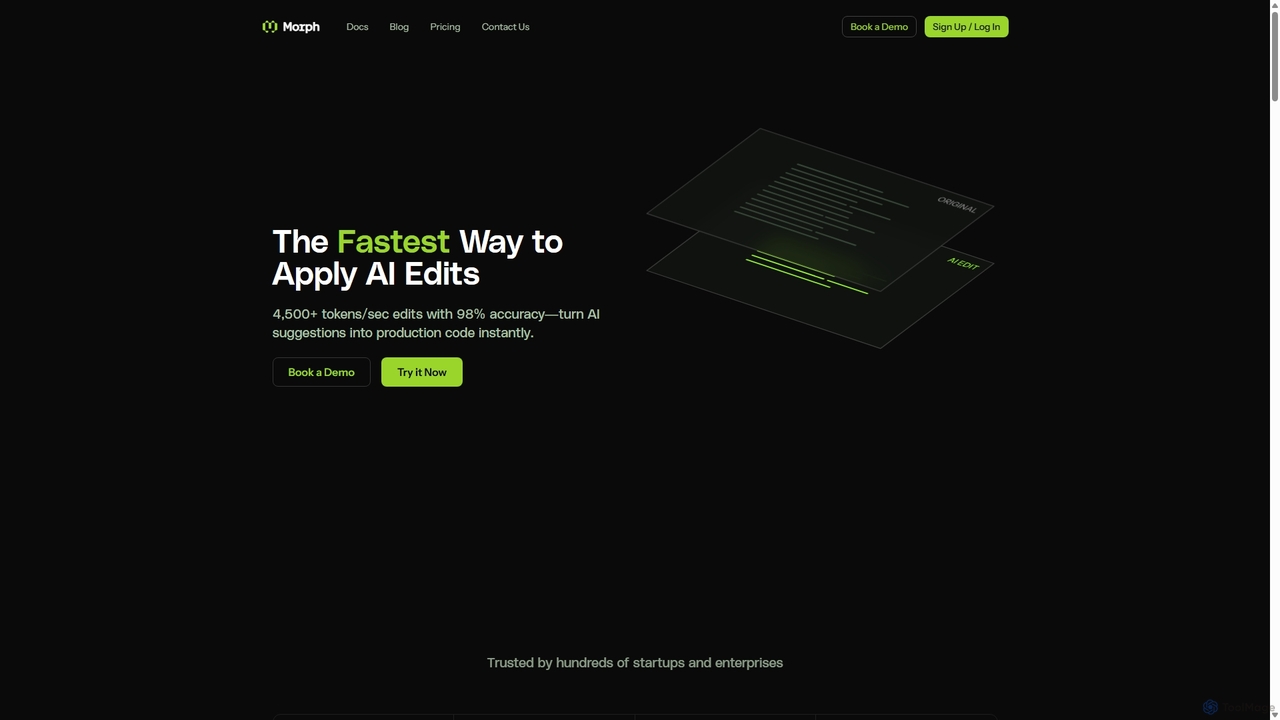
Morph
Morph is an API-first platform for developers, providing the fastest and most accurate way to apply AI-generated edits to code and files. With speeds of 4,500+ tokens/sec and 98% accuracy, it empowers AI agents to perform reliable, semantic modifications, bridging the gap between AI suggestions and production-ready implementation.
Infrastructure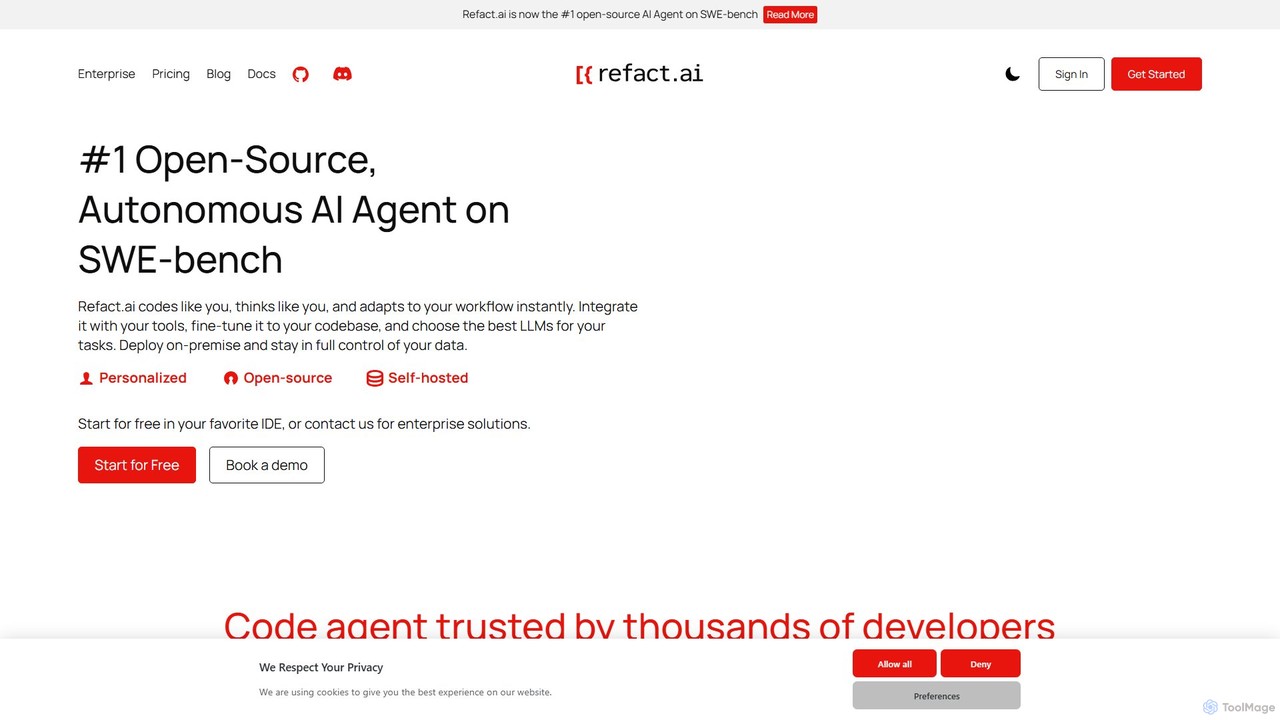
Refact
Refact is an open-source, self-hostable, and autonomous AI coding agent. It integrates into your IDE to act as a digital twin, automating coding tasks, providing context-aware completions and chat, and adapting to your codebase for maximum productivity and data privacy.
Code Assistant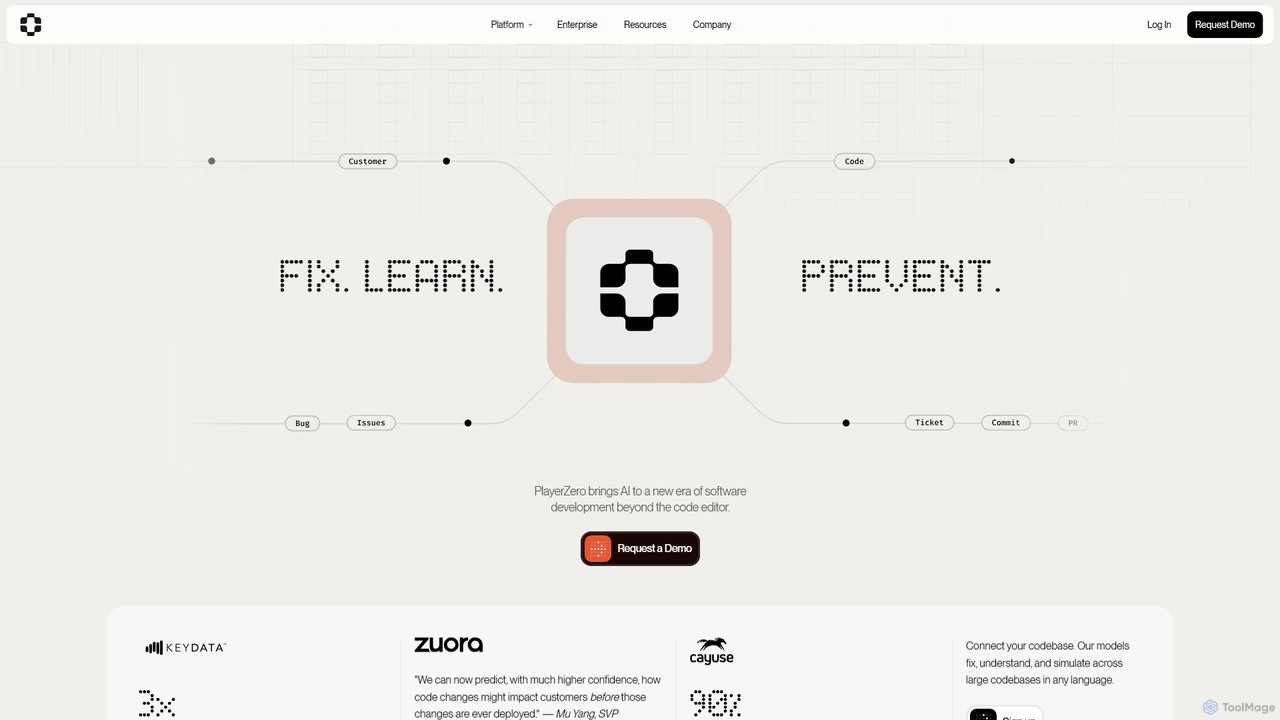
PlayerZero
PlayerZero is an AI-powered platform for predictive software quality. It helps engineering teams ship flawless software faster by using AI agents to simulate code, debug issues, and review pull requests, proactively identifying and preventing bugs before they impact users.
Code Assistant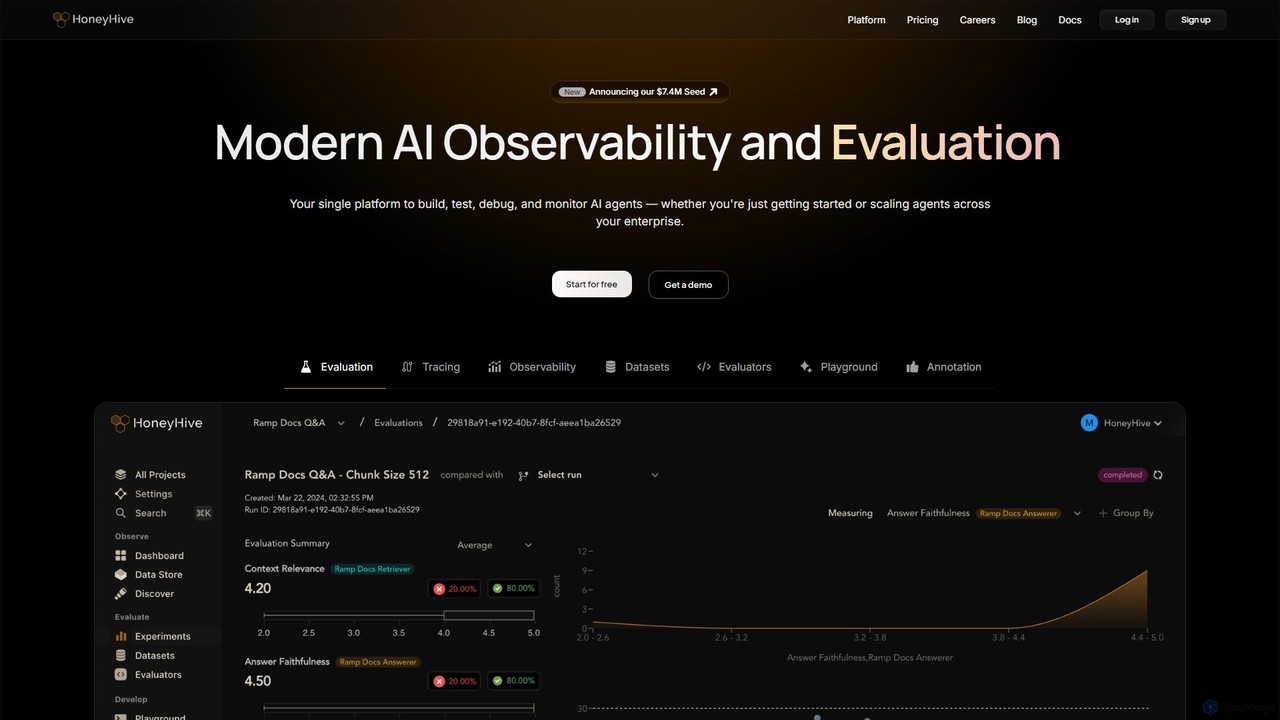
HoneyHive
HoneyHive is an all-in-one AI observability and evaluation platform for developers building with LLMs and AI agents. It provides a unified solution to build, test, debug, and monitor AI applications, from initial experiments to enterprise-scale deployment. The platform helps teams systematically measure AI quality, gain deep visibility into agent interactions, monitor performance metrics like cost and latency, and collaborate on essential assets like prompts and datasets, ensuring the confident shipment of reliable AI products.
Debugging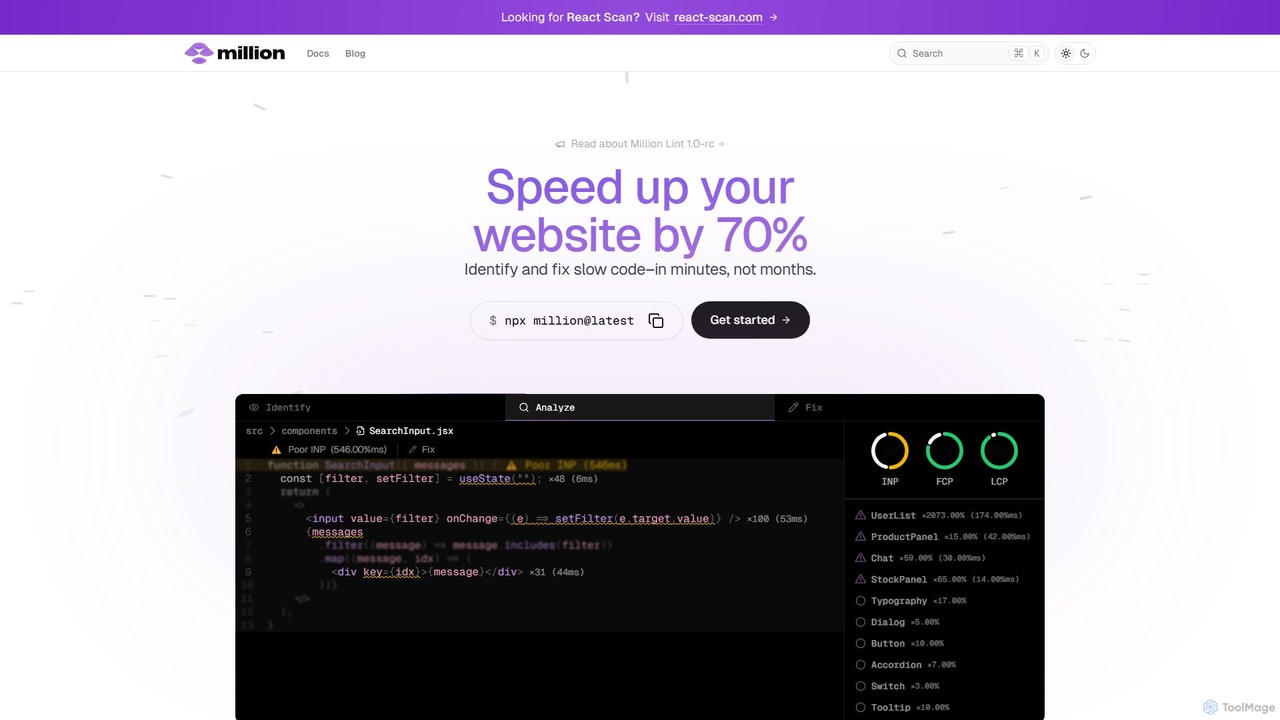
Million
Million is an AI-powered developer tool designed to significantly boost the performance of React websites. It functions as a VSCode extension and compiler, automatically identifying slow code, unnecessary re-renders, and other performance bottlenecks directly within your IDE. Million provides actionable, automated fixes, helping developers optimize their applications by up to 70% in minutes, not months.
Code Assistant
Jyek
Jyek is an AI agent platform that understands objectives, creates execution plans, uses tools, and delivers verifiable results for complex, multi-step tasks.
Automation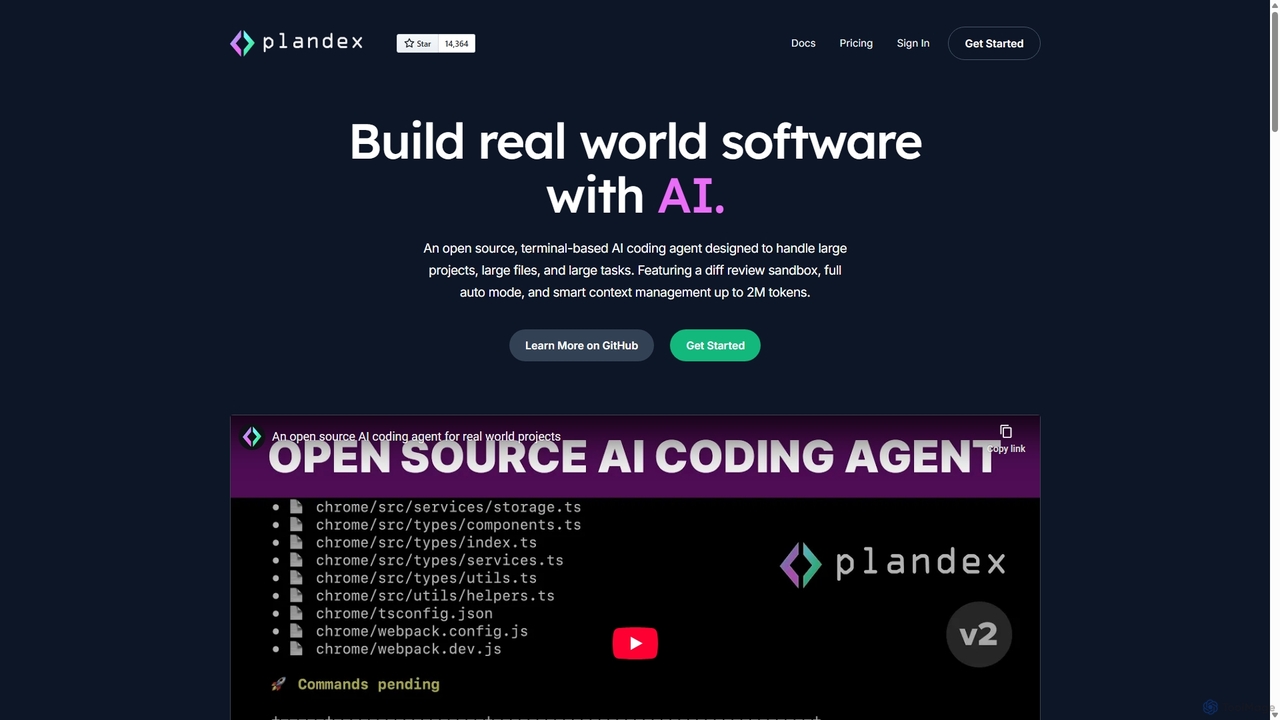
Plandex
Plandex is an open-source, terminal-based AI coding agent designed for complex, large-scale software development tasks. It excels at handling large projects and files with its 2M token context window. Featuring a diff review sandbox, configurable autonomy, and multi-model support, Plandex empowers developers to build, debug, and refactor entire applications with AI assistance, ensuring control and productivity in a dev-friendly workflow.
Code Generation
Digma Comments (0)
Sign in to comment.
Sign inNo comments yet.