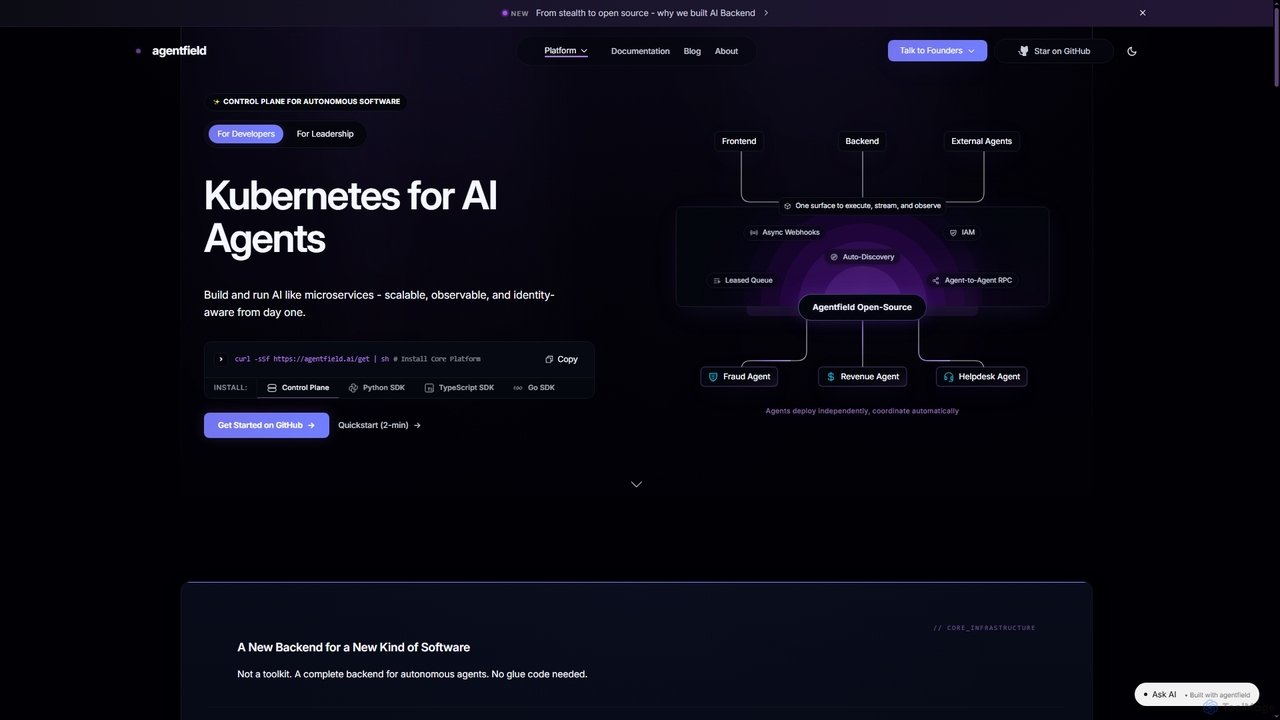
Hatchet is a distributed, fault-tolerant task queue designed to run AI agents, background tasks, and data pipelines at scale. It offers high-throughput, low-latency performance, ensuring no task is dropped. With SDKs for Python, Go, and TypeScript, developers can easily orchestrate complex workflows, schedule jobs, and monitor execution with built-in observability tools. It can be used as a managed cloud service or self-hosted.
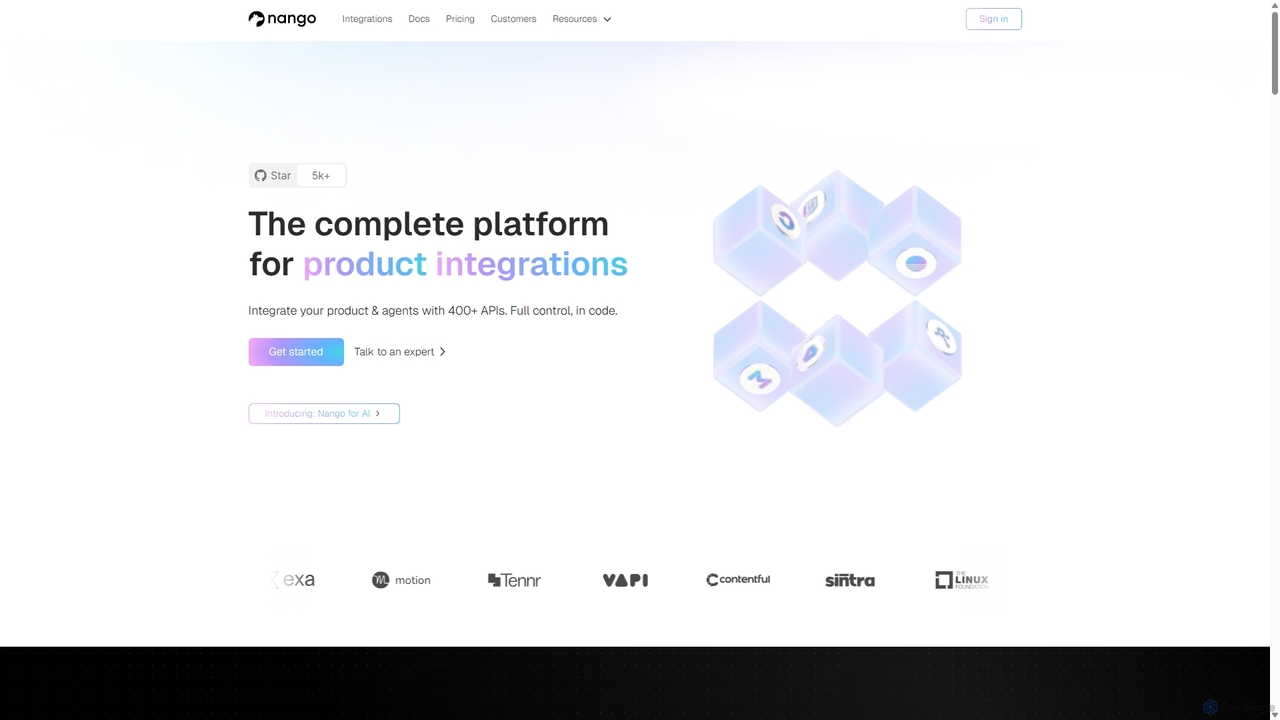
Nango is a comprehensive integration platform for developers, enabling B2B SaaS companies to rapidly build, deploy, and scale product integrations. It offers pre-built connectors for over 400 APIs, handles complex authorization flows, and provides a unified API, developer tooling, and scalable infrastructure. This developer-first, open-source platform ensures flexibility and control, allowing for custom, low-maintenance integrations.
Product overview
Hatchet Product overview
Hatchet is a distributed, fault-tolerant task queue designed to run AI agents, background tasks, and data pipelines at scale. It offers high-throughput, low-latency performance, ensuring no task is dropped. With SDKs for Python, Go, and TypeScript, developers can easily orchestrate complex workflows, schedule jobs, and monitor execution with built-in observability tools. It can be used as a managed cloud service or self-hosted.
Nango Product overview
Nango is a comprehensive integration platform for developers, enabling B2B SaaS companies to rapidly build, deploy, and scale product integrations. It offers pre-built connectors for over 400 APIs, handles complex authorization flows, and provides a unified API, developer tooling, and scalable infrastructure. This developer-first, open-source platform ensures flexibility and control, allowing for custom, low-maintenance integrations.
Detailed feature comparison
| Feature | Hatchet | Nango |
|---|---|---|
| Primary category | Task Queuing | Saas |
| Added | 2025-08-04 | 2025-09-11 |
| Pricing | Freemium | Freemium |
| Official website | hatchet.run | nango.dev |
| Product type | Website | Website |
| Performance data | ||
| User rating | Not verified | Not verified |
| Comments | 0 | 0 |
| Monthly visits | 51K | 141.4K |
| Monthly growth | 14.5% | -6.4% |
| Favorites | 95 | 128 |
| Details | View details | View details |
Hatchet vs Nango monthly traffic
Compare Hatchet and Nango by monthly reach, traffic trend, visit depth, top regions, and acquisition sources.
How to interpret the traffic data
In the Hatchet vs Nango monthly traffic comparison, Hatchet currently shows 51K visits and Nango shows 141.4K; Nango has about 2.8 times the visible traffic of Hatchet, an absolute difference of about 90.4K visits. This reflects visible reach, not feature quality or paid users.
Both tools provide verified traffic details, so monthly trends, visit depth, regions, and acquisition sources can be compared on the same basis.
Hatchet monthly traffic:
Latest traffic
Monthly traffic trend
- 2025/9: 34K Monthly visits
- 2026/1: 45.7K Monthly visits
- 2026/2: 77.1K Monthly visits
- 2026/3: 76.3K Monthly visits
- 2026/4: 44.5K Monthly visits
- 2026/5: 51K Monthly visits
Top regions
Top 5 countries/regions
| Country/region | Percentage | Traffic |
|---|---|---|
| ๐ฌ๐งUnited Kingdom | 55.28% | 28.2K |
| ๐บ๐ธUnited States | 28.98% | 14.8K |
| ๐ป๐ณVietnam | 7.31% | 3.7K |
| ๐ฎ๐ณIndia | 4.42% | 2.3K |
| ๐ง๐ทBrazil | 4.01% | 2K |
Traffic sources
| Source type | Percentage | Traffic |
|---|---|---|
| Direct | 82.76% | 42.2K |
| Referral | 16.66% | 8.5K |
| 0.58% | 296 |
Search keywords
Nango monthly traffic:
Latest traffic
Monthly traffic trend
- 2025/9: 57.3K Monthly visits
- 2026/1: 98.1K Monthly visits
- 2026/2: 98.6K Monthly visits
- 2026/3: 108.6K Monthly visits
- 2026/4: 151.1K Monthly visits
- 2026/5: 141.4K Monthly visits
Top regions
Top 5 countries/regions
| Country/region | Percentage | Traffic |
|---|---|---|
| ๐บ๐ธUnited States | 49.28% | 69.7K |
| ๐ฎ๐ณIndia | 24% | 33.9K |
| ๐ฑ๐ฐSri Lanka | 11.92% | 16.9K |
| ๐ฉ๐ชGermany | 9.31% | 13.2K |
| ๐ฒ๐ฝMexico | 5.49% | 7.8K |
Traffic sources
| Source type | Percentage | Traffic |
|---|---|---|
| Direct | 55.31% | 78.2K |
| Referral | 42.36% | 59.9K |
| 2.33% | 3.3K |
Search keywords
Usage comparison
Compare the core capabilities of Hatchet and Nango
Hatchet Core features
Nango Core features
Use cases
Hatchet Use cases
Nango Use cases
Best suited roles
Hatchet Best suited roles
Nango Best suited roles
Hatchet vs Nango๏ผIn-depth comparison and selection guidance
First decide whether the products solve the same kind of need
This in-depth Hatchet vs Nango comparison uses only the product records, taxonomy, audience, traffic, and community signals available on this page. Hatchet is primarily listed under โTask Queuingโ, while Nango is primarily listed under โSaasโ, so the first decision is whether your actual task matches their recorded scope.
The structured fields currently show these decision-relevant differences: Primary category (Hatchet: Task Queuing; Nango: Saas); Monthly visits (Hatchet: 51K; Nango: 141.4K); Monthly growth (Hatchet: 14.5%; Nango: -6.4%); Favorites (Hatchet: 95; Nango: 128); Website (Hatchet: hatchet.run; Nango: nango.dev). These facts are more useful for selection than brand visibility alone.
What market visibility and monthly traffic mean
In the Hatchet vs Nango monthly traffic comparison, Hatchet currently shows 51K visits and Nango shows 141.4K; Nango has about 2.8 times the visible traffic of Hatchet, an absolute difference of about 90.4K visits. This reflects visible reach, not feature quality or paid users.
Both tools provide verified traffic details, so monthly trends, visit depth, regions, and acquisition sources can be compared on the same basis.
If public market visibility is an important first-pass criterion, investigate Nango first. The final choice should still follow taxonomy, use case, and a real trial because higher traffic does not prove broader capabilities or better workflow fit.
Product positioning, use cases, and roles
Hatchet and Nango currently overlap in shared categories: Workflow Automation; shared tags: developer tools and open source. This can place both on the same shortlist, but it does not prove equal implementation, depth, or cost.
Hatchet's unique categories/tags are Task Queuing, Orchestration, AI pipelines, background jobs, data processing, distributed systems, fault tolerance, and scalability; Nango's are Saas, Api Management, API integration, B2B SaaS, backend development, data sync, iPaaS, and OAuth. These unique fields are the strongest differentiators: validate the product whose recorded scope matches the task instead of following traffic alone.
What ratings, comments, and favorites can tell you
Hatchet has no verified rating, 0 comments, 95 favorites, and 107 likes๏ผNango has no verified rating, 0 comments, 128 favorites, and 125 likesใ
Neither product has enough rating or comment samples for a credible reputation ranking.
Selection guidance by actual need
When to evaluate Hatchet first
Put Hatchet on the priority trial list when the task aligns with โTask Queuingโ and especially Task Queuing, Orchestration, AI pipelines, background jobs, data processing, and distributed systems. This follows recorded positioning and does not imply unlisted capabilities are absent.
Hatchet also currently records: pricing is freemium, product type is website, 51K verified monthly visits, no verified user rating. Verify any hard requirement around price, platform, or reach before trial, and do not let sparse review data substitute for testing.
When to evaluate Nango first
Put Nango on the priority trial list when the task aligns with โSaasโ and especially Saas, Api Management, API integration, B2B SaaS, backend development, and data sync, or the users include Backend Developer, CTO, Engineering Manager, and Product Manager. This follows recorded positioning and does not imply unlisted capabilities are absent.
Nango also currently records: pricing is freemium, product type is website, 141.4K verified monthly visits, no verified user rating. Verify any hard requirement around price, platform, or reach before trial, and do not let sparse review data substitute for testing.
How to validate the recommendation before deciding
The available data describes positioning, public visibility, and community signals, but it cannot prove output quality, speed, integration effort, privacy, or long-term cost in your workflow. Before deciding, run the same representative tasks in Hatchet and Nango, then record completion time, accuracy, manual corrections, and the real paid threshold. A like-for-like trial turns this comparison into a defensible adoption decision.
Comparison FAQ
How should I choose between Hatchet and Nango?
Where does this comparison data come from?
What do unknown fields mean?
Related AI tools

Paragon
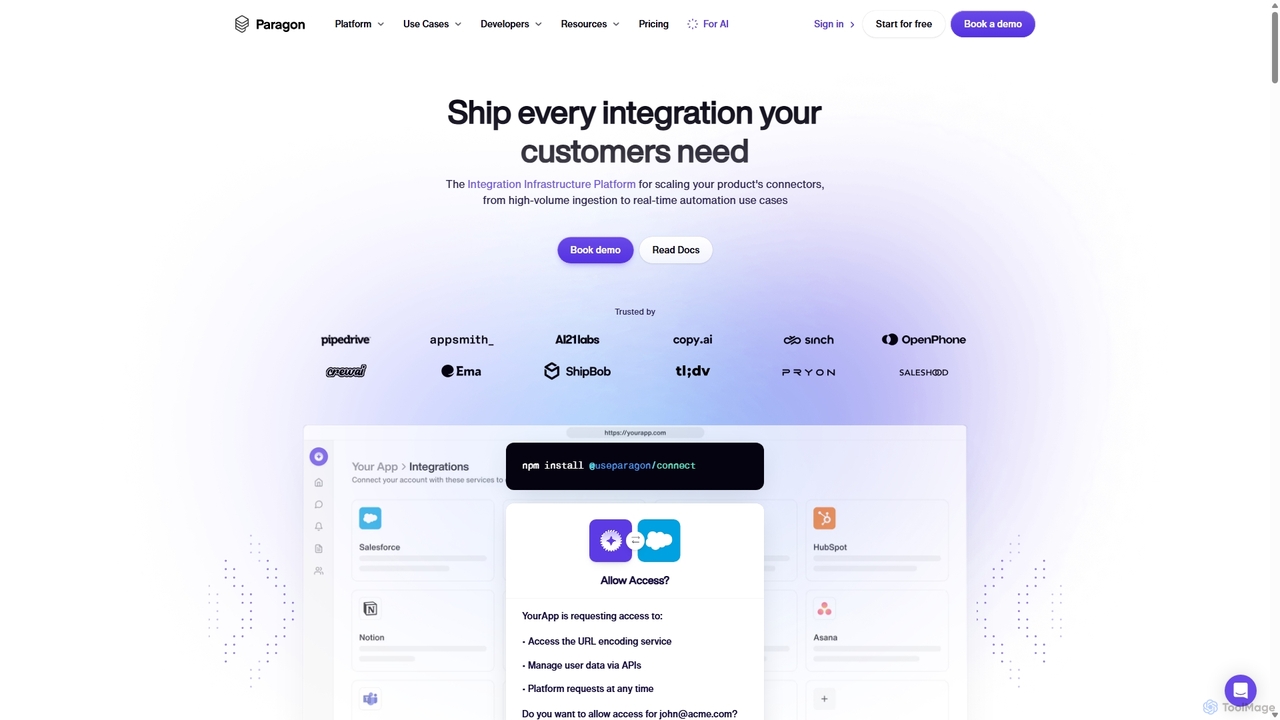
Paragon is an embedded integration platform for developers, designed to help SaaS and AI companies quickly build and scale product integrations. It provides a unified infrastructure with pre-built connectors, managed authentication, and purpose-built tools for various use cases like high-volume data ingestion for RAG, real-time actions for AI agents, and event-driven workflows. This allows developers to ship any integration their customers need, 10x faster.
Integration Platform
Superglue
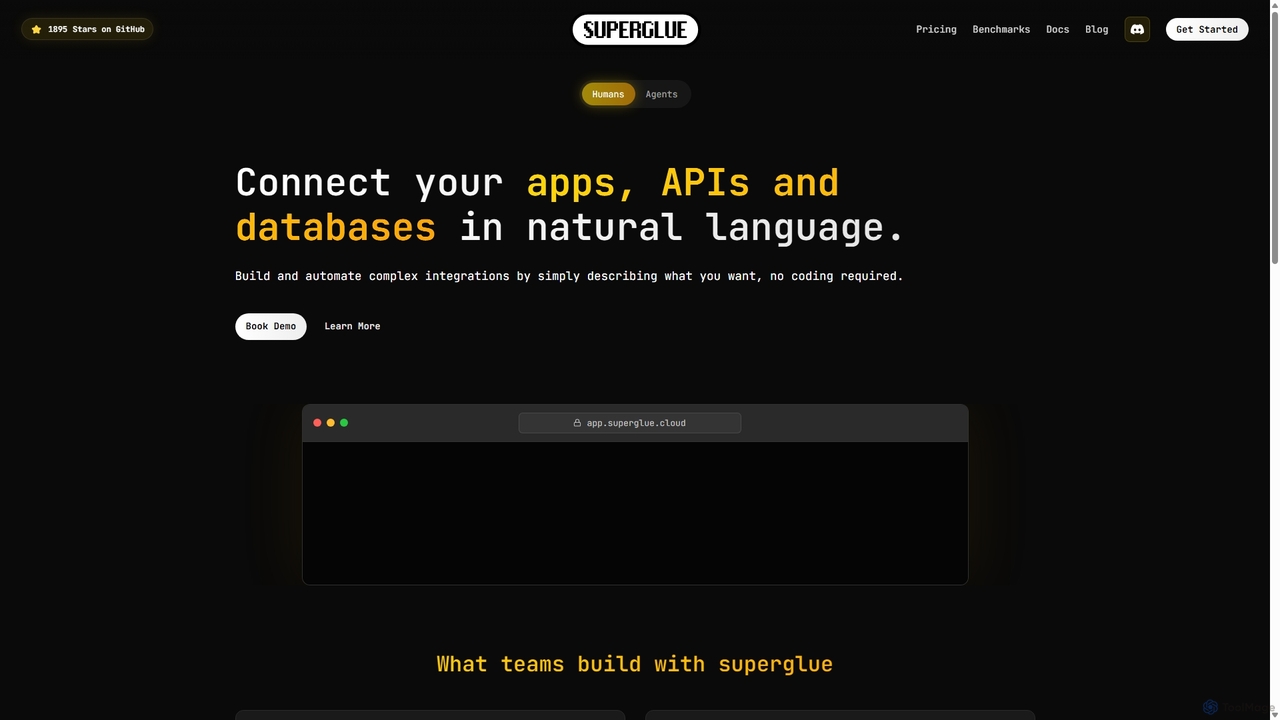
Superglue is an AI-powered platform that translates natural language intent into reliable API execution. It enables developers and teams to automate ETL pipelines, build API connectors instantly, migrate data, and create complex workflows using a chat interface or code. It's designed to empower AI agents with dynamic, production-ready tools for any API.
Tooling
ToolJet
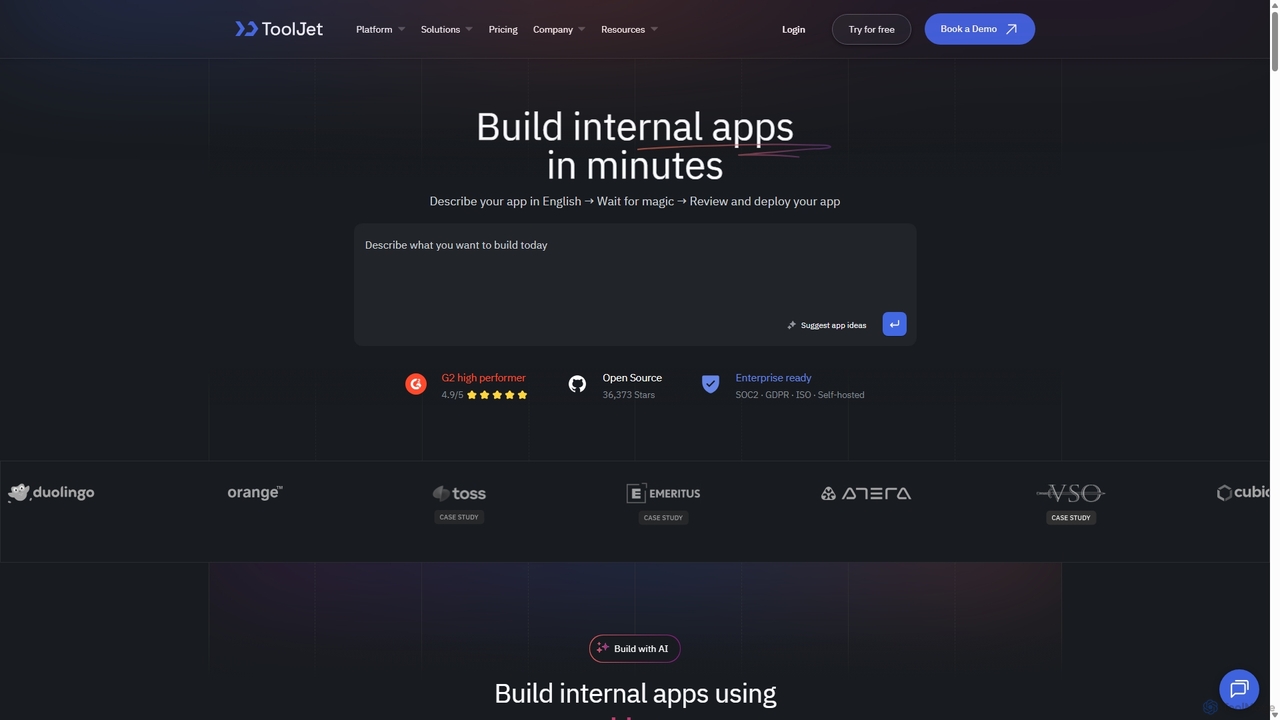
ToolJet is an AI-native, open-source low-code platform for developers to build and deploy internal tools rapidly. It integrates with numerous datasources, APIs, and AI models, allowing users to create complex applications using natural language prompts, a visual builder, and custom code.
Internal Tools
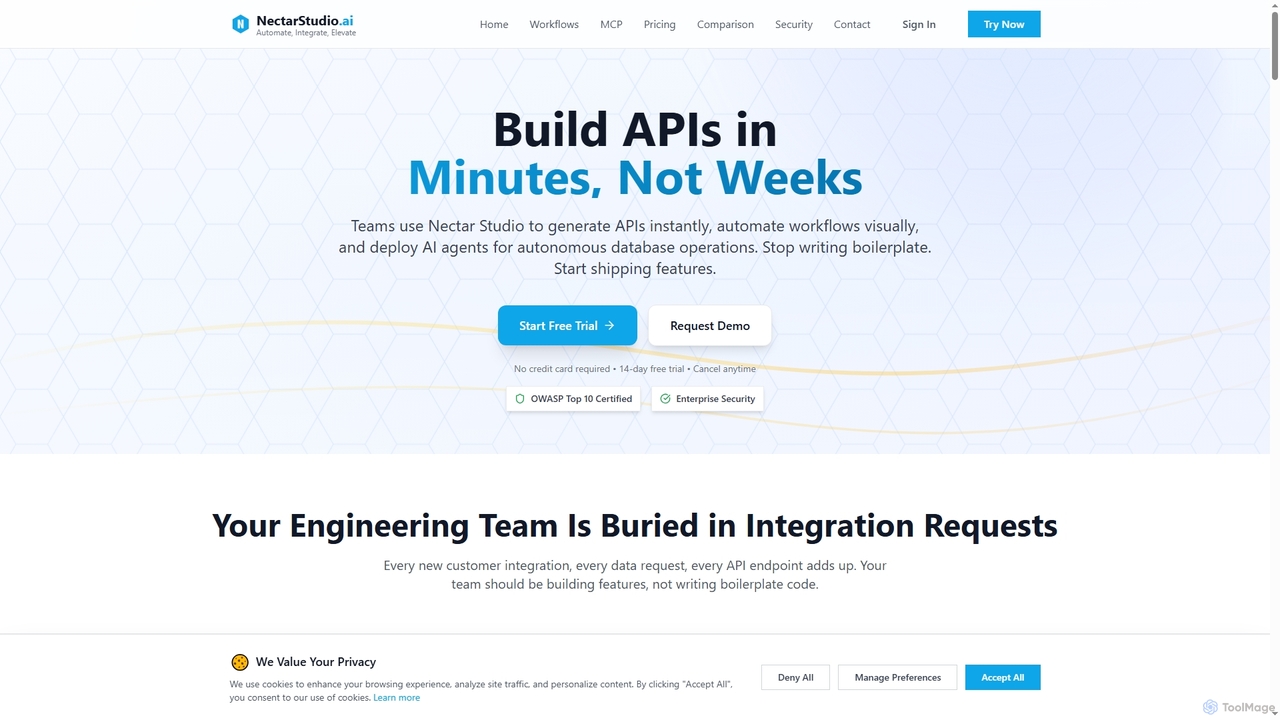
Nectarstudio
Nectarstudio is an AI-powered iPaaS platform designed for engineering teams to instantly generate bulk APIs from databases, automate workflows with a low-code visual builder, and deploy AI agents for autonomous database operations, reducing development time from weeks to minutes.
Business Intelligence
Composio
Composio is a developer platform that acts as a "skill layer" for AI agents. It enables developers to seamlessly connect their AI agents to over 10,000 tools and APIs, handling complex tasks like authentication, execution, and scaling. This allows developers to build powerful, action-oriented AI applications much faster by focusing on agent logic rather than integration plumbing.
Agent Tooling
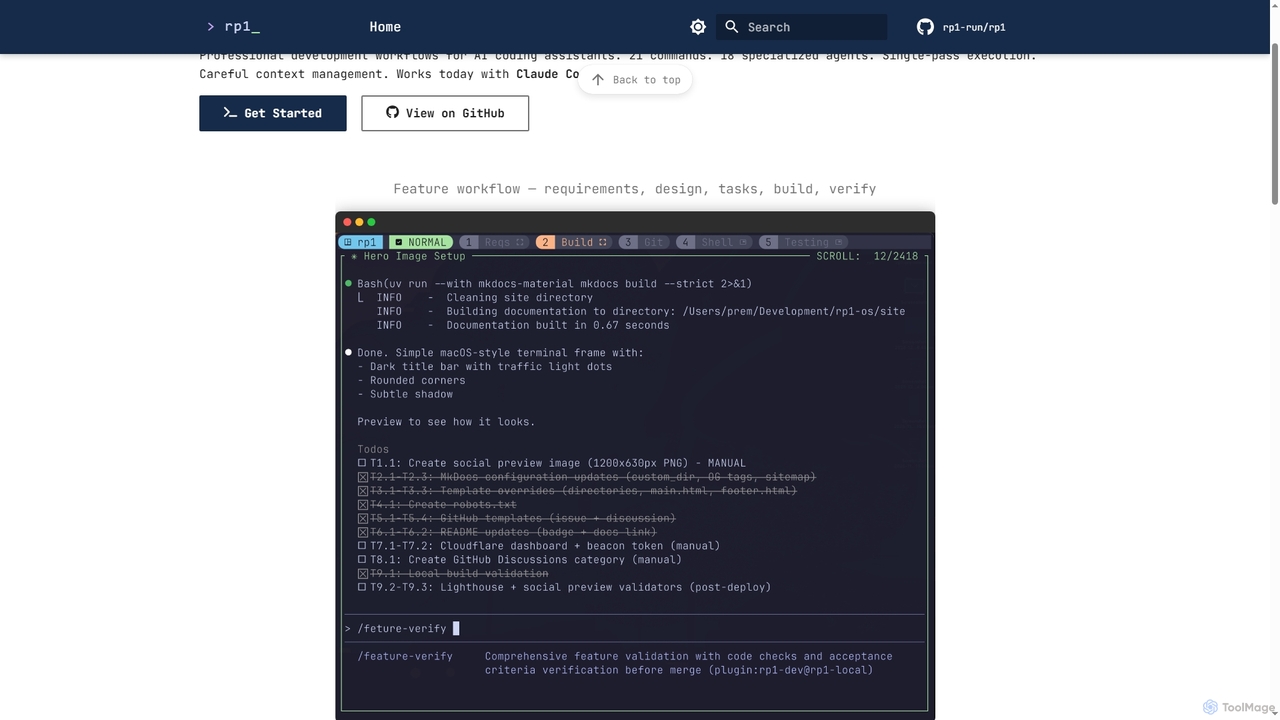
Rp1
Rp1 is a professional development workflow tool for AI coding assistants, designed to streamline software creation from requirements to deployment. It offers 21 commands and 18 specialized agents for efficient, single-pass execution of complex coding tasks, ensuring structured outputs and deep codebase awareness.
Ai Assistant
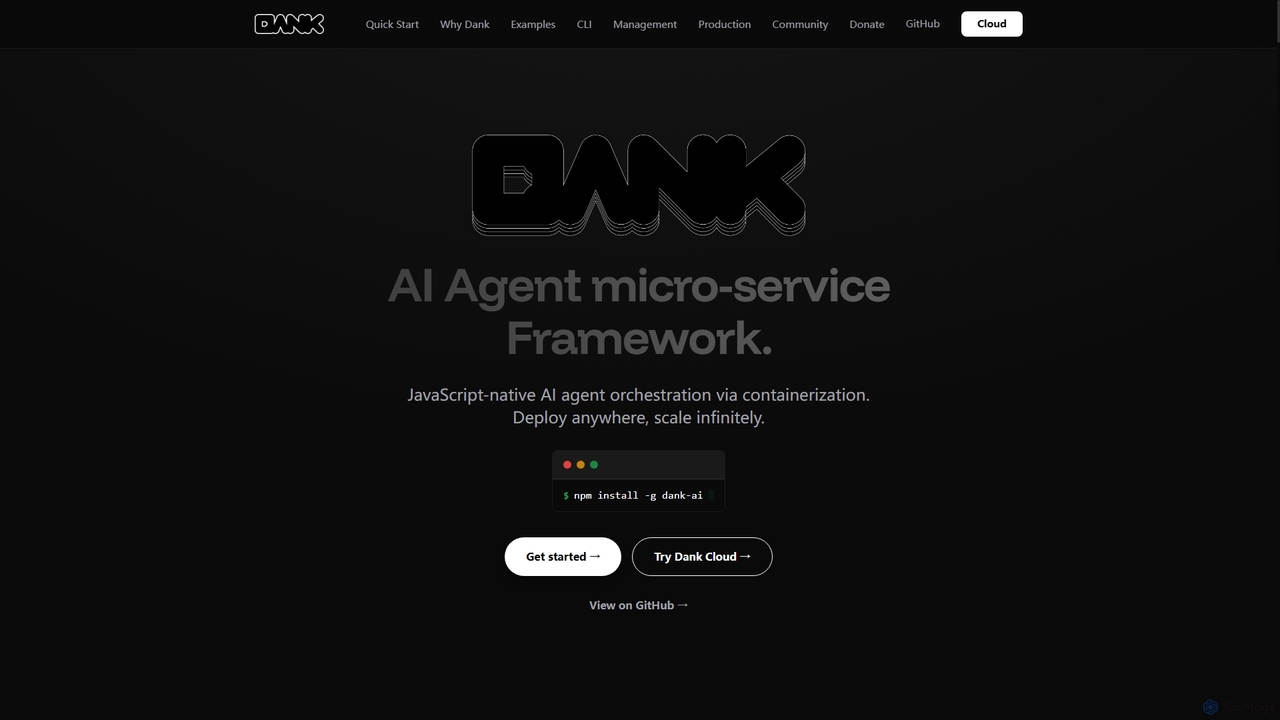
Dank
Dank is a JavaScript-native, open-source framework for orchestrating and deploying containerized AI agents. It enables developers to build, manage, and scale multiple AI agents as microservices across any cloud infrastructure, simplifying complex AI deployments with Docker-native architecture and real-time monitoring.
Agent Frameworks
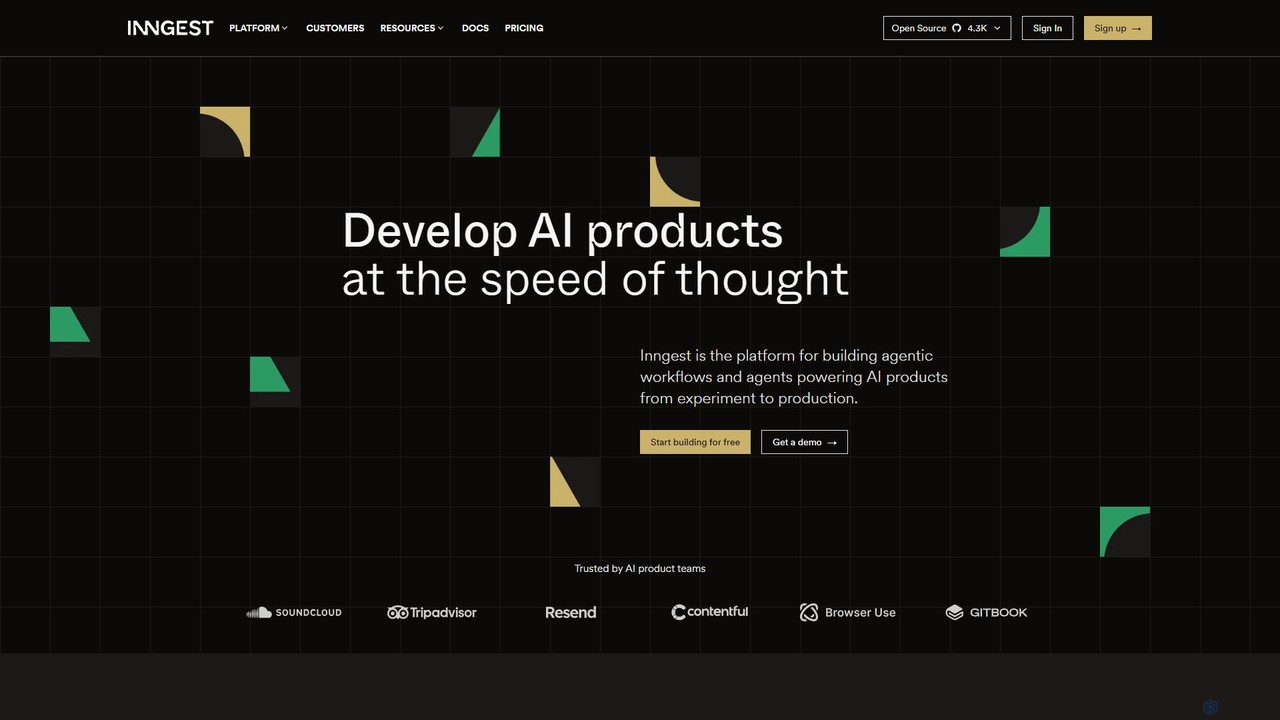
Inngest
Inngest is a developer platform for building, orchestrating, and scaling reliable AI and backend workflows. It provides a robust orchestration engine for creating fault-tolerant AI agents and applications with features like automatic retries, step-by-step debugging, and full observability. Go from local prototype to production at any scale, focusing on product logic instead of infrastructure management.
Backend
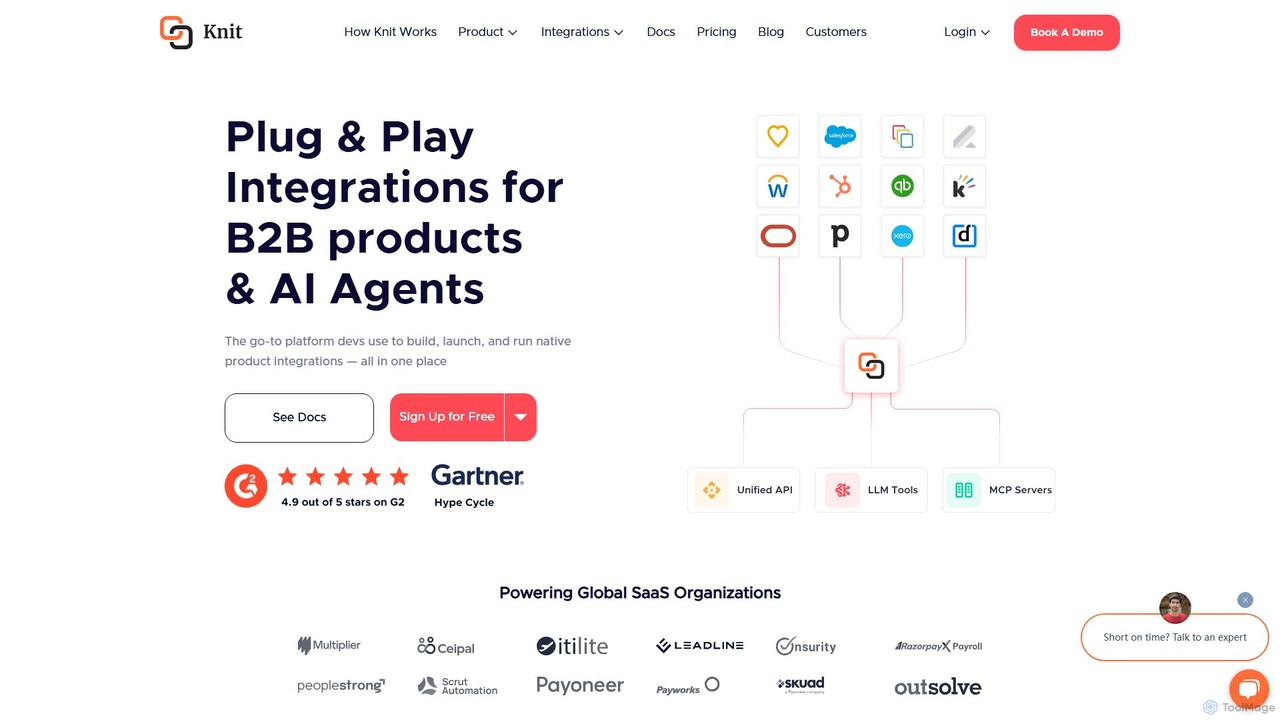
getknit
Knit is a unified API platform for developers, designed to build, launch, and manage native product integrations for B2B SaaS applications and AI agents. It simplifies connectivity to over 12 SaaS categories, enabling rapid development, reduced engineering overhead, and scalable integration solutions. Knit provides tools for bi-directional data syncs, empowering AI agents with action-taking capabilities, and automating complex workflows.
Agent Tooling
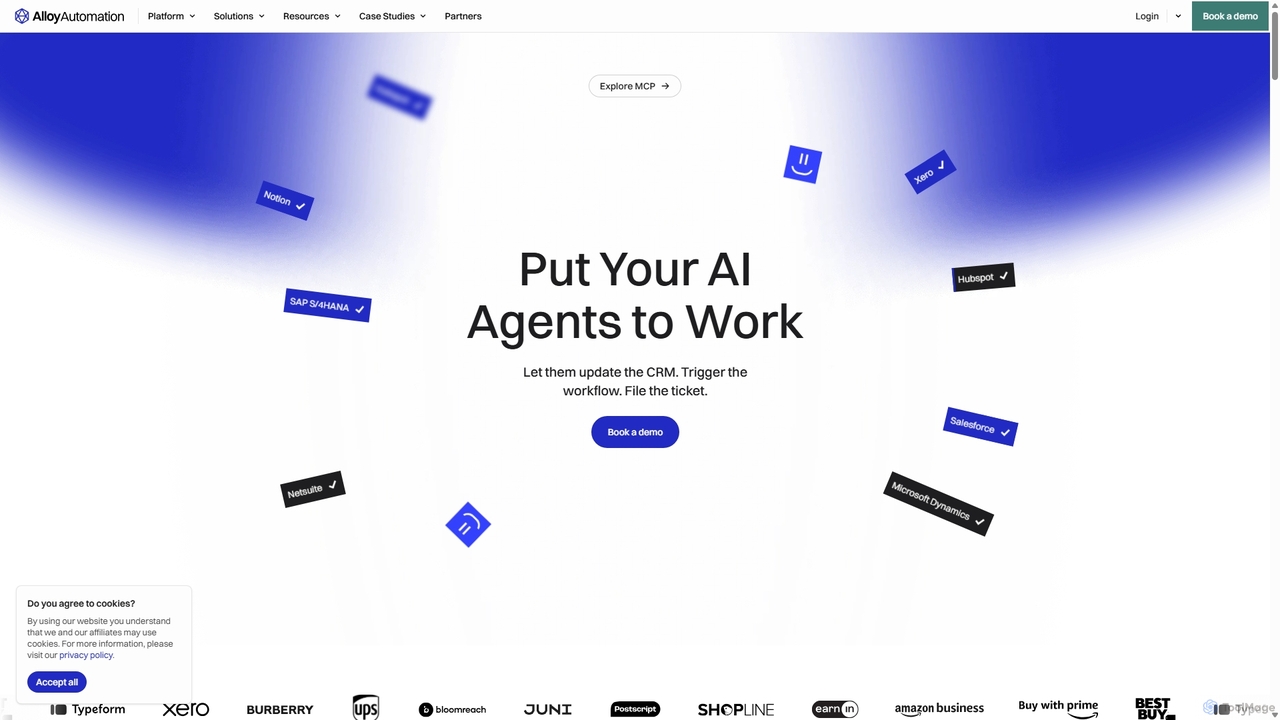
Alloy Automation
A powerful integration infrastructure for the AI era. Alloy Automation provides an agentic toolkit, embedded iPaaS, and a Connectivity API, enabling AI agents to take real-world actions and SaaS companies to rapidly build and scale product integrations.
Agent Tooling
Gradientj
Gradientj is a powerful platform for developers and businesses to build, test, and deploy autonomous AI agents. It provides a comprehensive suite of tools, including a reasoning engine, pre-built components, and seamless integrations, to transform complex workflows into intelligent, automated processes from prompt to production.
Intelligence
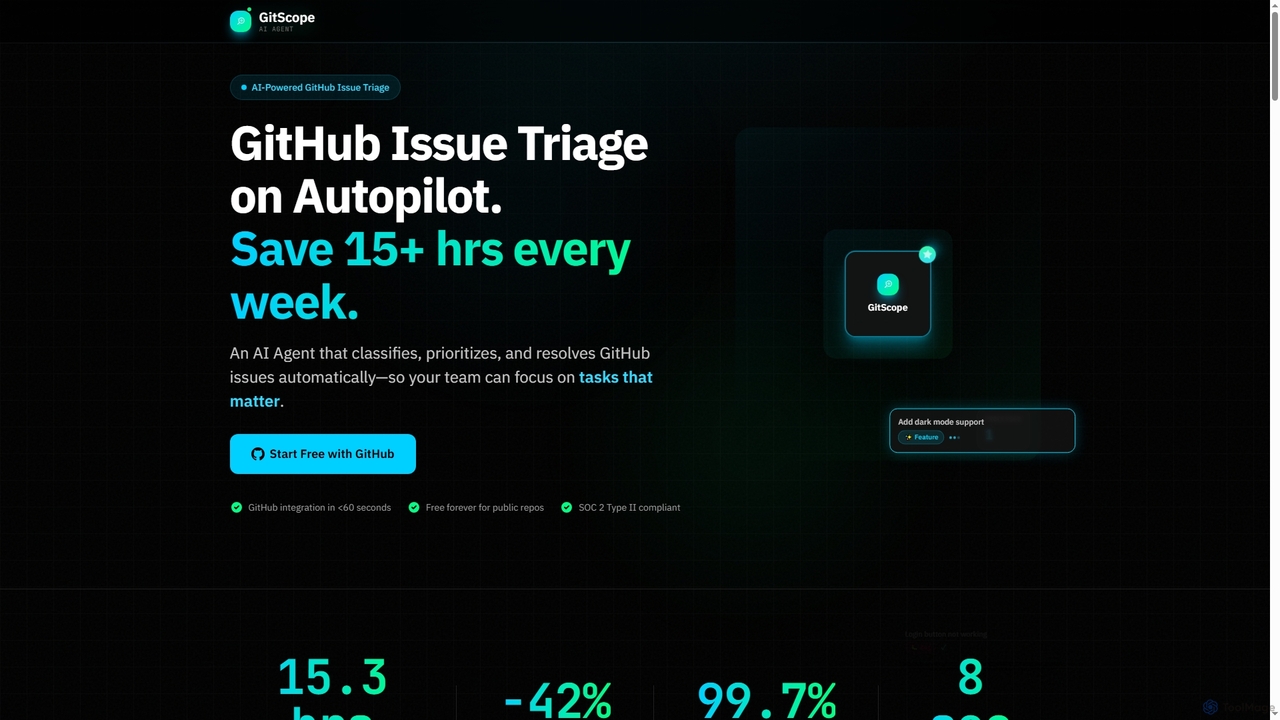
GitScope
GitScope is an AI-powered GitHub issue triage agent designed to automate the classification, prioritization, and resolution of issues. It helps engineering teams save significant time, reduce backlogs, and improve consistency by leveraging GPT-4 for intelligent analysis, duplicate detection, and configurable automation workflows. Free for public repositories, GitScope integrates seamlessly with GitHub to enhance team productivity and maintainer well-being.
Github Tools
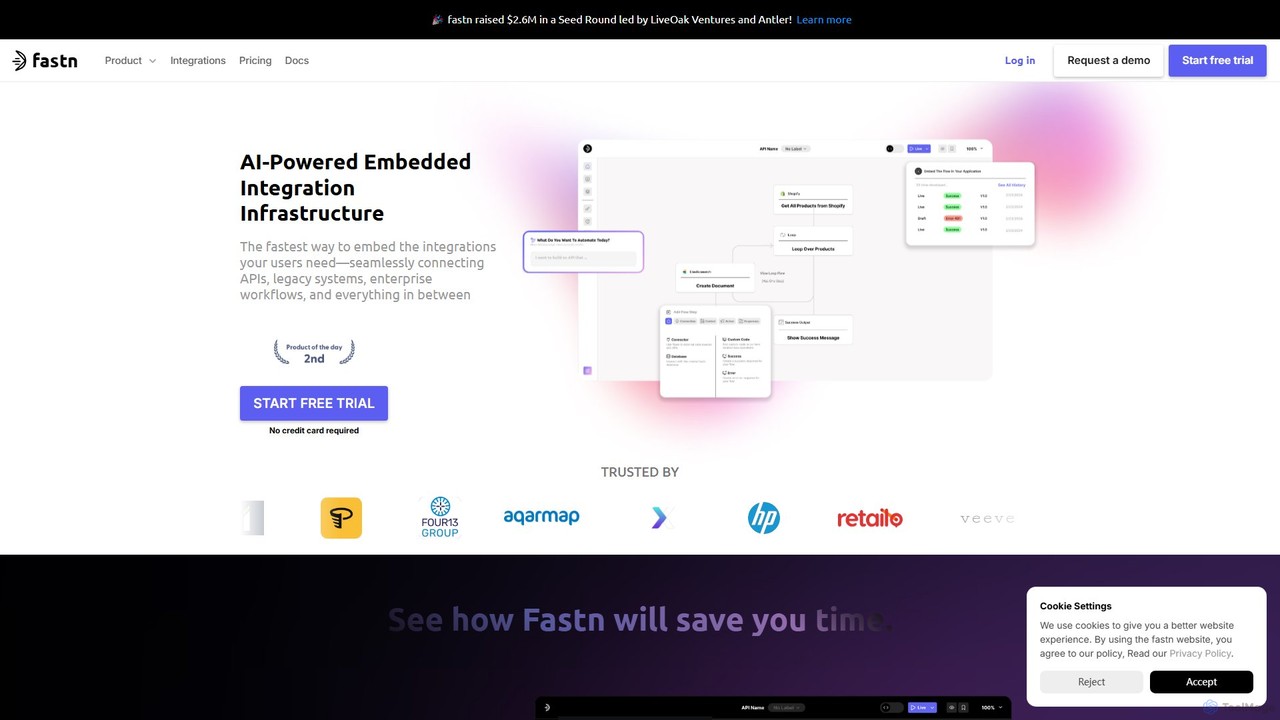
fastn
fastn is an AI-powered, low-code embedded integration platform (iPaaS) for SaaS companies. It enables developers to rapidly build, manage, and embed complex integrations using a visual interface and AI-driven prompts. Unify data from disparate sources like APIs, legacy systems, and enterprise workflows into a single, high-performance API to accelerate development and reduce costs.
Api Management
Agentfield
Agentfield is an open-source control plane designed for building and running autonomous AI agents as scalable, observable, and identity-aware microservices. It provides Kubernetes-like orchestration, cryptographic identity management, and production-ready infrastructure to bridge the gap between AI prototypes and robust, trustworthy production deployments.
Orchestration
Sublyzer
Sublyzer is an AI-powered analytics platform designed for SaaS founders and developers to monitor revenue, track churn, analyze performance, and resolve errors efficiently. It offers a unified dashboard with smart error tracking, AI explanations, and solution suggestions through a conversational interface.
Saas Analytics