
Hatchet Overview
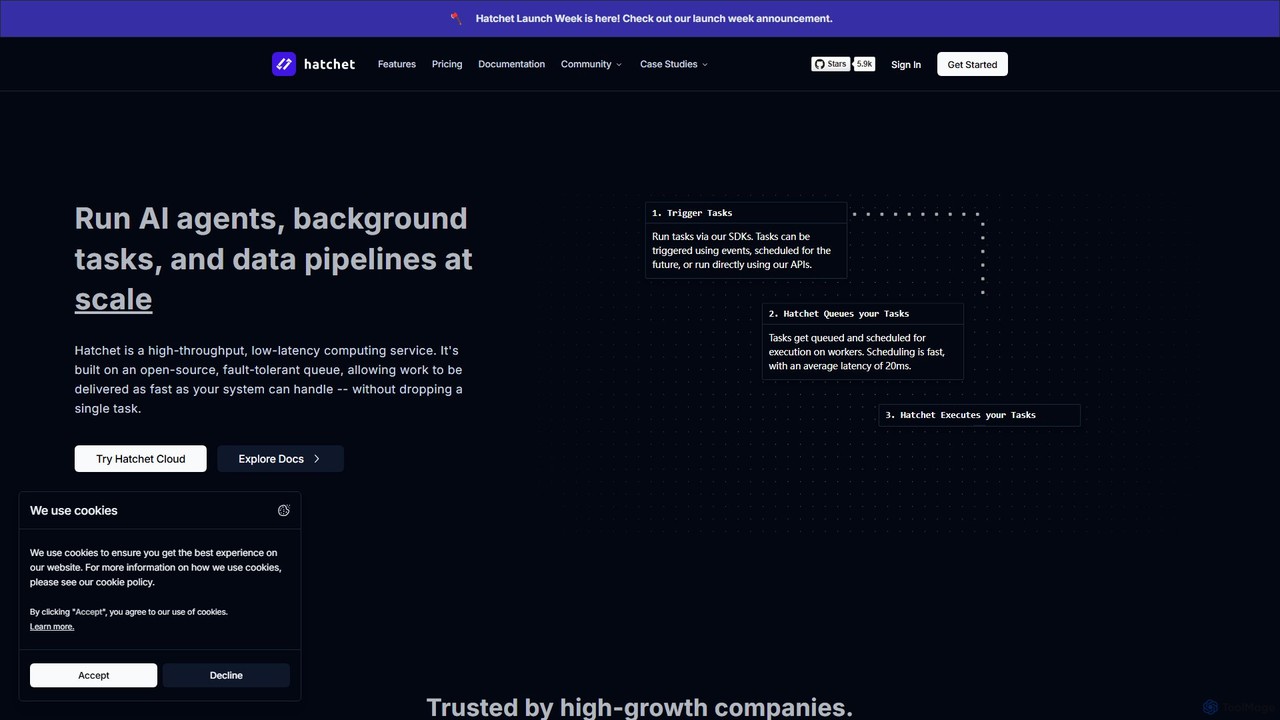
Hatchet is a high-performance computing service engineered for modern development challenges, specializing in the management of AI agents, background tasks, and complex data pipelines. Built upon an open-source, fault-tolerant queue, Hatchet guarantees reliable task delivery and execution, even under heavy load or in the event of system failures. It provides a robust solution for developers looking to scale their applications without compromising on speed or reliability, boasting an average scheduling latency of just 20ms.
The platform is designed to seamlessly integrate into your existing technology stack, offering a durable task queue that ingests tasks and dispatches them to workers at a manageable rate. This prevents system overloads, smooths out traffic spikes, and ensures that every user request is processed. Whether you're building a simple background job processor or a sophisticated, multi-step AI workflow, Hatchet provides the tools to break down complex logic into smaller, manageable, and reusable tasks.
How to use Hatchet
Integrating Hatchet into your project is a straightforward process designed for developer efficiency. The workflow typically involves four key steps:
- Define Your Task: Using one of the provided SDKs (Python, TypeScript, or Go), you start by defining the input structure for your task, often using a class or model.
- Create the Task Function: You then write the core logic of your task as a function and decorate it with `@hatchet.task()` to make it recognizable to the Hatchet system. This function processes the input and returns a result.
- Register the Task on a Worker: In your worker process, you initialize a Hatchet worker, providing it with a name and a list of the task functions you want it to handle. Starting the worker connects it to the Hatchet queue, making it ready to receive and execute jobs.
- Invoke the Task: From your main application, you can trigger the task by calling its `.run()` method and passing the required input. Tasks can be triggered by events, scheduled for a future time, or run directly via the API.
Core Features of Hatchet
- Durable Task Queuing: Guarantees that tasks are not lost, even if your application crashes. It tracks task progress and ensures completion or alerts you to failures.
- Advanced Workflow Orchestration: Build complex, multi-step workflows with sophisticated flow control, scheduling, and routing capabilities.
- High-Throughput & Low-Latency: Engineered to handle large volumes of tasks with minimal delay, ensuring your applications remain responsive.
- Built-in Observability: Comes with real-time dashboards, metrics, structured logging, and integrated alerting (Slack and email) to monitor your systems effectively.
- Multi-language SDKs: Native support for Python, TypeScript, and Go allows for seamless integration into a wide variety of tech stacks.
- Flexible Deployment: Choose between the fully managed Hatchet Cloud or self-host the MIT-licensed open-source version. Workers can be run on your own infrastructure for maximum control.
- Enterprise-Ready: Designed for enterprise needs with a highly scalable architecture, SOC 2 Type II compliance (under audit), and expert support options.
Use Cases for Hatchet
Hatchet is versatile and particularly useful for:
- Asynchronous Background Jobs: Offloading long-running tasks like sending emails, processing images/videos, or generating reports without blocking the main application thread.
- AI & Machine Learning Pipelines: Orchestrating complex AI workflows, including data ingestion, preprocessing, model training, and inference, ensuring each step runs reliably.
- Data Processing Pipelines: Building scalable and resilient pipelines for ETL (Extract, Transform, Load) jobs and real-time data analysis.
- Event-Driven Systems: Creating responsive applications that trigger workflows based on user actions, system events, or external webhooks.
- Handling Traffic Spikes: Using the queue to absorb and process large, sudden bursts of requests, ensuring system stability and a smooth user experience.
Advantages of Hatchet
Hatchet offers significant advantages over traditional task management systems:
- Reliability: Its fault-tolerant design ensures that critical tasks are never dropped.
- Scalability: The architecture is built to scale from small projects to large, high-growth company needs.
- No Vendor Lock-in: As a fully open-source tool, you have the freedom to self-host and customize it. You can run workers anywhere, connecting them to Hatchet Cloud or your own instance.
- Developer Experience: The intuitive SDKs and comprehensive observability tools simplify development, debugging, and maintenance.
- Cost-Effective: With a generous free tier and transparent pricing, it's accessible to projects of all sizes. The ability to self-host provides further cost control.
Pricing and Plans
Hatchet offers flexible pricing for both its managed cloud and self-hosted options.
- Managed Cloud Packages:
- Free: $0/mo. Ideal for testing and small projects. Includes 2k task runs/day, 1-day data retention, and community support.
- Starter: $180/mo. For systems starting to scale. Includes 20k task runs/day, 1-week data retention, and increased limits.
- Growth: $425/mo. For larger services with complex scaling needs. Includes 100k task runs/day, 2-week data retention, and private Slack support.
- Enterprise: Custom pricing. For complex systems with unique requirements, offering custom limits, SLAs, and dedicated support.
- Self-Hosted Support Packages:
- Essentials: $500/mo. Provides support with a 2-business-day SLA for self-hosted instances.
- Enterprise: $2000/mo. Offers premium support with a 1-business-day SLA, shared Slack channel, and advanced infrastructure guidance.
Traffic
Latest traffic
Status
Monthly traffic trend
- 2025-9: 34.0K
- 2026-1: 45.7K
- 2026-2: 77.1K
- 2026-3: 76.3K
- 2026-4: 44.5K
- 2026-5: 51.0K
Geography
Top 5 countries / regions
- 🇬🇧United Kingdom55.3%
- 🇺🇸United States29.0%
- 🇻🇳Vietnam7.3%
- 🇮🇳India4.4%
- 🇧🇷Brazil4.0%
Traffic sources
| Source type | Percentage |
|---|---|
Direct | 82.8% |
Referral | 16.7% |
Email | 0.6% |
Top keywords
| Keyword | Cost per click |
|---|---|
| best multi agent orchestration framework free | $0.00 |
| hatchet | $0.56 |
| hatchet company | $0.00 |
| hatchet python | $0.00 |
| temporal | $1.89 |
Hatchet Alternatives
Inferable
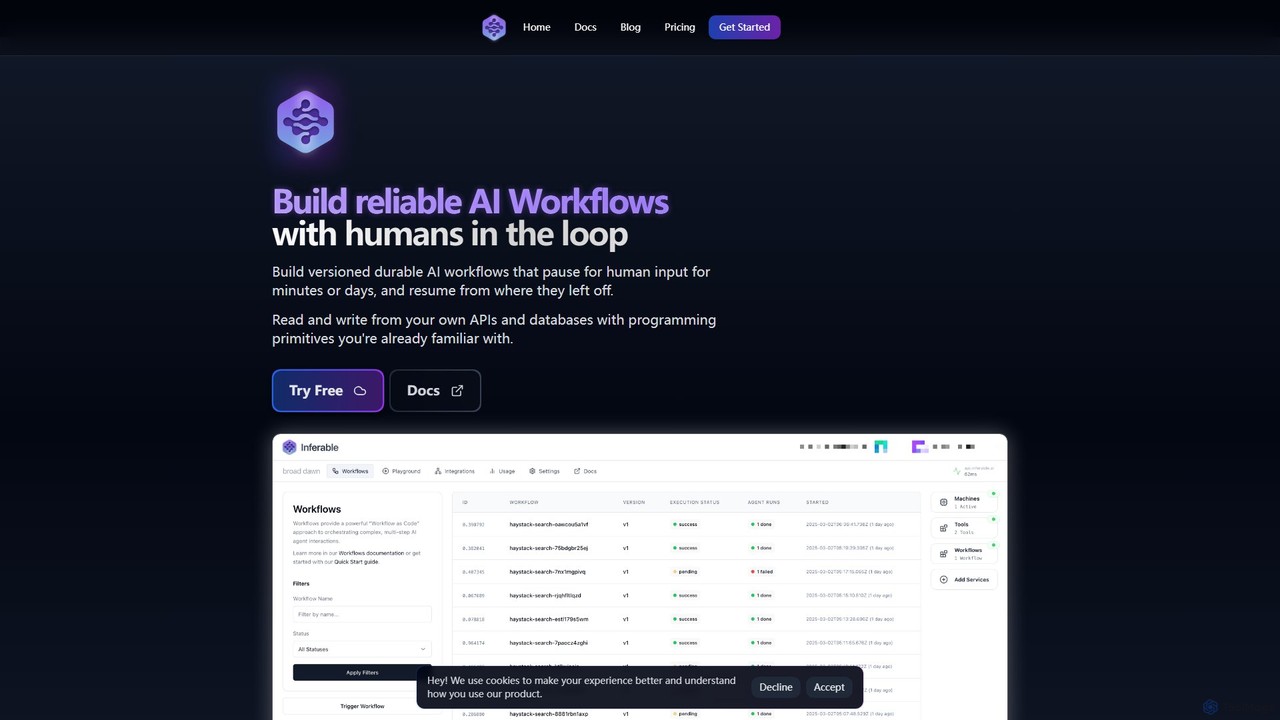
Inferable is an open-source, self-hostable developer platform for building reliable, durable, and versioned AI agents and workflows. It enables the creation of complex, long-running processes with human-in-the-loop capabilities, structured outputs, and on-premise execution for maximum security and control.
Agent Builder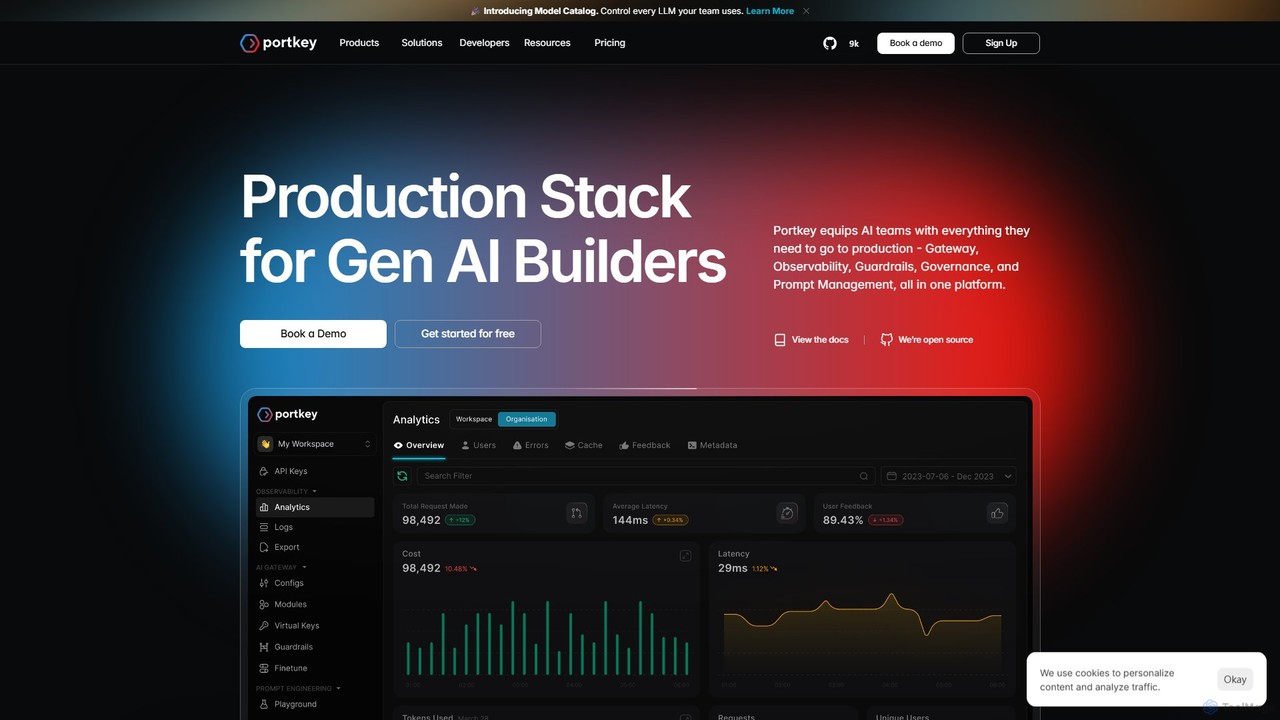
Portkey
Portkey is a comprehensive LLMOps platform for GenAI developers. It provides a unified AI Gateway to access over 1600 models, along with tools for observability, prompt management, cost control, and security. Streamline your AI application development from prototype to production with enhanced reliability, scalability, and governance, all in one place.
Api Management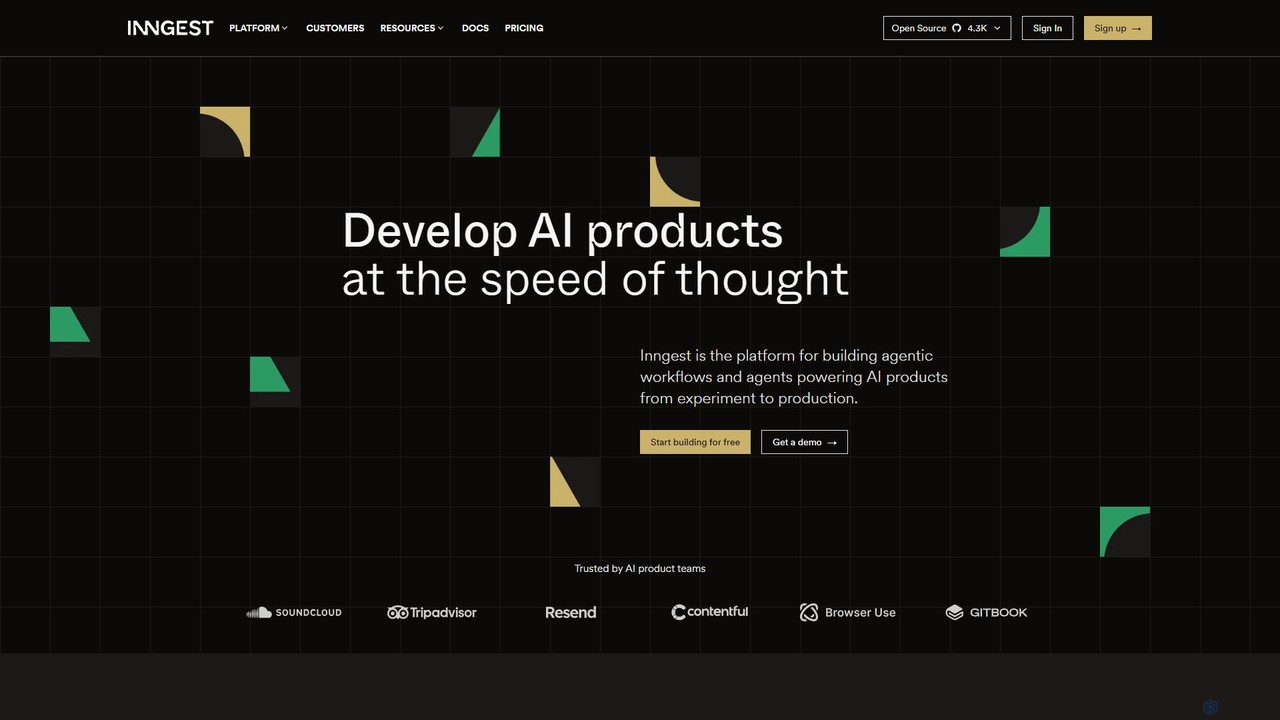
Inngest
Inngest is a developer platform for building, orchestrating, and scaling reliable AI and backend workflows. It provides a robust orchestration engine for creating fault-tolerant AI agents and applications with features like automatic retries, step-by-step debugging, and full observability. Go from local prototype to production at any scale, focusing on product logic instead of infrastructure management.
Backend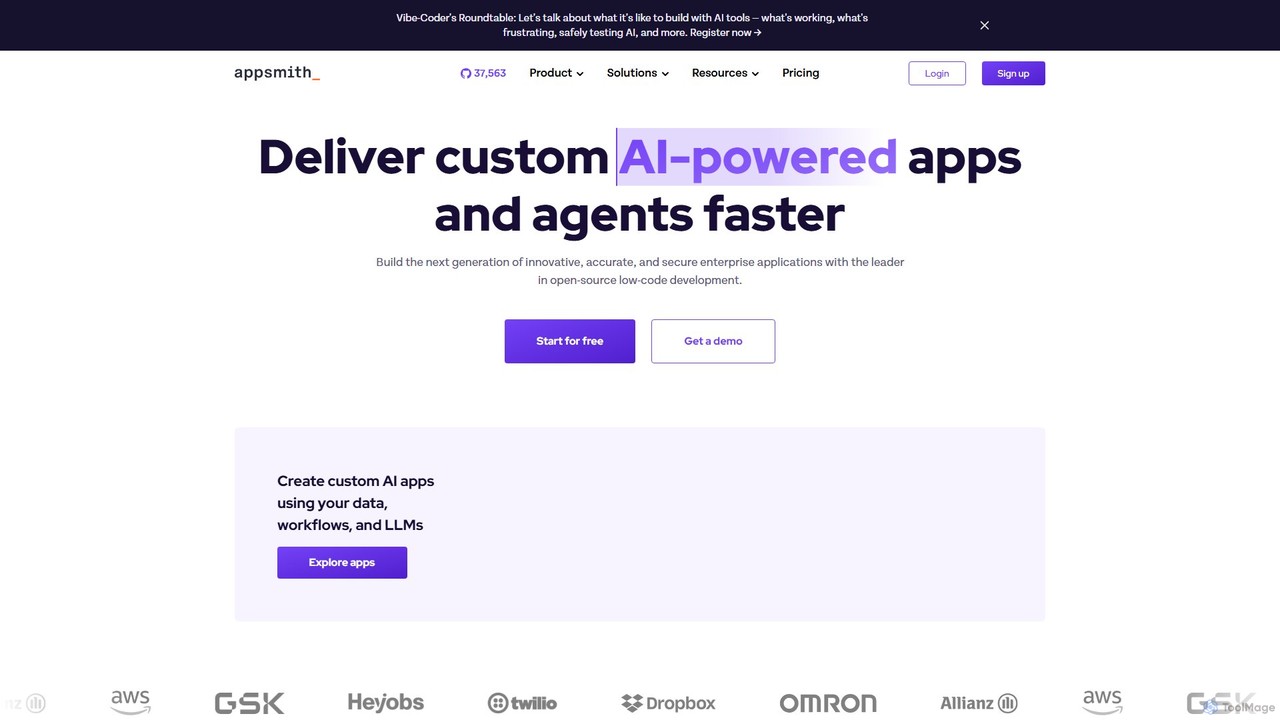
Appsmith
Appsmith is an open-source, low-code platform designed for developers to build, ship, and maintain internal tools, dashboards, and AI-powered applications rapidly. It connects to any data source, allows UI building via drag-and-drop or natural language, and offers full customization with JavaScript, empowering teams to create secure, scalable enterprise-grade applications with unprecedented speed.
Internal Tools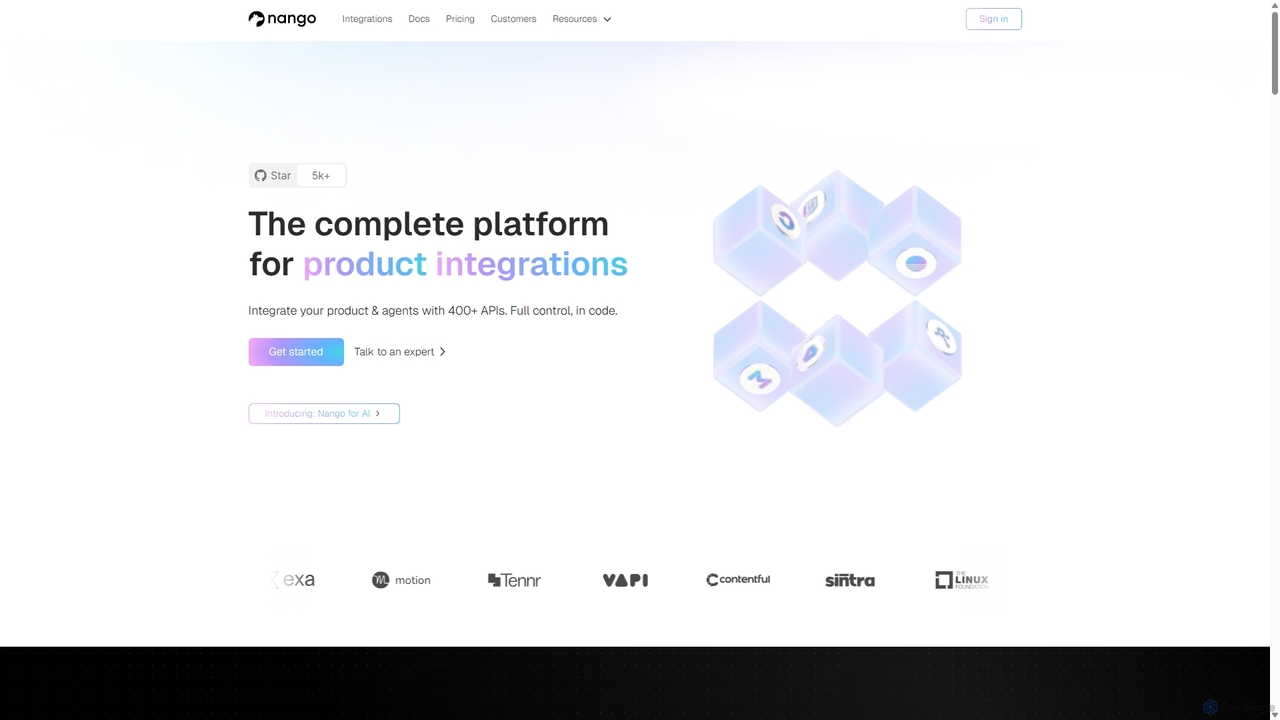
Nango
Nango is a comprehensive integration platform for developers, enabling B2B SaaS companies to rapidly build, deploy, and scale product integrations. It offers pre-built connectors for over 400 APIs, handles complex authorization flows, and provides a unified API, developer tooling, and scalable infrastructure. This developer-first, open-source platform ensures flexibility and control, allowing for custom, low-maintenance integrations.
SaasHatchet Categories
Hatchet Embed Widget
Copy this embed code to place the badge on your blog, article, or product site and send readers directly to this ToolMage detail page.

Related AI tools
Inngest
Inngest is a developer platform for building, orchestrating, and scaling reliable AI and backend workflows. It provides a robust orchestration engine for creating fault-tolerant AI agents and applications with features like automatic retries, step-by-step debugging, and full observability. Go from local prototype to production at any scale, focusing on product logic instead of infrastructure management.
Backend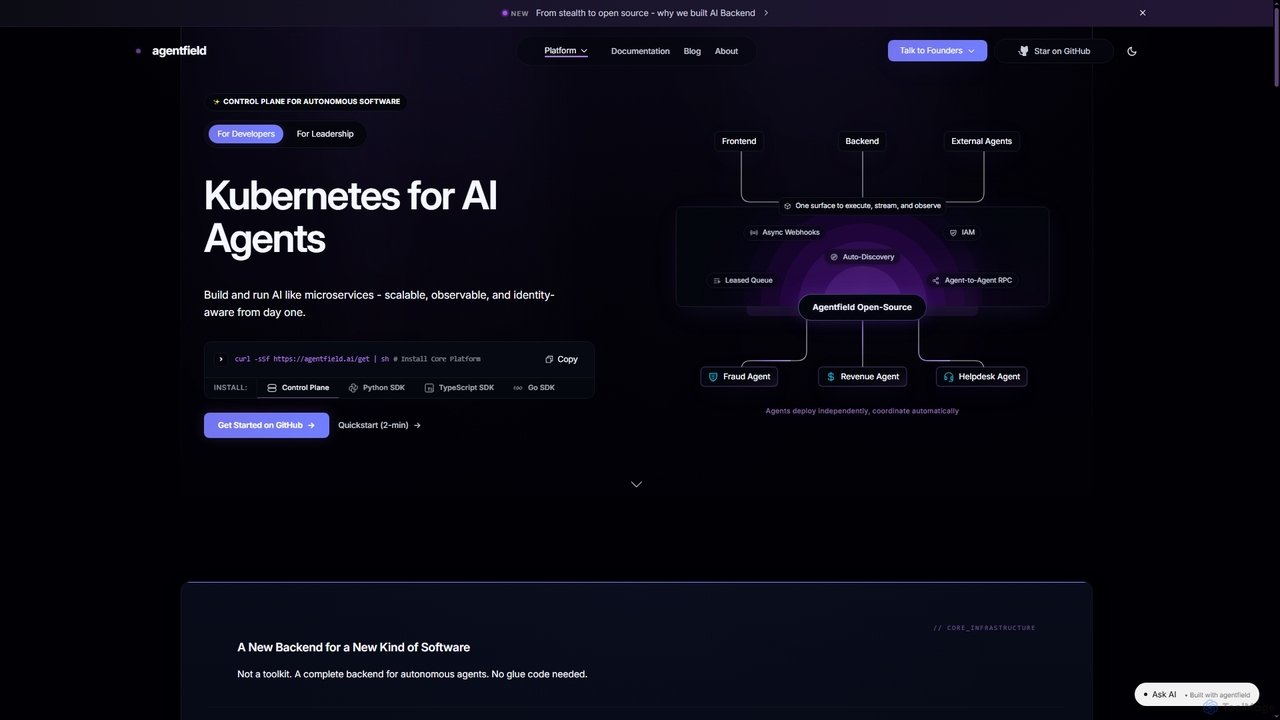
Agentfield
Agentfield is an open-source control plane designed for building and running autonomous AI agents as scalable, observable, and identity-aware microservices. It provides Kubernetes-like orchestration, cryptographic identity management, and production-ready infrastructure to bridge the gap between AI prototypes and robust, trustworthy production deployments.
Orchestration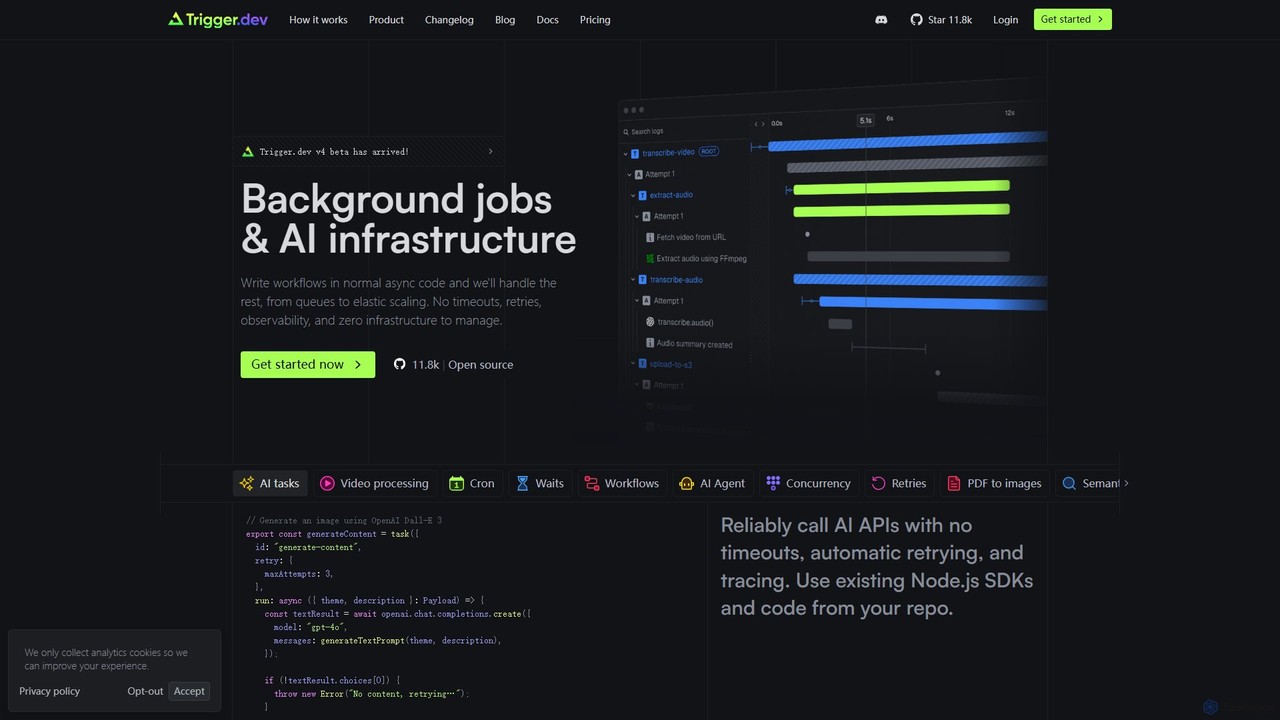
Trigger.dev
Trigger.dev is an open-source platform for developers to build, run, and manage long-running background jobs and AI workflows. It provides a robust infrastructure that handles timeouts, retries, and scaling, allowing you to write resilient tasks directly in your TypeScript or Python codebase. Ideal for orchestrating complex AI agents, data processing pipelines, and real-time applications without managing servers.
Model Orchestration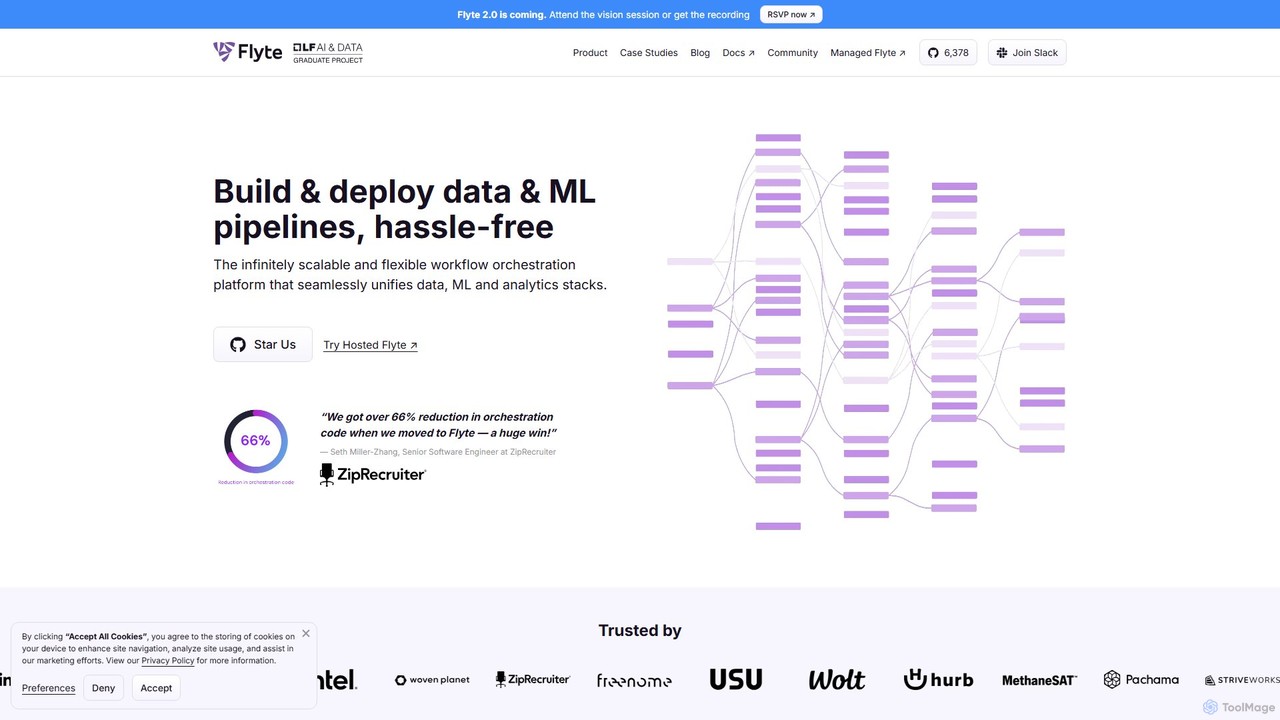
Flyte
Flyte is an open-source, cloud-native workflow orchestration platform designed for building, deploying, and managing production-grade data, machine learning, and analytics pipelines. It emphasizes scalability, reproducibility, and ease of use, enabling teams to move from local development to large-scale production seamlessly. With a Python-first SDK and support for multiple languages, Flyte empowers data scientists and engineers to create complex, versioned, and maintainable workflows.
Mlops
Eventual
Eventual is building the future of data infrastructure with Daft, a high-performance, open-source query engine for multimodal data. It enables engineers to process petabyte-scale images, video, audio, and text with the simplicity of SQL, drastically accelerating AI and ML workflows without the need for deep distributed systems expertise.
Machine Learning
Jyek
Jyek is an AI agent platform that understands objectives, creates execution plans, uses tools, and delivers verifiable results for complex, multi-step tasks.
Automation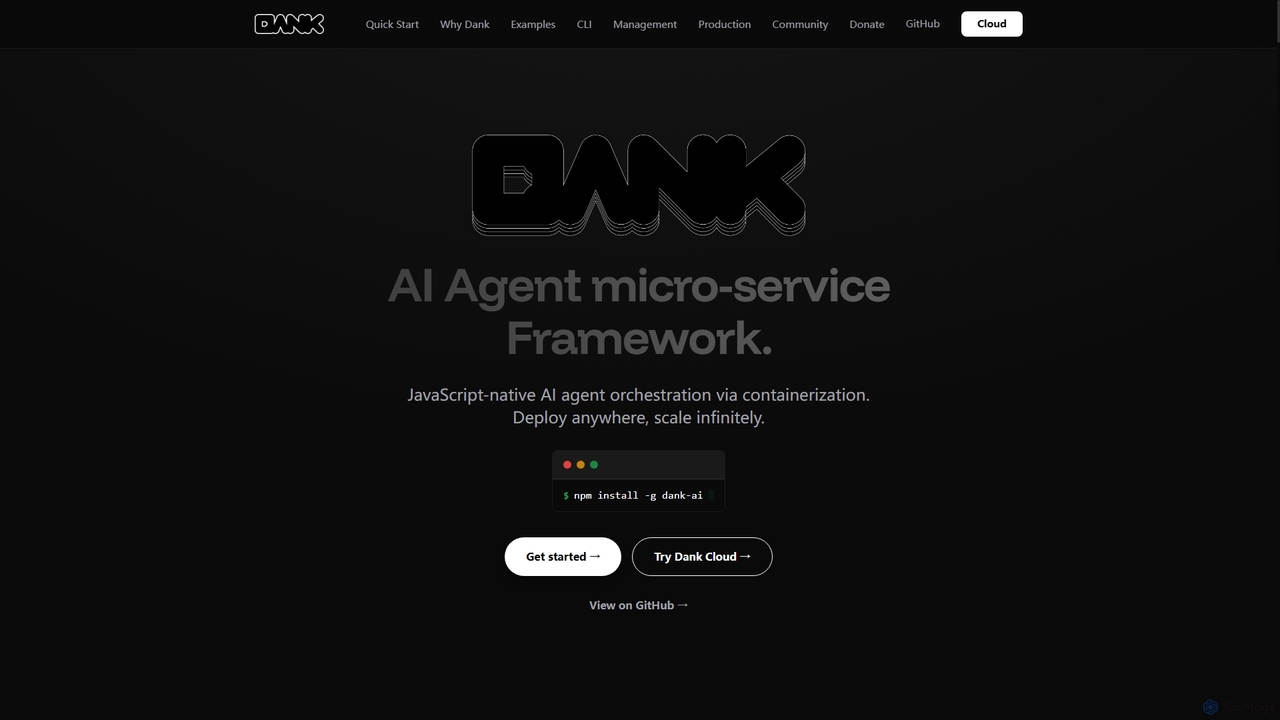
Dank
Dank is a JavaScript-native, open-source framework for orchestrating and deploying containerized AI agents. It enables developers to build, manage, and scale multiple AI agents as microservices across any cloud infrastructure, simplifying complex AI deployments with Docker-native architecture and real-time monitoring.
Agent FrameworksInferable
Inferable is an open-source, self-hostable developer platform for building reliable, durable, and versioned AI agents and workflows. It enables the creation of complex, long-running processes with human-in-the-loop capabilities, structured outputs, and on-premise execution for maximum security and control.
Agent Builder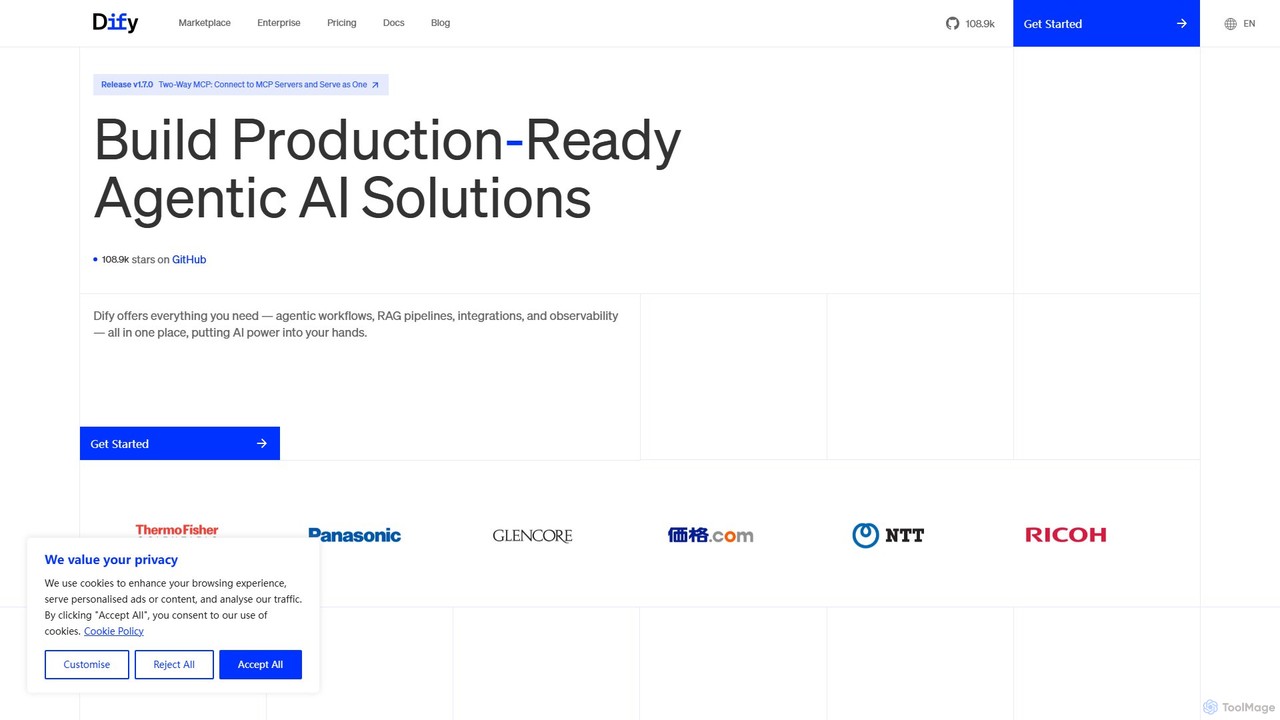
Dify
Dify is an open-source, low-code AI development platform for building and operating production-ready generative AI applications. It enables the creation of AI agents and workflows powered by RAG pipelines, extensive model support, and full observability, simplifying the entire development lifecycle from idea to deployment.
Ai AgentPortkey
Portkey is a comprehensive LLMOps platform for GenAI developers. It provides a unified AI Gateway to access over 1600 models, along with tools for observability, prompt management, cost control, and security. Streamline your AI application development from prototype to production with enhanced reliability, scalability, and governance, all in one place.
Api ManagementAppsmith
Appsmith is an open-source, low-code platform designed for developers to build, ship, and maintain internal tools, dashboards, and AI-powered applications rapidly. It connects to any data source, allows UI building via drag-and-drop or natural language, and offers full customization with JavaScript, empowering teams to create secure, scalable enterprise-grade applications with unprecedented speed.
Internal Tools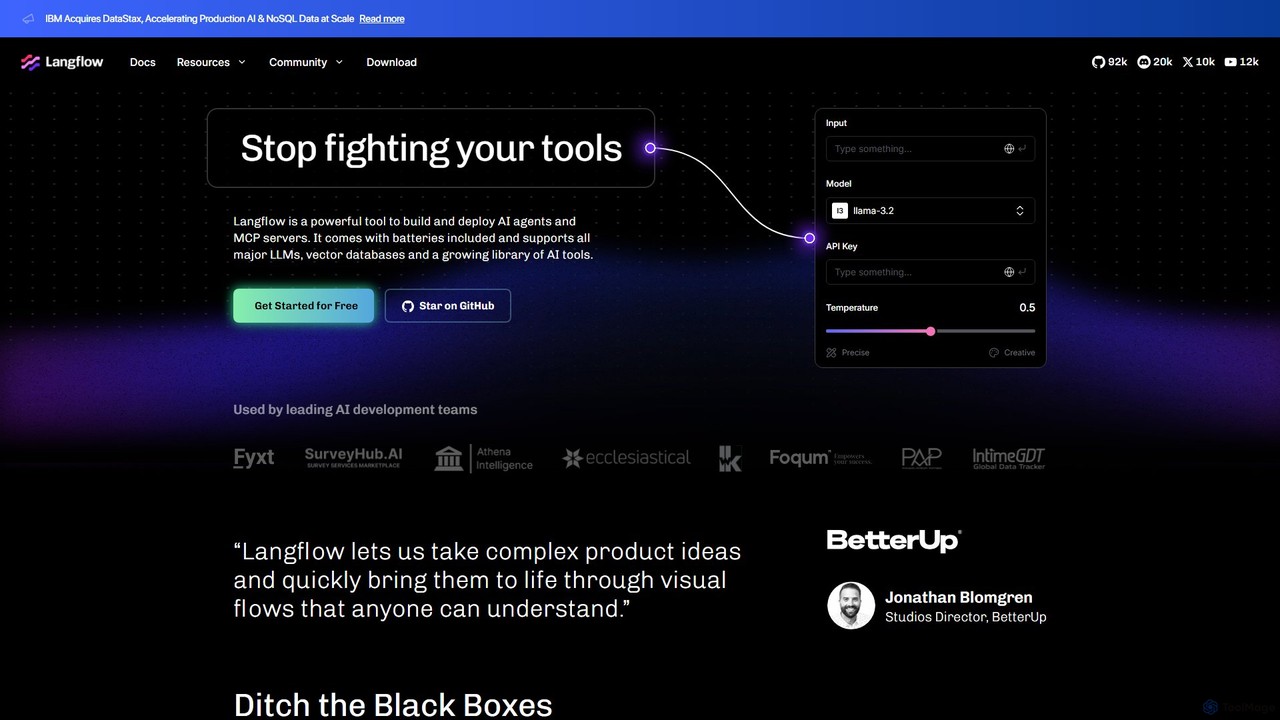
Langflow
Langflow is an open-source, visual UI for building and deploying AI applications. It features a drag-and-drop interface to chain LLMs, agents, and tools, enabling rapid prototyping and deployment of complex workflows like RAG and multi-agent systems. It supports extensive integrations and offers both self-hosted and cloud options.
Low Code No CodeNango
Nango is a comprehensive integration platform for developers, enabling B2B SaaS companies to rapidly build, deploy, and scale product integrations. It offers pre-built connectors for over 400 APIs, handles complex authorization flows, and provides a unified API, developer tooling, and scalable infrastructure. This developer-first, open-source platform ensures flexibility and control, allowing for custom, low-maintenance integrations.
Saas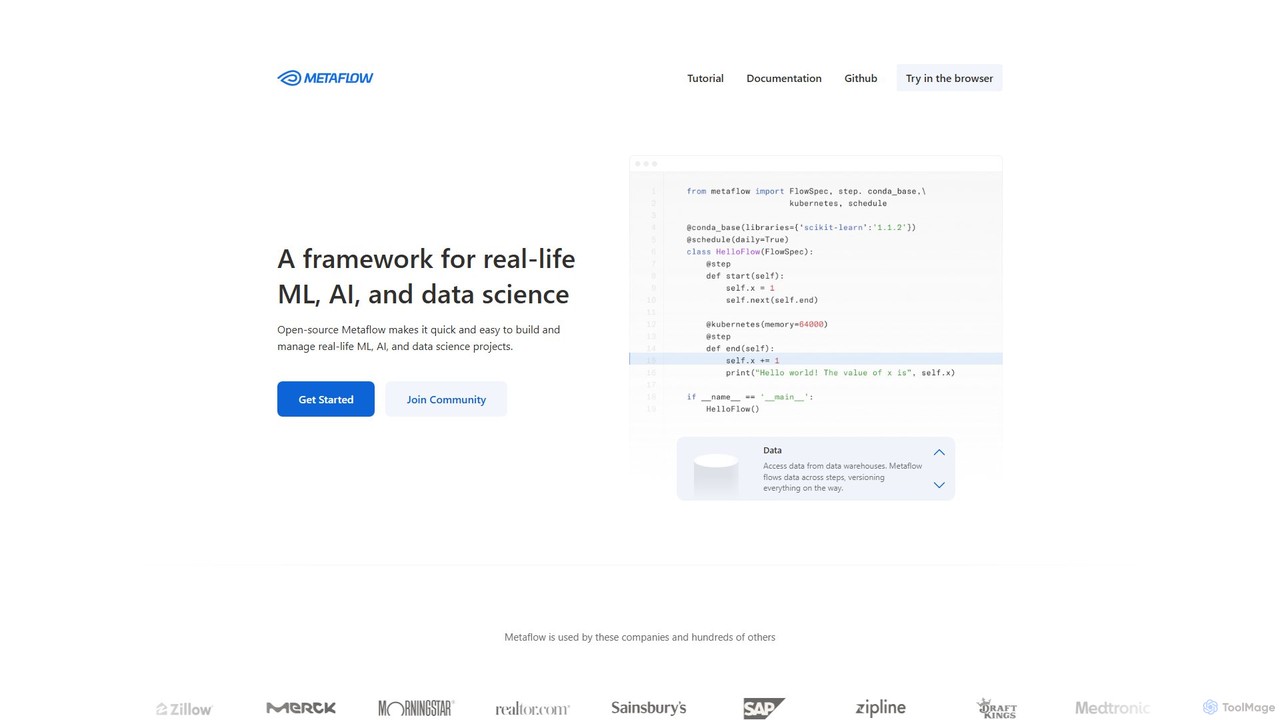
Metaflow
A human-centric Python framework, originally from Netflix, for building and managing real-life data science, ML, and AI projects. It simplifies workflow orchestration, data management, and model deployment, enabling rapid prototyping and scalable production pipelines.
Mlops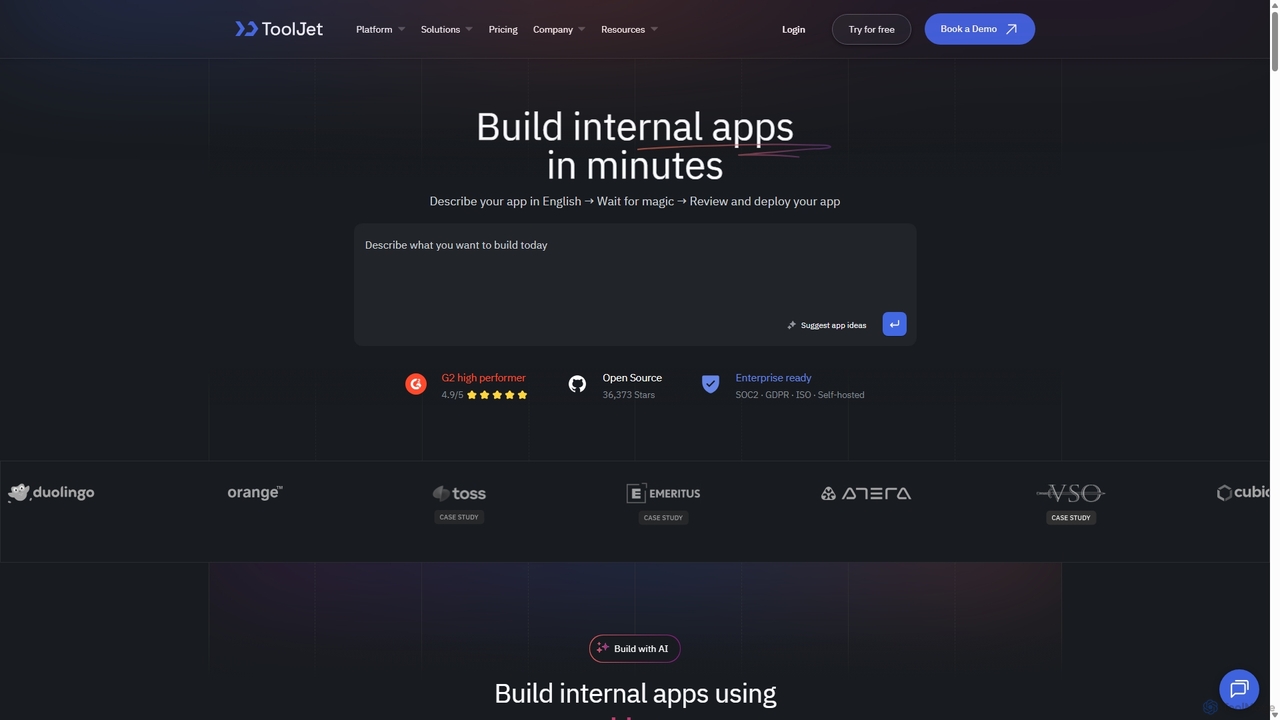
ToolJet
ToolJet is an AI-native, open-source low-code platform for developers to build and deploy internal tools rapidly. It integrates with numerous datasources, APIs, and AI models, allowing users to create complex applications using natural language prompts, a visual builder, and custom code.
Internal Tools
Hatchet Comments (0)
Sign in to comment.
Sign inNo comments yet.