ToolMage
Sign in
Langflow
Low Code No Code · 243.6K monthly visits

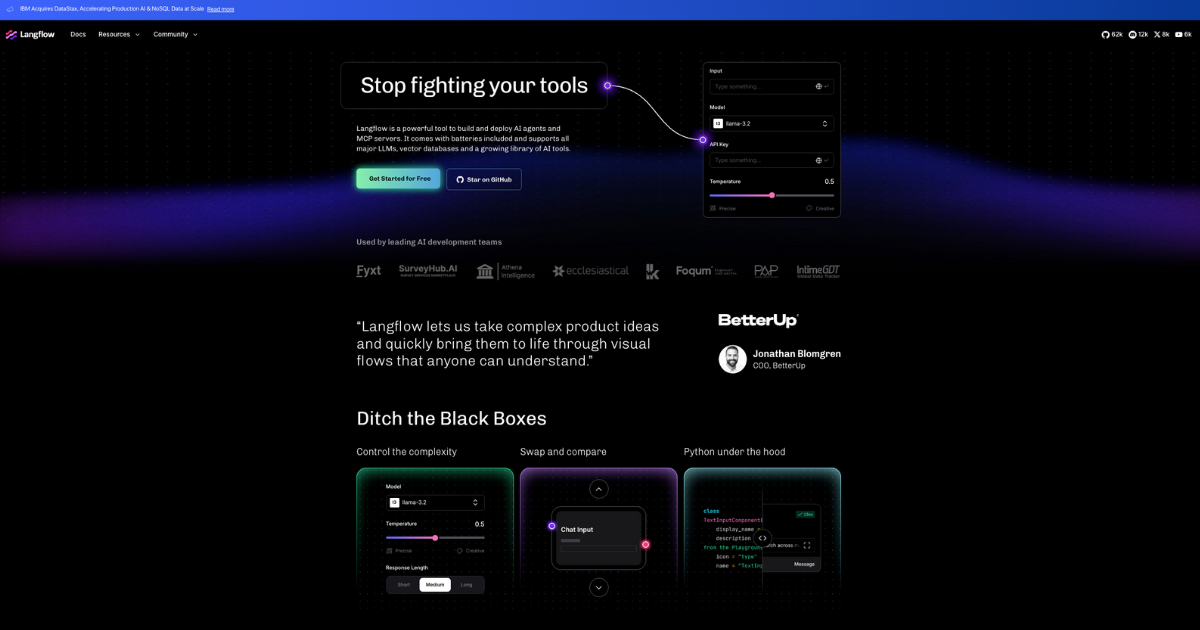
Langflow is an open-source, visual UI for building and deploying AI applications. It features a drag-and-drop interface to chain LLMs, agents, and tools, enabling rapid prototyping and deployment of complex workflows like RAG and multi-agent systems. It supports extensive integrations and offers both self-hosted and cloud options.
VS
ZGI
Agent Builder · 4.1K monthly visits

ZGI is a powerful, enterprise-grade AI development platform specializing in visual AI Agent workflow design, advanced Retrieval-Augmented Generation (RAG) systems, and multi-agent orchestration. It combines a no-code/low-code visual builder with robust security and API integration, enabling businesses to rapidly deploy complex AI solutions. ZGI also offers a comprehensive learning ecosystem, including courses and mentorship, to empower developers and teams to master AI agent development and build their own innovative products.

Langflow vs ZGI: pricing, features, traffic, and use cases

Compare Langflow and ZGI across positioning, pricing, traffic, and user feedback using structured factual data.

Updated Aug 18, 2026

Product overview

Langflow Product overview

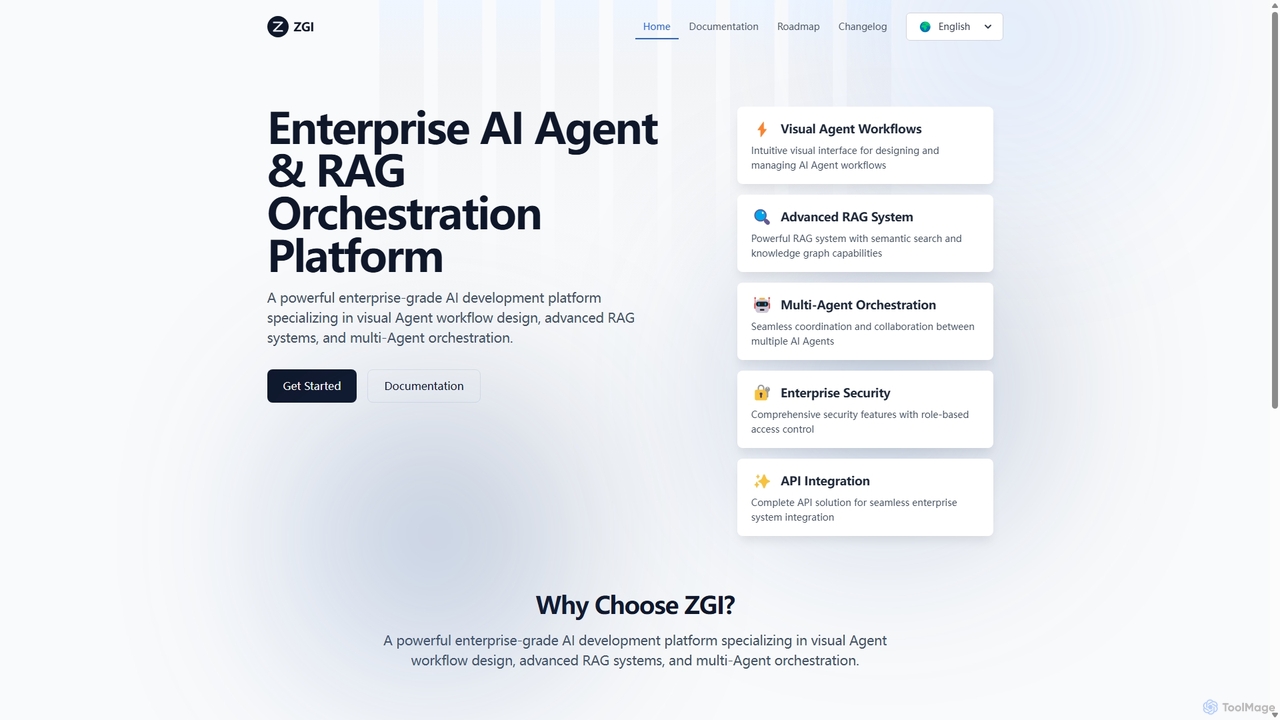
Langflow is an open-source, visual UI for building and deploying AI applications. It features a drag-and-drop interface to chain LLMs, agents, and tools, enabling rapid prototyping and deployment of complex workflows like RAG and multi-agent systems. It supports extensive integrations and offers both self-hosted and cloud options.
Preview

ZGI Product overview

ZGI is a powerful, enterprise-grade AI development platform specializing in visual AI Agent workflow design, advanced Retrieval-Augmented Generation (RAG) systems, and multi-agent orchestration. It combines a no-code/low-code visual builder with robust security and API integration, enabling businesses to rapidly deploy complex AI solutions. ZGI also offers a comprehensive learning ecosystem, including courses and mentorship, to empower developers and teams to master AI agent development and build their own innovative products.

Preview

Detailed feature comparison

FeatureLangflowZGI
Primary categoryLow Code No CodeAgent Builder
Added2025-08-142025-09-19
PricingFreemiumNot verified
Official websitewww.langflow.orgzgi.ai
Product typeWebsiteWebsite
Performance data
User ratingNot verifiedNot verified
Comments00
Monthly visits243.6K4.1K
Monthly growth6.2%Not verified
Favorites71134
DetailsView detailsView details

Langflow vs ZGI monthly traffic

Compare Langflow and ZGI by monthly reach, traffic trend, visit depth, top regions, and acquisition sources.

How to interpret the traffic data

In the Langflow vs ZGI monthly traffic comparison, Langflow currently shows 243.6K visits and ZGI shows 4.1K; Langflow has about 59.9 times the visible traffic of ZGI, an absolute difference of about 239.5K visits. This reflects visible reach, not feature quality or paid users.

Only Langflow has complete third-party traffic details; ZGI uses visits recorded inside ToolMage. These scopes cannot estimate market share directly, and on-site views should not be treated as the product’s total website traffic.

Langflow monthly traffic:

Latest traffic

Monthly visits
243.6K
Avg. visit duration
1:09
Pages per visit
1.95
Bounce rate
44.67%
Data updated 2026-06-15

Monthly traffic trend

  • 2025/9: 454.9K Monthly visits
  • 2026/1: 269.8K Monthly visits
  • 2026/2: 226.5K Monthly visits
  • 2026/3: 239.5K Monthly visits
  • 2026/4: 229.4K Monthly visits
  • 2026/5: 243.6K Monthly visits

Top regions

Top 5 countries/regions
Country/regionPercentageTraffic
🇨🇳China42.24%102.9K
🇮🇳India18.05%44K
🇺🇸United States16.88%41.1K
🇮🇩Indonesia16.72%40.7K
🇬🇧United Kingdom6.11%14.9K

Traffic sources

Source typePercentageTraffic
Direct78.32%190.8K
Referral20.42%49.7K
Email1.26%3.1K

Search keywords

composiolangflowlangfuseopenrouterpdf to markdown

ZGI monthly traffic:

Latest traffic

Monthly visits
4.1K
Traffic-based selection guidance: The current traffic scope is not sufficient for a reliable product ranking. Treat monthly visits as a market-interest signal, then decide using taxonomy, use cases, pricing, and a like-for-like trial rather than reading exposure as product capability.

Usage comparison

Compare the core capabilities of Langflow and ZGI

Langflow Core features

Low Code No Code
Workflow Automation

ZGI Core features

Low Code No Code
Workflow Automation
Agent Builder

Use cases

Langflow Use cases

AI agent
low-code
multi-agent systems
no-code
RAG
workflow automation
API
developer tools
llm
open source
visual builder

ZGI Use cases

AI agent
low-code
multi-agent systems
no-code
RAG
workflow automation
ai development platform
enterprise AI
knowledge management
orchestration

Best suited roles

Langflow Best suited roles

No verified data available

ZGI Best suited roles

AI Engineer
Business Analyst
CTO
Data Scientist
IT Manager
Product Manager
Software Developer

Langflow vs ZGI:In-depth comparison and selection guidance

First decide whether the products solve the same kind of need

This in-depth Langflow vs ZGI comparison uses only the product records, taxonomy, audience, traffic, and community signals available on this page. Langflow is primarily listed under “Low Code No Code”, while ZGI is primarily listed under “Agent Builder”, so the first decision is whether your actual task matches their recorded scope.

The structured fields currently show these decision-relevant differences: Primary category (Langflow: Low Code No Code; ZGI: Agent Builder); Pricing (Langflow: Freemium; ZGI: Not disclosed); Monthly visits (Langflow: 243.6K; ZGI: 4.1K); Favorites (Langflow: 71; ZGI: 134); Website (Langflow: www.langflow.org; ZGI: zgi.ai). These facts are more useful for selection than brand visibility alone.

What market visibility and monthly traffic mean

In the Langflow vs ZGI monthly traffic comparison, Langflow currently shows 243.6K visits and ZGI shows 4.1K; Langflow has about 59.9 times the visible traffic of ZGI, an absolute difference of about 239.5K visits. This reflects visible reach, not feature quality or paid users.

Only Langflow has complete third-party traffic details; ZGI uses visits recorded inside ToolMage. These scopes cannot estimate market share directly, and on-site views should not be treated as the product’s total website traffic.

The current traffic scope is not sufficient for a reliable product ranking. Treat monthly visits as a market-interest signal, then decide using taxonomy, use cases, pricing, and a like-for-like trial rather than reading exposure as product capability.

Product positioning, use cases, and roles

Langflow and ZGI currently overlap in shared categories: Low Code No Code and Workflow Automation; shared tags: AI agent, low-code, multi-agent systems, no-code, RAG, and workflow automation. This can place both on the same shortlist, but it does not prove equal implementation, depth, or cost.

Langflow's unique categories/tags are API, developer tools, llm, open source, and visual builder; ZGI's are Agent Builder, ai development platform, enterprise AI, knowledge management, and orchestration. These unique fields are the strongest differentiators: validate the product whose recorded scope matches the task instead of following traffic alone.

What ratings, comments, and favorites can tell you

Langflow has no verified rating, 0 comments, 71 favorites, and 82 likes;ZGI has no verified rating, 0 comments, 134 favorites, and 117 likes。

Neither product has enough rating or comment samples for a credible reputation ranking.

Selection guidance by actual need

When to evaluate Langflow first

Put Langflow on the priority trial list when the task aligns with “Low Code No Code” and especially API, developer tools, llm, open source, and visual builder. This follows recorded positioning and does not imply unlisted capabilities are absent.

Langflow also currently records: pricing is freemium, product type is website, 243.6K verified monthly visits, no verified user rating. Verify any hard requirement around price, platform, or reach before trial, and do not let sparse review data substitute for testing.

When to evaluate ZGI first

Put ZGI on the priority trial list when the task aligns with “Agent Builder” and especially Agent Builder, ai development platform, enterprise AI, knowledge management, and orchestration, or the users include AI Engineer, Business Analyst, CTO, and Data Scientist. This follows recorded positioning and does not imply unlisted capabilities are absent.

ZGI also currently records: pricing is not verified, product type is website, 4.1K on-site monthly views, no verified user rating. Verify any hard requirement around price, platform, or reach before trial, and do not let sparse review data substitute for testing.

How to validate the recommendation before deciding

The available data describes positioning, public visibility, and community signals, but it cannot prove output quality, speed, integration effort, privacy, or long-term cost in your workflow. Before deciding, run the same representative tasks in Langflow and ZGI, then record completion time, accuracy, manual corrections, and the real paid threshold. A like-for-like trial turns this comparison into a defensible adoption decision.

Comparison FAQ

How should I choose between Langflow and ZGI?
Compare positioning, pricing, taxonomy, and traffic maturity, then verify the latest details on each official website.
Where does this comparison data come from?
The factual baseline is derived from product, taxonomy, traffic, and community data. Reviewed editorial conclusions show their source and verification date.
What do unknown fields mean?
Unknown means there is not enough reliable evidence; the page does not fill gaps with assumptions.

Related AI tools

OnDemand AI Agents

OnDemand AI Agents

OnDemand AI Agents is a decentralized, RAG-powered Platform-as-a-Service (PaaS) designed to revolutionize business operations. It provides a comprehensive suite of tools for building, automating, and scaling AI-powered applications. Users can leverage pre-built agents, create custom ones, visually orchestrate complex workflows, and integrate their own models (BYOM/BYOI) in a flexible, secure, and scalable environment without needing an extensive development team.

Workflow Automation
Visits 27.2KFavorites 136Likes 118
Flowise
Freemium

Flowise

Flowise is an open-source, low-code platform for visually building customized AI agents and applications. Using a drag-and-drop interface, developers and teams can rapidly prototype and deploy complex systems, from RAG-powered chatbots to multi-agent workflows. It supports over 100 LLMs, various data sources, and offers enterprise-grade features for scalable deployment.

Model Deployment
Visits 214.8KFavorites 125Likes 137
scoutos
Freemium

scoutos

ScoutOS is an end-to-end platform for building, launching, and scaling custom AI solutions. It provides a comprehensive toolkit, including a no-code workflow builder, data ingestion, and multi-channel deployment options like website copilots and Slack bots. Ideal for developers and businesses looking to rapidly deploy and manage AI-powered applications for customer support, sales, marketing, and internal operations.

Ai Agent
Visits 16.8KFavorites 96Likes 105
UBOS
Freemium

UBOS

UBOS is a low-code AI orchestration platform for enterprises to build, deploy, and scale multi-agent AI workflows. It offers a marketplace of customizable templates, supports any LLM, and enables one-click deployment to cloud or on-premise. UBOS simplifies creating complex AI solutions like chatbots and data analysis tools, empowering businesses to become AI-first organizations with full data ownership.

Orchestration
Visits 52.2KFavorites 120Likes 126
Jyek
AD

Jyek

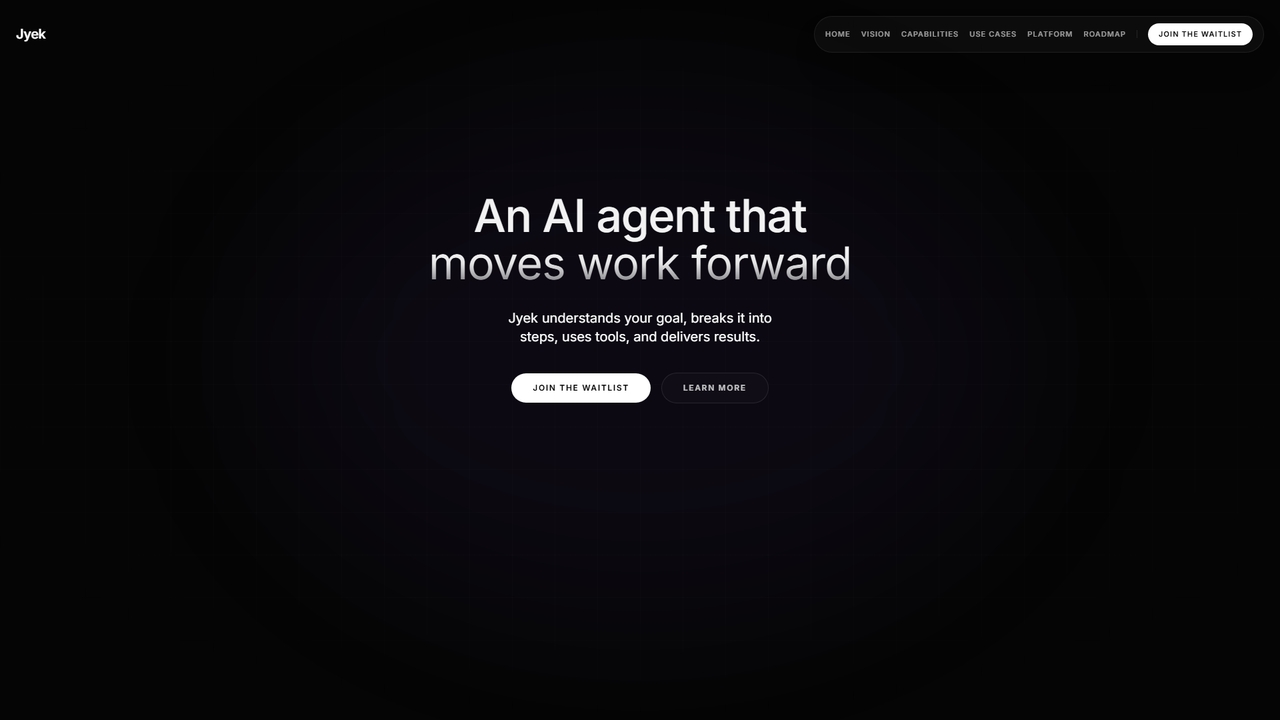
Jyek is an AI agent platform that understands objectives, creates execution plans, uses tools, and delivers verifiable results for complex, multi-step tasks.

Automation
Visits 2.5KFavorites 4Likes 6
Gradientj
Freemium

Gradientj

Gradientj is a powerful platform for developers and businesses to build, test, and deploy autonomous AI agents. It provides a comprehensive suite of tools, including a reasoning engine, pre-built components, and seamless integrations, to transform complex workflows into intelligent, automated processes from prompt to production.

Intelligence
Visits 5KFavorites 115Likes 128
Rowboat
Freemium

Rowboat

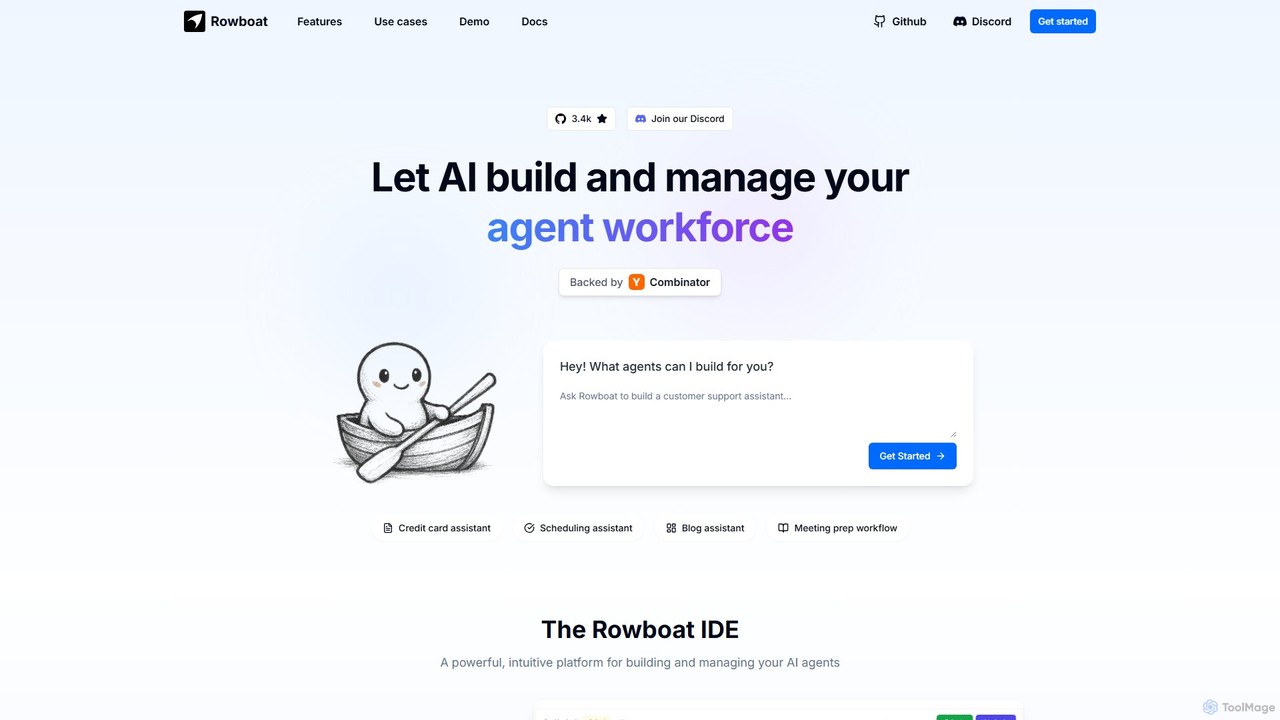
Rowboat is a powerful, AI-powered IDE for building, managing, and deploying complex multi-agent systems. Backed by Y Combinator, it allows users to describe workflows in plain English, and its AI copilot automatically generates the entire agent graph, including roles, prompts, and tool integrations. It's designed to simplify the creation of robust, real-world AI agents for productivity, e-commerce, support, and more, with features like open-source flexibility and support for over 100 LLMs.

Agent Builder
Visits 54KFavorites 109Likes 127
Draftnrun
Freemium

Draftnrun

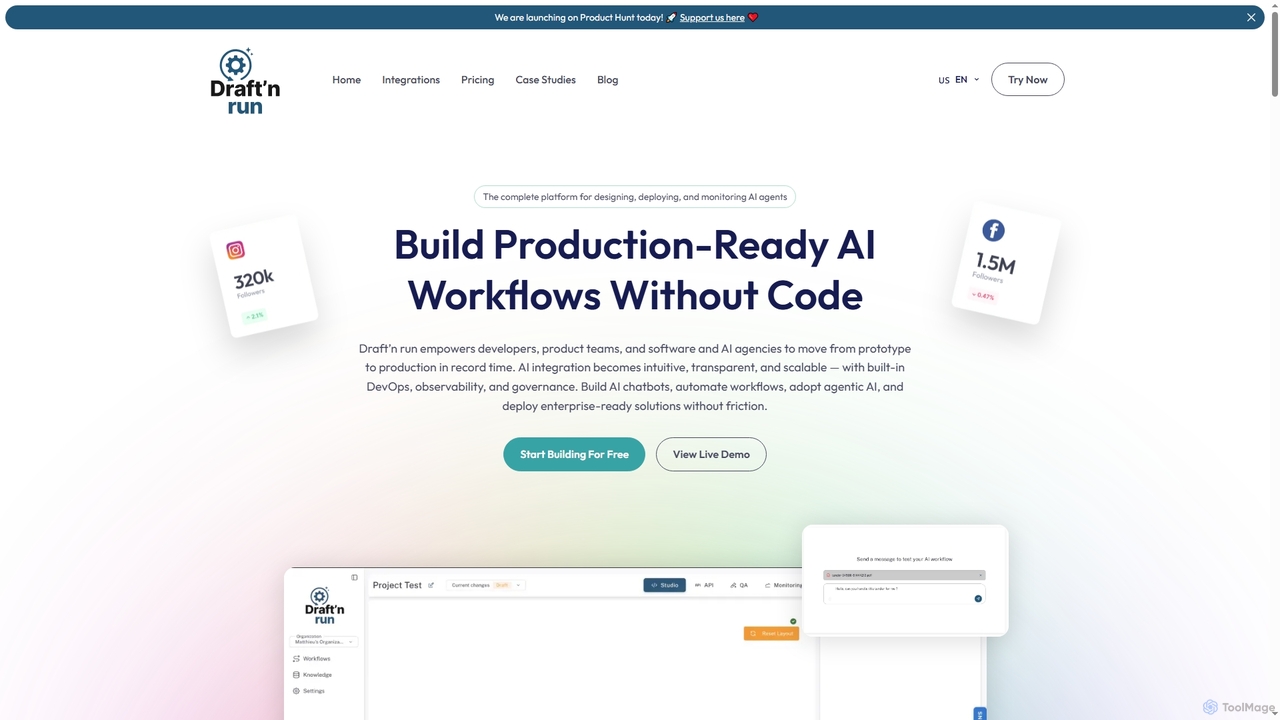
Draftnrun is an open-source AI agent platform that empowers developers, product teams, and agencies to design, deploy, and monitor production-ready AI workflows without code. It offers a visual builder, comprehensive observability, and flexible deployment options, accelerating AI integration and ensuring full control.

Chatbot
Visits 6.4KFavorites 103Likes 96
Quixl

Quixl

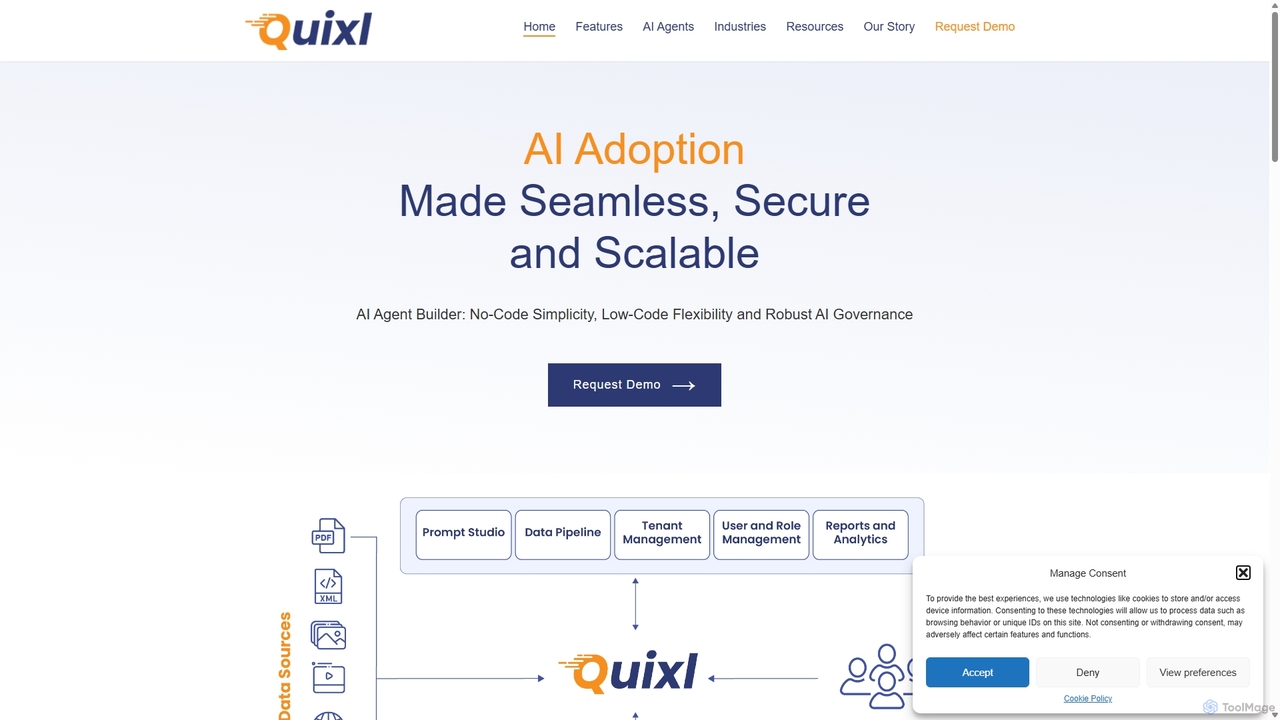
Quixl is an enterprise-grade, no-code platform for developing and deploying custom AI agents. It accelerates AI adoption by enabling businesses to build secure, scalable agents with support for multiple LLMs (OpenAI, Google AI, Anthropic), flexible on-premises or cloud deployment, and advanced features like RAG and prompt chaining.

Enterprise Software
Visits 5.9KFavorites 120Likes 105
Abacus.AI
Freemium

Abacus.AI

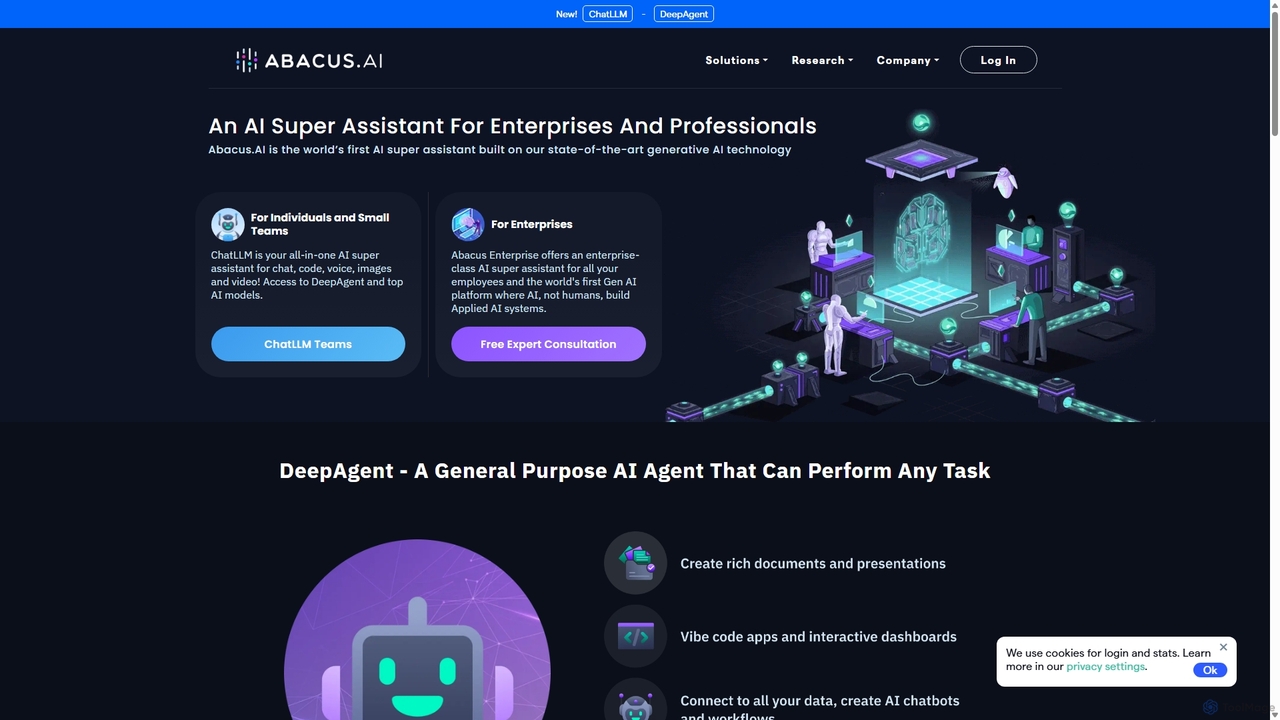
Abacus.AI is an advanced AI super assistant and generative AI platform designed for both enterprises and individuals. It enables the creation of AI agents, custom chatbots, and automated workflows to enhance productivity, analyze data, and build applied AI systems with minimal human intervention.

Chatbot
Visits 4.3MFavorites 111Likes 110
Vertesia
Paid

Vertesia

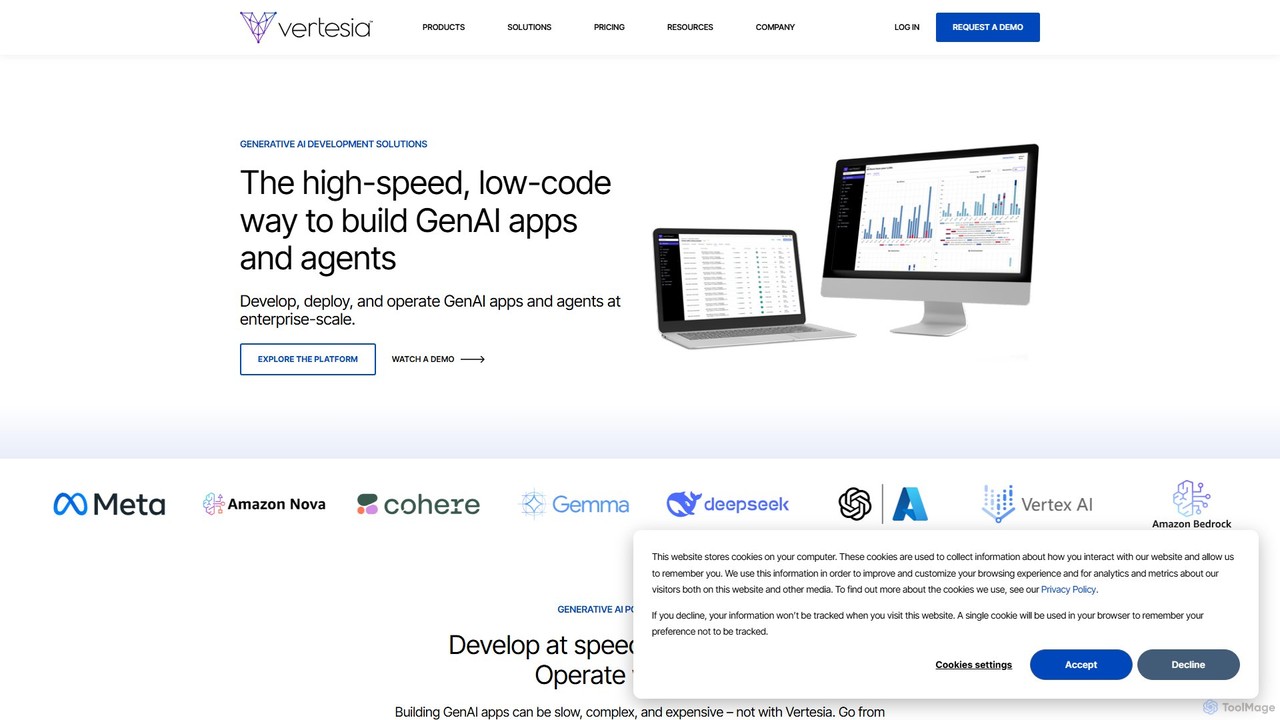
Vertesia is a high-speed, low-code generative AI development platform for enterprises. It enables businesses to rapidly build, deploy, and operate custom GenAI applications and agents at scale, transforming complex business processes and accelerating time-to-value without heavy infrastructure or spiraling costs.

Ai Agent Builder
Visits 8.1KFavorites 160Likes 140
Dify
Freemium

Dify

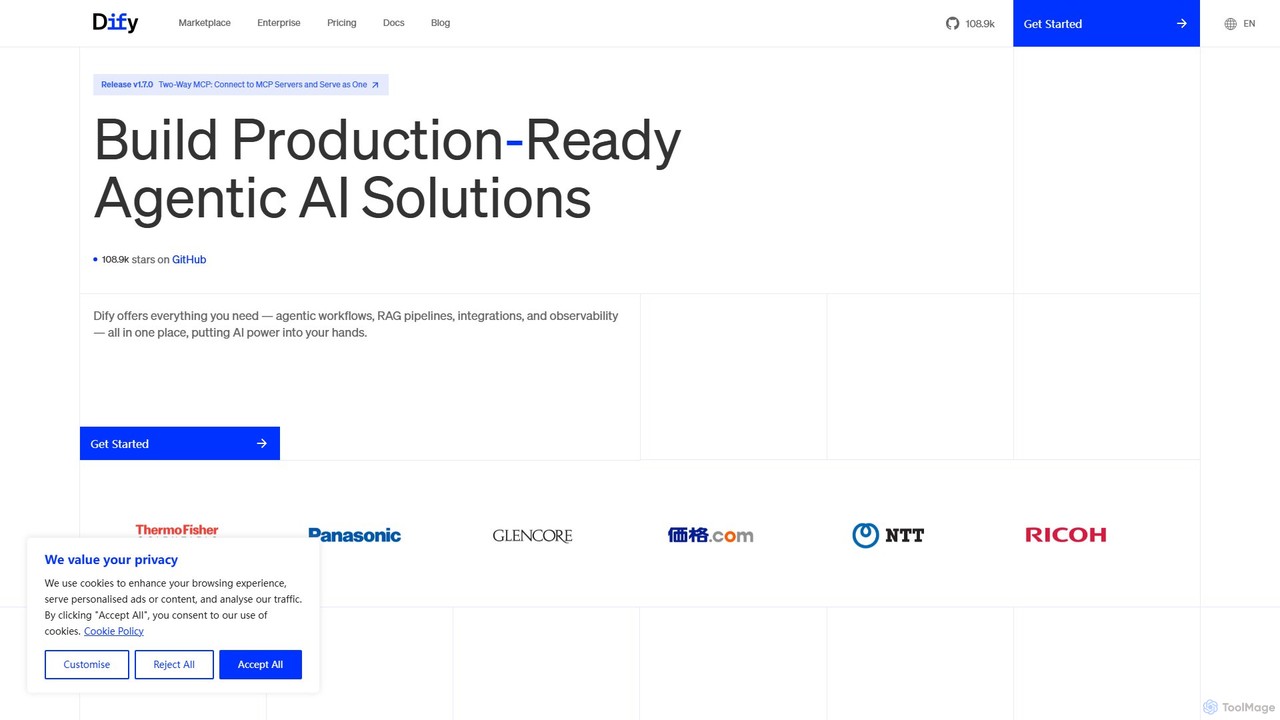
Dify is an open-source, low-code AI development platform for building and operating production-ready generative AI applications. It enables the creation of AI agents and workflows powered by RAG pipelines, extensive model support, and full observability, simplifying the entire development lifecycle from idea to deployment.

Ai Agent
Visits 1.1MFavorites 80Likes 83
Nectarstudio
Freemium

Nectarstudio

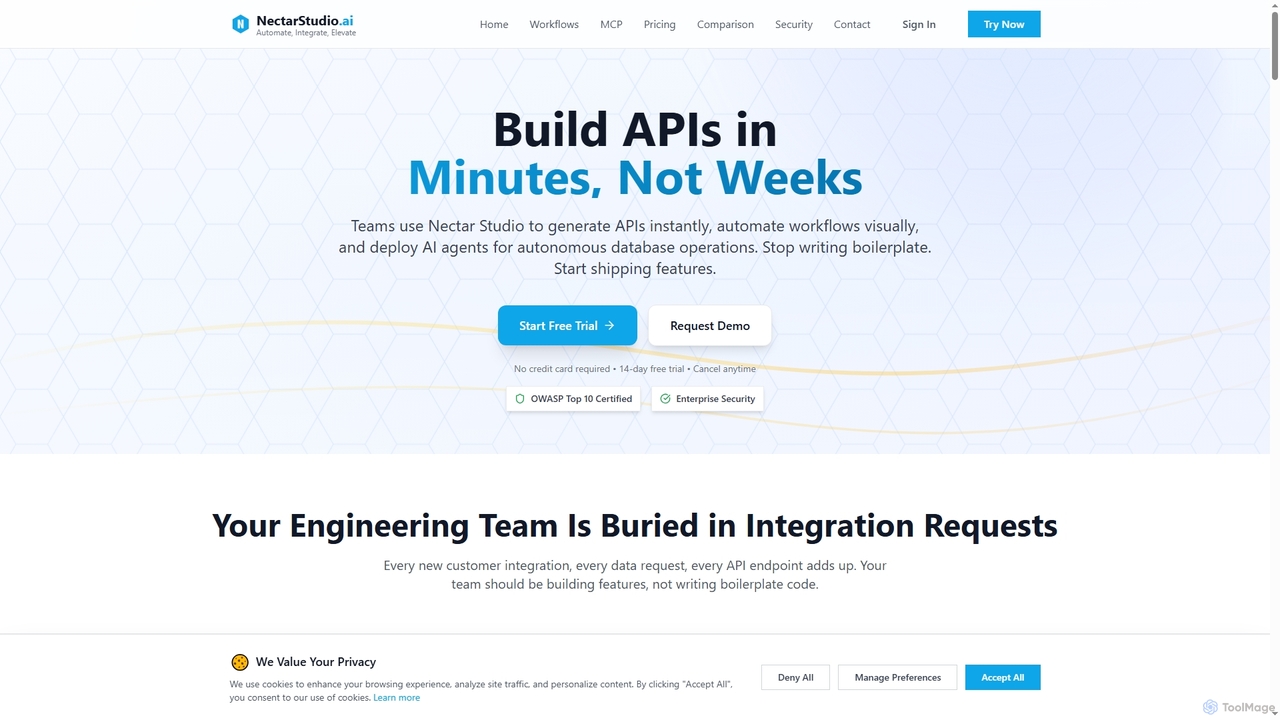
Nectarstudio is an AI-powered iPaaS platform designed for engineering teams to instantly generate bulk APIs from databases, automate workflows with a low-code visual builder, and deploy AI agents for autonomous database operations, reducing development time from weeks to minutes.

Business Intelligence
Visits 4.1KFavorites 86Likes 88
Kadabra
Freemium

Kadabra

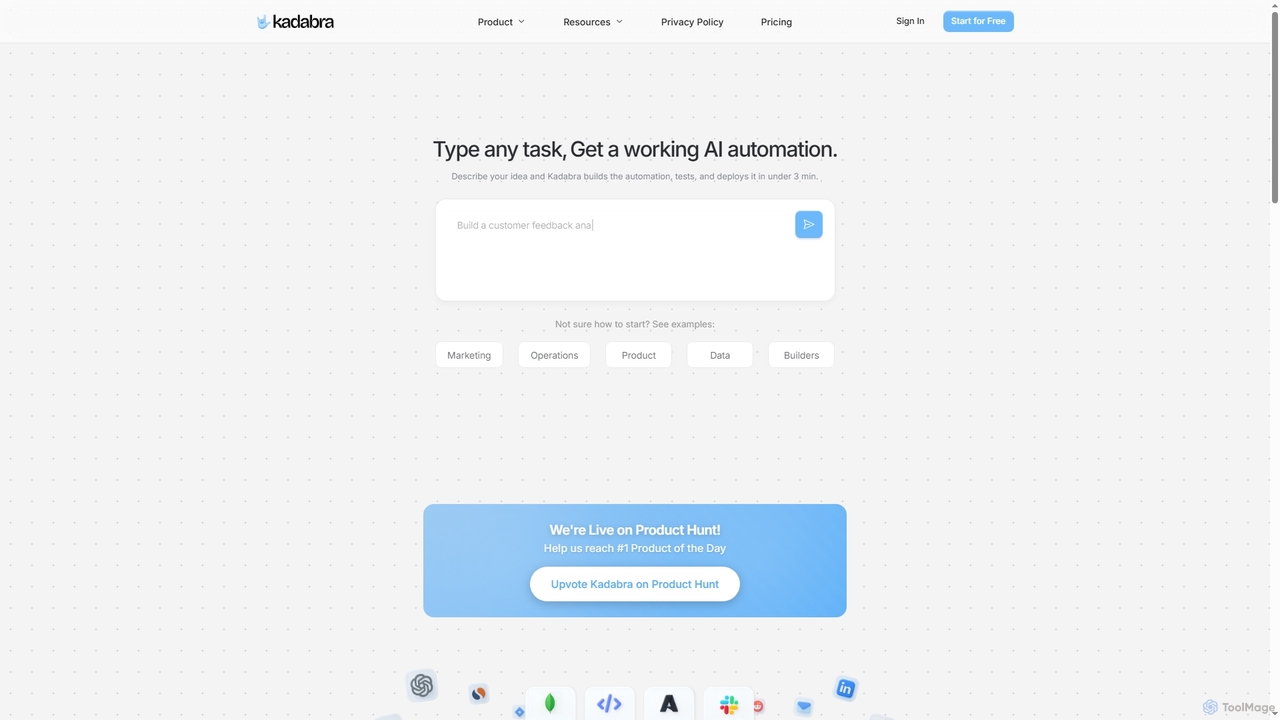
Kadabra is an AI-powered platform that transforms plain English descriptions into functional, deployable business and data automations. It allows users to build, test, and deploy complex workflows visually in minutes, integrating with a wide range of popular tools to streamline operations and enhance productivity.

Operations Management
Visits 4.7KFavorites 122Likes 124
MindStudio
Freemium

MindStudio

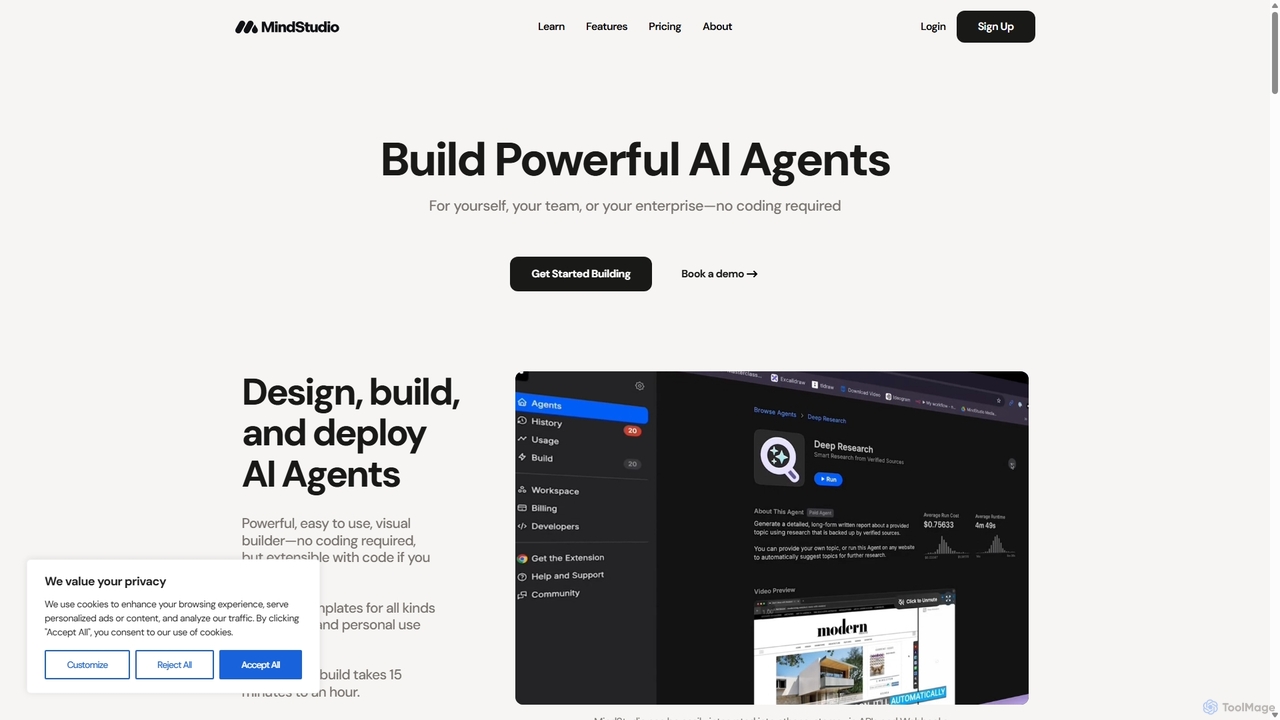
MindStudio is a no-code platform for designing, building, and deploying powerful AI agents. It offers a visual builder, over 100 templates, and seamless integration with 90+ LLMs and various data sources. Users can create AI-powered web apps, autonomous workflows, browser extensions, and more for personal, team, or enterprise use. It's designed for rapid development, robust automation, and scalable AI solutions without needing to write a single line of code, but is extensible with code if needed.

Ai Agent Builder
Visits 4.3KFavorites 135Likes 133