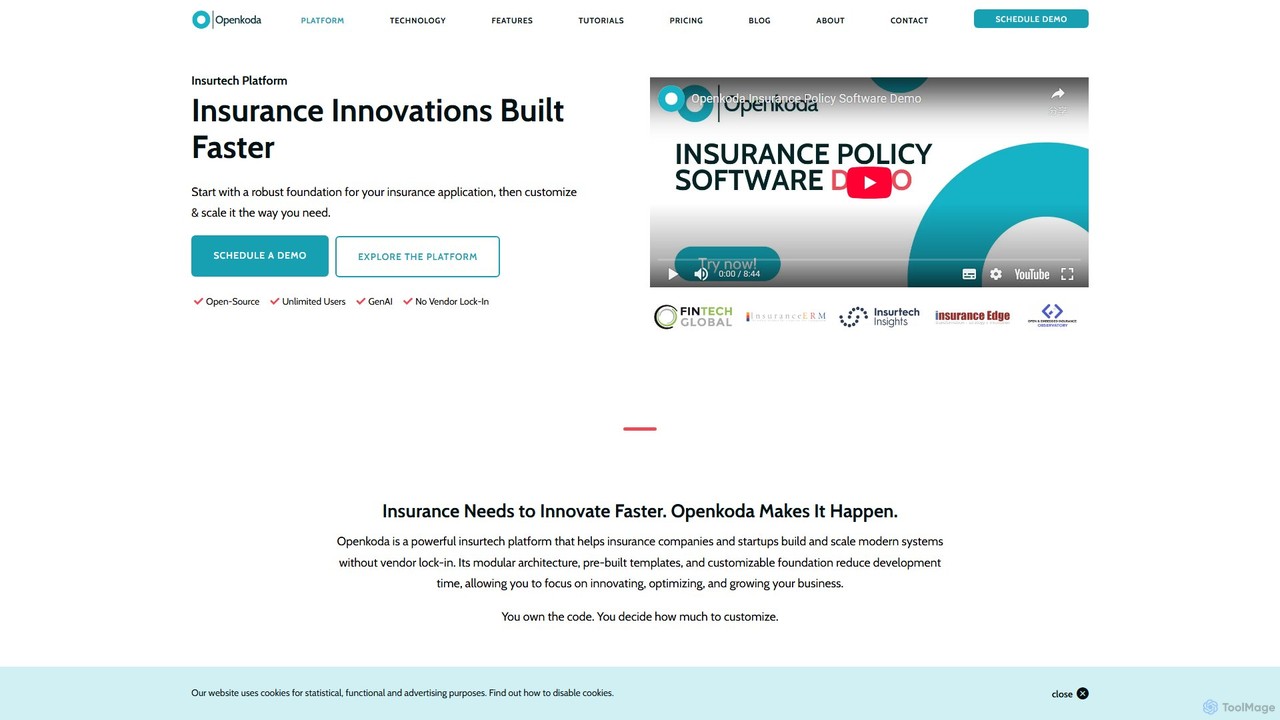
Openkoda is an open-source, low-code insurtech platform designed to help insurance companies and startups build, scale, and modernize applications faster. It offers pre-built templates, GenAI capabilities, and full code ownership to eliminate vendor lock-in and accelerate innovation.

ToolJet is an AI-native, open-source low-code platform for developers to build and deploy internal tools rapidly. It integrates with numerous datasources, APIs, and AI models, allowing users to create complex applications using natural language prompts, a visual builder, and custom code.
Product overview
Openkoda Product overview
Openkoda is an open-source, low-code insurtech platform designed to help insurance companies and startups build, scale, and modernize applications faster. It offers pre-built templates, GenAI capabilities, and full code ownership to eliminate vendor lock-in and accelerate innovation.
ToolJet Product overview
ToolJet is an AI-native, open-source low-code platform for developers to build and deploy internal tools rapidly. It integrates with numerous datasources, APIs, and AI models, allowing users to create complex applications using natural language prompts, a visual builder, and custom code.
Detailed feature comparison
| Feature | Openkoda | ToolJet |
|---|---|---|
| Primary category | Enterprise Solutions | Internal Tools |
| Added | 2025-08-09 | 2025-09-24 |
| Pricing | Freemium | Freemium |
| Official website | openkoda.com | tooljet.ai |
| Product type | Website | Website |
| Performance data | ||
| User rating | Not verified | Not verified |
| Comments | 0 | 0 |
| Monthly visits | 6K | 2.4K |
| Monthly growth | 13.9% | 3.1% |
| Favorites | 111 | 103 |
| Details | View details | View details |
Openkoda vs ToolJet monthly traffic
Compare Openkoda and ToolJet by monthly reach, traffic trend, visit depth, top regions, and acquisition sources.
How to interpret the traffic data
In the Openkoda vs ToolJet monthly traffic comparison, Openkoda currently shows 6K visits and ToolJet shows 2.4K; Openkoda has about 2.5 times the visible traffic of ToolJet, an absolute difference of about 3.7K visits. This reflects visible reach, not feature quality or paid users.
Both tools provide verified traffic details, so monthly trends, visit depth, regions, and acquisition sources can be compared on the same basis.
Openkoda monthly traffic:
Latest traffic
Monthly traffic trend
- 2025/9: 6.6K Monthly visits
- 2026/1: 8.4K Monthly visits
- 2026/2: 3.8K Monthly visits
- 2026/3: 5K Monthly visits
- 2026/4: 5.3K Monthly visits
- 2026/5: 6K Monthly visits
Top regions
Top 5 countries/regions
| Country/region | Percentage | Traffic |
|---|---|---|
| 🇺🇸United States | 56.27% | 3.4K |
| 🇵🇱Poland | 22.83% | 1.4K |
| 🇮🇳India | 18.06% | 1.1K |
| 🇿🇦South Africa | 2.84% | 172 |
Search keywords
ToolJet monthly traffic:
Latest traffic
Monthly traffic trend
- 2025/9: 117.4K Monthly visits
- 2026/1: 22.3K Monthly visits
- 2026/2: 9.9K Monthly visits
- 2026/3: 4.4K Monthly visits
- 2026/4: 2.3K Monthly visits
- 2026/5: 2.4K Monthly visits
Top regions
Top 5 countries/regions
| Country/region | Percentage | Traffic |
|---|---|---|
| 🇺🇸United States | 61.06% | 1.5K |
| 🇮🇳India | 38.94% | 933 |
Search keywords
Usage comparison
Compare the core capabilities of Openkoda and ToolJet
Openkoda Core features
ToolJet Core features
Use cases
Openkoda Use cases
ToolJet Use cases
Best suited roles
Openkoda Best suited roles
ToolJet Best suited roles
Openkoda vs ToolJet:In-depth comparison and selection guidance
First decide whether the products solve the same kind of need
This in-depth Openkoda vs ToolJet comparison uses only the product records, taxonomy, audience, traffic, and community signals available on this page. Openkoda is primarily listed under “Enterprise Solutions”, while ToolJet is primarily listed under “Internal Tools”, so the first decision is whether your actual task matches their recorded scope.
The structured fields currently show these decision-relevant differences: Primary category (Openkoda: Enterprise Solutions; ToolJet: Internal Tools); Monthly visits (Openkoda: 6K; ToolJet: 2.4K); Monthly growth (Openkoda: 13.9%; ToolJet: 3.1%); Favorites (Openkoda: 111; ToolJet: 103); Website (Openkoda: openkoda.com; ToolJet: tooljet.ai). These facts are more useful for selection than brand visibility alone.
What market visibility and monthly traffic mean
In the Openkoda vs ToolJet monthly traffic comparison, Openkoda currently shows 6K visits and ToolJet shows 2.4K; Openkoda has about 2.5 times the visible traffic of ToolJet, an absolute difference of about 3.7K visits. This reflects visible reach, not feature quality or paid users.
Both tools provide verified traffic details, so monthly trends, visit depth, regions, and acquisition sources can be compared on the same basis.
If public market visibility is an important first-pass criterion, investigate Openkoda first. The final choice should still follow taxonomy, use case, and a real trial because higher traffic does not prove broader capabilities or better workflow fit.
Product positioning, use cases, and roles
Openkoda and ToolJet currently overlap in shared categories: Low Code No Code and Workflow Automation; shared tags: enterprise software, low-code, no-code, open source, and workflow automation. This can place both on the same shortlist, but it does not prove equal implementation, depth, or cost.
Openkoda's unique categories/tags are Enterprise Solutions, Insurance, API, application builder, generative AI, insurance, insurtech, and legacy modernization; ToolJet's are Internal Tools, AI-powered, app builder, custom applications, database management, developer tools, and internal tools. These unique fields are the strongest differentiators: validate the product whose recorded scope matches the task instead of following traffic alone.
What ratings, comments, and favorites can tell you
Openkoda has no verified rating, 0 comments, 111 favorites, and 114 likes;ToolJet has no verified rating, 0 comments, 103 favorites, and 105 likes。
Neither product has enough rating or comment samples for a credible reputation ranking.
Selection guidance by actual need
When to evaluate Openkoda first
Put Openkoda on the priority trial list when the task aligns with “Enterprise Solutions” and especially Enterprise Solutions, Insurance, API, application builder, generative AI, and insurance. This follows recorded positioning and does not imply unlisted capabilities are absent.
Openkoda also currently records: pricing is freemium, product type is website, 6K verified monthly visits, no verified user rating. Verify any hard requirement around price, platform, or reach before trial, and do not let sparse review data substitute for testing.
When to evaluate ToolJet first
Put ToolJet on the priority trial list when the task aligns with “Internal Tools” and especially Internal Tools, AI-powered, app builder, custom applications, database management, and developer tools, or the users include Business Analyst, Data Analyst, DevOps Engineer, and Engineering Manager. This follows recorded positioning and does not imply unlisted capabilities are absent.
ToolJet also currently records: pricing is freemium, product type is website, 2.4K verified monthly visits, no verified user rating. Verify any hard requirement around price, platform, or reach before trial, and do not let sparse review data substitute for testing.
How to validate the recommendation before deciding
The available data describes positioning, public visibility, and community signals, but it cannot prove output quality, speed, integration effort, privacy, or long-term cost in your workflow. Before deciding, run the same representative tasks in Openkoda and ToolJet, then record completion time, accuracy, manual corrections, and the real paid threshold. A like-for-like trial turns this comparison into a defensible adoption decision.
Comparison FAQ
How should I choose between Openkoda and ToolJet?
Where does this comparison data come from?
What do unknown fields mean?
Related AI tools

NocoBase
NocoBase is an open-source, self-hosted no-code and low-code development platform. It empowers users to build custom business applications like CRMs and internal tools with high flexibility, granular permissions, and automated workflows, ensuring data security through on-premises deployment.
Internal Tools
QuickAppFlow
QuickAppFlow is an AI-powered low-code/no-code platform designed to build custom enterprise applications, automate complex workflows, and launch SaaS products. It integrates AI Process Automation, a conversational AI Co-Pilot, and visual development tools to accelerate digital transformation, enabling users to create powerful apps 10x faster and at a fraction of the cost without needing deep technical expertise.
Custom Chatbots
UBOS
UBOS is a low-code AI orchestration platform for enterprises to build, deploy, and scale multi-agent AI workflows. It offers a marketplace of customizable templates, supports any LLM, and enables one-click deployment to cloud or on-premise. UBOS simplifies creating complex AI solutions like chatbots and data analysis tools, empowering businesses to become AI-first organizations with full data ownership.
Orchestration
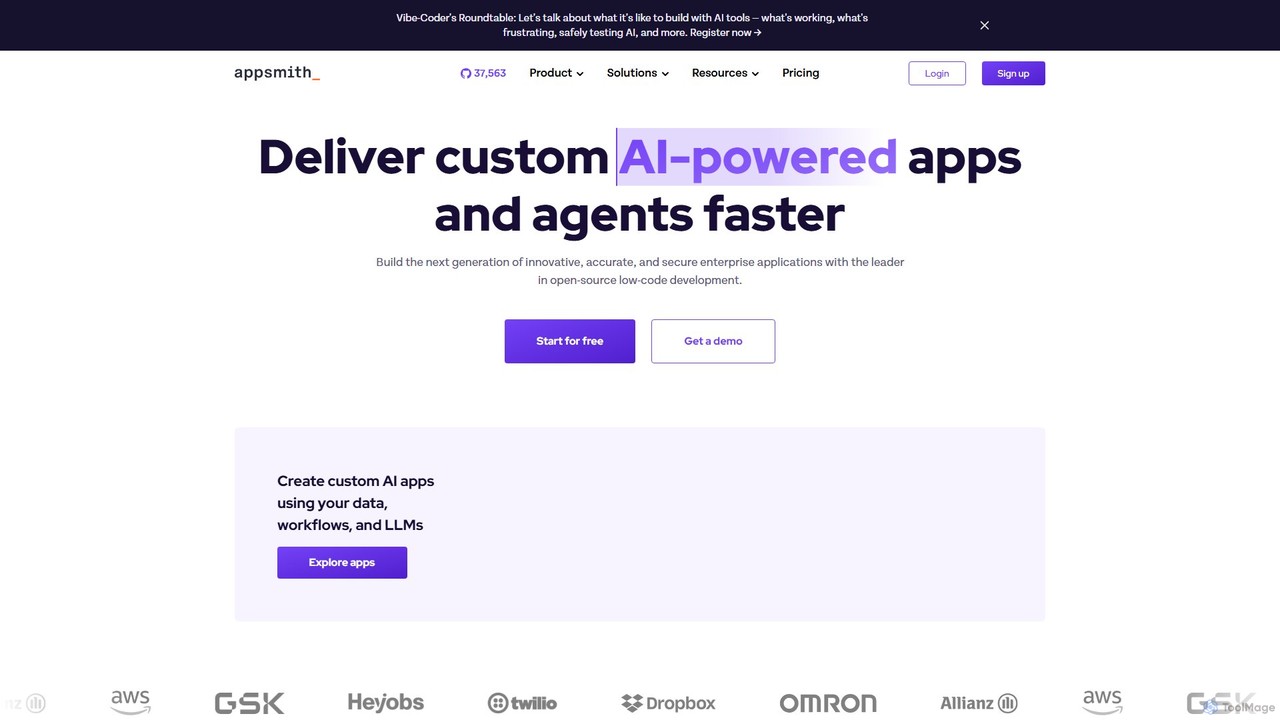
Appsmith
Appsmith is an open-source, low-code platform designed for developers to build, ship, and maintain internal tools, dashboards, and AI-powered applications rapidly. It connects to any data source, allows UI building via drag-and-drop or natural language, and offers full customization with JavaScript, empowering teams to create secure, scalable enterprise-grade applications with unprecedented speed.
Internal Tools
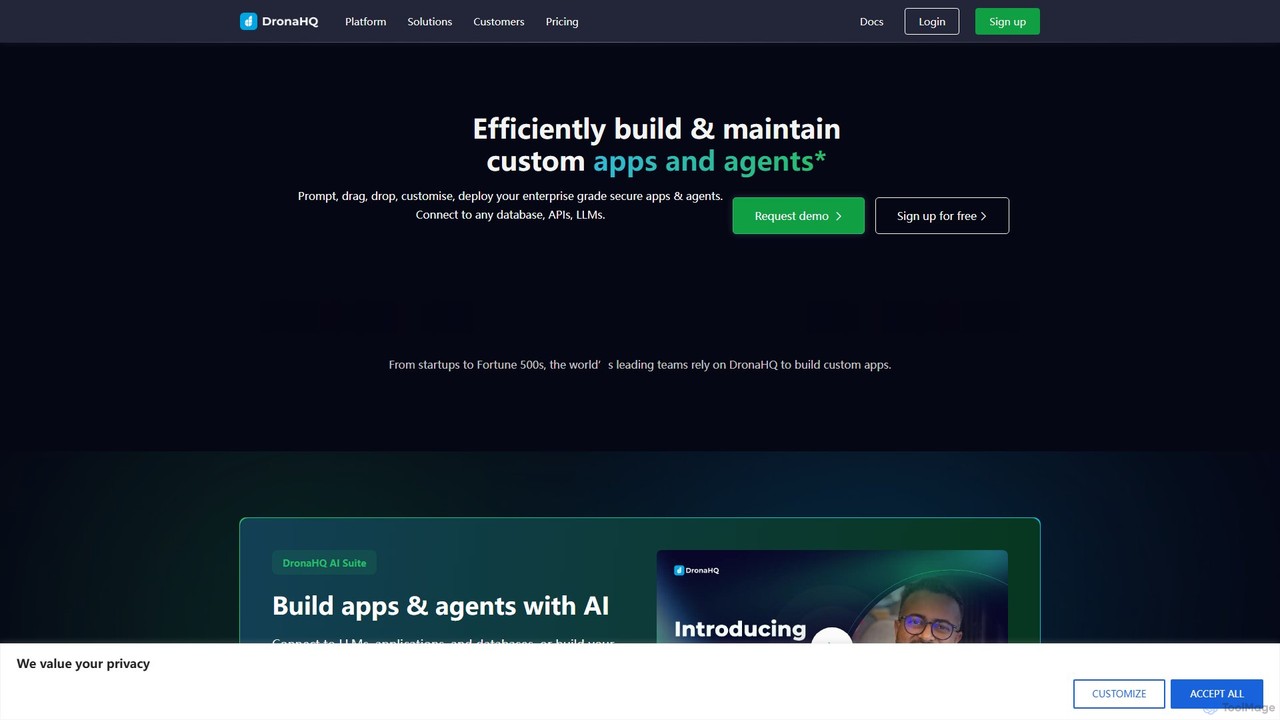
DronaHQ
DronaHQ is a low-code AI platform designed for building custom internal applications, AI agents, and automated workflows with high efficiency. It empowers developers and businesses to connect to any database, API, or LLM, using a visual drag-and-drop interface and AI-assisted development to create and deploy secure, enterprise-grade tools 10x faster.
Ai App Builders
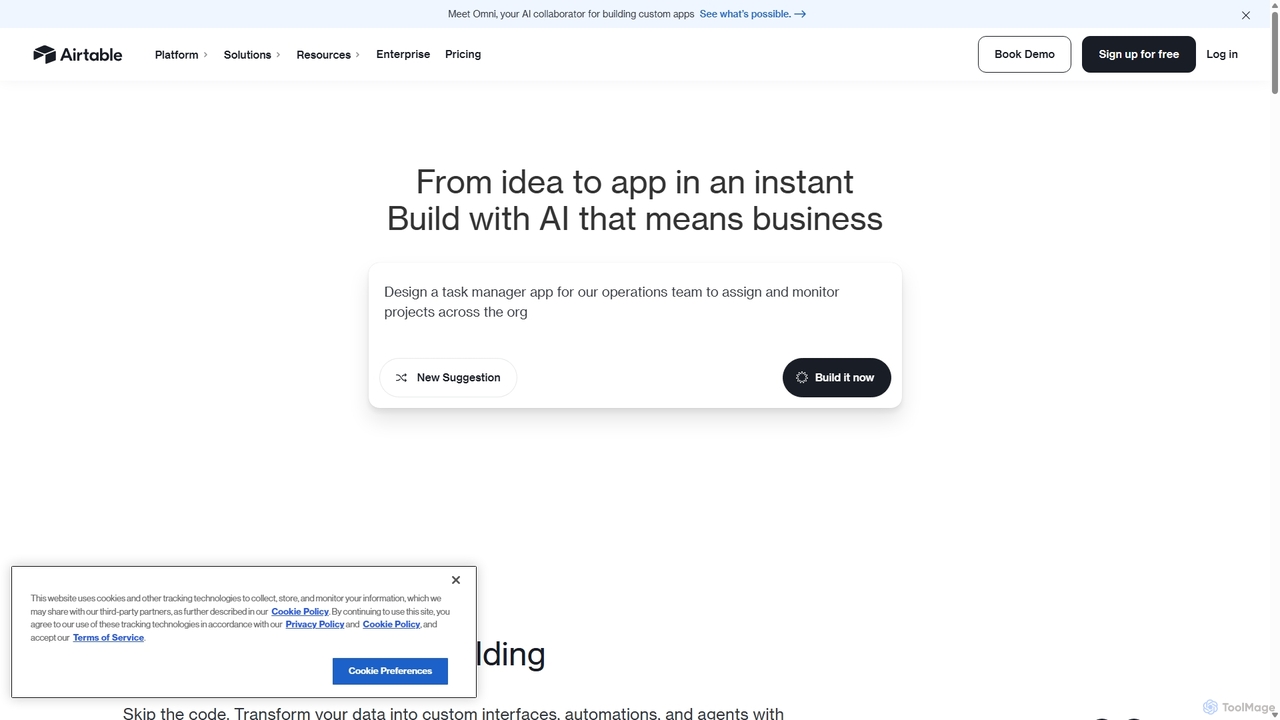
Airtable
Airtable is an AI-native app building platform for enterprises, combining the flexibility of a spreadsheet with the power of a database. It enables teams to create custom applications, automate complex workflows, and deploy intelligent AI agents without writing code, transforming critical data into actionable insights and streamlined operations.
Project Management
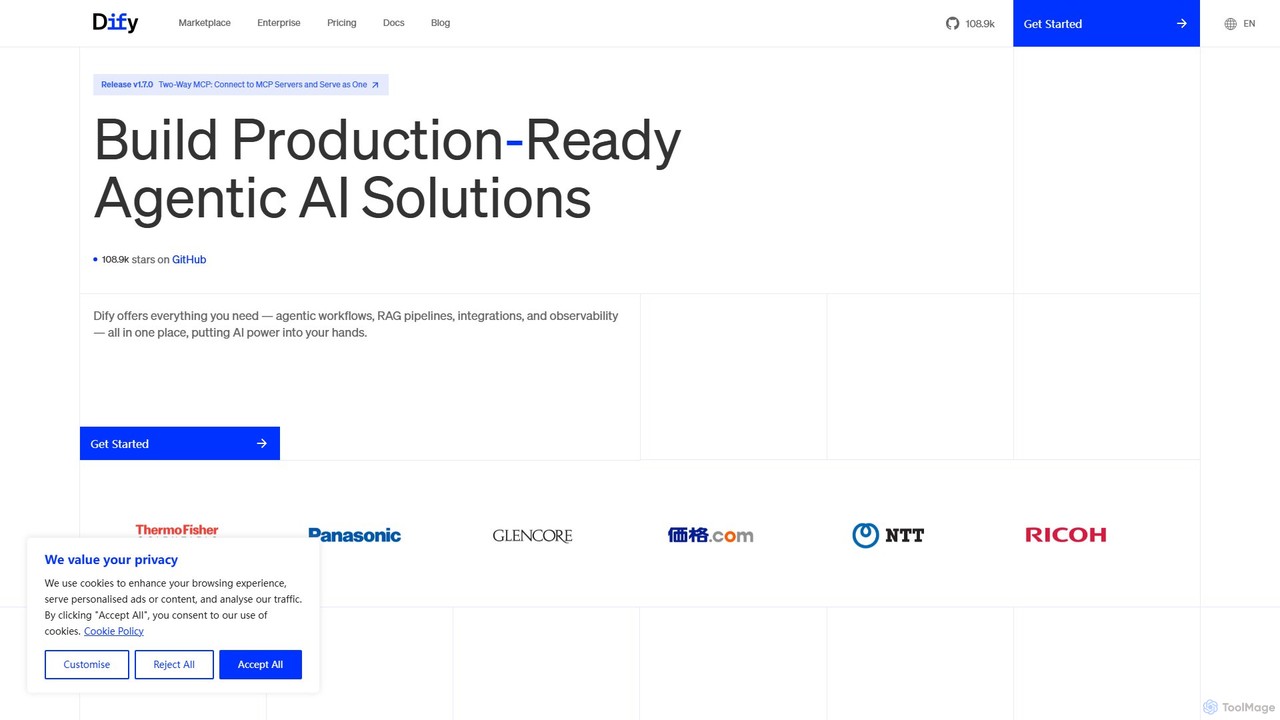
Dify
Dify is an open-source, low-code AI development platform for building and operating production-ready generative AI applications. It enables the creation of AI agents and workflows powered by RAG pipelines, extensive model support, and full observability, simplifying the entire development lifecycle from idea to deployment.
Ai Agent
Retool
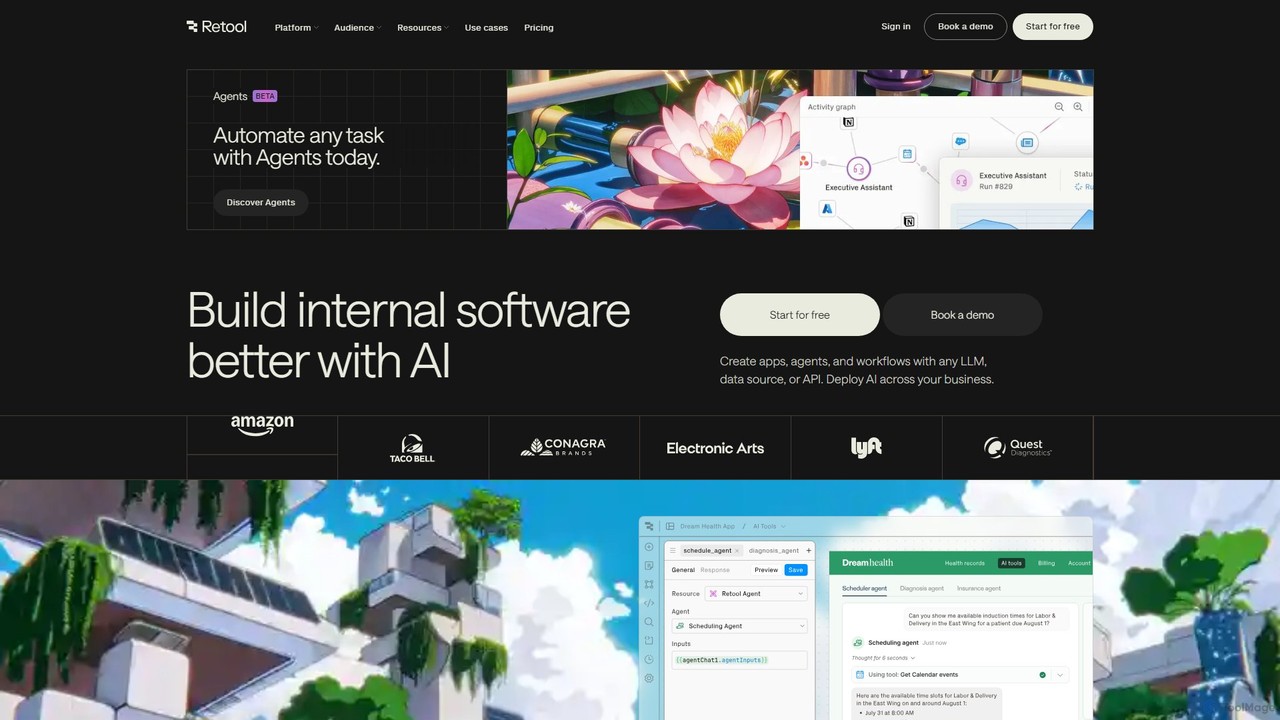
Retool is an AI-powered development platform for building internal software, applications, and automated workflows with exceptional speed. It enables developers and teams to create custom tools like admin panels, dashboards, and CRMs by connecting to any database or API, using a combination of visual building, code, and AI agents.
Internal Tools
Build0
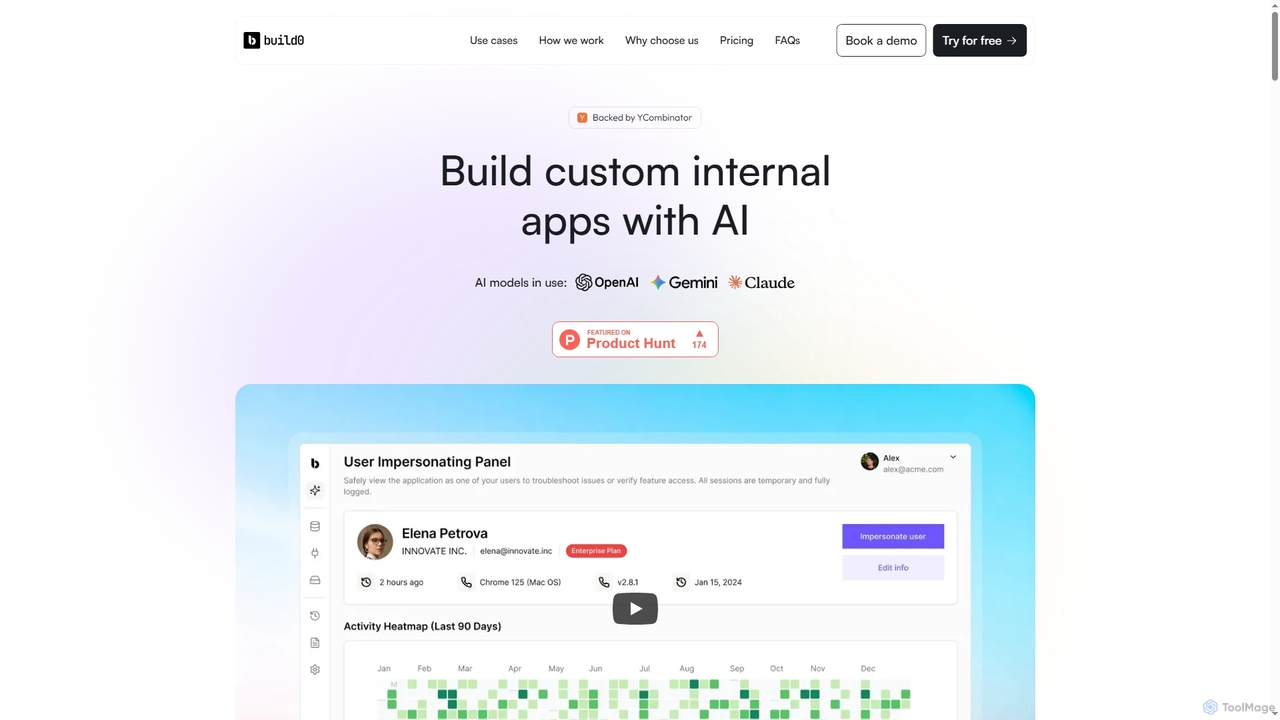
Build0 is an AI-powered platform that enables teams to create custom internal applications and dashboards in minutes. Simply describe your desired tool, connect existing data sources like Slack or databases, and let the AI generate a fully functional, secure app. It's designed for product, operations, and engineering teams to overcome development bottlenecks and build tools 10x faster, with the option to export high-quality React code.
Dashboard
Langflow
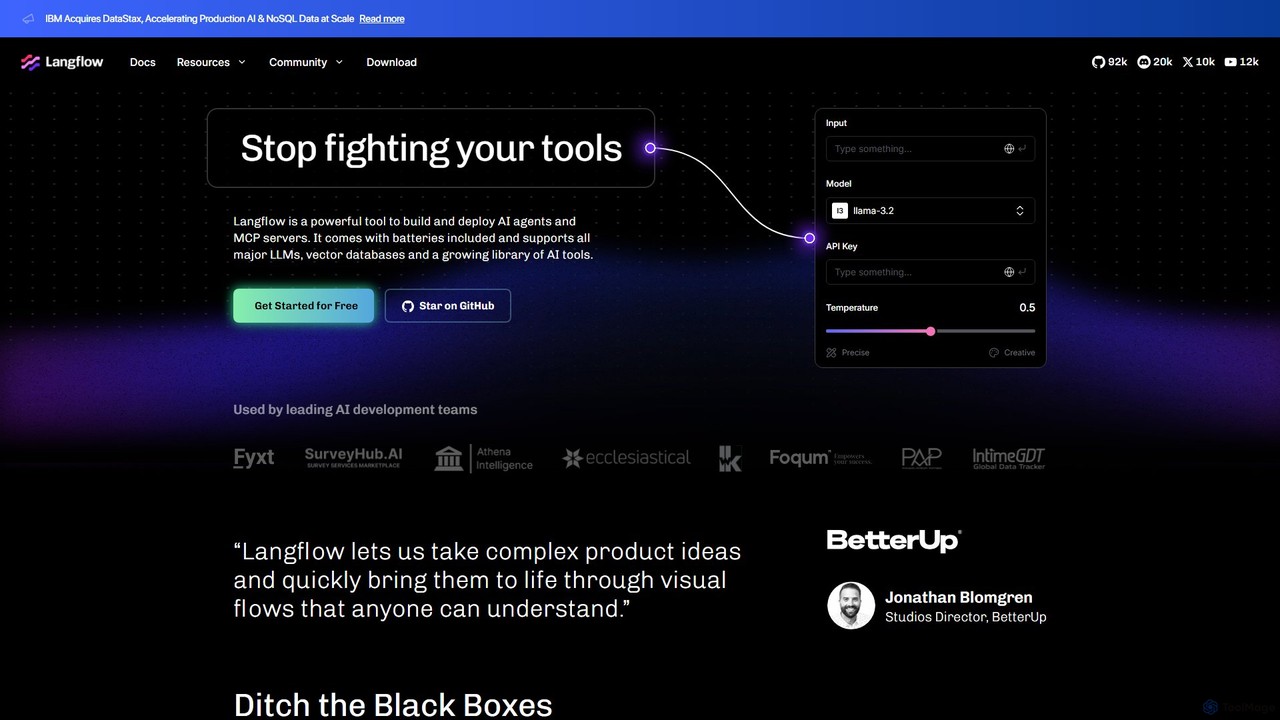
Langflow is an open-source, visual UI for building and deploying AI applications. It features a drag-and-drop interface to chain LLMs, agents, and tools, enabling rapid prototyping and deployment of complex workflows like RAG and multi-agent systems. It supports extensive integrations and offers both self-hosted and cloud options.
Low Code No Code
formsflow.ai
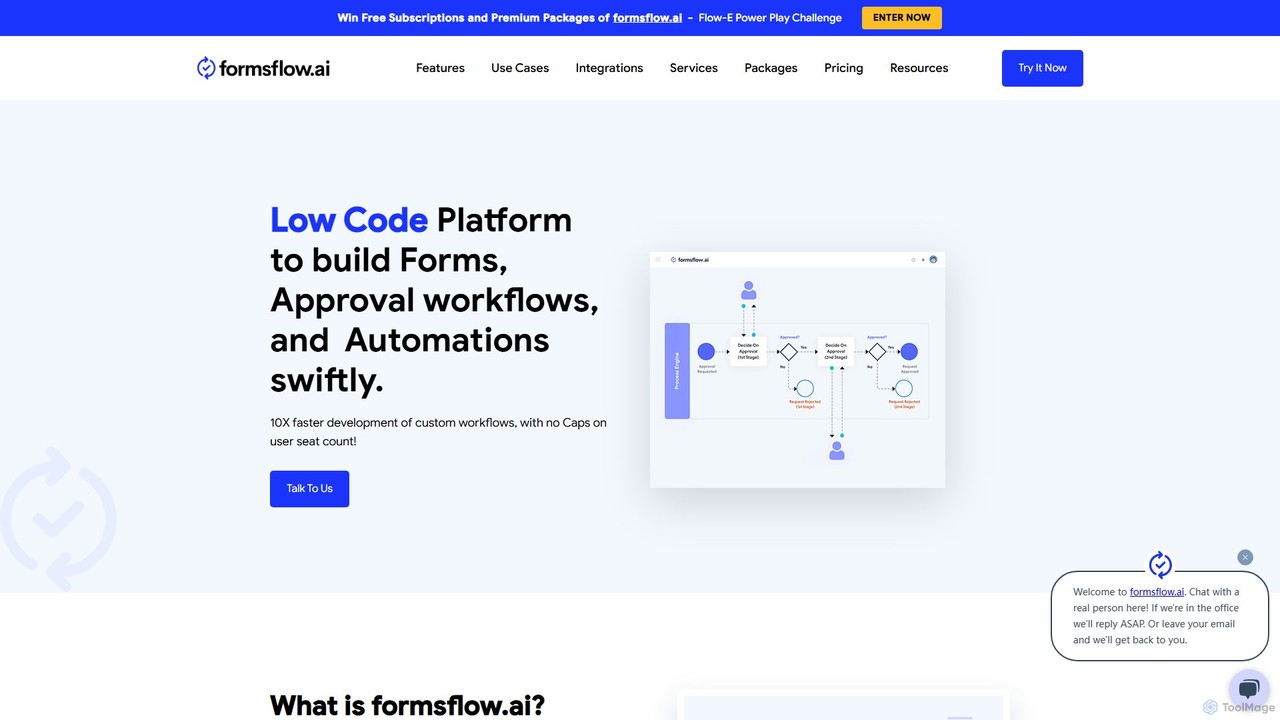
formsflow.ai is a low-code, open-source platform designed for building complex forms and automating workflows. It integrates a drag-and-drop form builder, a powerful BPMN/DMN workflow engine, and AI-driven analytics, including sentiment analysis. Ideal for enterprises, governments, and developers, it offers scalable, multi-tenant solutions for streamlined business process management and data-driven decision-making.
Business Intelligence
Gradientj
Gradientj is a powerful platform for developers and businesses to build, test, and deploy autonomous AI agents. It provides a comprehensive suite of tools, including a reasoning engine, pre-built components, and seamless integrations, to transform complex workflows into intelligent, automated processes from prompt to production.
Intelligence
Superglue
Superglue is an AI-powered platform that translates natural language intent into reliable API execution. It enables developers and teams to automate ETL pipelines, build API connectors instantly, migrate data, and create complex workflows using a chat interface or code. It's designed to empower AI agents with dynamic, production-ready tools for any API.
Tooling
Nectarstudio
Nectarstudio is an AI-powered iPaaS platform designed for engineering teams to instantly generate bulk APIs from databases, automate workflows with a low-code visual builder, and deploy AI agents for autonomous database operations, reducing development time from weeks to minutes.
Business Intelligence
Draftnrun
Draftnrun is an open-source AI agent platform that empowers developers, product teams, and agencies to design, deploy, and monitor production-ready AI workflows without code. It offers a visual builder, comprehensive observability, and flexible deployment options, accelerating AI integration and ensuring full control.
Chatbot