

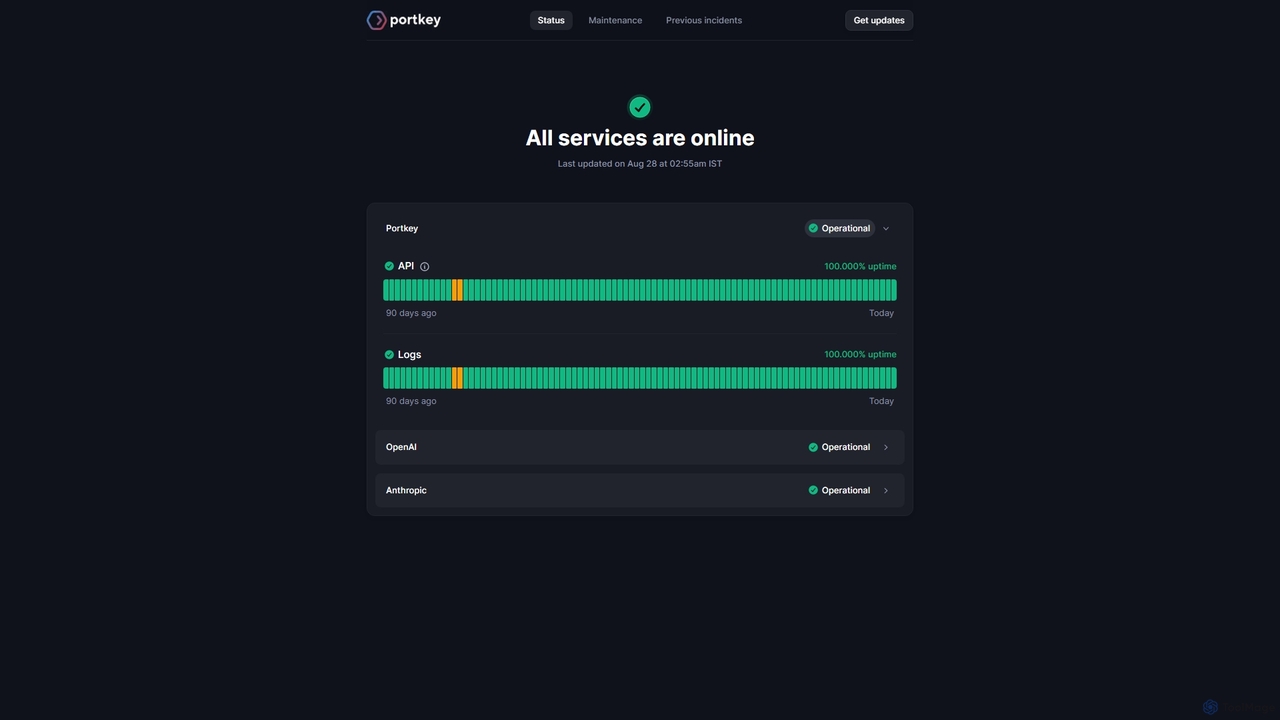
Portkey AI Overview
Portkey AI serves as a comprehensive control center for developers building applications on top of Large Language Models (LLMs). It acts as an AI gateway, streamlining the entire lifecycle of LLM integration, from development and testing to deployment and monitoring. By offering a unified interface to access a multitude of LLMs like OpenAI's GPT series, Anthropic's Claude, and others, Portkey AI empowers developers to build more robust, efficient, and resilient AI-powered products without being locked into a single provider.
The platform is engineered to tackle the common challenges in LLM application development, such as high latency, unpredictable costs, and service reliability issues. With its suite of powerful tools, engineering teams can gain deep insights into their AI usage, optimize performance, manage expenses, and ensure their applications remain operational even when underlying services face disruptions. Portkey AI is the essential infrastructure layer for any serious AI application.
How to use Portkey AI
Integrating Portkey AI into your workflow is designed to be seamless and requires minimal code changes. First, you sign up on the Portkey AI platform and create a new project to obtain a virtual API key. This key securely manages your credentials for various LLM providers. Next, in your application's code, you simply replace the base URL of your current LLM provider (e.g., 'api.openai.com') with Portkey's gateway URL. All your existing API calls will then be routed through Portkey's infrastructure. Once integrated, you can log into the Portkey AI dashboard to access a wealth of features. You can monitor requests in real-time, analyze latency and costs, configure caching strategies, set up automatic retries and fallbacks to different models, and manage your prompts centrally.
Core Features of Portkey AI
- Unified API Gateway: Connect to over 100 LLMs from providers like OpenAI, Anthropic, Google, Cohere, and more with a single, consistent API interface. Switch between models effortlessly.
- Observability and Monitoring: Gain full visibility into your AI application's performance with real-time logs, analytics dashboards, and alerts. Track requests, latency, token usage, and costs per user or feature.
- Semantic Caching: Drastically reduce latency and API costs by caching responses to similar or identical prompts. This improves user experience and optimizes your budget.
- Load Balancing and Fallbacks: Automatically route requests to the best-performing or most cost-effective model. Configure automatic fallbacks to a secondary model if the primary one fails or is slow, ensuring high availability.
- Prompt Management: A centralized repository to create, version, test, and deploy prompts. Collaborate with your team and roll out prompt updates without changing your application code.
- Cost Management and Control: Set budgets, receive alerts on spending, and use virtual keys to track costs for different teams, environments, or customers. Make data-driven decisions to control your AI expenditure.
- Enterprise-Grade Security: Protect sensitive data with features like PII redaction and ensure compliance with industry standards.
Use Cases for Portkey AI
Portkey AI is versatile and can be applied across various scenarios. Development teams use it to build highly reliable customer support chatbots that can automatically switch between GPT-4 and Claude if one service experiences downtime. Content generation platforms leverage its semantic caching to deliver articles and social media posts faster and at a fraction of the cost. For internal enterprise tools, companies use Portkey to monitor usage and manage costs across different departments. It's also an invaluable tool for A/B testing different LLMs or prompts to find the optimal combination for performance and cost-effectiveness before a full-scale rollout.
Advantages of Portkey AI
The primary advantage of Portkey AI is its ability to abstract away the complexity of managing multiple LLM integrations. This leads to a faster development cycle and reduced engineering overhead. Its focus on reliability with features like automatic fallbacks and retries ensures a stable user experience. The platform delivers significant cost savings through intelligent caching and cost-tracking tools. Furthermore, it prevents vendor lock-in, giving teams the flexibility to adopt the best model for the job at any time. The deep observability it provides empowers teams to debug issues quickly and continuously optimize their AI applications.
Pricing and Plans
Portkey AI offers a flexible, freemium pricing model designed to scale with your needs. The platform typically includes:
- Starter Plan (Free): Ideal for individual developers and small projects, offering a generous number of free requests per month, access to the unified API, and basic observability features.
- Pro Plan (Paid): Designed for growing startups and teams, this plan includes a higher request volume, advanced features like semantic caching, automatic fallbacks, and prompt management tools. Pricing is usually based on usage.
- Enterprise Plan (Custom): Tailored for large organizations with specific requirements for security, compliance, and scale. It includes unlimited requests, dedicated support, SSO, and advanced security features with custom pricing.
Please visit the official Portkey AI website for the most current and detailed pricing information.
Portkey AI Alternatives
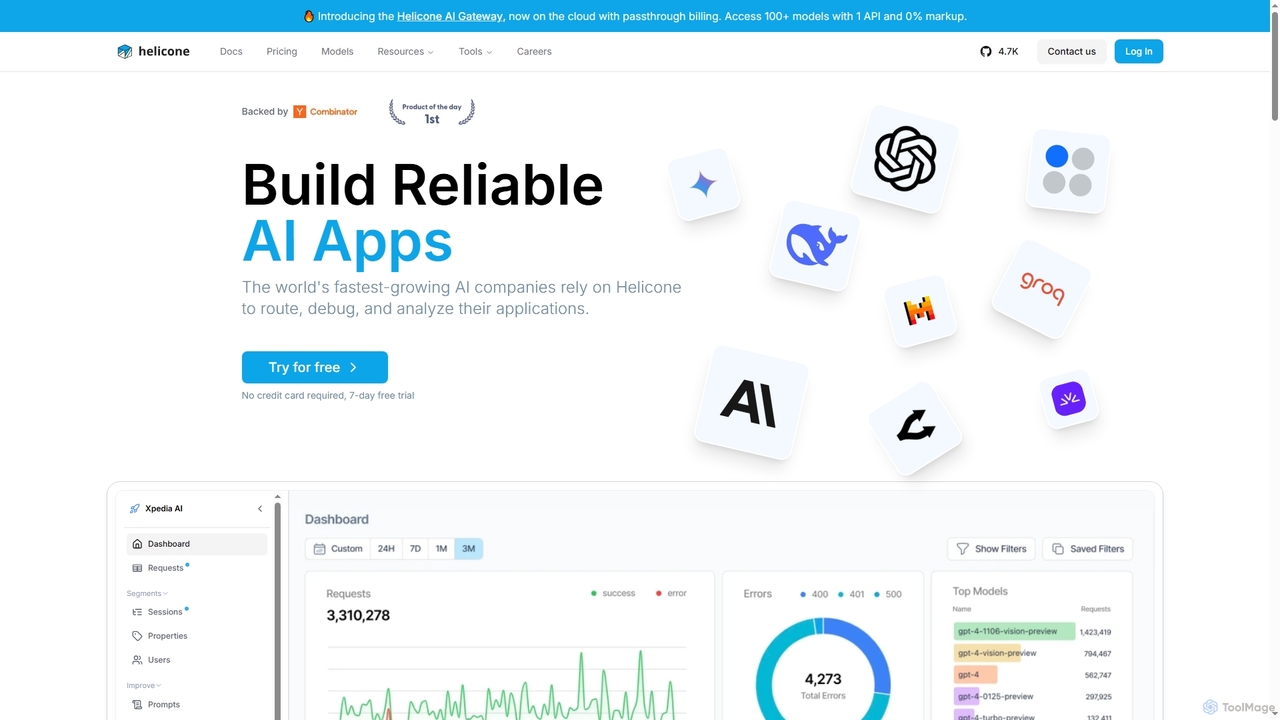
Helicone
Helicone is an open-source platform offering an AI Gateway and LLM Observability for developers. It helps build reliable AI applications by providing tools to route, monitor, debug, and analyze LLM usage. Key features include a unified API for 100+ models, intelligent caching, rate limiting, prompt management, and detailed performance analytics.
Api Management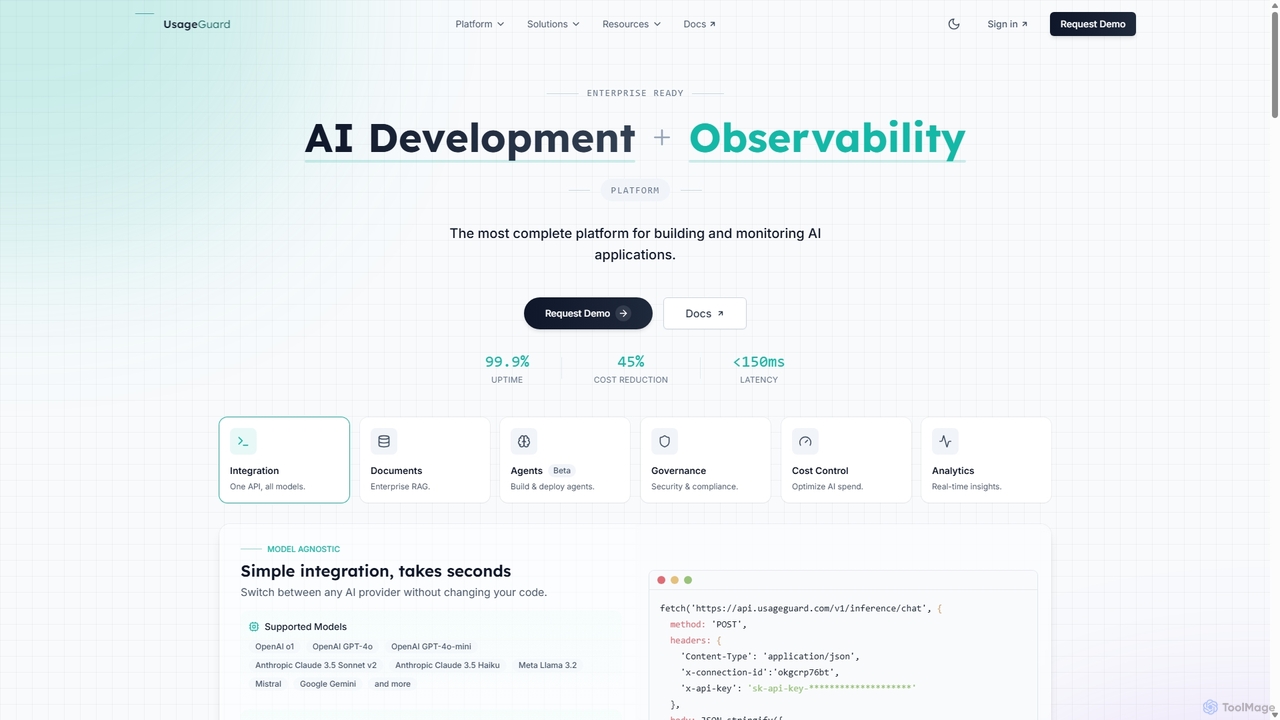
UsageGuard
UsageGuard is an all-in-one enterprise platform for AI development and observability. It provides a unified API to access all major LLMs, enabling seamless model switching. The platform focuses on enterprise-grade security, comprehensive cost control, and real-time monitoring to help businesses build, scale, and manage AI applications securely and efficiently.
Llmops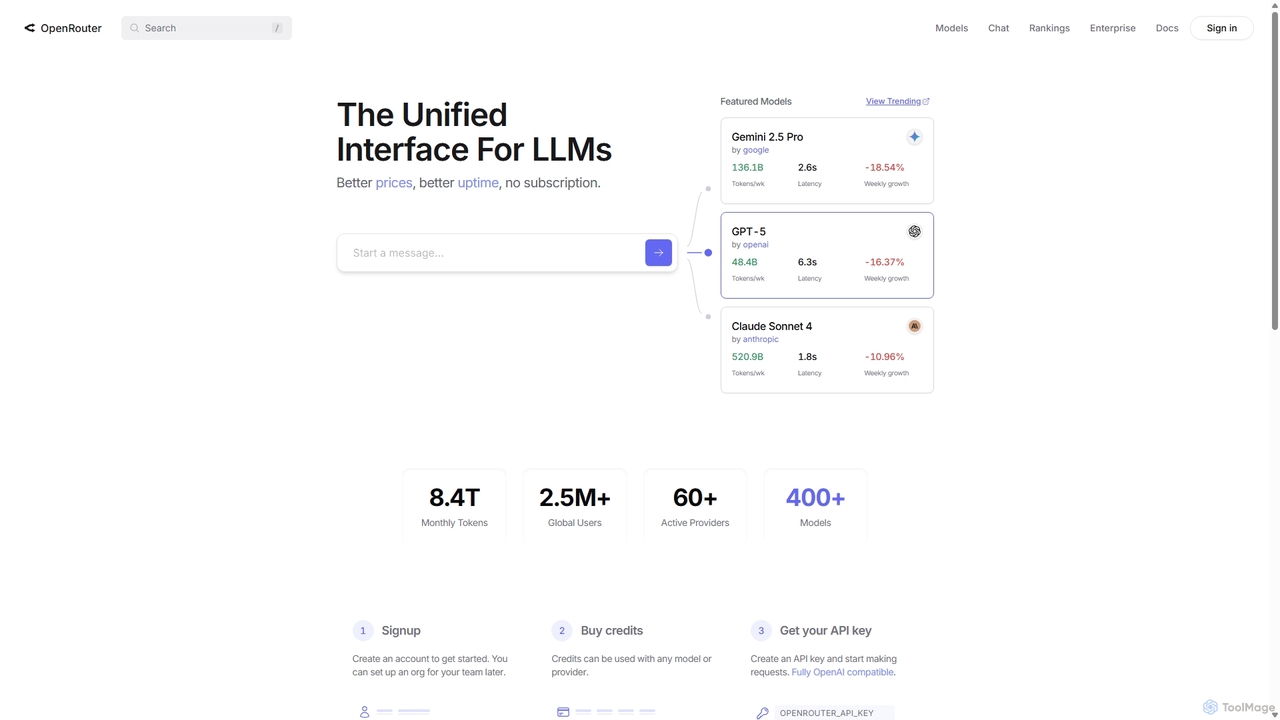
OpenRouter
OpenRouter is a unified API gateway for developers, providing access to over 400 AI models from 60+ providers like OpenAI, Google, and Anthropic. It simplifies development with a single API, offers competitive pay-as-you-go pricing, automatic failovers for high availability, and intelligent model routing to optimize cost and performance.
Model Deployment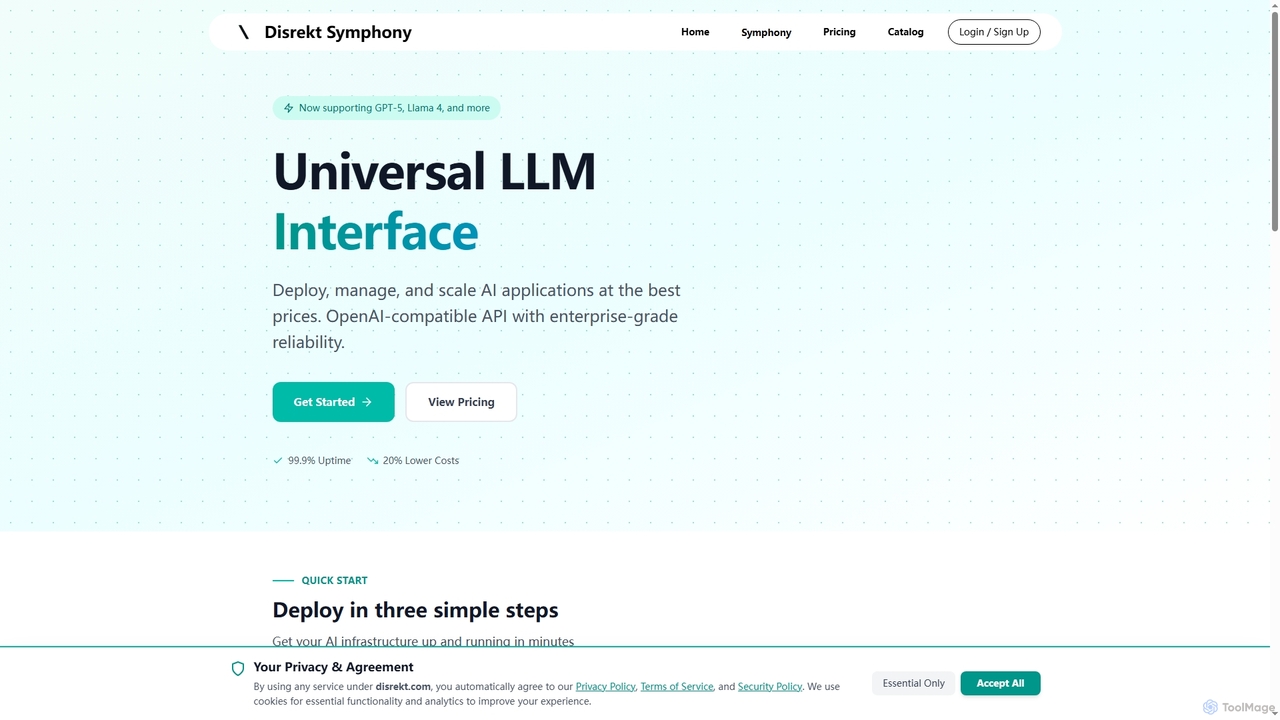
Symphony
Symphony is a universal LLM interface providing an OpenAI-compatible API for deploying, managing, and scaling AI applications. It offers enterprise-grade reliability, up to 20% lower costs, and supports over 100 major AI models like GPT-5 and Llama 4, making it an ideal solution for developers and enterprises seeking efficient and robust AI infrastructure.
Api Management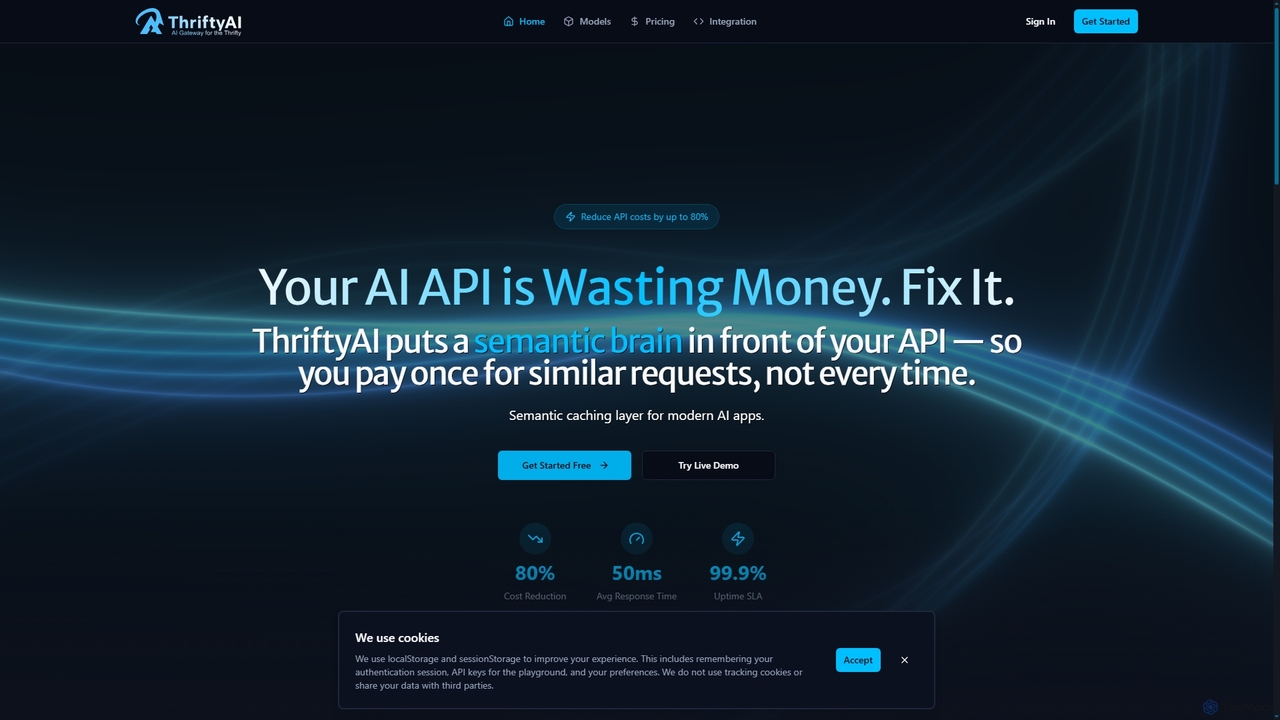
ThriftyAI
ThriftyAI is an advanced AI gateway and semantic caching layer designed to significantly reduce AI API costs by up to 80% and accelerate response times. It intelligently caches similar requests, masks sensitive data, and provides robust safety features, making it ideal for modern AI applications seeking efficiency and enterprise-grade security.
GatewayPortkey AI Categories
Portkey AI Jobs
Portkey AI Embed Widget
Copy this embed code to place the badge on your blog, article, or product site and send readers directly to this ToolMage detail page.

Related AI tools
Helicone
Helicone is an open-source platform offering an AI Gateway and LLM Observability for developers. It helps build reliable AI applications by providing tools to route, monitor, debug, and analyze LLM usage. Key features include a unified API for 100+ models, intelligent caching, rate limiting, prompt management, and detailed performance analytics.
Api ManagementOpenRouter
OpenRouter is a unified API gateway for developers, providing access to over 400 AI models from 60+ providers like OpenAI, Google, and Anthropic. It simplifies development with a single API, offers competitive pay-as-you-go pricing, automatic failovers for high availability, and intelligent model routing to optimize cost and performance.
Model DeploymentThriftyAI
ThriftyAI is an advanced AI gateway and semantic caching layer designed to significantly reduce AI API costs by up to 80% and accelerate response times. It intelligently caches similar requests, masks sensitive data, and provides robust safety features, making it ideal for modern AI applications seeking efficiency and enterprise-grade security.
Gateway
Jyek
Jyek is an AI agent platform that understands objectives, creates execution plans, uses tools, and delivers verifiable results for complex, multi-step tasks.
AutomationSymphony
Symphony is a universal LLM interface providing an OpenAI-compatible API for deploying, managing, and scaling AI applications. It offers enterprise-grade reliability, up to 20% lower costs, and supports over 100 major AI models like GPT-5 and Llama 4, making it an ideal solution for developers and enterprises seeking efficient and robust AI infrastructure.
Api Management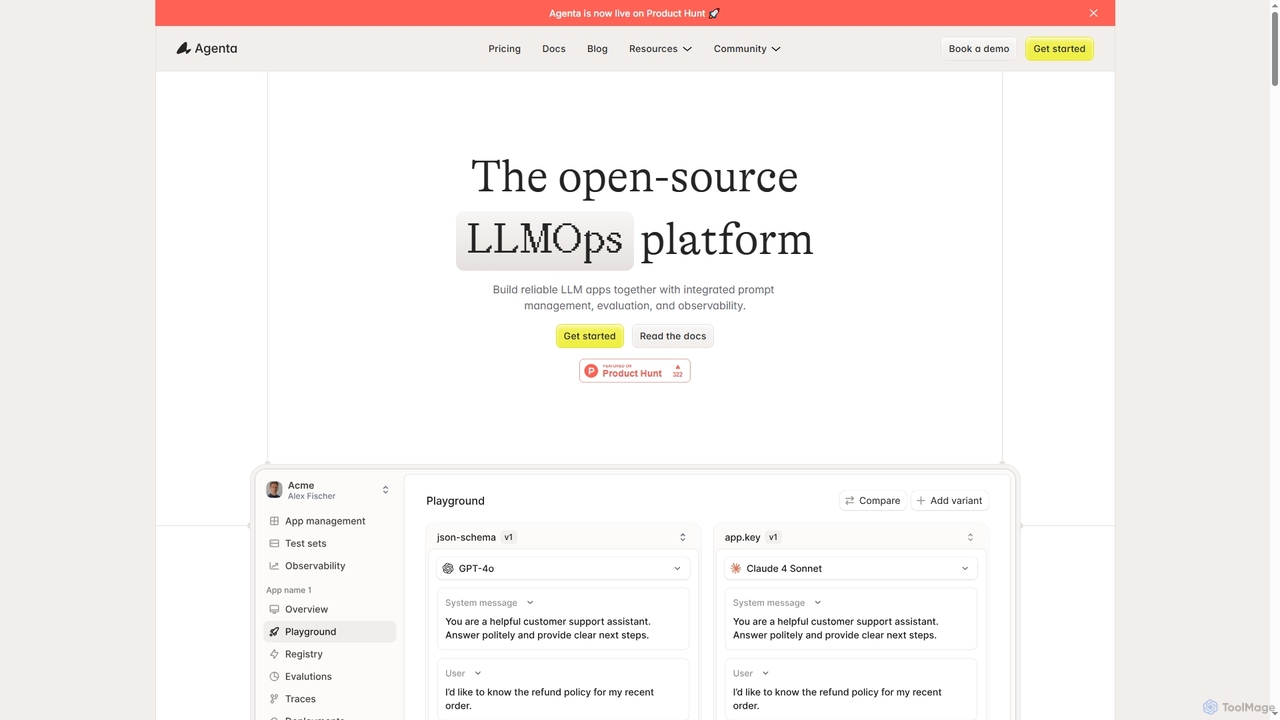
Agenta
Agenta is an open-source LLMOps platform designed for teams to build reliable LLM applications. It integrates prompt management, systematic evaluation, and observability into a single, collaborative workflow, helping developers, product managers, and domain experts move from scattered processes to structured development.
DebuggingUsageGuard
UsageGuard is an all-in-one enterprise platform for AI development and observability. It provides a unified API to access all major LLMs, enabling seamless model switching. The platform focuses on enterprise-grade security, comprehensive cost control, and real-time monitoring to help businesses build, scale, and manage AI applications securely and efficiently.
Llmops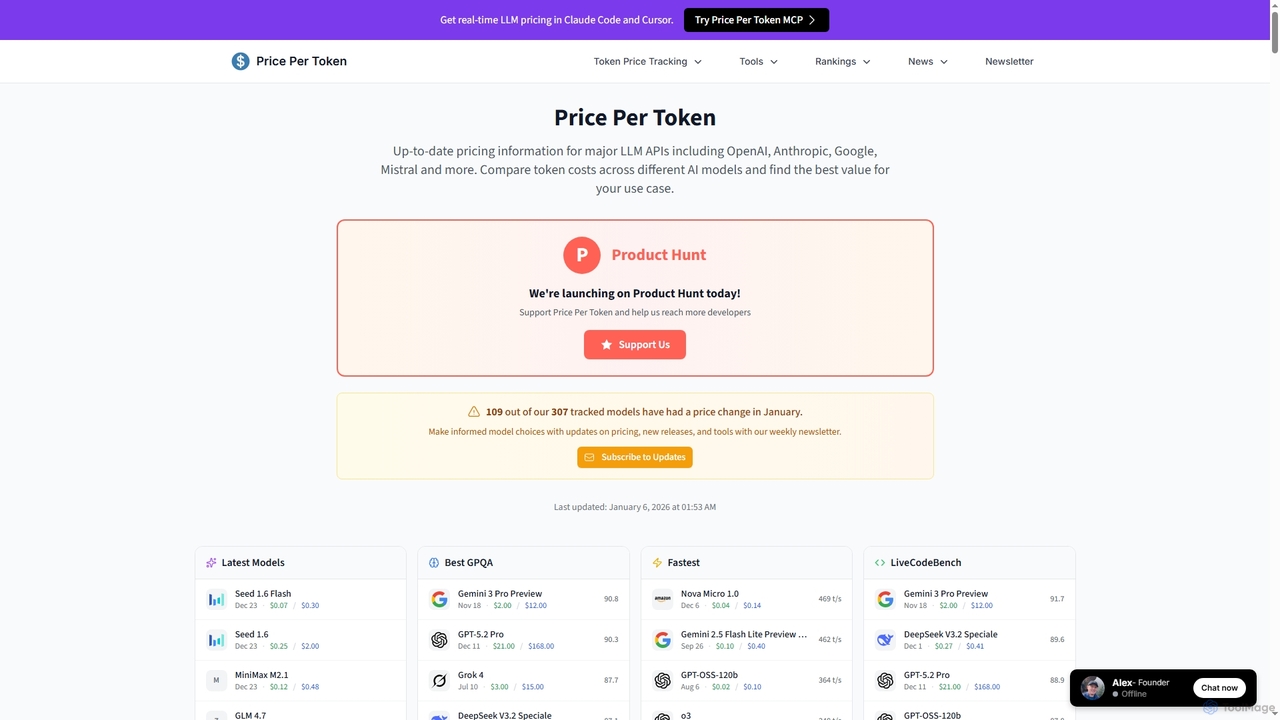
PricePerToken
PricePerToken is an essential AI tool offering real-time LLM API pricing comparisons for over 300 models. It helps developers, researchers, and businesses compare token costs, analyze performance benchmarks, and optimize their AI spending across major providers like OpenAI, Anthropic, Google, and Mistral.
Llm Pricing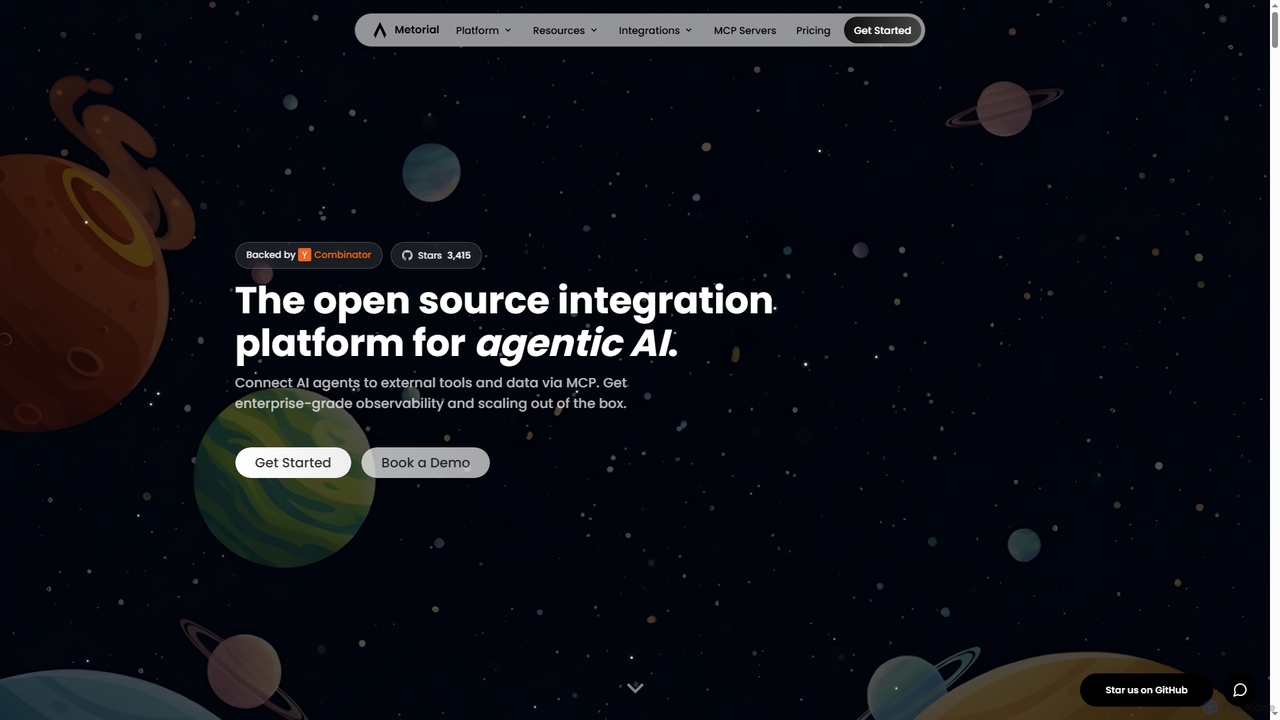
Metorial
Metorial is an integration platform for AI agents, enabling developers to quickly build, deploy, and monitor powerful agentic AI applications. It provides seamless connections to hundreds of tools, data sources, and APIs via its serverless Model Context Protocol (MCP) platform, offering robust SDKs, observability, and enterprise-grade security for scalable AI solutions.
Agentic Ai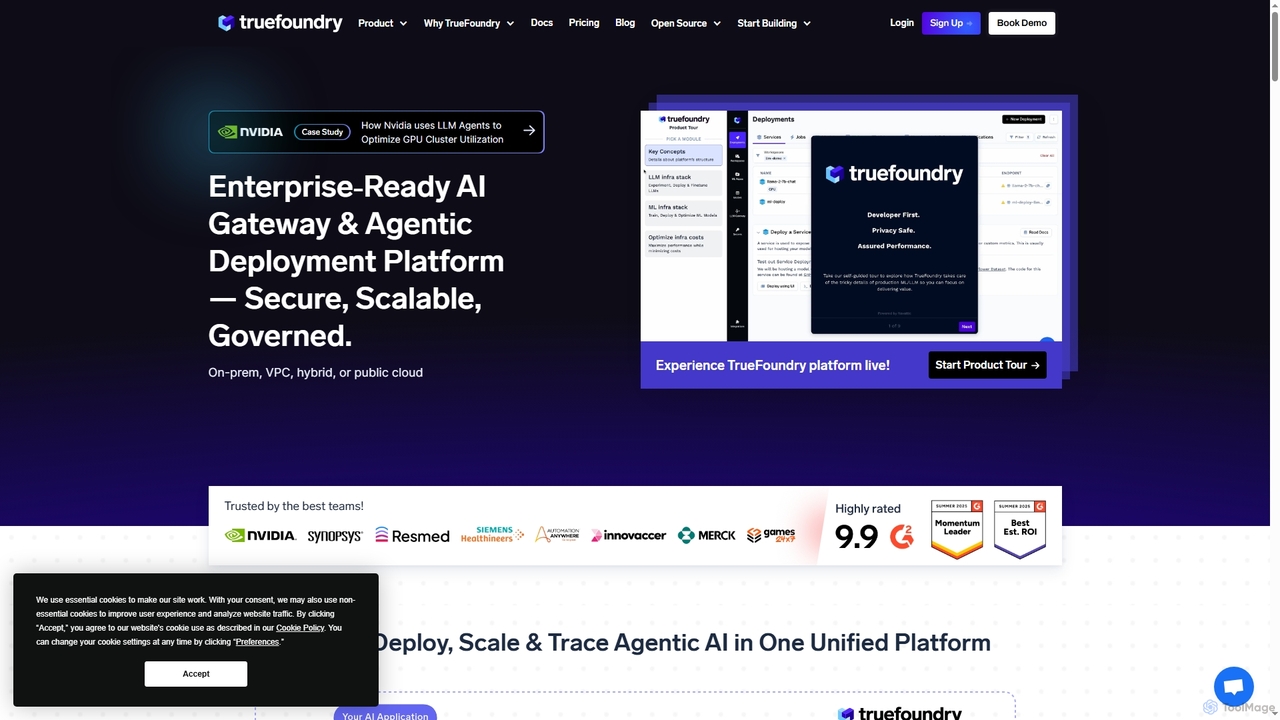
Truefoundry
Truefoundry is an enterprise-ready platform for deploying, managing, and scaling agentic AI applications. It provides a unified AI Gateway to orchestrate complex AI workflows, manage models, and ensure security, governance, and observability. Designed for developers and MLOps teams, it supports on-premise, cloud, and hybrid deployments, optimizing GPU utilization and accelerating time-to-production.
Cloud Computing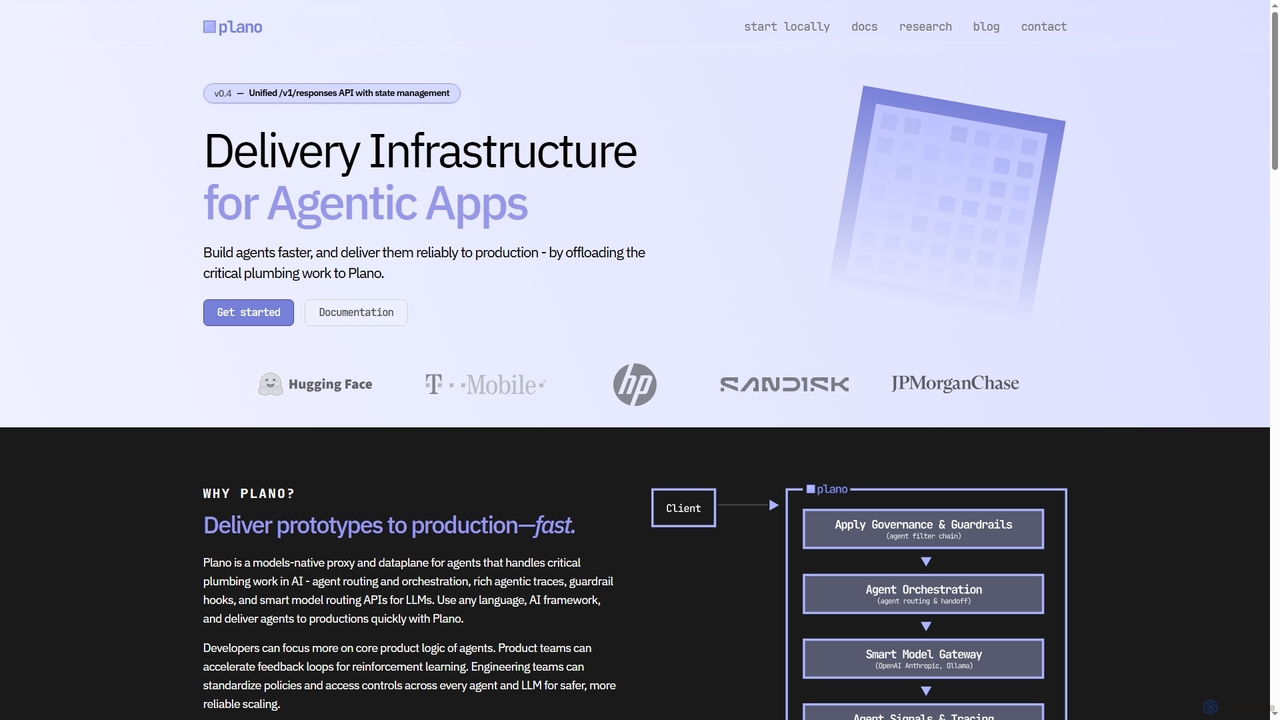
Plano
Plano is a models-native delivery infrastructure for agentic AI applications, offloading critical plumbing work such as agent routing, orchestration, rich observability, and guardrail hooks. It accelerates the development and reliable deployment of AI agents to production, allowing developers to focus on core product logic. Designed for speed and reliability, Plano simplifies complex AI infrastructure challenges.
Agent Orchestration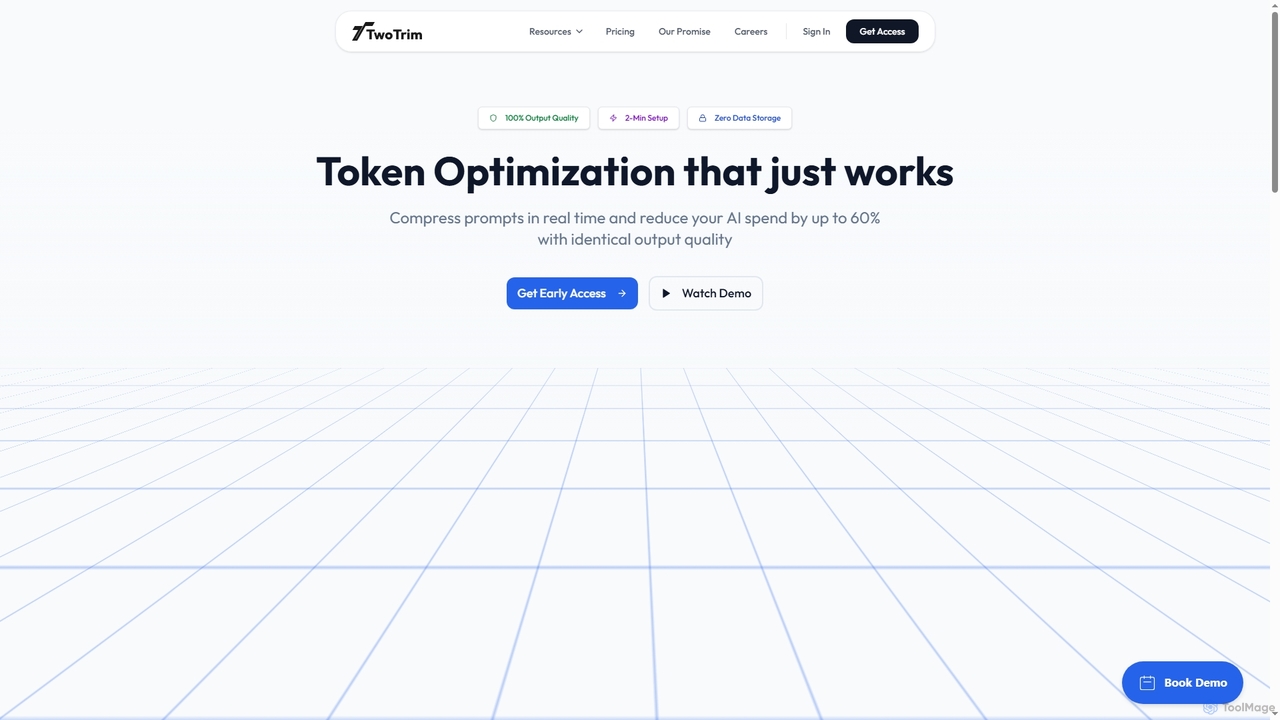
TwoTrim
TwoTrim is an AI token optimization platform that intelligently compresses large language model prompts in real-time, reducing AI API costs by up to 60% while guaranteeing 100% output quality. It offers a secure, stateless, and transparent solution for enterprises.
Large Language Models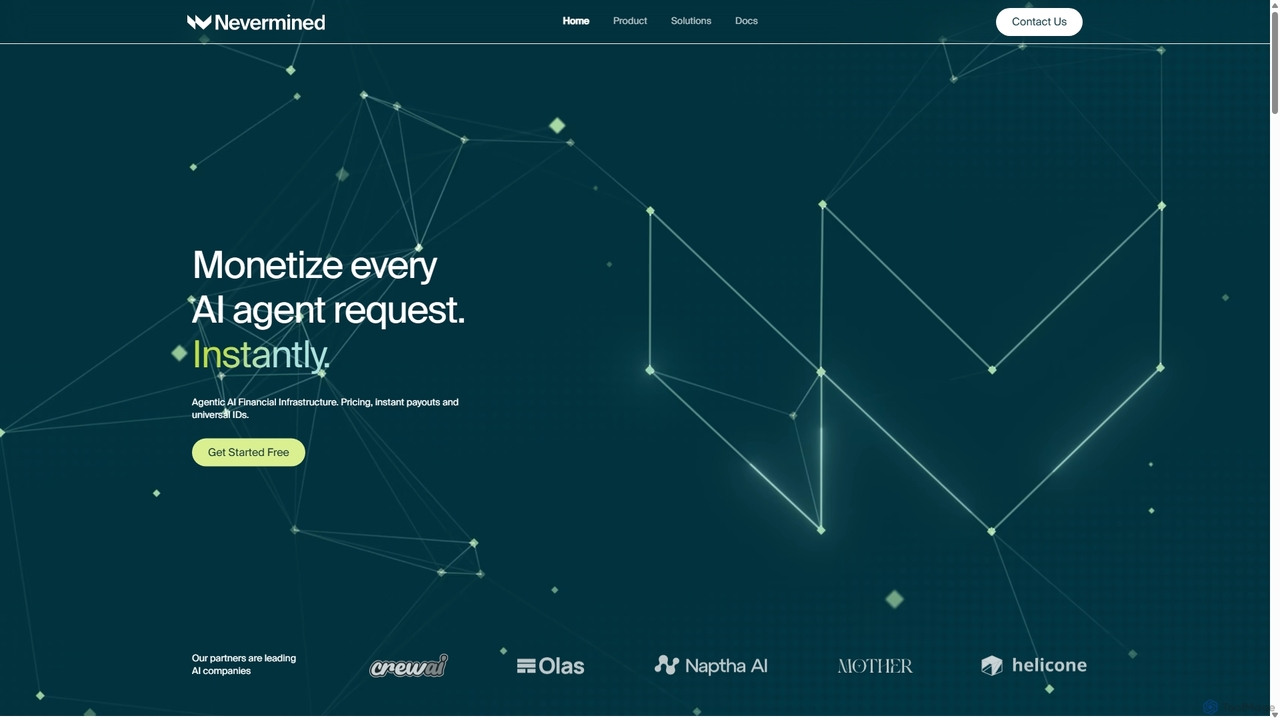
Nevermined
Nevermined is a specialized billing and payments infrastructure designed for the AI economy. It enables developers and businesses to instantly monetize every AI agent request through flexible, AI-native pricing models like usage-based, outcome-based, and value-based billing. It provides real-time metering, instant payouts, and universal agent IDs to support both human-to-agent and agent-to-agent transactions, future-proofing applications for the emerging agentic commerce landscape.
Monetization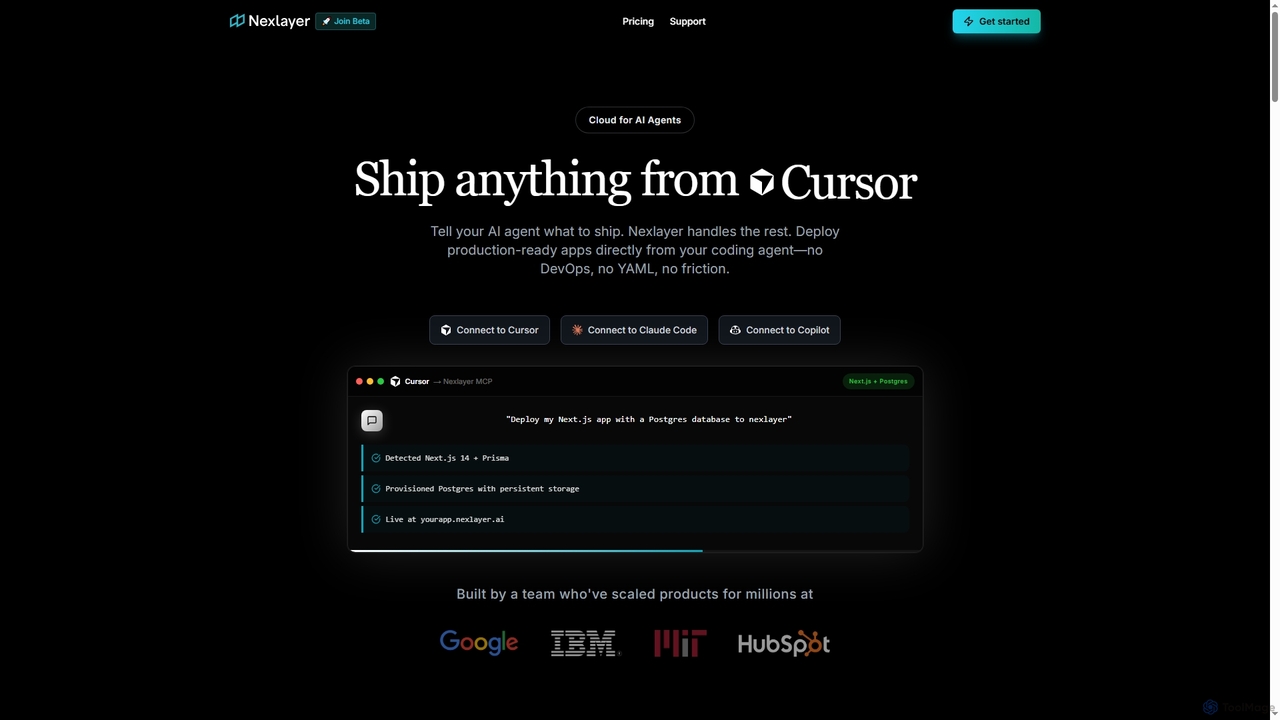
Nexlayer
Nexlayer is the first agent-native cloud platform designed to empower AI coding agents to deploy production-ready applications swiftly. It automates complex infrastructure, enabling developers and founders to ship full-stack apps, APIs, and databases in minutes without DevOps overhead.
Application Development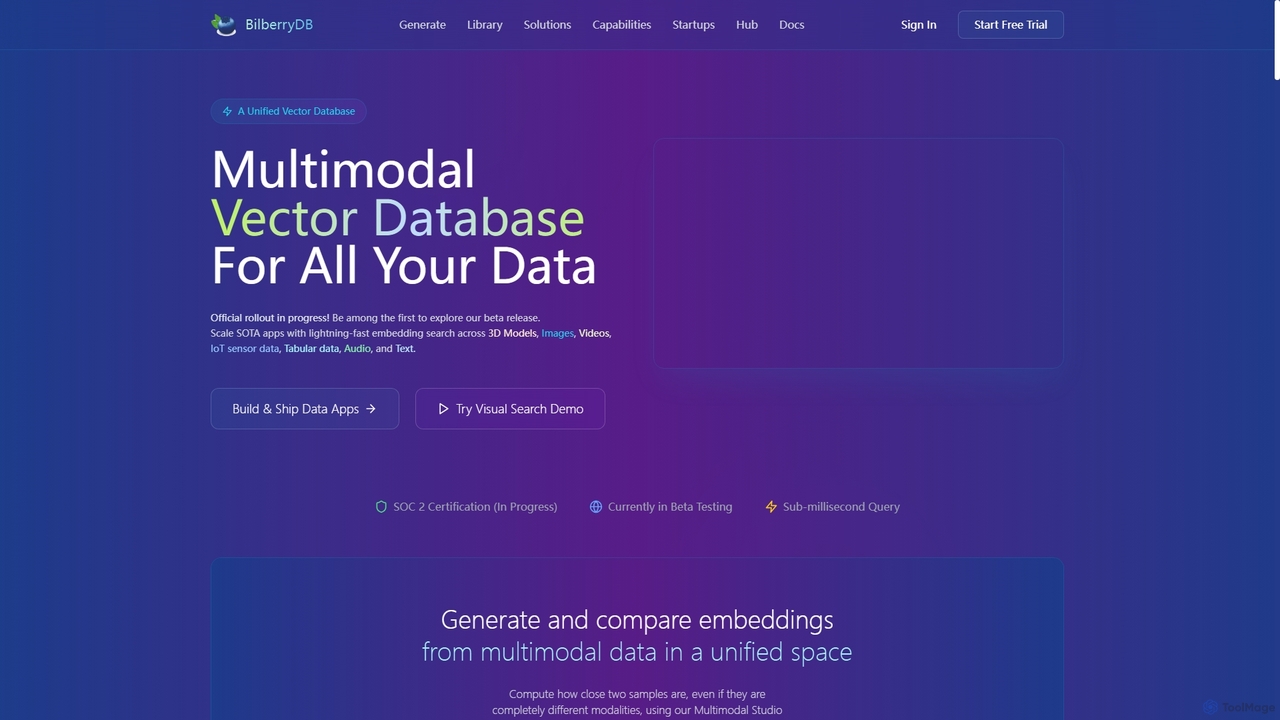
Bilberrydb
Bilberrydb is an enterprise-grade, multimodal vector database designed for building advanced AI applications. It enables lightning-fast embedding search across diverse data types including 3D models, images, videos, audio, text, and tabular data on a unified platform.
Vector Database
Portkey AI Comments (0)
Sign in to comment.
Sign inNo comments yet.