Accessibility Best in category 1 results Transcription AI Tool

Popular AI tools in the Transcription field of Accessibility include Ekto Captions, etc., helping you quickly improve efficiency.

Ekto Captions

Ekto Captions

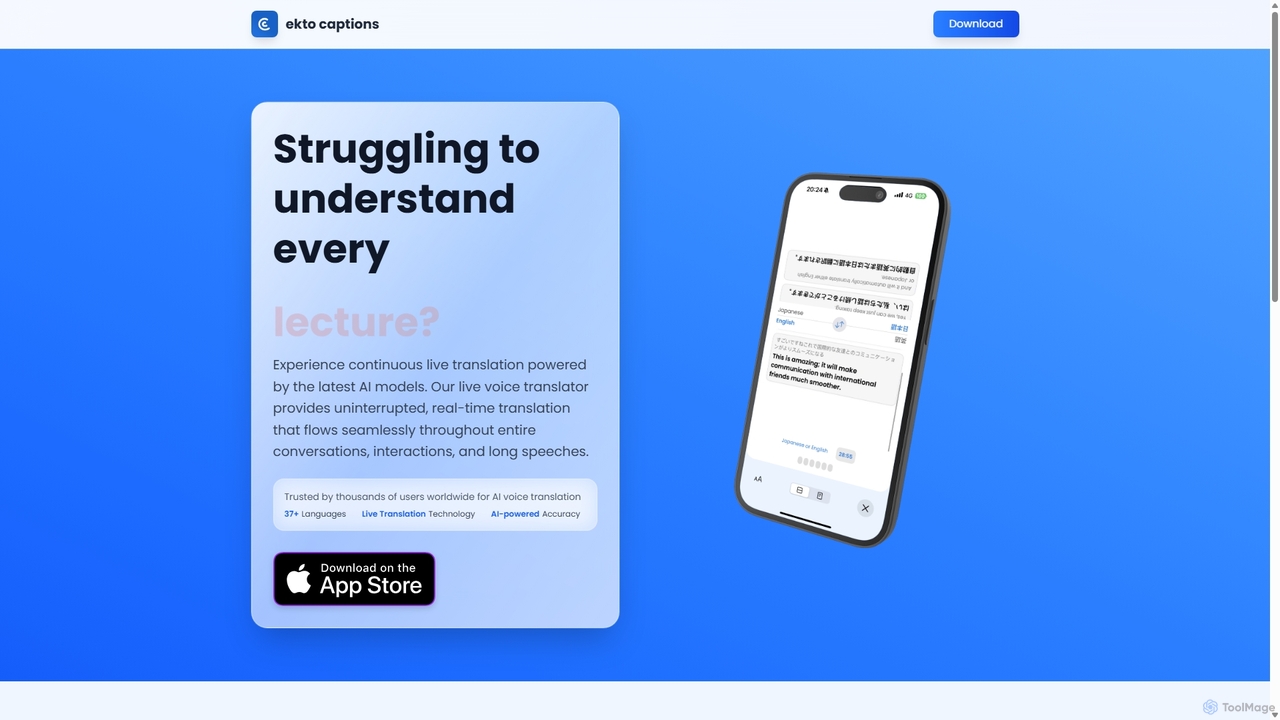
Ekto Captions is an AI-powered voice translator and live interpreter app for iOS. It provides continuous, real-time translation …

2.9K

About Transcription

Transcription tools are AI-powered solutions that convert spoken language from audio or video into written text. Leveraging advanced speech recognition and natural language processing (NLP) algorithms, these tools provide accurate and efficient text versions of verbal content. They are essential for creating accessible content, improving documentation, and streamlining workflows across various industries, often featuring real-time capabilities, speaker identification, and multi-language support.

Core Features

  • Speech-to-Text Conversion: Accurately transforms audio and video recordings into editable written text.
  • Speaker Identification: Automatically distinguishes and labels different speakers within a conversation or recording.
  • Timestamping: Inserts time markers into the transcribed text, linking specific phrases to their exact points in the audio.
  • Multi-language Support: Processes and transcribes audio in a wide array of languages and dialects.
  • Custom Vocabulary: Allows users to add industry-specific jargon, proper nouns, or technical terms to enhance transcription accuracy.

Use Cases

Transcription tools are widely adopted by professionals needing to convert spoken words into text for various purposes. They are crucial for documenting meetings, interviews, and lectures, providing a searchable and reviewable record. Additionally, these tools are invaluable for content creators who need to generate subtitles, closed captions, or text-based content from podcasts and videos, significantly enhancing content accessibility and repurposing efforts.

How to Choose

When selecting an AI transcription tool, consider its accuracy, especially for specific accents or technical jargon, and the speed of transcription (real-time vs. batch processing). Evaluate its language support, speaker identification capabilities, and integration options with existing workflows. Security and privacy features are also paramount, particularly for sensitive data, alongside the pricing model and overall user-friendliness.

TranscriptionUse Cases

1

Documenting Meetings and Interviews

Business professionals and researchers utilize transcription tools to automatically convert recorded meetings, client calls, and in-depth interviews into accurate, searchable text. This streamlines the creation of meeting minutes, research notes, and comprehensive documentation, saving hours of manual listening and typing.

2

Generating Subtitles and Captions for Video

Content creators, educators, and media producers employ these tools to quickly generate precise subtitles and closed captions for videos, webinars, and online courses. This significantly enhances content accessibility for hearing-impaired audiences and non-native speakers, while also boosting SEO for video content.

3

Repurposing Audio/Video Content for Blogs

Podcasters and YouTubers leverage transcription to convert their audio and video content into written blog posts, articles, or show notes. This strategy maximizes content reach, provides alternative consumption formats, and improves search engine visibility by offering text-based versions of their multimedia assets.

4

Academic Research and Qualitative Data Analysis

Academics and students use transcription tools to process recorded lectures, focus group discussions, and qualitative research interviews. Having text transcripts simplifies the process of coding, analyzing themes, and extracting key insights from large volumes of spoken data, accelerating research workflows.

5

Legal and Medical Dictation and Record-Keeping

Legal professionals and healthcare providers rely on transcription tools to convert dictated notes, court proceedings, depositions, and patient consultations into written records. This ensures high accuracy for critical documentation, maintains compliance, and provides easily retrievable information for future reference.

6

Journalism and Media Production Workflow

Journalists and media teams use transcription to rapidly convert press conferences, field interviews, and broadcast footage into text. This enables quick fact-checking, quote extraction, and script preparation, significantly accelerating the news reporting and content production cycle.

TranscriptionFrequently Asked Questions