Ai Agent Best in category 1 results Programming AI Tool

Popular AI tools in the Programming field of Ai Agent include Lingma, etc., helping you quickly improve efficiency.

Lingma

Lingma

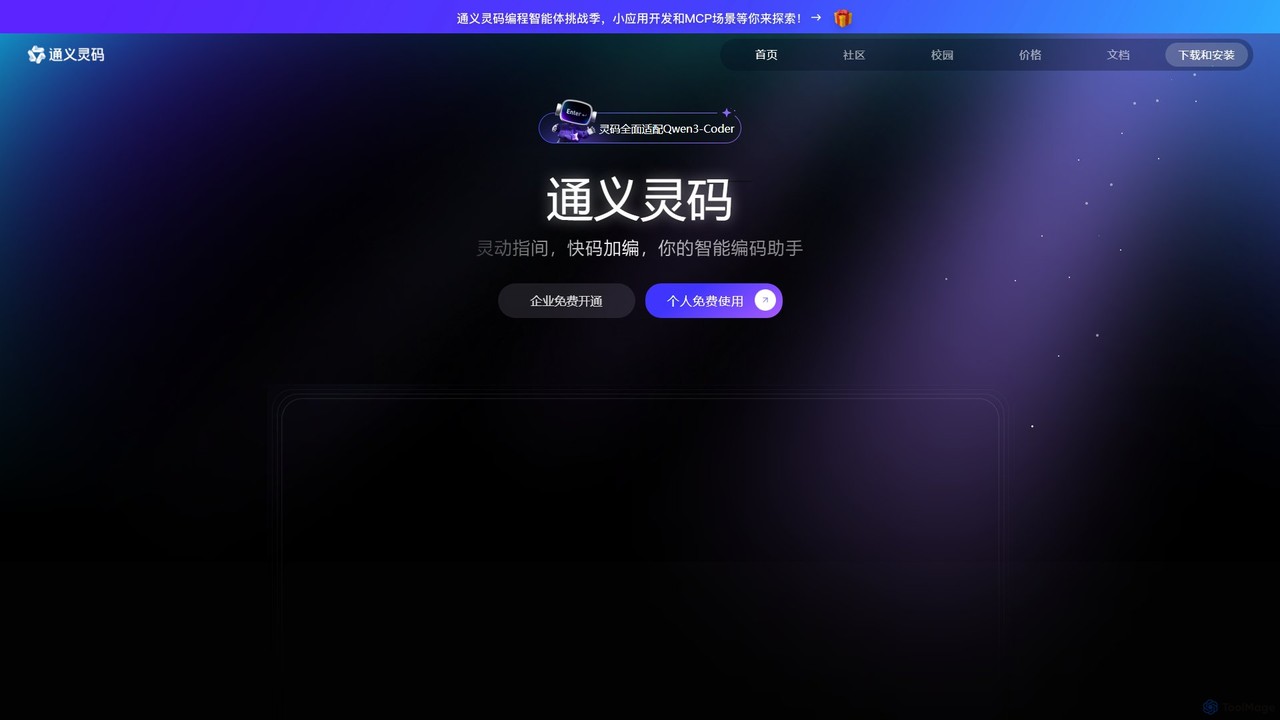
Lingma is an AI-powered coding assistant from Alibaba Cloud, designed to enhance developer productivity. It offers intelligent code …

164.7K

About Programming

AI Programming agents are a type of AI agent specialized in understanding, generating, and managing software code. Leveraging large language models trained on vast codebases, these tools can interpret natural language prompts to perform complex development tasks. They act as autonomous or semi-autonomous partners for developers, accelerating workflows, automating repetitive coding, and debugging complex issues. Unlike simple code completion utilities, AI Programming agents can handle multi-step logic, manage project files, and integrate with development environments to execute complete tasks.

Core Features

  • Autonomous Code Generation: Creates entire functions, classes, or applications from high-level descriptions and requirements.
  • Automated Debugging: Identifies, analyzes, and proposes fixes for bugs by examining code and error logs.
  • Code Refactoring & Optimization: Restructures existing code to improve performance, readability, and maintainability without changing its external behavior.
  • Test Case Generation: Automatically writes unit tests, integration tests, and end-to-end tests to ensure code quality and coverage.
  • Environment Integration: Works directly within IDEs, version control systems (like Git), and CI/CD pipelines to manage the full development lifecycle.

Use Cases

These agents are widely used by software developers, DevOps engineers, and data scientists. Common applications include rapid prototyping of new applications, automating the creation of boilerplate code, migrating legacy systems to modern frameworks, and generating complex scripts for data analysis or infrastructure management.

How to Choose

When selecting an AI Programming agent, consider the following: Language and Framework Support (ensure it covers your tech stack), Level of Autonomy (from a co-pilot assistant to a fully autonomous agent), Integration Capabilities (compatibility with your IDE, Git provider, and CI/CD tools), and Security Policies (how it handles your proprietary code).

ProgrammingUse Cases

1

Rapid Prototyping of a Web Application

A product manager needs to build a minimum viable product (MVP) to validate a business idea quickly. They provide an AI programming agent with a high-level description of the required features, such as user authentication, a dashboard, and a data entry form. The agent generates the necessary front-end (e.g., React), back-end (e.g., Node.js), and database schema. This process creates a functional prototype in hours instead of weeks, allowing for rapid iteration and user feedback with minimal upfront development effort.

2

Automating Unit Test Generation for Legacy Code

A quality assurance (QA) engineer is tasked with increasing test coverage for a large, legacy codebase. They deploy an AI programming agent to analyze the code, understand its logic, and automatically generate comprehensive unit tests using frameworks like Jest or PyTest. The agent identifies edge cases and creates relevant assertions, significantly improving code reliability and reducing the manual, time-consuming effort of writing tests from scratch for unfamiliar code.

3

Debugging Complex Production Issues

A senior developer is facing a critical, hard-to-reproduce bug in a production environment. They provide the AI programming agent with error logs, stack traces, and relevant code snippets. The agent analyzes the context, simulates potential execution paths, and pinpoints the likely root cause of the bug. It then suggests a specific code fix with a detailed explanation, drastically reducing the mean time to resolution (MTTR) and minimizing system downtime.

4

Refactoring Code for Performance Optimization

A software architect identifies a performance bottleneck in a critical microservice. Instead of manually refactoring the complex logic, they instruct an AI programming agent to optimize the code. The agent analyzes algorithms, suggests more efficient data structures, and rewrites inefficient loops, all while ensuring the functionality remains unchanged by running existing tests. The result is a refactored, more performant, and maintainable codebase, achieved with significantly less developer intervention.

5

Building API Integrations with Natural Language

A marketing operations specialist needs to connect two different SaaS platforms (e.g., a CRM and an email marketing tool). Lacking deep API expertise, they use an AI programming agent. They describe the desired data flow in plain English, such as 'When a new lead is created in the CRM, add them to the 'New Leads' email campaign.' The agent reads the API documentation for both platforms, handles authentication, and generates the necessary integration script or serverless function to automate the workflow.

6

Automating DevOps and CI/CD Pipeline Scripts

A DevOps engineer needs to create a new deployment pipeline for a microservice. They use an AI programming agent to generate the configuration files (e.g., Dockerfile, Kubernetes YAML, GitHub Actions workflows). By describing the build, test, and deployment stages in natural language, the agent produces the required scripts, validates their syntax, and helps set up the entire CI/CD process. This accelerates the delivery of new software features and reduces the likelihood of human error in complex configuration files.

ProgrammingFrequently Asked Questions