ToolMage
Sign in

Best 1 Task Management AI tools for Ai Agent

Popular Task Management AI tools in Ai Agent include Manus 1.5, helping you work more efficiently.

Manus 1.5
Freemium

Manus 1.5

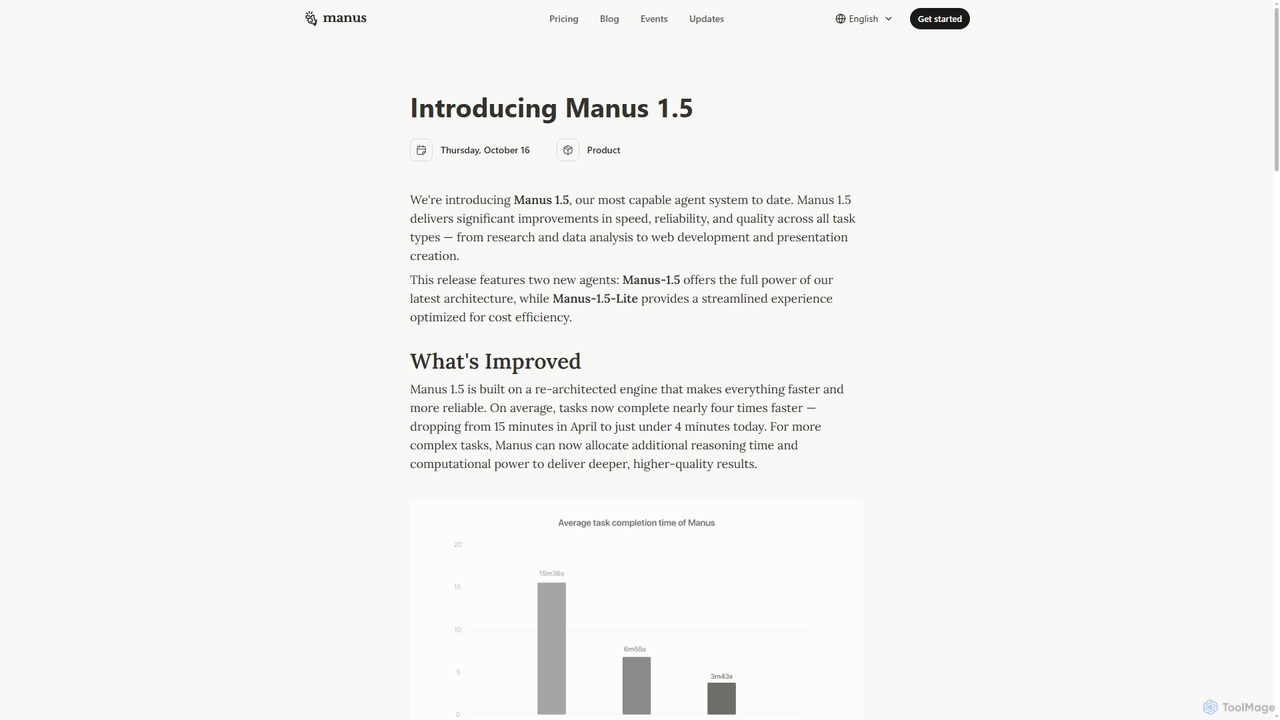
Manus is a general AI agent system designed to execute complex tasks autonomously. It can conduct research, analyze data, and even build and deploy full-stack web applications with backends and databases, all through a conversational interface.

Task Management
Visits 28.1MFavorites 162Likes 180

About Task Management

Task Management AI tools are intelligent agents designed to autonomously or semi-autonomously plan, execute, and monitor tasks. These tools leverage advanced AI to understand context, dynamically prioritize, and optimize workflows, going beyond traditional task lists. They streamline complex projects, enhance productivity, and ensure timely completion by adapting to changing conditions and proactively addressing potential issues.

Core Features

  • Intelligent Task Decomposition: Automatically breaks down complex goals into actionable sub-tasks and dependencies.
  • Dynamic Prioritization: Adjusts task order and urgency based on deadlines, resource availability, and strategic impact.
  • Automated Execution & Delegation: Initiates tasks, triggers actions, or assigns work to human or other AI agents.
  • Progress Monitoring & Reporting: Tracks task status in real-time, identifies bottlenecks, and generates comprehensive progress reports.
  • Adaptive Scheduling: Optimizes timelines and resource allocation based on unforeseen changes or new information.

Applicable Scenarios

These tools are invaluable for project managers seeking to automate planning and resource allocation, busy professionals needing dynamic schedule optimization, and organizations coordinating complex cross-departmental workflows. They also support IT operations for automated incident response and content teams for streamlined production pipelines.

How to Choose

When selecting a Task Management AI tool, consider its level of autonomy (fully autonomous vs. human-in-the-loop), integration capabilities with existing software, and its ability to handle task complexity. Evaluate customization options, learning capabilities, and the robustness of its monitoring and reporting features to ensure it aligns with your operational needs.

Task Management use cases

1

Automated Project Planning & Resource Allocation

Project managers input project goals and key milestones into the AI task management tool. The AI automatically decomposes tasks, estimates timelines, allocates resources based on team skills and availability, and generates an initial project plan. This significantly reduces planning time and optimizes resource utilization for complex projects.

2

Dynamic Schedule Optimization & Reminders

Individuals or team members input all their to-do items, meetings, and deadlines. The AI tool dynamically adjusts schedules based on priority, deadlines, and personal habits, sending intelligent reminders. This ensures important tasks are not missed and optimizes the daily workflow for maximum productivity.

3

Cross-Departmental Collaboration Task Coordination

In complex projects involving multiple departments, the AI task management tool automatically identifies task dependencies and coordinates progress across different teams. When one department's task is completed, it can automatically notify and initiate related tasks for the next department, reducing communication barriers and delays.

4

Automated Customer Service Request Handling

Customer service teams utilize AI task management tools to automatically categorize, prioritize, and assign incoming customer requests (e.g., emails, chats) to the most suitable customer service representative or automated process. For common issues, the tool can even automatically trigger replies or solutions, significantly speeding up response times.

5

Content Creation Workflow Management

Marketing and content teams manage the entire content creation process, from ideation and writing to review and publication. An AI task management tool can automatically track progress at each stage, identify bottlenecks, and ensure content is published on time, while coordinating the work of different creators and editors.

6

IT Operations Incident Response & Resolution

IT operations teams use AI task management tools to automate the reception, initial diagnosis, and assignment of incident reports. The tool can automatically create tickets, notify relevant engineers based on incident type and severity, and track resolution progress, thereby accelerating response times and reducing system downtime.

Task Management FAQ

What are Task Management AI Agents?

Task Management AI Agents are intelligent software entities designed to autonomously or semi-autonomously plan, execute, and monitor tasks to achieve specific goals. They leverage AI capabilities like natural language processing and machine learning to understand task requirements, prioritize dynamically, and adapt to changing conditions, making them more proactive than traditional task management systems.

How do Task Management AI Agents differ from traditional task managers?

Traditional task managers are typically passive tools for listing and tracking tasks, requiring constant human input for prioritization and execution. Task Management AI Agents, however, are active, intelligent entities that can understand context, dynamically prioritize based on real-time data, and even execute or trigger actions autonomously. They offer adaptive decision-making and proactive problem-solving, significantly reducing manual oversight.

What are the key benefits of using Task Management AI Agents?

The primary benefits include significantly enhanced efficiency through automation, improved accuracy in task prioritization and execution, and reduced manual overhead for planning and monitoring. They also lead to better resource utilization, proactive identification and resolution of bottlenecks, and more consistent task completion, ultimately boosting overall productivity and project success rates.

What features should I look for when choosing a Task Management AI Agent?

When selecting a Task Management AI Agent, prioritize its level of autonomy and its ability to integrate seamlessly with your existing project management and communication tools. Look for robust task decomposition, dynamic prioritization, and adaptive scheduling capabilities. Strong progress monitoring, reporting, and customization options are also crucial for tailoring the agent to your specific workflows and learning from past performance.

Can Task Management AI Agents integrate with existing project management software?

Yes, most advanced Task Management AI Agents are designed with integration capabilities in mind. They often provide APIs or direct connectors to popular project management platforms like Jira, Asana, Trello, and Monday.com, as well as calendar and communication tools. This allows for seamless synchronization of tasks, statuses, and data, ensuring a unified and efficient workflow across your existing ecosystem.

Who benefits most from using Task Management AI Agents?

Task Management AI Agents are highly beneficial for project managers seeking to automate complex planning and resource allocation, and for busy professionals needing dynamic schedule optimization. Teams involved in cross-departmental collaboration, customer service, content creation, and IT operations also gain significant advantages by streamlining workflows, reducing manual errors, and ensuring timely task completion across various operational domains.