Xata
Xata is a "Postgres at scale" platform designed to enhance developer velocity and optimize database performance. It offers …
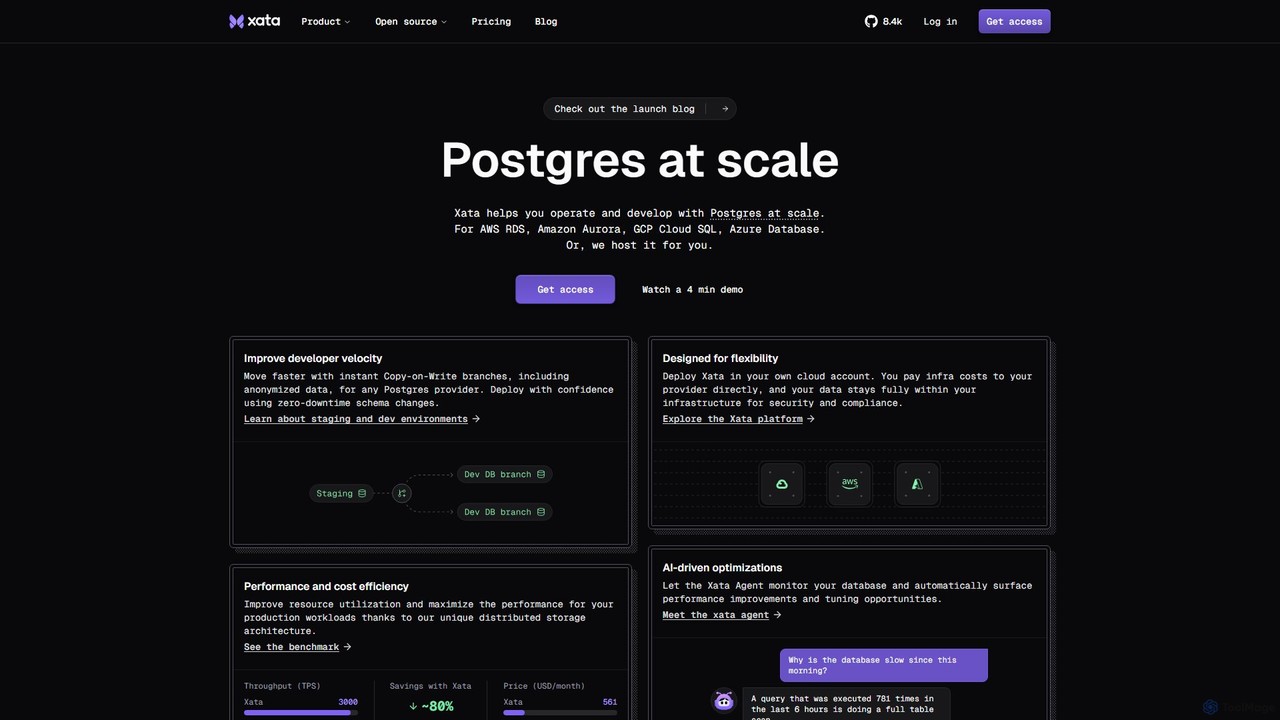
Xata is a "Postgres at scale" platform designed to enhance developer velocity and optimize database performance. It offers unique features like instant Copy-on-Write branches with PII anonymization, zero-downtime schema migrations, and an AI-powered agent for automated performance tuning. Deploy on Xata's infrastructure or within your own cloud for maximum flexibility and compliance.
About Database Optimization
Database Optimization tools are AI-powered solutions designed to enhance the performance, efficiency, and reliability of database systems. Leveraging machine learning algorithms, these tools analyze query patterns, resource utilization, and data structures to identify bottlenecks and suggest or automatically implement improvements. They are crucial for organizations managing large datasets, ensuring faster data retrieval, reduced operational costs, and improved application responsiveness within the broader AI infrastructure landscape.
Core Features
- Automated Indexing: AI analyzes query workloads to recommend or create optimal indexes, significantly speeding up data access without manual intervention.
- Query Performance Tuning: Machine learning identifies inefficient queries and suggests rewrites or execution plan adjustments for faster processing.
- Resource Allocation Optimization: Dynamically adjusts CPU, memory, and storage resources based on real-time demand and predictive analytics to prevent bottlenecks.
- Anomaly Detection: AI monitors database metrics to detect unusual performance drops or security threats, enabling proactive intervention.
- Predictive Maintenance: Forecasts potential performance issues or hardware failures before they occur, allowing for scheduled maintenance and preventing downtime.
Use Cases
These tools are essential for database administrators, DevOps engineers, and data architects in various industries. They are applied in scenarios requiring high-performance data access, such as real-time analytics platforms, large-scale e-commerce systems, and financial trading applications. By automating complex tuning tasks, AI-driven database optimization ensures that critical applications remain responsive and data operations are cost-effective.
How to Choose
When selecting a database optimization tool, consider its compatibility with your existing database systems (SQL, NoSQL), the breadth of its optimization capabilities (indexing, query, resource), and its integration with your monitoring and CI/CD pipelines. Evaluate the level of automation offered, from recommendations to autonomous tuning, and assess the vendor's support for specific cloud environments or on-premise deployments. Scalability and security features are also critical for enterprise-level adoption.

Database OptimizationUse Cases
Real-time Analytics Platform Performance Enhancement
Data engineers in a financial institution use AI database optimization tools to ensure their real-time trading analytics platform maintains sub-millisecond query response times. The AI continuously monitors data access patterns and automatically adjusts indexes and query execution plans, preventing performance degradation during peak market activity and ensuring critical business decisions are based on up-to-the-second data.
E-commerce Database Scalability Management
An e-commerce platform experiences fluctuating traffic, especially during sales events. Database administrators deploy AI optimization to dynamically scale database resources and tune queries. The AI predicts traffic surges, pre-optimizes frequently accessed product data, and ensures the database can handle millions of concurrent user requests without slowdowns, maintaining a smooth shopping experience and preventing lost sales.
Cloud Database Cost Reduction
A startup running its applications on a cloud-based database aims to reduce infrastructure costs. AI database optimization tools analyze resource usage patterns and identify opportunities to right-size instances, optimize storage, and eliminate inefficient queries. This leads to significant savings on cloud billing by ensuring resources are only consumed when truly needed, without compromising performance.
Legacy System Modernization and Performance Boost
An enterprise with an aging on-premise database system struggles with slow reports and application response times. AI database optimization is implemented to analyze the legacy schema and query workload. The AI identifies redundant data, suggests schema improvements, and automatically tunes queries, breathing new life into the existing infrastructure and delaying costly full-scale migrations.
Proactive Anomaly Detection in Data Warehouses
A data science team relies on a large data warehouse for complex machine learning model training. An AI database optimization tool monitors the warehouse's performance metrics, detecting subtle anomalies that indicate potential issues like slow-running ETL jobs or inefficient data loading. This proactive detection allows the team to address problems before they impact model training schedules or data freshness.
Developer Productivity through Automated Query Tuning
Software developers frequently write new queries for features, sometimes inadvertently creating inefficient ones. Integrating AI database optimization into the development pipeline allows for automatic analysis and suggestion of query improvements during code review or testing phases. This empowers developers to write performant code from the start, reducing the burden on DBAs and accelerating development cycles.