Ai Infrastructure Best in category 1 results Model Monitoring AI Tool

Popular AI tools in the Model Monitoring field of Ai Infrastructure include Cleanlab, etc., helping you quickly improve efficiency.

Cleanlab

Cleanlab

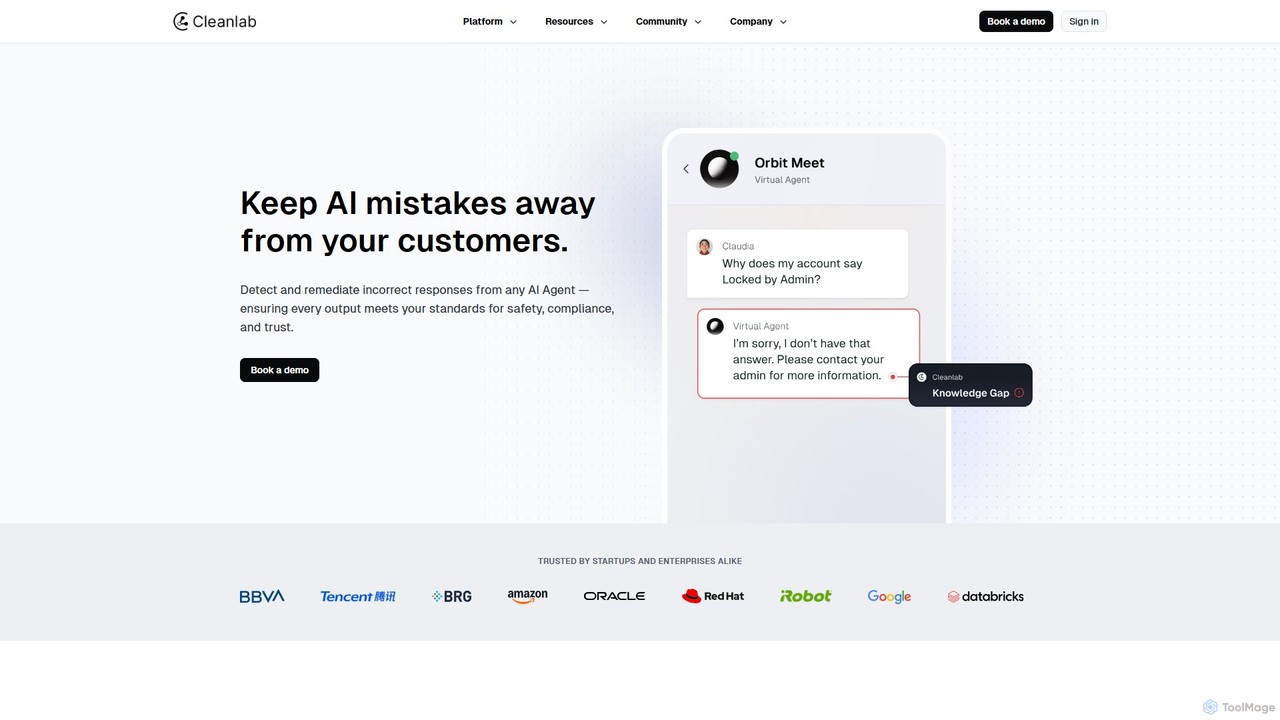
Cleanlab is an AI reliability platform that detects and fixes errors, hallucinations, and other issues in any AI …

30.5K

About Model Monitoring

Model Monitoring tools are a specialized category of AI infrastructure for tracking, analyzing, and maintaining the performance of machine learning models in production. These tools continuously evaluate live model predictions against ground truth or baseline data to detect issues like performance degradation, data drift, and concept drift. Their primary value lies in ensuring model reliability, fairness, and accuracy over time, which protects business outcomes and maintains user trust. By providing automated alerts and diagnostic insights, they enable teams to proactively manage the entire model lifecycle post-deployment.

Core Features

  • Performance Tracking: Monitors key metrics like accuracy, precision, recall, and F1-score in real-time to quantify model effectiveness.
  • Drift Detection: Automatically identifies statistical changes in input data (data drift) or the relationship between inputs and outputs (concept drift).
  • Bias and Fairness Analysis: Assesses model predictions across different demographic segments to uncover and mitigate unfair biases.
  • Data Integrity Validation: Checks the health of incoming data streams for anomalies, missing values, or schema changes that could impact performance.
  • Explainability & Diagnostics: Provides insights into why a model made a specific prediction, aiding in root cause analysis of performance issues.

Use Cases

Model Monitoring is critical in industries where models drive key business decisions. In finance, it's used to ensure fraud detection models adapt to new fraudulent patterns. E-commerce companies use it to maintain the relevance of recommendation engines. In healthcare, it validates the reliability of diagnostic AI tools by monitoring for shifts in patient data.

How to Choose

When selecting a Model Monitoring tool, consider its integration capabilities with your existing MLOps stack (e.g., MLflow, Kubeflow). Evaluate the types of models it supports (tabular, NLP, computer vision) and its ability to scale with your prediction volume. Also, assess the quality of its alerting system, the depth of its diagnostic dashboards, and its features for fairness and explainability.

Model MonitoringUse Cases

1

Monitor a Financial Fraud Detection Model

An MLOps team at a fintech company is responsible for a real-time transaction fraud detection model. They use a model monitoring tool to continuously track its performance. The tool alerts them to a sudden drop in precision, and its dashboard reveals that a new type of sophisticated fraud is bypassing the model (concept drift). The tool's explainability feature helps them analyze the misclassified transactions, providing crucial insights to gather new labeled data and retrain the model, quickly restoring its effectiveness and preventing financial losses.

2

Ensure Fairness in a Loan Approval AI

A data scientist at a bank needs to ensure their automated loan approval model is fair and unbiased. They deploy a model monitoring platform that specifically tracks fairness metrics across different demographic groups (e.g., age, gender, ethnicity). The system flags a performance disparity for a protected group. Using the tool's bias analysis features, the data scientist can pinpoint the input features causing the bias, allowing them to mitigate the issue and ensure compliance with regulatory standards, thereby maintaining the bank's reputation.

3

Maintain an E-commerce Recommendation Engine

An e-commerce platform relies on a recommendation engine to drive sales. A machine learning engineer uses a monitoring tool to track data integrity and model relevance. The tool detects significant data drift in user behavior following a major holiday season. This drift causes the model's recommendations to become less relevant, leading to a lower click-through rate. The monitoring system automatically triggers a retraining pipeline with the new data, ensuring the recommendation engine quickly adapts to changing customer preferences and maximizes sales opportunities.

4

Validate a Medical Imaging Diagnosis Model

A hospital's IT department monitors an AI model that assists radiologists in detecting tumors from medical scans. A model monitoring tool is crucial for ensuring patient safety. It validates that the input image data from different MRI machines is consistent and hasn't degraded in quality. It also tracks the model's predictions against final diagnoses confirmed by senior radiologists, flagging any systematic errors or performance drops. This continuous validation ensures the AI tool remains a reliable assistant, rather than a source of diagnostic error.

5

Analyze NLP Model Performance for a Chatbot

A customer service manager wants to improve their support chatbot's effectiveness. They use a model monitoring tool to analyze the underlying NLP model. The platform visualizes conversations where the model failed to understand user intent or gave irrelevant answers. It identifies patterns in these failures, such as new slang terms or product names not in the training data. This allows the product team to identify specific areas for improvement, create new training examples, and retrain the model to better handle real-world user queries.

6

Oversee a Predictive Maintenance Model in Manufacturing

A manufacturing plant uses a model to predict equipment failure and schedule maintenance proactively. An operations engineer monitors this model to ensure its predictions are accurate. The monitoring tool detects that the model's accuracy is declining for a specific type of machine. By analyzing the input data streams, the engineer discovers that a new sensor was installed, providing data in a different format (data drift). They can then update the data processing pipeline to handle the new format, preventing inaccurate predictions that could lead to costly unplanned downtime.

Model MonitoringFrequently Asked Questions