Ai Infrastructure Best in category 1 results Model Optimization AI Tool

Popular AI tools in the Model Optimization field of Ai Infrastructure include Narrow AI, etc., helping you quickly improve efficiency.

Narrow AI

Narrow AI

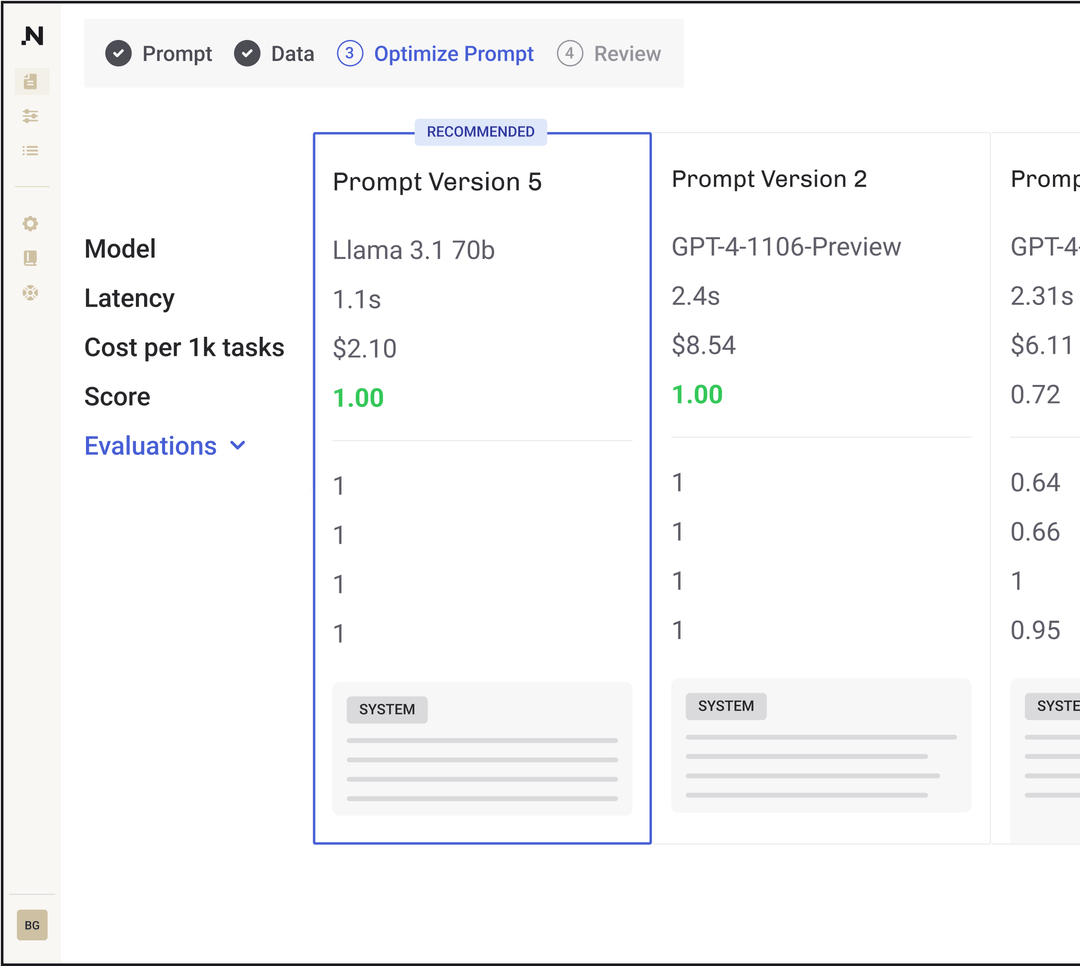
Narrow AI is an LLM optimization platform for developers that automates prompt engineering and model selection to drastically …

2.2K

About Model Optimization

Model Optimization tools are a specialized category of AI infrastructure software designed to make trained machine learning models smaller, faster, and more energy-efficient. These tools apply techniques like quantization, pruning, and knowledge distillation to reduce a model's computational and memory footprint without a significant loss in accuracy. This process is critical for deploying complex AI on resource-constrained hardware, such as mobile phones or IoT devices, and for reducing the operational costs of large-scale AI services in the cloud. They bridge the gap between a trained model and its practical, real-world application.

Core Features

  • Quantization: Reduces the precision of model weights (e.g., from 32-bit float to 8-bit integer) to decrease size and accelerate computation.
  • Pruning: Systematically removes less important weights or connections from the neural network to create a smaller, sparser model.
  • Knowledge Distillation: Trains a smaller, compact "student" model to mimic the behavior of a larger, more complex "teacher" model.
  • Model Compilation: Converts a model into a hardware-specific, highly optimized executable format for target devices like GPUs, TPUs, or CPUs.
  • Performance Profiling: Analyzes a model's execution to identify and resolve performance bottlenecks related to speed, memory, or power usage.

Use Cases

Model Optimization is essential for MLOps engineers, AI developers, and embedded systems engineers. It is widely used in industries like consumer electronics for on-device AI, automotive for real-time perception systems, and cloud computing to manage the inference costs of large language models (LLMs) and recommendation engines. Any application requiring efficient AI inference benefits from these tools.

How to Choose

When selecting a Model Optimization tool, consider its compatibility with your AI frameworks (e.g., TensorFlow, PyTorch, ONNX). Evaluate its support for your target hardware, from server-grade GPUs to mobile NPUs. Assess the range of optimization techniques it offers and the degree of automation versus manual control provided. Finally, analyze its ability to manage the trade-off between performance gains and potential accuracy degradation.

Model OptimizationUse Cases

1

Deploying AI Models on Edge Devices

A mobile application developer needs to integrate a real-time object detection feature into their app. The original model is too large and slow to run smoothly on a smartphone, causing battery drain and a poor user experience. By using a model optimization tool, the developer applies 8-bit quantization and pruning to the model. This reduces its size by 75% and triples the inference speed, allowing the feature to run efficiently on-device with minimal impact on battery life, enabling a responsive and powerful user experience.

2

Reducing Cloud Inference Costs for LLMs

A tech startup runs a popular chatbot service powered by a large language model (LLM). The high cost of GPU servers for inference is impacting their profitability. The MLOps team uses a model optimization suite to apply knowledge distillation and structured pruning. They create a smaller, specialized model that retains 98% of the original's performance on their specific tasks. This optimized model can handle 2.5 times more concurrent users on the same hardware, directly reducing their cloud infrastructure bill by over 50% and improving service scalability.

3

Enabling Real-Time AI in Automotive Systems

An automotive engineer is developing an Advanced Driver-Assistance System (ADAS) that uses a neural network for pedestrian detection. The system has strict latency requirements—a decision must be made in milliseconds. The engineer uses a model compilation tool to convert their PyTorch model into a highly optimized engine for the car's specific embedded GPU. The compilation process fuses layers and optimizes memory access, reducing inference latency by 60% and ensuring the system meets its critical real-time performance targets for safety.

4

Fitting Models onto Low-Power Microcontrollers

An embedded systems engineer is designing a smart home device with a keyword-spotting feature. The target hardware is a tiny microcontroller with only 256KB of RAM. The initial TensorFlow Lite model is too large to fit. Using an advanced optimization toolkit, the engineer applies aggressive weight pruning and 8-bit integer quantization. This shrinks the model size from 1MB to just 180KB, allowing it to be successfully deployed on the microcontroller while maintaining over 95% accuracy for the target keywords, making the smart feature viable.

5

Accelerating E-commerce Recommendation Engines

An MLOps team at a large e-commerce company manages a deep learning recommendation model. To provide real-time suggestions, inference latency must be extremely low. They use a performance profiling tool to identify that specific layers in their model are computational bottlenecks on their server GPUs. The optimization tool suggests targeted optimizations, including compiling these specific layers with a different precision (mixed-precision). After applying these changes, the end-to-end latency of the recommendation service drops by 40%, leading to faster page loads and a measurable increase in user engagement and sales.

6

Optimizing NLP Models for Faster API Responses

A SaaS company offers a text summarization API. Customers complain about slow response times for large documents. The backend team identifies the NLP model as the bottleneck. Instead of retraining a new model from scratch, they use knowledge distillation. They train a smaller, faster Transformer model (the 'student') to replicate the output of their large, accurate model (the 'teacher'). The new student model is 4x faster and is deployed to production, reducing the average API response time from 3 seconds to under 700 milliseconds, significantly improving customer satisfaction.

Model OptimizationFrequently Asked Questions